- A probation-period exit is judged less by the reason and more by the signal: Does it sound finished, stable, and repeatable.
- Decide “include vs omit” based on what you can prove, what the next role needs, and whether the application will ask for full history anyway.
- Use one neutral label plus one closure cue. Avoid emotional explanations that invite a second interview inside the first interview.
Probation Period Ended Is Not The Problem. The Signal Is.
If you are Googling job hopping after probation period, you are not trying to “spin” anything. You are trying to stop a three month job from becoming the loudest line on your resume.
I have seen this pattern in real hiring loops: A short stint is rarely an automatic “no.” The “no” happens when the candidate explains it in a way that sounds ongoing. Not available. Still in conflict. Still unpredictable.
One candidate, Rina, left a product role around the end of probation because the team quietly changed her scope into mostly support work. She told the first recruiter, “It was toxic and I had to protect my mental health.” The recruiter did not argue. They simply moved on. We rewrote her explanation into something boring and closed, and she started getting second calls again.
Key Point: Your goal is not to defend the exit. Your goal is to make it sound like a closed chapter with a clear boundary.
What Recruiters Think They Are Screening For
In screening, people are not doing deep investigations. They are pattern matching. With a probation exit, they are usually asking three quiet questions:
- Is this a repeat risk, or a one-off mismatch.
- Will this person leave again as soon as onboarding gets hard.
- Is there a performance issue hiding behind vague language.
⚠️ Warning: “Explaining more” often increases suspicion. The more emotional detail you add, the more it sounds like an unresolved story.
A colleague of mine, Marcus, used to hire for a customer success team. He put it simply: “If the candidate makes it sound like a clean decision with no bitterness, I can keep listening. If it sounds like a fight, I assume more fights are coming.”
“So what happened in that last role. Why was it so short?”
That question is normal. Your answer should be normal too. Short. Neutral. Forward-facing.
Should You List The Short Job On Your Resume
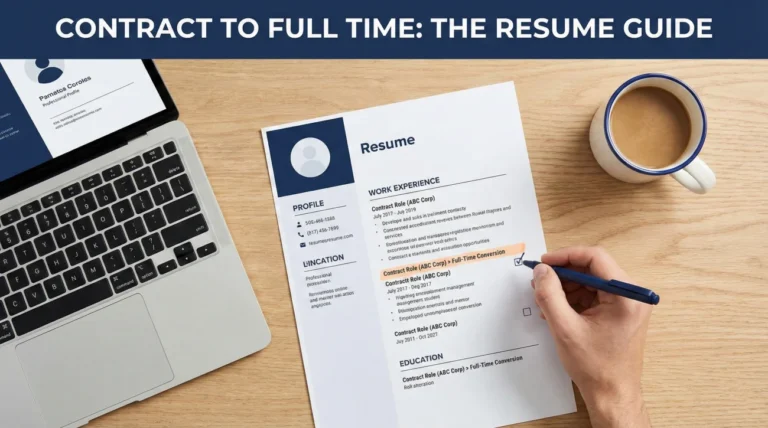
Online advice is split because people confuse two documents: your resume and your application. A resume is a marketing document. An application form can be a record request. That difference matters.
| Situation | Better Choice | Why It Helps |
|---|---|---|
| You gained a clear, relevant achievement in 6 to 16 weeks | Include it, but keep the explanation boring | It shows momentum and reduces “gap anxiety” |
| The role adds no relevant signal and creates more questions | Omit it from the resume | Your resume does not need every short stop |
| You are applying in a space that often asks for full work history | Omit from resume if needed, but be consistent on applications | Reduces the risk of looking inconsistent later |
| You were dismissed and the reason could be misread as “for cause” | Keep language factual and minimal | Avoids making a small exit sound like misconduct |
There is also a practical reality: some employers use third-party verification tools and databases for employment checks, while many checks focus on what you disclose. You do not need to panic, but you do need consistency between what you submit where.
The “Neutral Label + Closure Cue” Framework
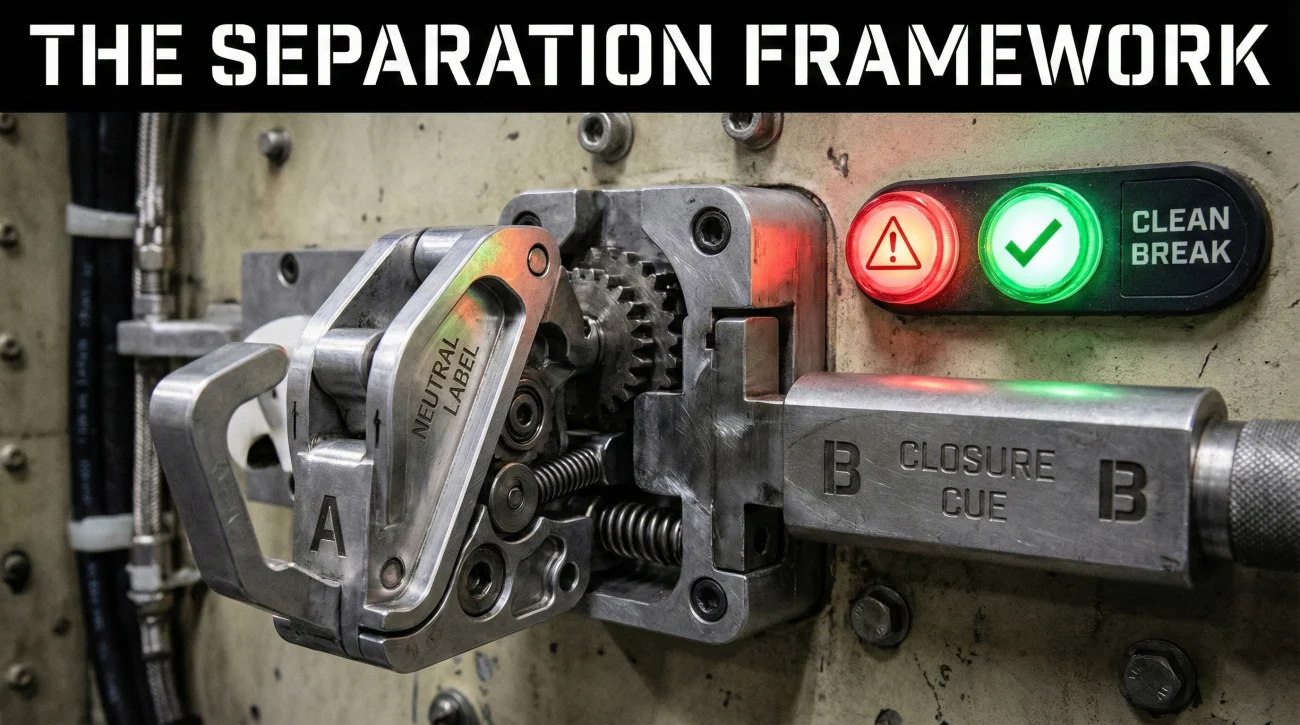
This is the framework I use when someone wants to explain a probation exit without making it sound like drama.
[Neutral Label] + [Boundary] + [Forward Match]
- Neutral Label: What happened, stated like a calendar entry.
- Boundary: A short phrase that signals it is finished.
- Forward Match: One line that connects you to the role you want now.
💡 Pro Tip: If you can say it in one breath, it usually sounds stable. If it takes three sentences, it usually sounds like an open argument.
Jared, an analyst I coached, kept saying: “They set me up to fail.” Even if that felt true, it sounded like a warning sign. We changed it to: “Early exit due to role mismatch. I am now focused on analyst roles with clear scope and measurable deliverables.” Same truth, different signal.
Placement Rules That Keep The Line From Getting Bigger

Rule 1: Keep the reason out of the job title line
Do not write “Probation Period Ended” inside the title line. That visually spotlights the exit. Put any neutral context in a small note only if you truly need it.
Rule 2: Use month and year consistently
People try to hide a short stint by switching formats. That inconsistency can be louder than the short job itself. Pick one format and stay consistent across roles.
Rule 3: Never use emotional or accusatory labels
Left after probation can be neutral if you phrase it like a decision boundary, but “toxic,” “betrayed,” or “unfair” tends to invite interrogation.
❌ Note: “Mutual separation because leadership was chaotic” sounds like you are still fighting the last company in the interview room.
Six Clean Ways To Explain A Probation-Period Short Stint

Each example below is designed to sound closed, factual, and boring. Boring is good here.
Example 1: Role mismatch, candidate chose to exit.
Early exit due to scope mismatch. Now focused on coordinator roles with stable, process-based responsibilities.
Example 2: Probation review created a clear boundary.
Role ended after probation review. I am targeting CS roles with structured onboarding and defined accounts.
Example 3: “Contract-like” framing when the reality was short by design.
Short assignment to support a migration window. Delivered documentation and handoff materials for the core workflow.
Example 4: You left quickly, but you kept it professional.
I resigned during probation after the role shifted away from performance marketing. Now focusing on growth roles tied to measurable pipeline outcomes.
Example 5: You were let go, but you avoid “for cause” implications.
Position ended early during probation. Since then, I have aligned with SDR teams using clear territory definitions and repeatable playbooks.
Example 6: You want to acknowledge learning without sounding defensive.
Short tenure during a team restructure. I am now pursuing analyst roles with stable reporting lines and well-scoped stakeholder needs.
💡 Pro Tip: If you have multiple short stints, do not write a different “reason sentence” for each one. Use one consistent style so it looks like life, not a series of emergencies.
A 20-Second Interview Answer That Does Not Invite Cross-Examination

Your interview goal is to satisfy curiosity, not to open an investigation.
Base script:
Optional add-on if they push: Add one detail, then stop.
⚠️ Warning: Do not give a timeline of conflicts, names, or “who said what.” The moment you do, you turn a short stint into a story about interpersonal risk.
Common Mistakes That Make The Probation Exit Sound Worse
- 🧨 Writing a dramatic reason: “I escaped a toxic environment.”
- 🧩 Mixing date formats to blur the months.
- 🗣️ Over-explaining: Three paragraphs to justify a three month job.
- 🎭 Using vague euphemisms: “It just did not work out” with no closure cue.
- 🚪 Sounding unavailable: “I needed time to recover” with no stability signal.
One more real example: Stella left during probation after a manager change turned the job into something else. Her first draft said: “Leadership misrepresented the role.” That might be true, but it is also accusatory. We changed it to: “Early exit due to scope change.” Same reality, lower heat. She stopped getting follow-up questions about it within two interviews.
Final: Make The Exit Boring, Closed, And Predictable
The cleanest probation explanation is not the most detailed one. It is the one that sounds finished. One neutral label, one boundary phrase, and one forward match to the role you are pursuing now.
If you want a simple north star for job hopping after probation period, it is this: Write it like a short business decision, not like a personal story that still hurts.
❓ FAQ
🎯 Do I have to mention that it was during probation
Usually no. Most of the time you can describe it as an early exit, short tenure, or role mismatch. Only add the word “probation” if you are directly asked and you can say it neutrally.
🧭 If I omit the job from my resume, will background checks find it
Many checks focus on what you disclose, but some employers use verification systems or third parties. The practical rule is consistency: If an application asks for full work history, provide it there even if your resume is curated.
🧩 Should I use years only to hide a three month role
I would be careful. Changing formats can draw more attention than the short stint itself. If you use month and year for other roles, stay consistent.
🛠️ What is the safest reason to say if I was let go
Keep it factual and minimal: “Role ended early during probation” or “Position ended after an early review.” Then pivot to what you are doing now and why this role is a better match.
🌿 How do I answer if they ask whether it was performance
Do not argue. Use a calm boundary: “It was an early mismatch on scope and expectations, and it ended within the probation window.” Then move directly to fit, skills, and what you have done since.
⚠️ Disclaimer: ResumeSolving provides resume, cover letter, job search communication, and career transition guidance for informational purposes only. Hiring practices vary by employer, role, location, industry, and individual circumstances. We do not guarantee interviews, job offers, ATS results, or other outcomes. Verify employer requirements directly and follow applicable laws and workplace policies. For sensitive situations, use only information you are comfortable disclosing and keep all statements accurate.