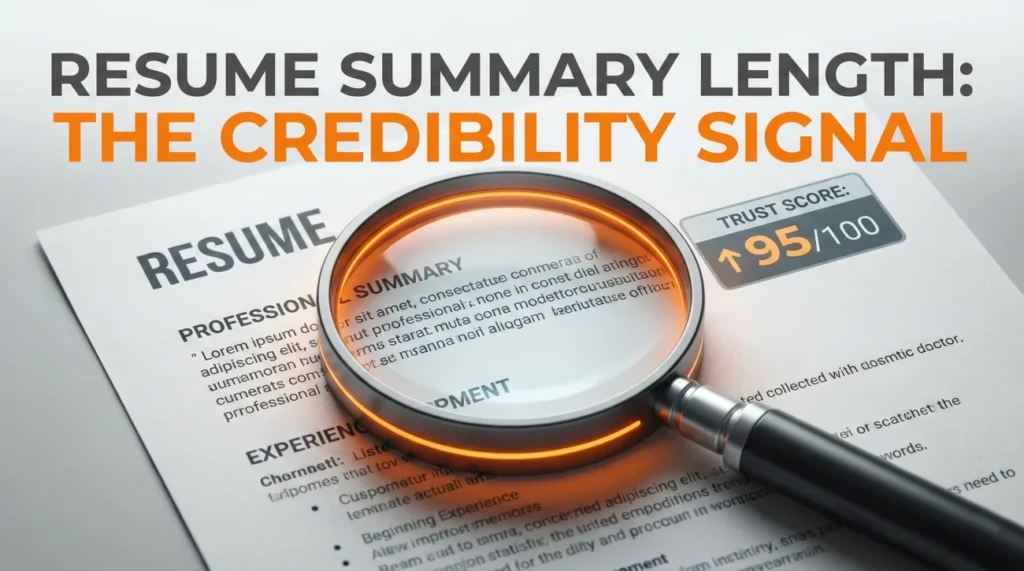
- Your resume summary length is a credibility signal: Too long often reads like you are compensating for weak proof.
- Think in lines, not sentences: Most strong summaries land in 2 to 5 lines depending on role level and what you must clarify.
- If you need 6+ lines, the fix is usually not “write better”, it is “move proof into bullets and keep the summary as an opener”.
Why resume summary length matters more than people admit
I once reviewed a resume for a candidate named Béatrice who had done solid work for years, but her summary was eleven lines. It read like a LinkedIn About section squeezed into a document that was supposed to be fast. Nothing in it was offensive. Nothing was wildly inaccurate. But the first reaction it triggered was: “Why is she trying so hard to convince me before I even get to the work?”
That is the real problem with resume summary length. It is not a grammar issue. It is not an ATS issue. It is a human trust issue. A long summary often feels like a pitch without receipts. And when a recruiter or hiring manager is scanning quickly, trust is the only currency that matters in the first few seconds.
This guide is not going to give you a single magic number and pretend it fits every job. Instead, I will give you a line-based way to choose the right length, explain why “too long” can look fake, and show you six examples you can adapt without sounding like a resume generator.
Stop counting sentences and start counting lines
Most advice online says “one to three sentences”. That sounds tidy, but it breaks in real resumes because sentences wrap. Font size, margins, and layout change what the reader sees. The reader does not experience your summary as “two sentences”. They experience it as “a block that takes over the top of the page”.
So use a simpler rule: Count how many lines your summary occupies in your actual resume format. If you change spacing and it suddenly becomes eight lines, you did not create more value. You created more friction.
| Visible length | What it signals | Best used when |
|---|---|---|
| 2 lines | Clarity and confidence | You match the role cleanly and your bullets carry the proof |
| 3 lines | Focused value with one proof hint | You need to anchor scope, specialty, and one credible result |
| 4 to 5 lines | Context plus positioning | Career change, founder to employee, or a story that needs one extra bridge |
| 6 lines | High risk of sounding “pitchy” | Only if you are senior and the extra line is still specific, not adjectives |
| 7+ lines | Reader fatigue, credibility drop | Almost never. Usually a sign you are trying to do the job of bullets up top |
The goal is not to be short for the sake of being short. The goal is to keep the top of the page readable so the reader reaches your experience section with attention left.
Why a long summary can look fake even if it is true
“Fake” here does not mean lying. It means the reader feels a mismatch between the amount of claim and the amount of proof they have seen so far. A summary sits before evidence. So when it is long, it stacks claims at the exact moment the reader is most skeptical.
Key Point: A summary is an opener, not your autobiography. If it tries to do the job of your bullets, it often reads like you do not have bullets strong enough to carry the story.
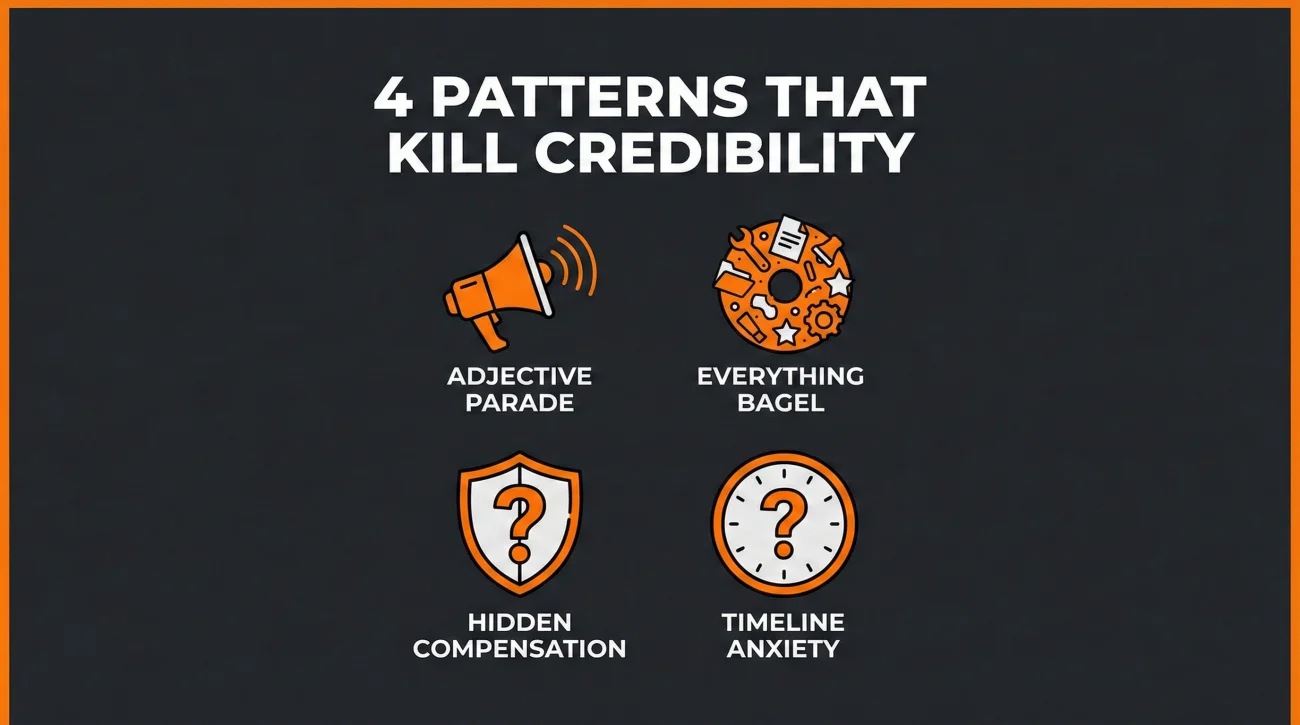
Four common patterns that make “too long” feel untrustworthy
Pattern 1: The adjective parade.
Words like “results-driven”, “dynamic”, “strategic”, “innovative” are not automatically bad. But when you stack them for multiple lines, you sound like you are selling a personality instead of showing work.
Pattern 2: The everything bagel.
Candidates try to mention every tool, every domain, every soft skill, and every industry to avoid being filtered out. The result is a summary that signals: “I am not sure what job I am actually pursuing.”
Pattern 3: The hidden compensation.
When a summary is long, I often find the experience bullets are thin, generic, or unmeasured. The summary becomes a shield. The reader senses that and trusts less.
Pattern 4: The timeline anxiety.
People who have a gap, a job hop, or a career pivot sometimes put a long explanation in the summary to “get ahead of it”. Unfortunately, explanations at the top usually feel defensive.
A friend of mine in HR ops calls this “the pre-apology”. If your summary reads like you are asking to be understood before you are evaluated, it rarely lands well.
Choose the right length based on what you must clarify
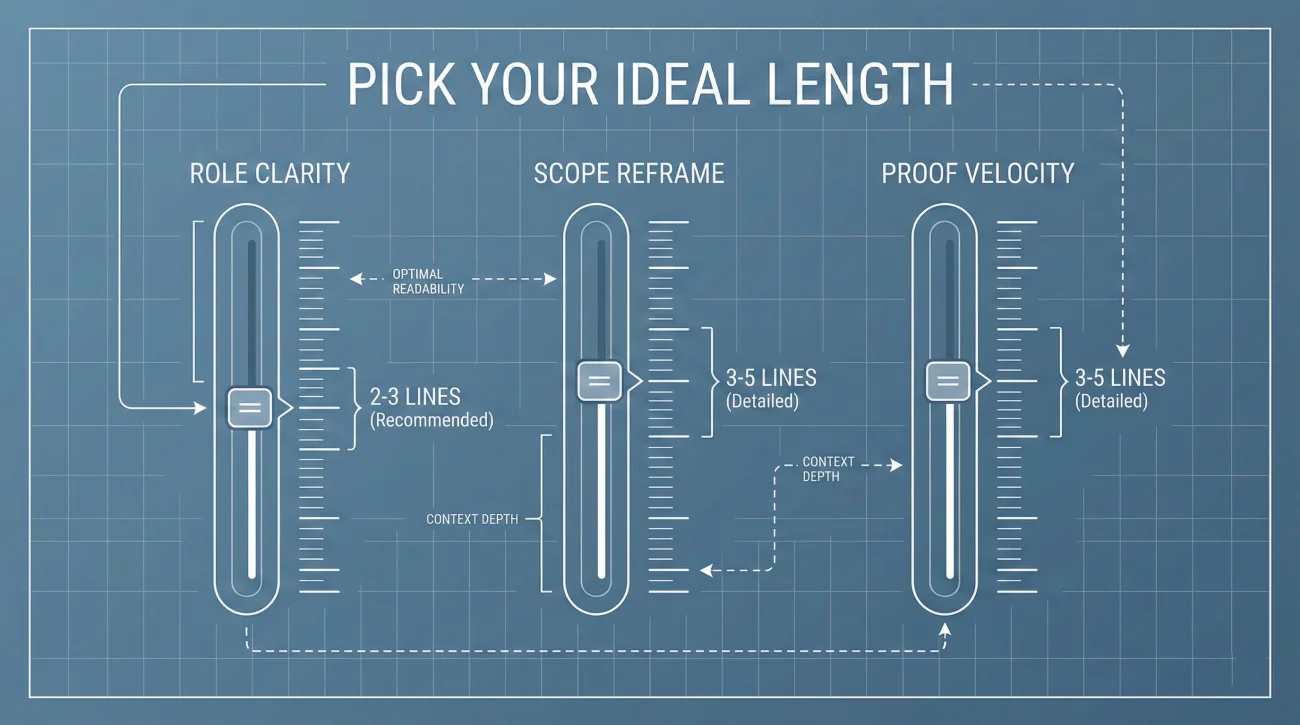
Here is the quickest way I decide summary length when I review resumes: I ask what must be clear before the reader hits the first job entry. If the answer is “not much”, the summary should be shorter. If the answer is “my target role is not obvious from my last title”, you may need more lines, but only for bridging.
💡 Pro Tip: Your summary should earn its space by clarifying one thing the experience section cannot explain instantly.
Ask these three questions
1) Is my target role obvious from my last job title?
If yes, 2 to 3 lines is usually enough.
2) Do I need to reframe scope?
Example: You were a “Founder” but you are applying as an “Operations Manager”. That often needs 4 to 5 lines, but only if the lines are concrete.
3) Do I have proof coming immediately in bullets?
If your first job bullets start with real outcomes, your summary can be shorter because evidence arrives fast.
If you answered “no” to #3, do not expand the summary to compensate. Fix the bullets. A longer summary is not a substitute for strong proof.
A practical cutting framework for resume summary word count
If you are staring at a summary that feels too long, your instinct might be to rewrite it from scratch. That sometimes works, but it is slow. A faster method is to cut by category. Think of your summary as having four possible ingredients:
[Target Role] + [Specialty] + [Proof Hint] + [Environment Fit]
Most strong summaries only need three of those. The extra fluff usually hides in the fourth.
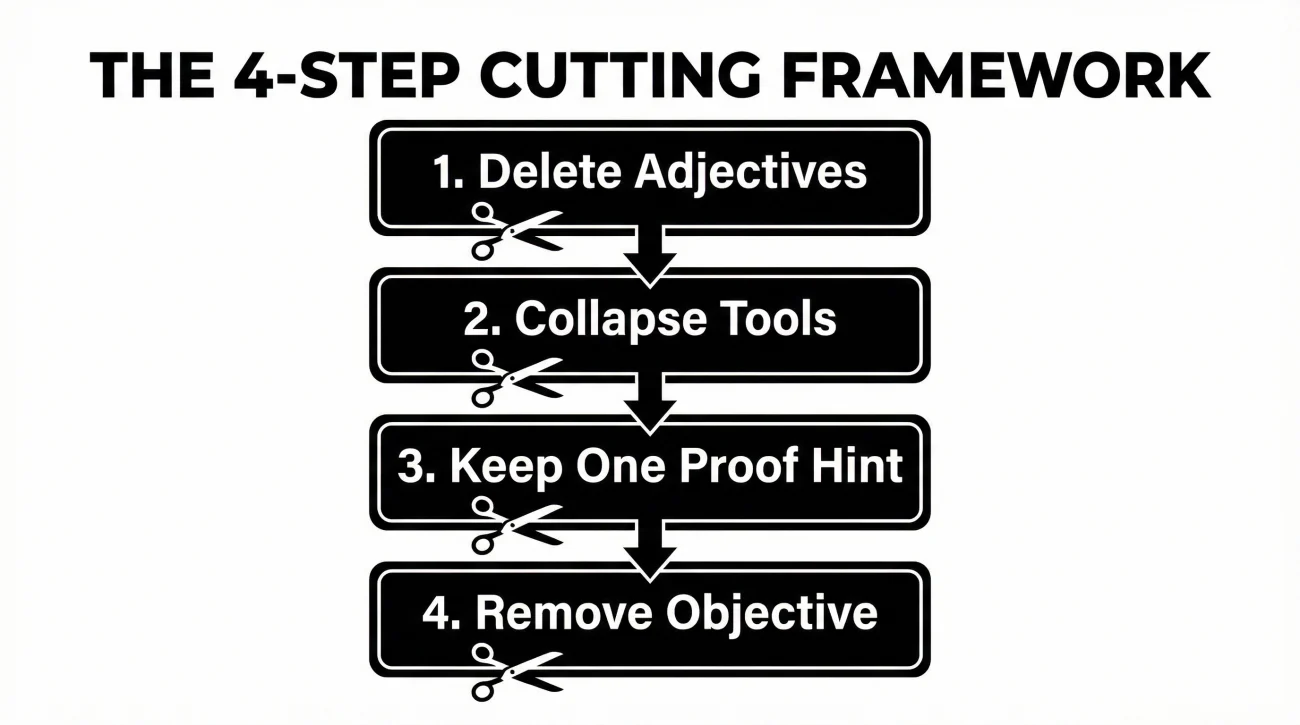
Cut in this order
Step 1: Delete generic character claims.
“Hard-working”, “self-motivated”, “passionate”, “team player”. If it cannot be proven in a bullet, it does not belong up top.
Step 2: Collapse tool lists.
Instead of listing eight tools, mention one category: “modern analytics stack” or “CRM and lifecycle tooling”, then let keywords appear in bullets.
Step 3: Keep one proof hint only.
The summary is not the place for three metrics. Choose one that anchors credibility and save the rest for experience bullets.
Step 4: Remove the mini-cover-letter line.
The sentence that starts with “Seeking an opportunity to…” often adds length without adding trust.
A quick before and after you can feel
The problem is not that any single phrase is illegal. The problem is that the reader learned nothing concrete after a full block of text.
The second version is not “short because short is trendy”. It is short because it has role, scope, one proof hint, and a believable working style.
Six short resume summary examples with the right number of lines
These are written to be copied and adapted. They are also designed to show line discipline. If you paste them into your resume and they suddenly become eight lines, fix spacing and tighten wording, not by shrinking font to unreadable sizes.
Example 1: Clean match, mid-career (2 to 3 lines)
This is short because no bridge is required. The title and the target role align.
Example 2: Career change (4 to 5 lines)
The extra line is doing a job: It connects domains without sounding like an apology.
Example 3: Founder to employee (4 to 5 lines)
Notice what is missing: No ego, no “visionary”, no dramatic story. Just scope and translation.
Example 4: Overqualified concern (3 to 4 lines)
This is a case where one extra clarifying line prevents the reader from guessing your intent.
Example 5: After a gap (3 to 4 lines)
I have seen this work when the rest of the resume backs it up with current activity, even small, like recent training or volunteer support work.
Example 6: Senior scope, still controlled (5 to 6 lines)
Even at senior level, the summary stays concrete. If it starts turning into philosophy, it becomes unreadable fast.
Resume summary mistakes that usually inflate length
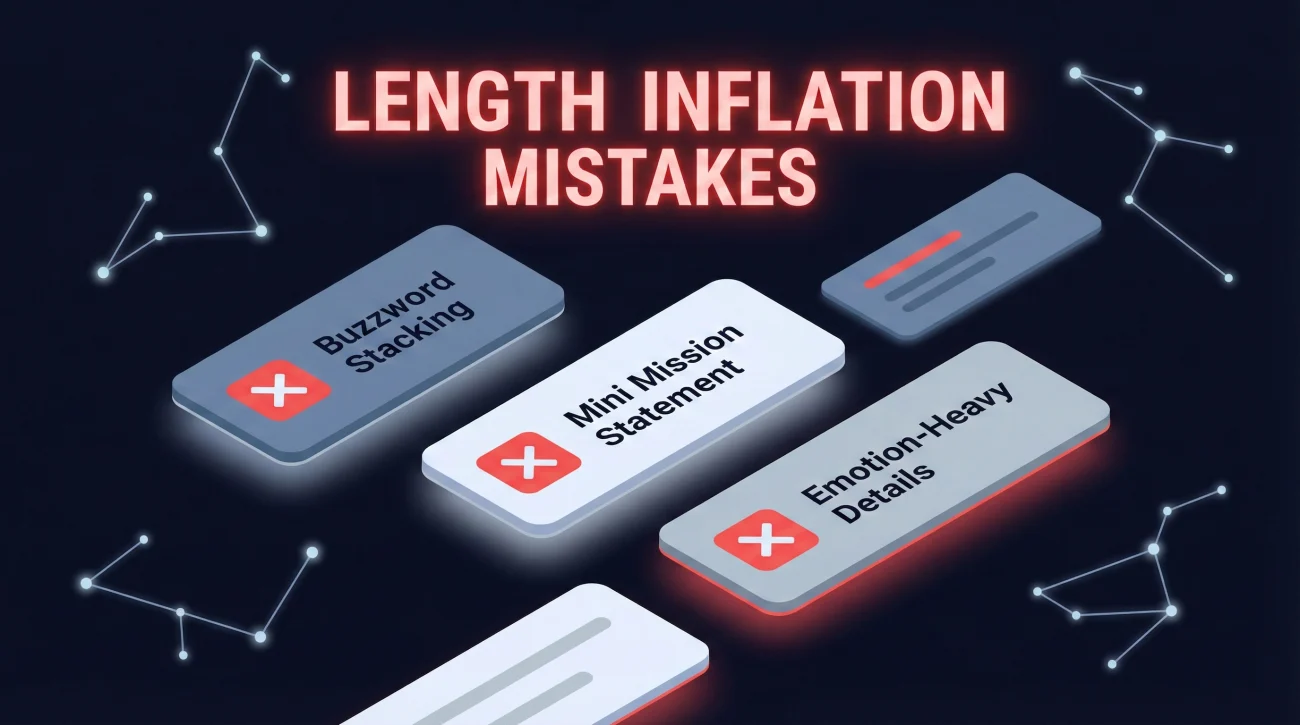
When people ask me “how many lines should a resume summary be”, they often expect a number. But the better answer is: It should be as long as it needs to be to clarify scope, and as short as possible everywhere else. These mistakes are what push a summary into the danger zone.
- Starting with “Highly motivated professional” instead of a real target role.
- Listing every soft skill you have ever been told you possess.
- Stacking buzzwords: Strategic, innovative, dynamic, synergistic, results-driven.
- Trying to summarize every job you have held.
- Writing a mini mission statement about what you believe in.
- Using vague impact: “Drove growth” with no hint of what changed.
- Adding an “objective” sentence that explains what you want, not what you offer.
- Explaining a gap or pivot with emotion-heavy detail instead of a clean bridge.
- Repeating keywords that already appear in your headline, title, and skills.
- Using long sentences that wrap into multiple lines when a shorter phrase would do.
⚠️ Warning: If your summary is long because you are afraid the reader will miss something, that fear usually belongs in your tailoring process, not in the summary block.
Final
When your summary is the right length, it does something subtle: It makes the rest of the resume feel believable. It gives the reader a clean frame so your bullets land with less resistance. If you remember one rule, make it this one: Your summary is an opening, not a replacement for evidence.
Most candidates do best in the 2 to 5 line range, and the exceptions are still controlled, not expansive. If you need a longer block to feel understood, that is usually a sign you are trying to solve a proof problem with more words. A stronger move is to keep the opener tight, then let the work speak.
In a section-by-section approach, resume summary length is one of those small details that quietly changes whether your whole document feels real.
❓ FAQ
🧩 How many lines should a resume summary be for most roles?
Most strong summaries sit in 2 to 5 visible lines. If you match the role clearly, 2 to 3 lines is enough. If you are bridging a pivot or founder background, 4 to 5 lines can be justified as long as every line stays specific.
📏 Is “one to three sentences” still good advice?
It is a decent starting point, but lines are a better measurement because layout changes how sentences wrap. A “two sentence” summary can still become six lines if the sentences are long.
🧠 What is a safe resume summary word count?
Word count is less reliable than lines, but many effective summaries land around 35 to 75 words. If you push far beyond that, check whether you are stacking adjectives, tool lists, or explanations that belong elsewhere.
🎯 Can a senior candidate use a longer professional summary length?
Senior candidates sometimes need one extra line to clarify scope, but long blocks still carry risk. Senior readers are often the least patient with vague leadership language, so keep it concrete and outcome-tied.
🛠️ If my summary is too long, what should I cut first?
Cut generic character claims first, then collapse tool lists, then keep only one proof hint. If you still need space, remove the objective-style line and let your bullets handle detail.
🔍 Does ATS care about resume summary length?
ATS is typically more sensitive to structure and keywords than to length. Humans care about length because it impacts readability. Optimize for the human scan, then ensure your key terms show up naturally across the resume.
⚠️ Disclaimer: ResumeSolving provides resume, cover letter, job search communication, and career transition guidance for informational purposes only. Hiring practices vary by employer, role, location, industry, and individual circumstances. We do not guarantee interviews, job offers, ATS results, or other outcomes. Verify employer requirements directly and follow applicable laws and workplace policies. For sensitive situations, use only information you are comfortable disclosing and keep all statements accurate.