- This question is not about your past employer. It is about whether you will repeat the pattern.
- Answer with a short, closed story: Context, Decision, Learning, Commitment.
- Match the script to your tenure: 3 months, 6 months, and 1 year trigger different worries.
The Real Question Behind “Why You Left So Soon”
When an interviewer asks why did you leave your last job so soon, most candidates hear an accusation. Most interviewers are doing something simpler: They are scanning for risk.
I have sat on both sides of this. When a resume shows a short stint, the room usually goes quiet for half a second. Someone is thinking: “Is this a pattern, or a one-off?” Someone else is thinking: “Will we be hiring again in four months?”
This article is built for the non-crisis reasons only. No layoffs, no firing, no dramatic explanations. Just the very common stuff: role mismatch, unclear scope, a manager change, a different direction than promised, a better fit opportunity, or a situation where you made a fast, adult decision.
💡 Pro Tip: Your goal is not to sound perfect. Your goal is to sound predictable.
What Hiring Managers Fear When They Hear “So Soon”
In practice, this question bundles three worries. If you answer the wrong worry, even a polite answer can land badly.
| Hidden worry | What it sounds like in their head | What your answer must include |
|---|---|---|
| Flight risk | “Will they leave again once it gets hard or boring?” | A commitment signal tied to the role you want now |
| Judgment risk | “Do they jump quickly without trying to fix things?” | One sentence showing you tried to clarify or correct course |
| Performance risk | “Were they pushed out, or failing quietly?” | A neutral explanation that avoids drama and oversharing |
Key Point: A short tenure is not automatically bad. A vague, emotional answer is what turns it into a problem.
One of my colleagues, Rina, used to say she can predict interview outcomes by the second sentence of this answer. If the candidate spends that sentence describing unfairness, chaos, or “toxic everything,” the interviewer stops listening for fit. If the second sentence explains a decision calmly and points forward, the interviewer relaxes.
A Safe 4-Part Framework That Works in 20 Seconds or 45 Seconds
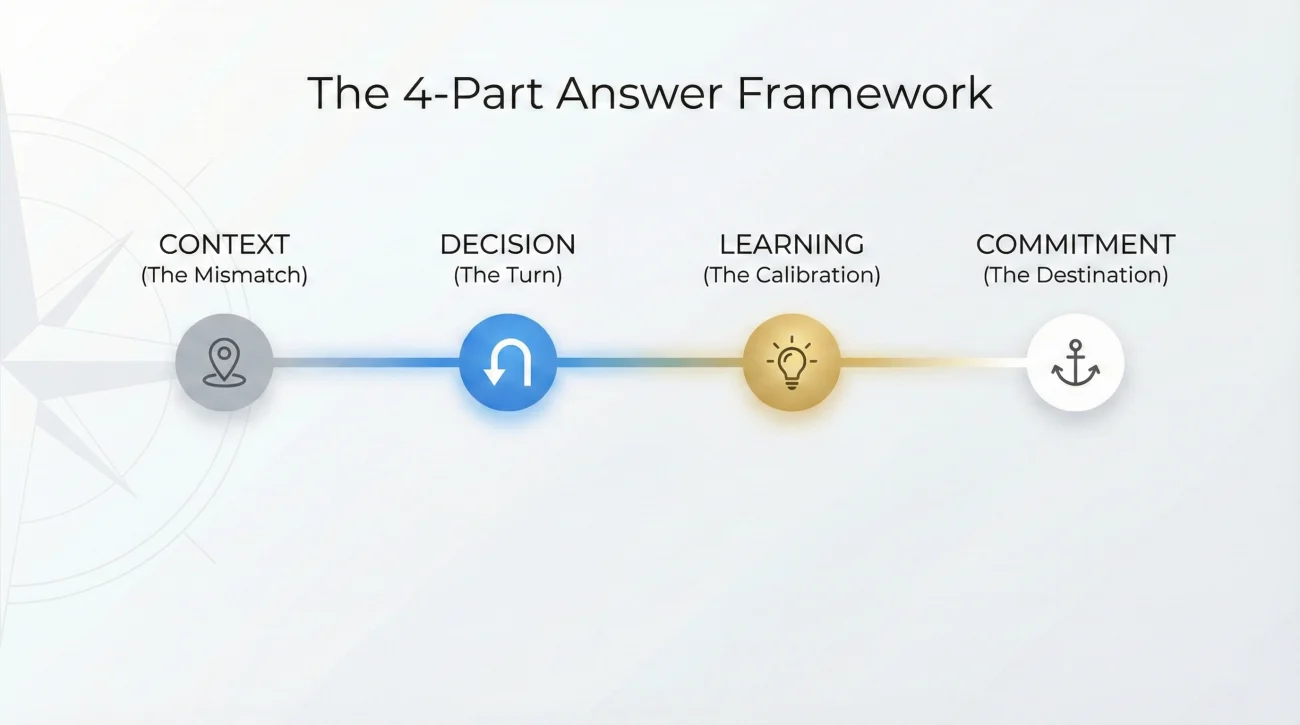
I teach candidates to use one structure that scales up or down without sounding rehearsed:
[Context] + [Decision] + [Learning] + [Commitment]
1) Context: Describe the mismatch, not the mess. Keep it factual and small. Mention the axis of mismatch: scope, pace, role definition, product, team structure, or what you were hired to do versus what the job became.
2) Decision: Show you did not panic-quit. One sentence is enough. “I tried X.” “I asked for Y.” “After Z became clear, I decided to move on.” That single sentence handles judgment risk.
3) Learning: Show improved self-filtering. This is the part most internet articles skip. If you can name what you learned about your best working conditions, you sound like you will choose better next time.
4) Commitment: Tie stability to the role you want now. Do not promise you will stay five years. Promise something believable: what you want to build, what type of team you want to commit to, and why this role fits that.
⚠️ Warning: If you only do “context + commitment” you can sound like you are selling. If you add “decision + learning,” you sound like an adult.
Tenure Matters: 3 Months, 6 Months, and 1 Year Trigger Different Reactions
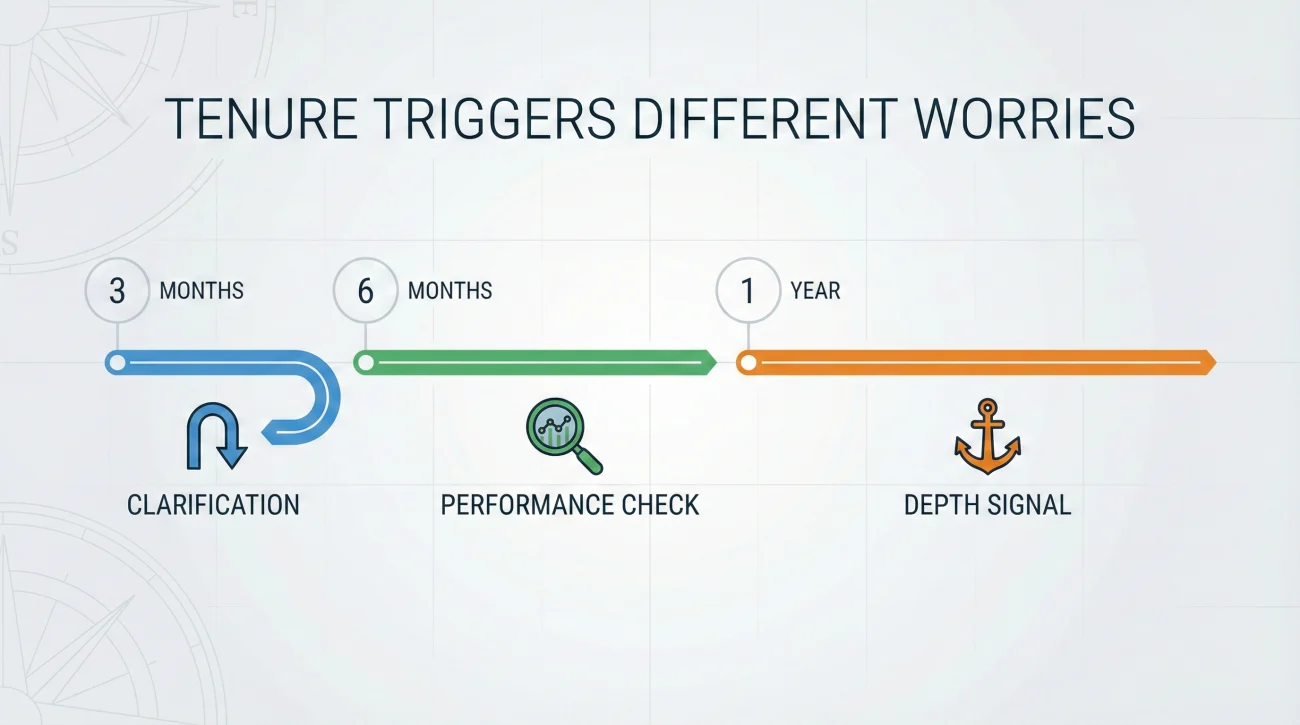
1️⃣ If it was 3 months:
A left after 3 months interview question usually means the interviewer suspects one of two things: either the role was misrepresented, or you made a snap call. Your job is to show it was a quick clarification, not a quick escape.
Keep your details minimal. Use one sentence to show you checked reality early, one sentence to show a clean decision point, then pivot back to long-term fit.
2️⃣ If it was 6 months:
The left after 6 months interview version often triggers performance speculation. Your language must stay neutral and closed. No hints of ongoing conflict.
This is where “Decision + Learning” matters most. Without it, the interviewer fills the silence with their own theory.
3️⃣ If it was around 1 year:
The left after 1 year interview angle is easier. Many teams accept a one-year move if it is a coherent step. The risk is sounding like you are chasing novelty.
Anchor your commitment in scope and compounding work. Make it clear you want depth, not constant change.
💡 Pro Tip: The shorter the tenure, the more your answer must sound like a clean decision, not a long story.
Five Short Answers You Can Use Without Sounding Defensive

These are built to fit into 15 to 25 seconds. Adjust details, but keep the structure.
Short Answer 1: Role mismatch without blame
I joined expecting a role centered on stakeholder work and project ownership. Once I started, the day-to-day was much more execution-heavy and the scope was narrower than discussed. I tried to recalibrate expectations early, and that is when I realized it was not the right fit. I am focused now on roles like this one where the scope is clearly defined and long-term.
Short Answer 2: Team direction changed quickly
The team went through a leadership change soon after I joined, and the priorities shifted in a way that moved the role away from my core strengths. I stayed long enough to confirm the direction was stable, then I made a decision to pursue a better match. This role aligns with what I do best and what I want to build next.
Short Answer 3: Pace and structure were not sustainable
I learned quickly that the operating pace and support structure were not set up for success in that role. I tried to create clarity on priorities and metrics, but it remained inconsistent. I decided it was better to leave early than drag it out. I am looking for a team with clear goals and steady execution, which is why this position stands out.
Short Answer 4: Better fit opportunity without sounding opportunistic
I accepted that role because it looked aligned on paper, but I realized early it was not the best long-term match. When I saw an opportunity that matched my target path much more closely, I chose to make the change early rather than wait. I am focused on committing to the right lane, not bouncing between roles.
Short Answer 5: Clarity came fast
That experience helped me clarify what I need to do my best work: clear ownership, stable priorities, and a team that measures outcomes the same way I do. Once that became clear, I made a quick decision to move on. I am much more selective now, and that is why I am confident about this direction.
Five Longer Answers That Still Stay Closed and Professional
These run 35 to 60 seconds. Use them when the interviewer asks a follow-up like, “What exactly happened?”
Long Answer 1: Misaligned expectations, corrected early
I took the role because the interview process described a blend of strategy and execution. In the first month, it became clear the role was almost entirely execution, with limited decision-making and unclear success metrics. I raised that with my manager and asked for a reset on priorities and expectations. After a few weeks, we both saw the role would not shift, so I decided to leave early rather than stay in a job that was not aligned. The positive outcome is that I now screen more carefully for role definition and ownership, which is exactly what I see in this position.
Long Answer 2: Manager change and priority shift
A leadership change happened soon after I joined, and the product roadmap shifted. The role moved away from the original scope and became more reactive. I stayed long enough to see whether the new direction would stabilize, and I tried to define a clear set of deliverables. Once it was clear the shift was permanent, I made the call to move on and focus on roles where the scope is stable. I am looking for a long-term home, and I am choosing based on alignment, not speed.
Long Answer 3: Culture fit framed as working style fit
I am careful how I describe this because every team has its own style. What I found was that my best work happens in an environment with direct feedback, clear priorities, and predictable planning cycles. That team operated more ad hoc, with shifting priorities and limited feedback loops. I tried to adapt and asked for clarity on success metrics, but the operating model stayed the same. I decided it was better to step out early and find a team whose working style matches mine. This role feels aligned because the expectations and cadence are clearly defined.
Long Answer 4: Growth path mismatch
I joined believing the role would build toward a specific growth path. After starting, I realized the responsibilities were not leading to that path, and the learning curve was not where I needed it to be. I spoke with leadership about potential adjustments, but the team structure made that difficult. I left early because I did not want to drift for a year and then reset. I am being intentional now about roles that build the right foundation, and this position connects cleanly to my long-term direction.
Long Answer 5: Short tenure, still delivered something
Even in a short time, I try to leave things better than I found them. I ramped quickly, clarified the immediate priorities, and helped stabilize a few processes for the team. At the same time, it became clear the role was not aligned with what I do best and how I work. I raised the mismatch early, evaluated whether it could realistically change, and then made the decision to move on. The lesson for me was how to identify fit earlier, and the commitment piece is why I am being selective and focused with roles like this one.
Eight Pivot Lines That Move You Back to Fit
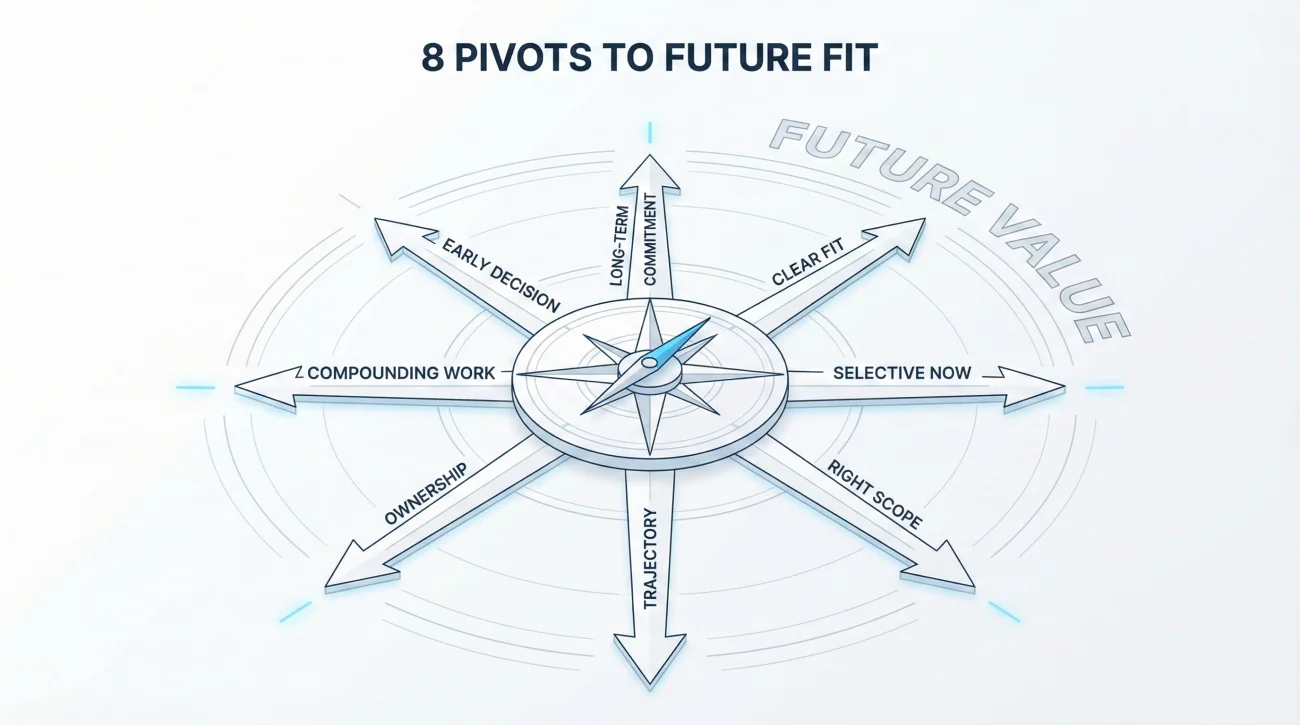
Use a pivot when your answer risks getting stuck in details. These lines are designed to sound natural, not like a script.
- ✅ What I am focused on now is finding a role where I can commit long-term and build real depth.
- ✅ That experience made me clearer on what “fit” means for me, and this role matches that much better.
- ✅ The short version is: I learned quickly, I made a clean decision, and I am more selective now.
- ✅ I am not looking for a perfect job. I am looking for the right scope and a team I can grow with.
- ✅ I want to be evaluated on the trajectory I am choosing now, not one short mismatch.
- ✅ The stability signal for me is ownership. I want a role with clear accountability and long-term goals.
- ✅ I am looking for a place where the work compounds, and that is what drew me to this position.
- ✅ I can share details if helpful, but the key is that I made an early decision to align with my long-term path.
Red-Flag Phrases That Accidentally Make It Worse
Some phrases are popular online because they feel honest, but they raise more questions than they answer.
| Avoid saying | What they hear | Swap to |
|---|---|---|
| “It was toxic.” | Drama, conflict, or poor adaptability | “The working style and priorities were not a fit for how I do my best work.” |
| “My manager was terrible.” | Blame, resentment, and future conflict risk | “There was a mismatch in expectations and scope that did not resolve.” |
| “I got bored.” | Flight risk and low grit | “The role did not have the depth I expected, so I targeted a better long-term match.” |
| “They had no idea what they were doing.” | Contempt and poor judgment | “The team was still defining processes, and the role shifted away from the original scope.” |
| “I had to leave fast.” | Impulsive decision-making | “I evaluated fit early and made a clean decision once the direction was clear.” |
❌ Note: “Honesty” is not the same as “detail.” In interviews, too much detail often reads like instability.
A Quick Risk Checklist Before You Answer
If you want a short tenure interview answer that lands well, check these before you walk into the room.
- Can I describe the mismatch in one sentence without blaming anyone?
- Can I name one thing I did to clarify or correct course?
- Can I state one learning that makes me sound more selective now?
- Can I connect my commitment to this role’s scope and timeline?
- Can I keep it under 45 seconds unless they ask for more?
When a candidate struggles here, it is usually because they are trying to win the moral argument. Interviews do not reward moral arguments. They reward clarity and predictability.
👉 If they press: “So would you leave again if it gets hard?”
A calm answer is: “If the scope matches what we discussed and the role has clear ownership, I commit. My lesson from that short stint was to screen fit earlier, not to run from hard work.”
👉 If they press: “Did you have performance issues?”
Keep it simple: “No. It was a fit and scope mismatch that became clear early. I prefer making an early decision rather than staying misaligned.”
Three Real-World Patterns I See Over and Over
These are the most common non-crisis short-stint stories I hear in real hiring conversations. I am sharing them because they show how to keep the story closed.
Cecilia: The role was sold as one thing, delivered as another
Cecilia joined a “strategic” role that turned into task intake with little ownership. She wanted to say, “They bait-and-switched me.” We rewrote it into scope language so it stayed factual.
Her strongest sentence became the decision point: She asked for a scope reset, confirmed the role would not change, and left early rather than sit misaligned for a year. That one sentence made her sound predictable.
Dev: He left after probation, and the fear was judgment
Dev’s first draft answer sounded like he quit out of frustration. The interviewer worry was not the exit. The worry was whether he tries to fix things before moving on.
Once he added one line about clarifying priorities and requesting scope alignment, his story shifted from reactive to mature. The rest of the answer became short and calm.
O’Hara: She had to explain why she did not wait a year
O’Hara kept repeating, “It was not right for me.” That sounds vague, even if it is true. Vague answers create space for suspicion.
When she named the mismatch as a specific axis and tied it to her target scope, she stopped sounding like she was escaping. Her line for why did you leave after 3 months became a fit decision that pointed forward.
Final: A Short Tenure Can Sound Stable If the Story Is Closed
A short stint is not a scar. It is a signal that needs to be interpreted. When you answer calmly, show one adult decision point, name one lesson, and tie your commitment to the role in front of you, most interviewers move on fast.
If you want one sentence to remember, it is this: You are not defending the exit. You are proving you will not repeat it.
When you frame why did you leave your last job so soon as a fit decision with a clear commitment signal, the question stops feeling like an accusation and starts feeling like a normal checkpoint in the interview.
❓ FAQ
🎯 Should I mention the short job if it was only a few months?
If it is on your resume, be ready to explain it clearly. If it is not listed and you are not asked, do not volunteer it. If asked about the timeline, answer directly and keep the story closed.
🧭 How honest should I be about a bad manager?
Be honest about the mismatch, not the person. Manager-blame creates fear of future conflict. Use working-style and scope language instead.
🧩 What if they assume I was fired?
Do not over-explain. A simple, neutral line is enough: “It was a fit and scope mismatch that became clear early, so I made a clean decision to move on.” Then pivot back to fit.
🚀 Can I say I left for a better opportunity?
Yes, but frame it as alignment, not upgrading. Make it about long-term fit, scope, and growth path rather than chasing novelty.
🧠 How long should my answer be?
Start with 20 to 30 seconds. If they ask follow-ups, expand to 45 to 60 seconds. Long answers without a clear decision point tend to raise more questions.
⚠️ Disclaimer: ResumeSolving provides resume, cover letter, job search communication, and career transition guidance for informational purposes only. Hiring practices vary by employer, role, location, industry, and individual circumstances. We do not guarantee interviews, job offers, ATS results, or other outcomes. Verify employer requirements directly and follow applicable laws and workplace policies. For sensitive situations, use only information you are comfortable disclosing and keep all statements accurate.