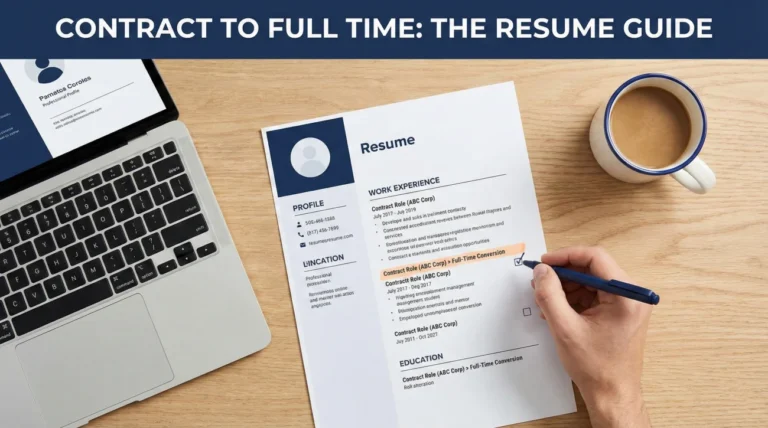
- If you’re switching industries, “tailoring” is not copying keywords. It’s mirroring what the role measures, then proving it with your own evidence.
- Use the 10 mirror points to translate your old work into the new role’s language without sounding fake.
- Tailor fast by changing only the parts that hiring teams actually read: Title line, summary hook, top bullets, projects, and skills order.
Why Tailoring Feels Harder When You’re Changing Careers
The first time you switch industries, tailoring can feel like you’re stuck between two bad options. Option one: You keep your old wording, and the hiring manager thinks you’re not relevant. Option two: You mirror the job description too closely, and it reads like you’re trying to “sound like the role” rather than be the role.
As an HR lead, I’ve watched this happen in real time. A candidate named Tessa moved from classroom teaching into corporate L&D. Her experience was strong. Her resume was not. It looked like she had taken the posting, sprinkled the same phrases into her bullets, and hoped the ATS would do the rest. The recruiter’s reaction was immediate: “This feels generic. What did she actually do?”
That is the real problem to solve. Career changers don’t get rejected because they forgot a keyword. They get rejected because tailoring can accidentally erase credibility.
Key Point: Tailoring for a career change is translation, not imitation.
What “Mirror” Actually Means (So You Don’t Keyword Stuff)
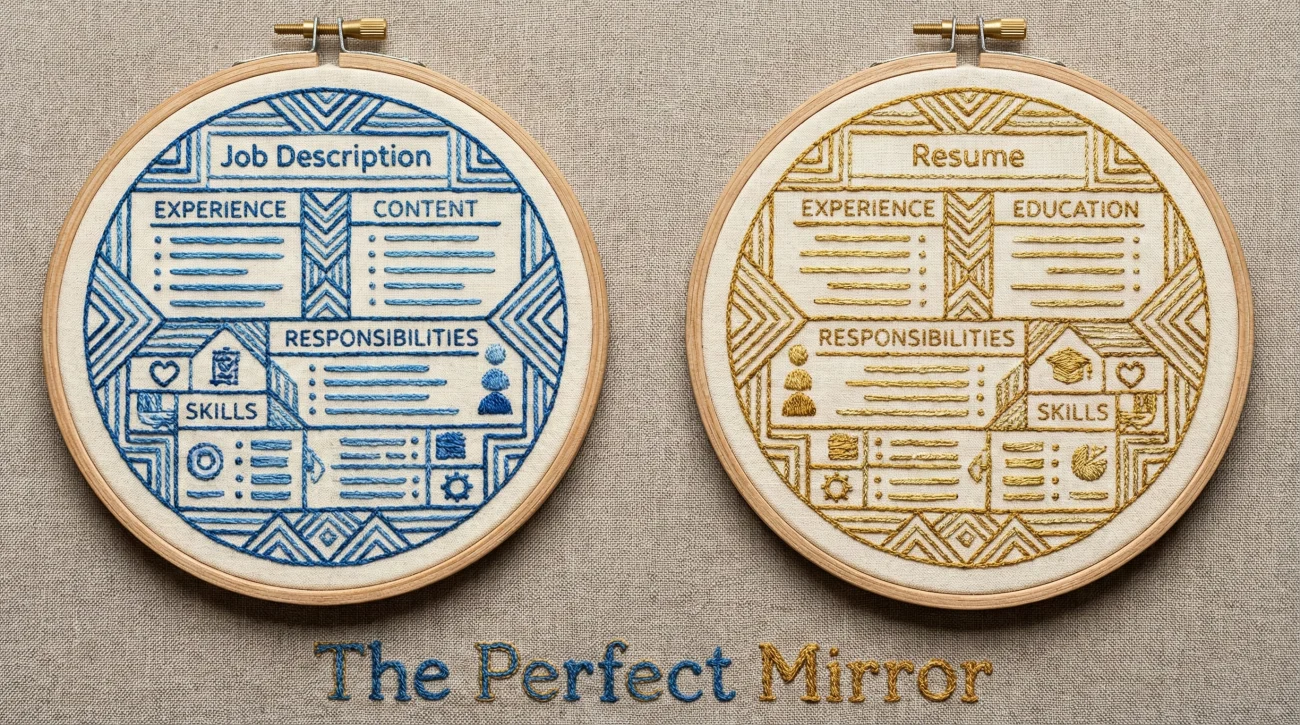
Most advice treats “mirror the job description” like a simple swap: Replace your words with their words. That works when you already have direct experience in the same lane. When you’re pivoting, it backfires, because you’re borrowing language without the underlying proof.
Here’s the definition I use with career changers:
Mirror = Match what the role measures + Use their vocabulary only where you have receipts
The 3 layers you can safely mirror
Layer 1: Outcomes.
What did the job description say success looks like. Revenue growth, reduced cycle time, improved NPS, fewer defects, higher adoption. Outcomes are safe to mirror because you can prove them with numbers, even if your industry was different.
Layer 2: The work shape.
This is the process language: “build”, “launch”, “optimize”, “audit”, “triage”, “design”, “document”. Career changers usually have the same shapes of work, but they describe them with the wrong verbs.
Layer 3: The nouns that matter.
Tools, artifacts, stakeholders, constraints. This layer is where keyword stuffing happens. You can mirror nouns only when you can explain them naturally in an interview.
⚠️ Warning: If a keyword is not interview safe, it is not resume safe.
The 10 Mirror Points That Make a Career Change Resume Feel Real
When I review pivot resumes, I’m not counting keywords. I’m checking whether the candidate mirrored the right signals. Use these 10 points as your tailoring map.
| Mirror point | What to copy from the posting | How to prove it on your resume |
|---|---|---|
| 1) Success metrics | What success is measured by | A bullet with a number and a “so what” result |
| 2) Decision scope | IC vs lead vs manager language | Your title line + verbs (led vs executed vs owned) |
| 3) Stakeholders | Who you collaborate with | One bullet naming cross functional partners |
| 4) Tools and systems | The exact tool names they care about | Skills section ordering, plus one bullet showing usage |
| 5) Deliverables | Artifacts the job produces | Portfolio, project bullets, or “created X” statements |
| 6) Process words | How work is done (design, test, iterate) | Action verbs in your first 3 bullets |
| 7) Constraints | Compliance, risk, cost, timeline pressure | A bullet showing tradeoffs you managed |
| 8) Domain vocabulary | Industry terms that signal “insider” | Only if you can define it without Googling |
| 9) Level of complexity | Scale hints (volume, regions, users) | Numbers: budgets, counts, throughput, adoption |
| 10) The “why this role” theme | What the team cares about most | Summary line + a project that matches the theme |
Notice what is missing from that list: Copying every keyword. Your job is to mirror the parts that make the reader think, “Okay, they understand what matters here.”
A Fast Tailoring Checklist for Career Changers (15 Minutes, Not 2 Hours)
A friend of mine, Dev, tried to pivot from retail ops into customer success. He did the “tailor everything” approach for a week and burned out. The change that helped was simple: We limited tailoring to the parts humans read first.

Step 1: Pick 3 “must mirror” lines from the job post
Don’t start with the whole posting. Start with the 3 lines that reveal what the company actually needs right now. Usually they sound like: “Own onboarding”, “Reduce churn”, “Partner with product”, “Build playbooks”.
Write them down. This becomes your mini brief.
Step 2: Rewrite your top line to match the target role
This is where career changers waste opportunity. Your first line is not a biography. It’s a positioning statement.
If you are moving industries, you can still name the function you are aiming for. Do it honestly, without pretending you already held the exact title.
Step 3: Replace “old industry nouns” with “new role nouns” where you have proof
This is where keyword strategy career change resume becomes real. You are not swapping words for aesthetics. You are swapping because the reader needs to recognize the work.
Example: A teacher moving into enablement can translate “lesson plans” into “training materials” if they can show outcomes like adoption or performance improvement.
Step 4: Reorder your bullets so the mirrored proof shows up first
Career changers often have relevant proof buried under years of unrelated sounding work. You do not need to delete your experience. You need to change the reading order.
Do I need to rewrite every bullet for every application?
No. For most pivots, rewriting the first 3 bullets of your most relevant role (or project) is enough. Everything after that can stay stable as long as it supports credibility.
Step 5: Make skills a mirror, not a dumping ground
If the posting says “Salesforce” and you have it, write Salesforce. If you don’t, don’t play synonym games. Career changers get into trouble when they try to look fluent in tools they have not touched.
When you customize resume for new industry, the skills section should show two things: You understand the tool stack, and you are interview safe on every item you list.
6 Before and After Mirrors That Sound Human (Not Stuffed)
Below are real patterns I’ve seen. The “before” lines are not bad work. They’re just written in a dialect the new industry doesn’t immediately understand.
| Before (Old wording) | After (Mirrored for the target role) |
|---|---|
| Handled customer issues and answered questions daily. | Resolved escalations across email and chat, improving first response consistency and documenting repeat issues for process fixes. |
| Created training for new hires. | Built onboarding materials and facilitated training sessions that shortened ramp time and improved early performance outcomes. |
| Worked with different teams to get things done. | Partnered cross functionally with sales, operations, and support to align workflows and remove handoff bottlenecks. |
| Managed multiple tasks and priorities. | Owned a weekly prioritization cadence, balancing urgent tickets with longer term improvements while meeting SLA targets. |
| Improved processes in my department. | Mapped a recurring workflow, identified failure points, and implemented a new checklist that reduced rework and cycle time. |
| Used Excel to track data. | Analyzed trend data in spreadsheets to surface recurring issues, report insights, and recommend actions to leadership. |
One more story, because it captures the line between mirroring and pretending. A candidate named Bob tried to pivot from hospitality management into project coordination. His resume said “Agile”, “roadmap”, “stakeholder alignment” everywhere. In the interview, he could not explain how he ran a sprint, because he had never run one. We rewrote it to focus on scheduling, vendor coordination, risk tracking, and operational cadence. Same person, same capability, but now it was interview safe.
“I don’t want my resume to sound like I’m borrowing someone else’s job.”
If that sentence hits, good. That’s the instinct that keeps you credible.
How to Avoid Keyword Stuffing Without Becoming “Too Generic”
Keyword stuffing is not only repetition. It is also mismatch. A resume can include the exact words and still feel wrong if the bullets do not prove them.

Three rules I give career changers
Rule 1: One keyword needs one receipt. If you add a tool, show how you used it. If you add “stakeholder management”, name the stakeholders or show the decision you drove.
Rule 2: Mirror nouns lightly, mirror outcomes heavily. Outcomes travel across industries. Nouns do not.
Rule 3: Prefer specificity over volume. Three mirrored proof points beat twelve borrowed phrases.
Note: If your tailoring strategy is “copy paste the posting into my resume”, you will eventually get caught by a human, even if an ATS lets it through.
When people ask me how far to push tailoring, I answer this way: Mirror until the reader understands you. Stop before you start performing a role you have not done.
If You’re Applying a Lot: A Sustainable Tailoring System
Most career changers are not applying to five jobs. They’re applying to fifty. That changes the strategy. You need a system that is repeatable and doesn’t degrade quality.
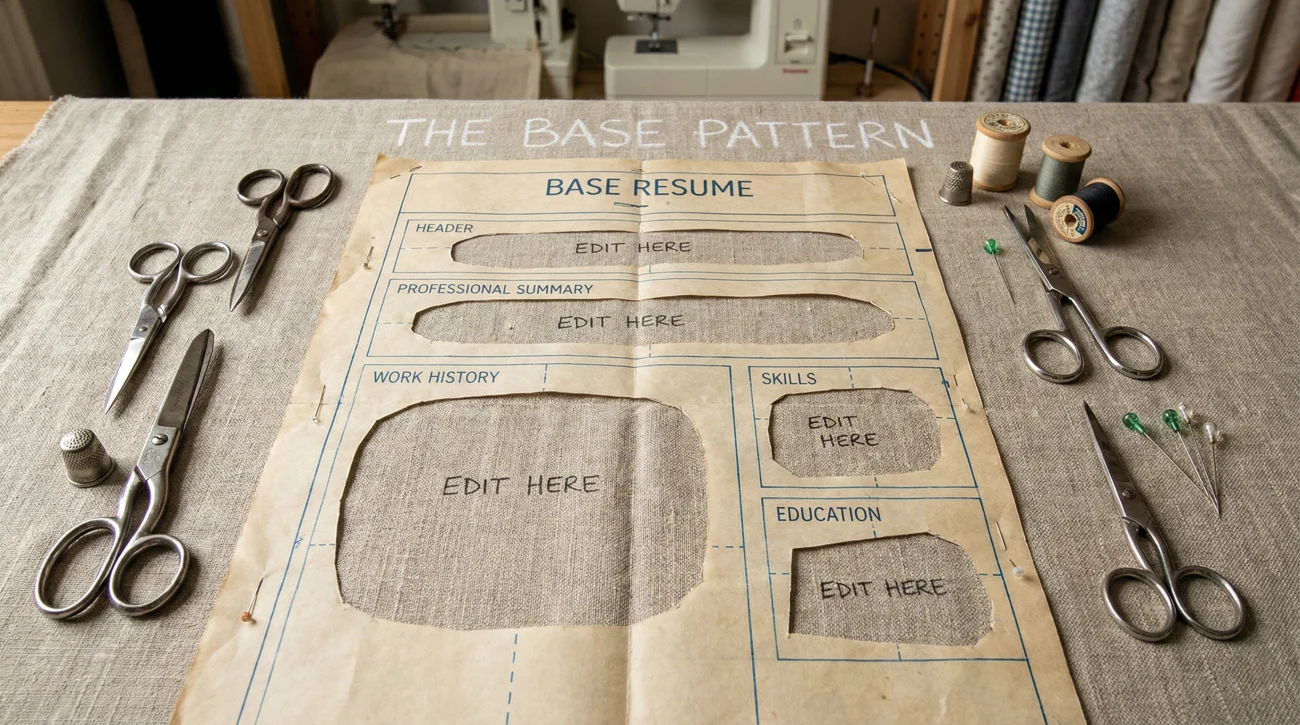
Build two versions of your resume, not fifty
Create a “base pivot resume” that already matches the target function, then create one alternate version for the second most common job family you apply to.
For example: If you are pivoting into analytics, you might have one version leaning product analytics and another leaning operations analytics. The tailoring per application becomes small.
Only tailor these five slots per application
- Target title line
- First two summary lines
- First three bullets under your most relevant role or project
- Projects section ordering
- Skills order (not the entire list)
That is how you tailor resume career change without living inside your resume file.
Final: Tailoring That Protects Credibility
There’s a quiet confidence that shows up when a career change resume is tailored the right way. It does not beg to be considered. It simply makes the reader’s job easy: They can see what you did, what it changed, and why it maps to the role they are hiring for.
If you take only one idea from this, take this: Mirror what the job measures, then prove it with your own evidence. That is how you go from “interesting but unclear” to “worth a conversation.”
And when you’re ready to tighten the whole pivot story across the resume, the anchor is your how to tailor resume for career change approach. Keep it honest, keep it interview safe, and let your proof do the heavy lifting.
❓ FAQ
🎯 How much tailoring is “enough” for a career change?
Enough means: Your title line, summary hook, and top proof bullets match the role’s success metrics and vocabulary. If you are rewriting every line, you are probably over tailoring.
🧠 Should I copy keywords exactly from the job description?
Copy exact tool names and core role terms only when you can back them up. Mirror outcomes and process language more aggressively than niche jargon.
✅ What if I don’t have the exact tools they list?
Don’t fake it. List what you truly used, and mirror the work shape with outcomes. If a tool is essential, consider learning it separately, but keep the resume interview safe.
🧩 Where should mirrored keywords go for the most impact?
Put them where they have proof. Summary for positioning, bullets for receipts, projects for relevance, and skills for scanning. Avoid stuffing keywords into a skills list with no supporting bullets.
🕒 Can I tailor fast if I’m applying to many jobs?
Yes. Maintain a base pivot resume, then tailor five slots only: Title line, summary hook, top bullets, project order, and skills order.
🚫 What is the biggest red flag in a tailored career change resume?
The biggest red flag is borrowed language with no receipts. If you add a concept you can’t explain in an interview, it will weaken trust instead of improving match.
⚠️ Disclaimer: ResumeSolving provides resume, cover letter, job search communication, and career transition guidance for informational purposes only. Hiring practices vary by employer, role, location, industry, and individual circumstances. We do not guarantee interviews, job offers, ATS results, or other outcomes. Verify employer requirements directly and follow applicable laws and workplace policies. For sensitive situations, use only information you are comfortable disclosing and keep all statements accurate.