Career Change Resume Mistakes: 15 Red Flags That Quietly Kill Interviews
15 Career Change Resume Mistakes

Your biggest risk in a career switch is not “lack of experience,” it is unclear intent plus weak proof. Most red flags come from language: Vague goals, soft claims, and bullets that do not translate across industries. Small rewrites matter: One target role, one bridge metric, and one project that looks like real delivery. Stop … Read more

Job Title Tweaks for a Career Change: What Is Safe and What Is Not

How To Change Job Title On Resume For Career Change

If your title is confusing, you can clarify it without “upgrading” yourself: Use a truthful market translation, not a fantasy promotion. Use a simple test: Can you prove the title in bullets, verify it if asked, and explain it in one calm sentence. When in doubt, keep the official title and add a clarifier in … Read more

Tailoring a Career Change Resume: What to Mirror Without Keyword Stuffing

How To Tailor Resume For Career Change

If you’re switching industries, “tailoring” is not copying keywords. It’s mirroring what the role measures, then proving it with your own evidence. Use the 10 mirror points to translate your old work into the new role’s language without sounding fake. Tailor fast by changing only the parts that hiring teams actually read: Title line, summary … Read more

Projects Section for a Career Change: Make It Feel Like Real Experience

Projects Section For Career Change Resume

If you are switching fields, a projects section is your credibility bridge, but only if it reads like accountable work. Use a simple structure: Clear label, tight scope, real constraints, measurable outcome, and a hint of proof. Below you get a section plan, 8 plug and play project writeups, and 8 bullet patterns that feel … Read more

Career Change With No Direct Experience: What Counts as Proof

Career Change Resume With No Experience

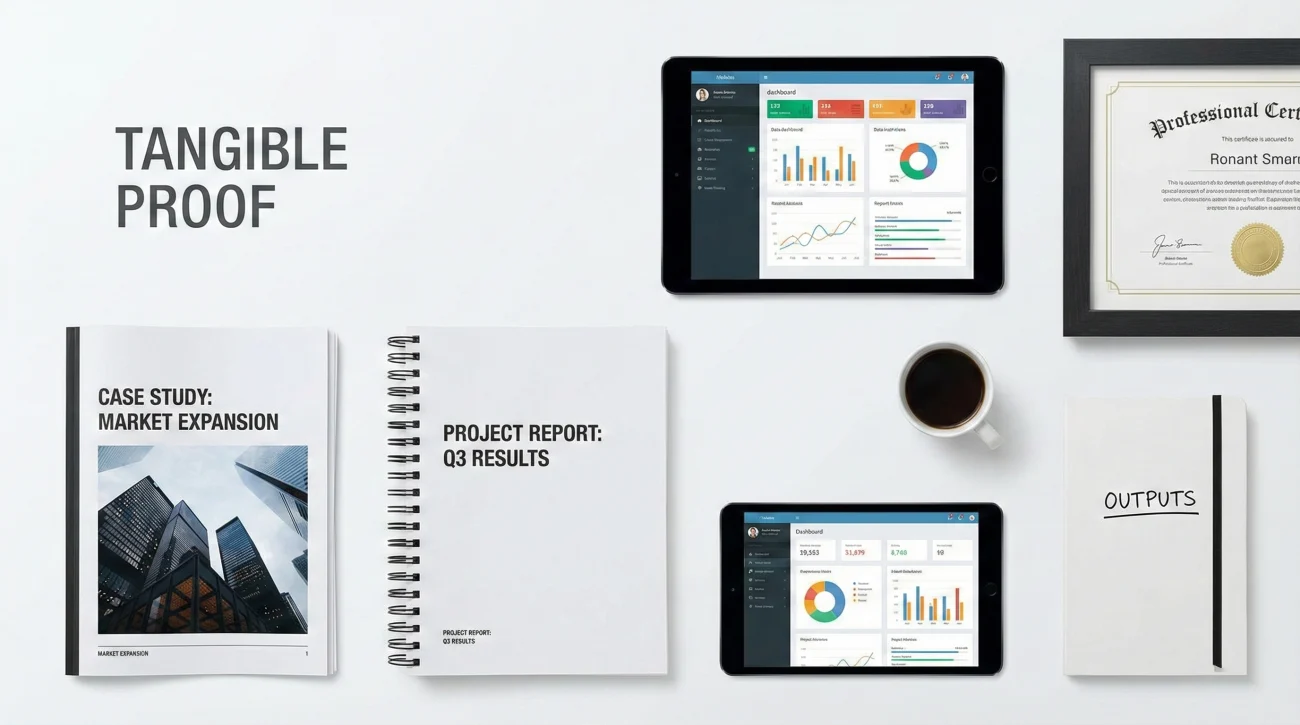
If you lack the job title, your resume must show proof artifacts: Outputs, metrics, and real work samples beat “transferable skills” claims. Build a simple Proof Map: Requirement → Proof source → Artifact → One measurable line, then place it where recruiters actually look. Use 10 accepted proof sources (projects, internal work, volunteering, coursework with … Read more

Career Change Cover Letter: One Paragraph That Connects the Dots

Career Change Cover Letter

If your resume looks like two different people, one clean paragraph can reconnect the story without writing a whole new cover letter. The goal is not to justify your past. The goal is to make your next step feel deliberate, supported, and already in motion. Use a simple three-part structure: Past context, Bridge skills, Proof … Read more

Why the Career Change: A 45-Second Interview Answer That Sounds Intentional

How To Explain Career Change In Interview

Answer “Why the career change?” like a hiring manager is grading risk: Make it sound chosen, not accidental. Use a simple 45-second structure: Past pattern, Pivot trigger, Role fit, Stay signal. Keep eight ready-made bridge lines to connect your old work to their problems without sounding defensive. Pick one of six scripts based on your … Read more

Career Change Resume Summary: 7 Openings That Make Recruiters Read On

How To Write A Career Change Resume Summary

If your summary starts with a target role and a proof hook, recruiters stop treating you like a “maybe later” candidate. Use one of the 7 openings below to bridge the title gap without sounding like you’re begging for a chance. Pick 1 proof hook (numbers, scope, tools, training, or a relevant project) and place … Read more

Transferable Skills for a Career Change: How to Prove Them (Not Claim Them)

Transferable Skills On Resume For Career Change

If your resume only lists transferable skills, it reads like a claim. Hiring teams look for proof that the skill already showed up in your work. Use a simple proof framework: Context, action, outcome, and evidence. Evidence can be a tool, a process, or an artifact you produced. This guide gives 12 proof patterns and … Read more

Career Change Resume: Make an Industry Switch Look Logical

Career Change Resume

Recruiters will not translate your experience for you. Your resume must explicitly connect old skills to new role requirements. Career change risk centers on three fears: no proof you can do the work, no context for why you are switching, and generic claims without evidence. The strongest career change resumes add proof before switching: projects, … Read more