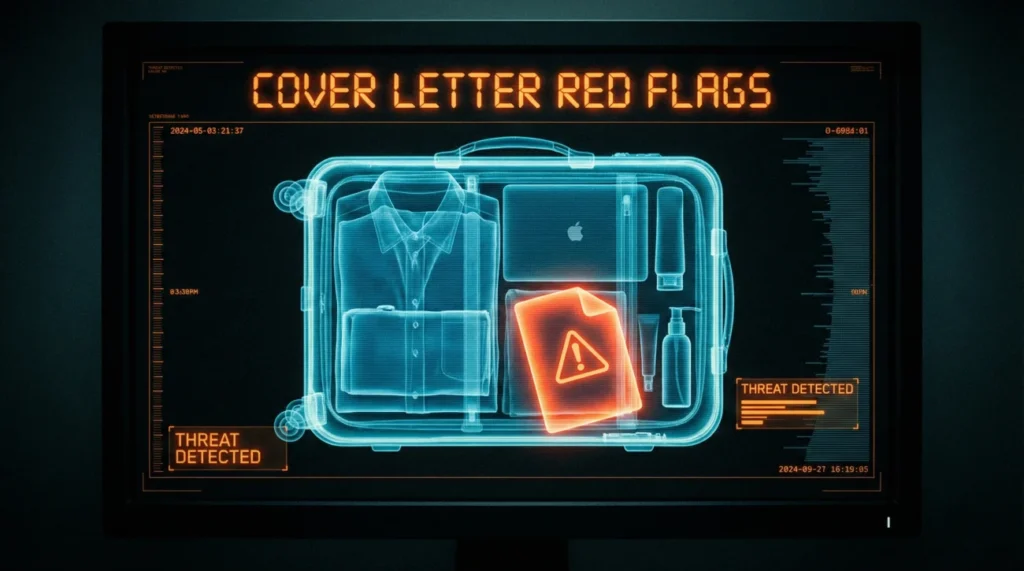
- Most cover letter “mistakes” are not about grammar. They’re about what one sentence implies about risk.
- Use the 18 red-flag lines below as a swap list: Keep the truth, remove the panic, blame, or legal vibe.
- Run the self-check at the end to catch oversharing and accidental negativity before you hit submit.
Why One Line Can Sink an Otherwise Solid Application
I’ve seen strong candidates lose momentum because the cover letter added one extra detail that didn’t need to be there. Not a lie. Not anything “crazy.” Just one line that made the reader wonder: Is this person still in the middle of a crisis?
That’s why I treat cover letter mistakes like quality control, not “writing tips.” When your resume is already doing its job, the cover letter should only add context and stability, especially if you’re a hard case on paper.
💡 Pro Tip: If your situation is complicated, your writing has to be simpler, not longer.
The Recruiter Translation Layer: What Your Sentence Suggests
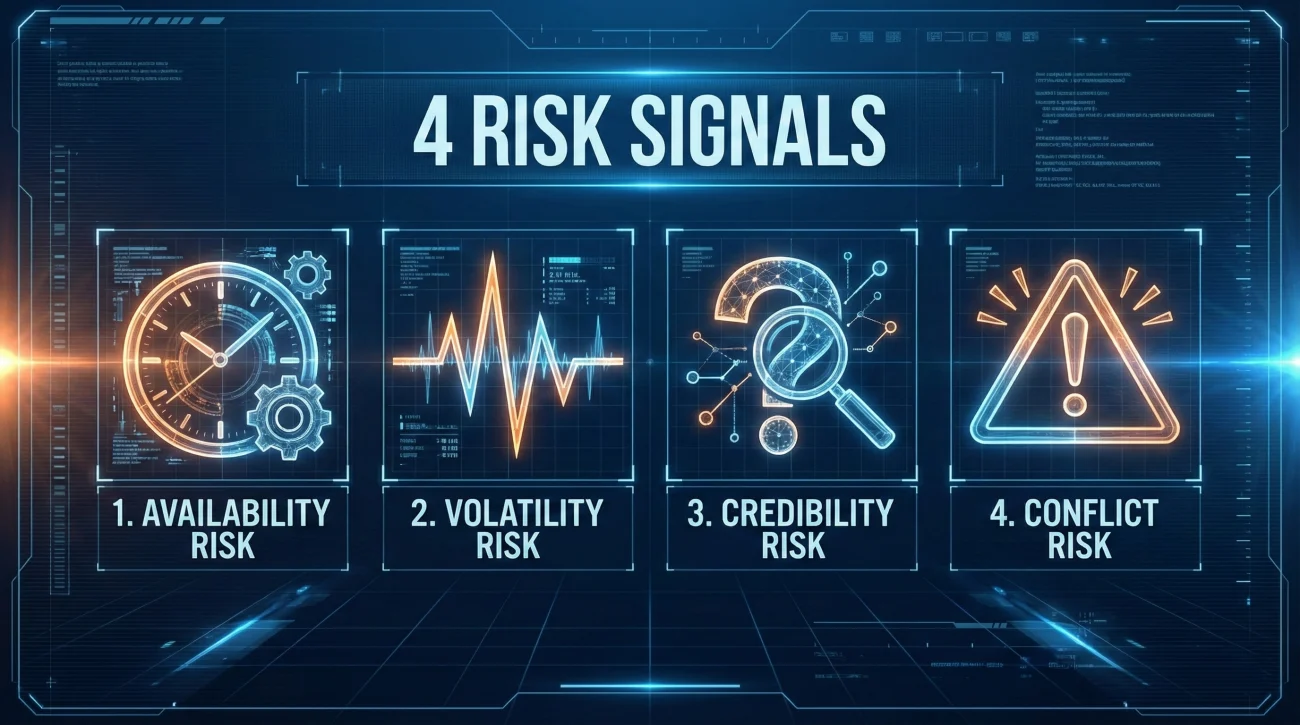
Recruiters don’t read a cover letter like a diary. They read it like a risk scan. The same sentence can land as honest to you and unstable to them.
The four risk signals that show up in real screening
- Availability risk: “Will this person actually start and stay available?”
- Emotional volatility risk: “Will this become drama in the team?”
- Credibility risk: “Is this inflated, vague, or inconsistent with the resume?”
- Legal or conflict risk: “Is there an active dispute or a pattern of blame?”
I remember a candidate named Jordan who was laid off in a messy reorg. Their resume was clean, achievements were solid. The cover letter had one sentence about being “unfairly pushed out,” and the hiring manager immediately asked me, “Is this going to be an ongoing conflict story?”
Same facts, different framing, totally different outcome.
Key Point: You can tell the truth without handing the reader a reason to worry.
Below is a swap list built from patterns I keep seeing in bad cover letter examples, plus what candidates shared on forums when they realized the letter hurt them.
Cover Letter Mistakes: 18 Lines Recruiters Read as Risk (And How to Fix Them)
These are not “banned phrases.” They’re lines that often trigger cover letter red flags because of what they imply when the reader has limited context.
| Red-flag line | What it signals | Safer rewrite (still true) |
|---|---|---|
| “I was wrongfully terminated.” | Legal dispute, conflict energy, unknown details. | “My last role ended due to a change in company direction, and I’m focused on roles where I can deliver measurable impact.” |
| “My manager was toxic and I had to leave.” | Blame, volatility, unclear accountability. | “I’m looking for a team with clear priorities and healthy collaboration, where I can contribute consistently.” |
| “I need a job urgently.” | Desperation, potential acceptance then quick exit. | “I’m ready to start within [timeframe] and I’m prioritizing roles that match my strengths in [area].” |
| “I’ll take anything to get my foot in the door.” | No role clarity, high churn risk. | “I’m targeting [role] because my experience in [skill] aligns with the outcomes you need.” |
| “This company is my dream job.” | Flattery without substance, weak signal. | “I’m interested in this role because of [specific work], and I can support it through [relevant proof].” |
| “Please see my attached resume for details.” | Low effort, wasted space. | “One example of relevant impact: [achievement with metric] that maps directly to [job need].” |
| “I’m a hard worker and fast learner.” | Generic traits, no evidence. | “In my last role, I ramped in [time] and delivered [result], which required [skill].” |
| “I have excellent communication skills.” | Unprovable claim. | “I regularly translated complex updates into exec-ready summaries and aligned cross-functional stakeholders.” |
| “I’m overqualified but willing to accept less.” | Boredom risk, ego friction. | “I’m choosing this scope intentionally because I want to focus on [specific work] and deliver reliable results.” |
| “I’ve been unemployed for a long time.” | Invites the reader to worry without context. | “During a focused transition period, I stayed current through [course/project], and I’m ready to return to full-time work.” |
| “I was dealing with severe personal issues.” | Oversharing, ongoing availability fear. | “I took time to handle a personal matter that is now resolved, and I’m fully available for this role.” |
| “My health prevented me from working.” | Triggers assumptions about ongoing constraints. | “I took a medical leave that has concluded, and I’m ready for full-time responsibilities.” |
| “I had to care for a sick family member.” | May sound ongoing if not closed clearly. | “I took a caregiving leave that has ended, and I’m now returning to work with full availability.” |
| “I’m switching careers because I hated my last field.” | Negativity, identity drift. | “I’m pivoting toward [field] because I’ve tested the fit through [project/learning] and it’s where I perform best.” |
| “I don’t have direct experience, but…” | Opens with weakness. | “While my title differed, I’ve done the core work: [matching responsibility] with [result].” |
| “I’m returning after a break and I’m nervous.” | Confidence signal drops. | “I’m returning after a planned break and I’ve rebuilt momentum through [recent activity], so I can contribute immediately.” |
| “I made mistakes in my last role.” | Invites “what kind of mistakes?” without control. | “I learned quickly in a high-change environment and improved my approach by [specific adjustment], leading to [result].” |
| “I’m passionate about many things and open to roles.” | Low focus, weak intent. | “I’m focused on [role] and strongest in [two strengths], which map to your priorities in [team need].” |
⚠️ Warning: If you’re tempted to write a “context paragraph” that sounds like a defense statement, that’s usually your cue to cut it in half.
If you’re wondering what not to say in a cover letter, it often comes down to this: Don’t add information that forces the reader to imagine worst-case scenarios.
Two Micro-Fixes That Save Most Hard-Case Letters
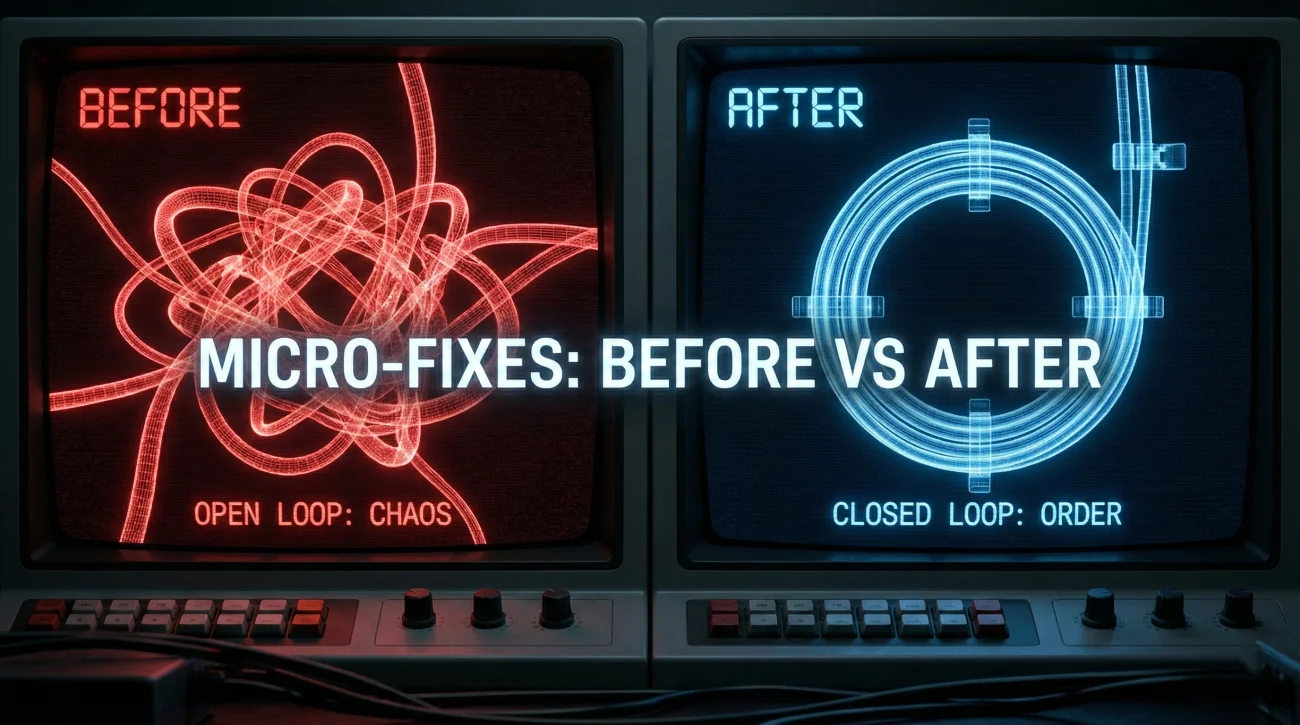
Micro-fix 1: Close the loop on anything that sounds ongoing
A lot of damage comes from “open-ended” wording. If your sentence could be interpreted as still happening, close it.
Micro-fix 2: Swap emotional adjectives for neutral facts
Readers don’t know your full story. Emotional labels make them guess. Neutral facts let them move on to your value.
“I thought I was being honest, but it reads like I’m still in the fight.”
That line came from a friend of mine after they re-read an older cover letter months later. They weren’t dishonest. They were too close to the story.
3-Minute Self-Check Before You Hit Submit

This is the quick screen I use when I’m helping someone who has a complicated timeline. If any item is a “yes,” revise the sentence until it becomes neutral and closed-ended.
- ✅ Does every sensitive point sound resolved, not ongoing?
- ✅ Did I avoid blaming a person, a company, or “the system”?
- ✅ Did I include at least one concrete proof point, not just traits?
- ✅ Would this still sound stable if someone read it fast and skeptical?
- ✅ Did I avoid repeating resume bullets word-for-word?
- ✅ If I removed one paragraph, would the letter get stronger?
❌ Note: A cover letter is not the place to “pre-argue” your case. If the reader wants details, they’ll ask in interview.
Final
Hard cases don’t lose jobs because they have context. They lose jobs because the context is written in a way that creates extra fear. The fix is usually simple: Remove the heat, close the loop, add one proof point, then stop.
If you treat your cover letter like a component that must pass quality control, the whole application feels steadier. That’s the quiet power of cover letter mistakes done right: You keep the truth and remove the unintended risk signals.
❓ FAQ
🎯 Should I mention a layoff in my cover letter?
Only if it adds clarity, and only in one calm sentence. A layoff is common. What hurts is wording that implies conflict, uncertainty, or ongoing instability.
🧩 What if my reason for leaving was a toxic workplace?
Translate it into what you want moving forward, not what you’re escaping. “Clear priorities,” “healthy collaboration,” and “stable scope” communicate fit without blame.
🧠 How do I address a career gap without oversharing?
Use a closed-loop line: One neutral reason, one “now resolved” signal, one readiness statement. Then move immediately to what you can deliver in the role.
📌 Is it a mistake to repeat my resume in the cover letter?
Yes, if you’re copying bullets. Instead, pick one achievement and explain the “so what”: Why it mattered, how you did it, and how it maps to this job’s priorities.
🔍 What’s the fastest way to spot a damaging line?
Read your letter like a skeptical stranger. Any sentence that sounds like a defense statement, a complaint, or an open-ended personal situation should be rewritten.
⚠️ Disclaimer: ResumeSolving provides resume, cover letter, job search communication, and career transition guidance for informational purposes only. Hiring practices vary by employer, role, location, industry, and individual circumstances. We do not guarantee interviews, job offers, ATS results, or other outcomes. Verify employer requirements directly and follow applicable laws and workplace policies. For sensitive situations, use only information you are comfortable disclosing and keep all statements accurate.