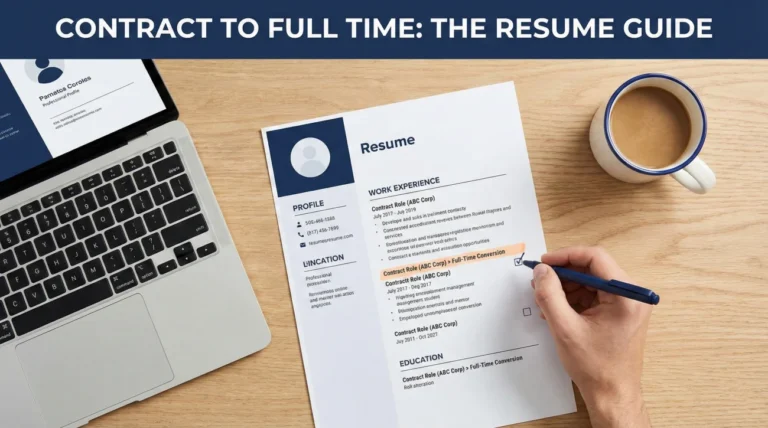
- If the gap is obvious or recent, one short paragraph can prevent the “Are you available?” doubt from forming.
- The winning structure is: time-bounded reason, readiness proof, why now, why this role.
- Do not narrate. Do not apologize. Do not disclose personal details. Just close the loop and move on.
Why a Gap Paragraph Can Quiet the Wrong Questions
I have seen hiring managers ignore a gap when the rest of the application feels steady. I have also seen the same gap become the entire conversation when one line in a cover letter accidentally signals: “I might not be fully back.” That is the part most generic advice misses.
One candidate I worked with, Jenny, had a 14-month gap after relocating for a partner’s job. Her resume was strong. Her cover letter was warm. But her gap line ended with: “I’m finally ready to get my life back on track.” The hiring manager did not read it as motivation. They read it as volatility. We replaced it with one calm paragraph that sounded closed, current, and intentional. She kept getting interviews, and the gap stopped being the headline.
Key Point: Your gap paragraph is not there to win sympathy. It is there to remove uncertainty, especially about availability, consistency, and timeline.
In this guide, I will give you exactly one job: write a single paragraph that explains the gap without turning your cover letter into a confession booth. Your readers should feel the gap is finished and irrelevant, then move on to your fit for the role.
Cover letter employment gap is a common search phrase because people feel they need to “say something.” You do. But you only need to say it once, and you need to say it in a way that closes the door behind you.
When You Should Mention the Gap and When You Should Not
Not every gap deserves space in a cover letter. If you mention it when it is not necessary, you train the reader to look for problems. If you avoid it when it is obvious, you force the reader to invent a story. The goal is to prevent guessing.
| Situation | Mention the Gap? | Why |
|---|---|---|
| The gap is small (a few months) and your recent role is strong | No | It is normal. Bringing it up can make it feel larger than it is. |
| The gap is recent and visible (6 to 18 months) and you are returning now | Yes | This is where “Are you fully back?” starts forming in the reader’s mind. |
| The gap sits right before a career pivot or a senior role move | Usually yes | The reader may wonder if the gap was a derailment or a deliberate reset. |
| You have credible activity during the gap (freelance, training, volunteering) | Yes, briefly | A short proof line can turn “empty time” into “maintained readiness.” |
| Your resume already explains it cleanly (sabbatical line, contract period, caregiving label) | Optional | If the resume already closes the loop, the cover letter can stay focused on fit. |
💡 Pro Tip: If your gap triggers a predictable business concern (availability, relocation stability, performance continuity), mention it once. Otherwise, let the resume timeline speak.
The recruiter brain you are writing for
Most recruiters are not judging your life choices. They are reducing risk quickly. A gap can imply risk in three boring ways: You might not stick, you might not be fully available, or you might not be current in the work.
So your paragraph should answer those three concerns without drama. That is it. If you start explaining feelings, hardship, or backstory, you create new questions you did not need to create.
The One-Paragraph Structure That Works
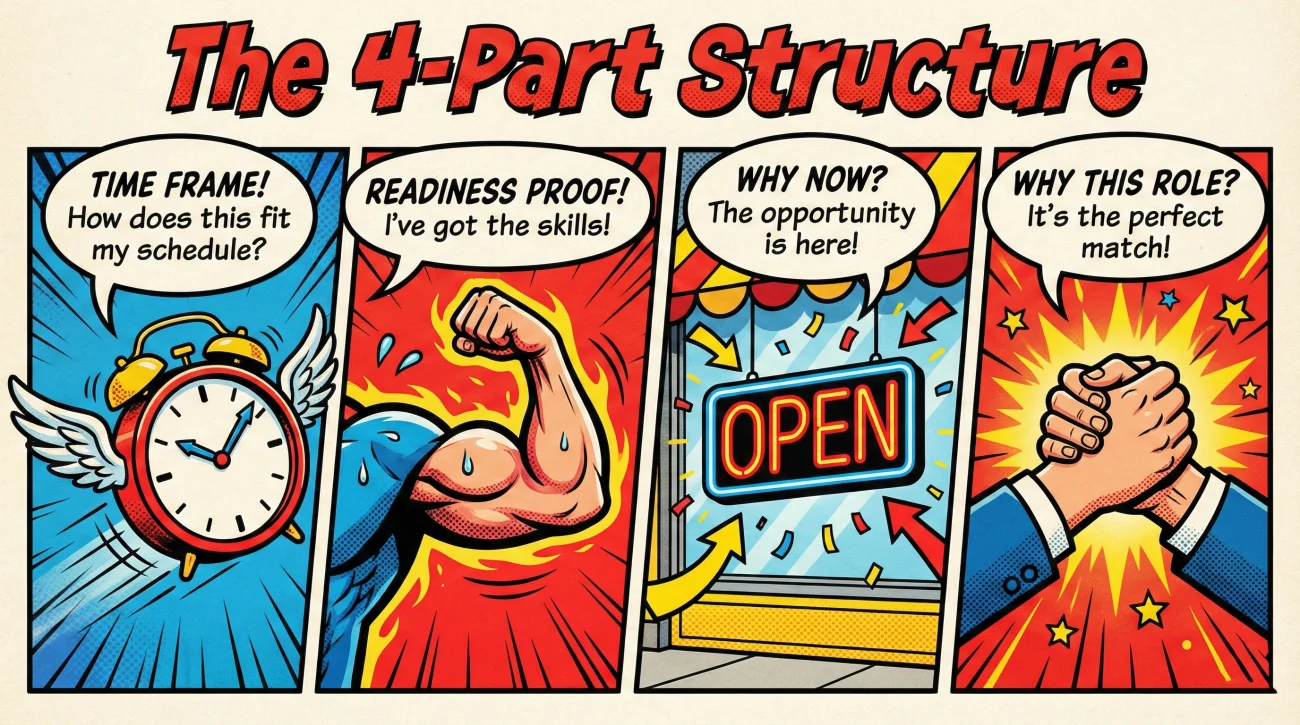
If you take nothing else from this page, take the structure. It is designed to keep the paragraph short and to stop you from oversharing.
[Time Frame + Neutral Reason] + [Readiness Proof] + [Why Now] + [Why This Role]
What each piece does
Time frame + neutral reason: This closes the “Where were you?” loop. It also prevents the reader from imagining the gap is still ongoing.
Readiness proof: This answers “Are you current?” without making claims that sound defensive. Think: training, volunteering, portfolio work, or simply staying engaged with the field.
Why now: This is the subtle availability signal. You do not need to announce your personal circumstances. You just need to imply the chapter is closed and you are committed.
Why this role: This prevents the paragraph from feeling like an excuse. It returns the spotlight to fit and value.
⚠️ Warning: If your paragraph does not include a “closure signal,” it can unintentionally sound like you are still in the middle of the situation.
Template 1: Planned Gap Paragraph (Clean and Closed)
This template fits situations like caregiving, relocation, planned break, or a deliberate reset. The tone is steady and factual. It does not ask for understanding. It simply states what happened and why you are ready now.
How to personalize it without making it messy
Pick one proof line. Not three. The paragraph is not meant to prove you are a hero. It is meant to prove you are current.
Also, keep the reason neutral. You are not hiding. You are protecting the reader’s attention and your privacy at the same time.
Template 2: Unplanned Gap Paragraph (Still Professional and Safe)
This template fits messy realities: a role ended, the market was slow, a personal situation required time, or a return took longer than expected. The trick is to avoid blame and avoid emotional language. You are not pleading. You are signaling stability.
The tone test
If the paragraph sounds like you are asking to be forgiven, rewrite it. Your tone should sound like someone who expects to be evaluated on capability, not on personal history.
One client, Marcus, kept writing: “I struggled to find work and it really affected my confidence.” I understood why he wrote it. But I also knew it would invite doubt. We changed it to a readiness-focused line about relevant coursework and a clear “ready now” signal. He later told me interviews felt less like cross-examinations.
Sentence Bank: Build a Tight Paragraph Without Sounding Scripted
Use these lines like Lego. Choose one from each category. You will end up with a paragraph that feels human but stays controlled. This is the fastest way to write an employment gap cover letter paragraph that does not ramble.
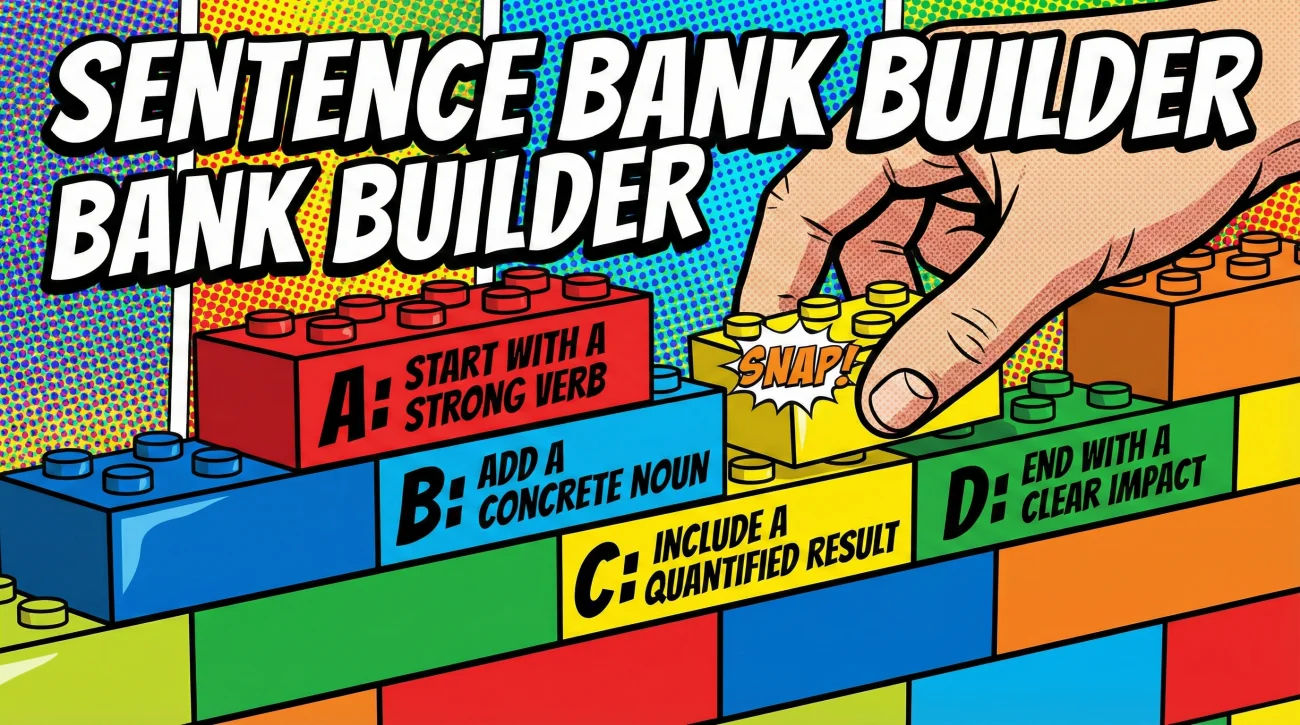
A: Time window + neutral reason
- From [Month Year] to [Month Year], I stepped away from full-time work to [neutral reason] and am now ready to return.
- After leaving [Company] in [Month Year], I took a structured pause to reset my search and focus on roles aligned with [target direction].
- I took a planned career break during [Year] to handle a time-limited personal commitment and have since transitioned back to full availability.
B: Readiness proof (pick one)
- During that period, I kept my skills current by completing [course/cert] and applying it in [small project/portfolio].
- I stayed engaged in the work through [freelance/volunteer/contract] projects focused on [relevant scope].
- I remained active in the field by following [industry area], building [portfolio], and sharpening [tool/skill].
C: Why now (closure signal)
- That chapter is now complete, and I am focused on returning to full-time work in [function].
- I am now in a position to commit fully to a long-term role and contribute immediately.
- I have transitioned back into a full work rhythm and am excited to bring that momentum into my next team.
D: Why this role (bring the reader back to business)
- This role stood out because it combines [A] and [B], which matches how I have delivered results in [past context].
- I am drawn to [Company] because the team’s focus on [specific initiative] aligns with my experience in [relevant area].
- The scope of this position fits my strengths in [skills], especially in environments that value [priority].
💡 Pro Tip: If you are writing a cover letter for returning to work, the “Why now” line is where you quietly remove the availability doubt. Do not over-explain. Just close it.
Do-Not-Say List: What Makes Recruiters Nervous
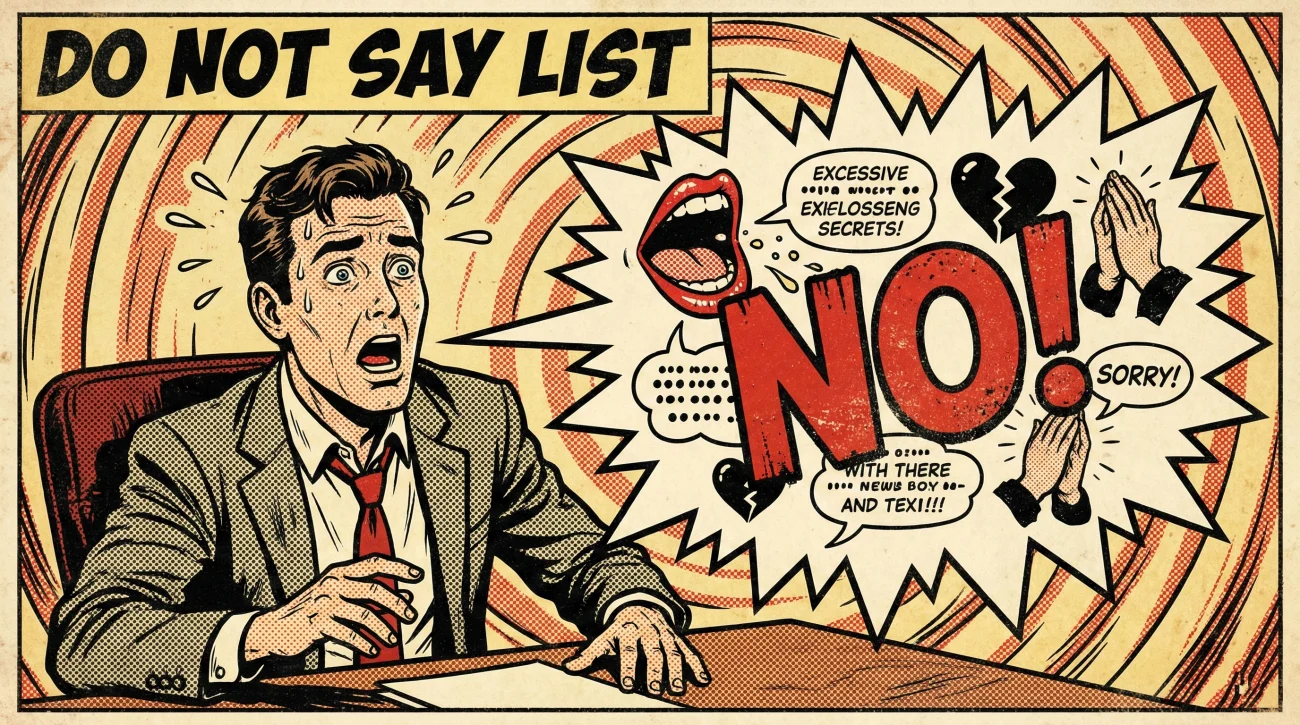
Most “bad gap lines” are not immoral. They are simply risky. They create uncertainty, invite follow-up, or make the reader wonder if the situation is still ongoing.
- ❌ “I went through a difficult time and I’m trying to rebuild my life.”
- ❌ “I’ve been out of work for a while, but I promise I’m a hard worker.”
- ❌ “I had some health issues and it was really intense.”
- ❌ “I was dealing with family problems and it took longer than expected.”
- ❌ “I just need someone to give me a chance.”
What to write instead
Replace emotion with closure. Replace pleading with readiness. Replace detail with one neutral phrase plus one proof line.
One colleague of mine in HR put it bluntly after reviewing a cover letter stack: “When someone sounds unstable, I cannot risk it. When someone sounds private but ready, I keep reading.” That is the standard you are writing for.
Three Real-World Edits: Before and After
This is the part people rarely get from big resume sites: the actual sentence-level edits that change how a hiring manager feels while reading.
Below are three common “before” lines I see, and the “after” lines that keep the meaning but remove the risk.
| Before | After | Why it works |
|---|---|---|
| I took time off due to personal issues, and it affected me a lot. | From March 2024 to May 2025, I took a time-limited break for personal reasons and kept my skills current through X. | Time-bounded, neutral, and closes the loop without inviting details. |
| I have been struggling to get back into the workforce, but I am ready now. | After my role ended in June 2024, I focused on finding the right next step while staying current through X. I am now ready to commit to a full-time role. | Removes self-pity and replaces it with readiness and commitment. |
| I know the gap looks bad, but I hope you can understand. | I took a planned break during 2024, stayed engaged through X, and I am excited to bring that momentum into this role because Y. | Stops apologizing and returns the paragraph to business value. |
⚠️ Warning: If your paragraph contains the words “understand,” “promise,” or “chance,” it often reads like a plea. Replace them with time, proof, closure, and fit.
Final: The Gap Is Not the Story, Your Fit Is
A strong gap paragraph feels almost boring. It is calm, bounded, and quickly replaced by evidence of fit. That is exactly what you want.
If you are stuck, do this simple test: Read your paragraph out loud and ask, “Does this sound closed?” If the listener could reasonably ask, “So are you back yet?” then your closure signal is missing.
Write one tight paragraph, then move on to the work you want to be hired for. When done right, your cover letter employment gap paragraph becomes a quick bridge, not a spotlight.
❓ FAQ
🧭 Should I explain a 3-month gap in a cover letter?
Usually no. Short gaps are common. If the rest of your timeline is strong, mentioning it can make it feel bigger than it is. Save the explanation for interviews if asked.
🔒 How specific should I be about the reason for the gap?
Keep it neutral and time-bounded. One short reason phrase is enough. Your goal is closure, not disclosure.
✅ What counts as “readiness proof” if I did not work during the gap?
One credible signal is enough: A course, a small portfolio project, volunteer work, or relevant self-study you can speak about confidently. Avoid listing five things. Pick one that matches the role.
📌 Where should the gap paragraph go in the cover letter?
Place it where it naturally removes doubt, often after a brief opening line about the role and before your strongest fit evidence. Do not bury it at the end like a confession.
🧩 Can I reuse the same gap paragraph for multiple jobs?
You can reuse the time, reason, and proof parts. But customize the last sentence so it connects to the specific role. That last line is what keeps the paragraph from sounding like an excuse.
🎯 What is the biggest mistake people make with an employment gap cover letter paragraph?
They overshare or apologize. A good gap paragraph is short, factual, and closed. Then it quickly returns to value and fit.
⚠️ Disclaimer: ResumeSolving provides resume, cover letter, job search communication, and career transition guidance for informational purposes only. Hiring practices vary by employer, role, location, industry, and individual circumstances. We do not guarantee interviews, job offers, ATS results, or other outcomes. Verify employer requirements directly and follow applicable laws and workplace policies. For sensitive situations, use only information you are comfortable disclosing and keep all statements accurate.