- If you were fired, your cover letter usually should not explain it. The default is: Say nothing unless the application forces the topic.
- If you must mention it, use one short paragraph: A neutral separation line, a closed chapter signal, then a forward proof line.
- Avoid emotional detail, blame, or legal framing. Your goal is to remove doubt, not to argue your case.
The awkward moment: When you think your cover letter needs a firing paragraph
I have watched smart candidates wreck their own chances by trying to be “fully transparent” in the first six lines. They wrote the whole backstory. They tried to sound fair. They tried to sound mature. And what the reader heard was: “This is still messy.”
So let’s get specific. This guide is only about one thing: The single paragraph you write in a cover letter after being fired when you genuinely cannot avoid the topic.
One quick story to set the tone. A candidate I coached, Heather, had been let go during a metrics reset and leadership shuffle. She opened her cover letter with three sentences defending herself. Her experience was solid, but the letter read like a debate. We replaced it with one neutral paragraph that “closed the chapter” without asking the employer to take sides. She still had to answer questions later, but she stopped filtering herself out at the first scroll.
Key Point: Your termination paragraph is not where you prove you were right. It is where you prove you are safe to hire now.
When you should mention being fired: And when you really should not
Most of the time: Do not volunteer it in the cover letter
A cover letter is a persuasion document. You want the reader to stay in “Could this person do the job?” mode. A termination explanation, even if fair, can pull them into “What’s the risk?” mode too early.
That’s why the default is silence. If your resume doesn’t force the question, don’t add a paragraph that creates it.
The exceptions: Three situations where one paragraph helps
There are cases where silence creates a bigger story in the reader’s head. In those cases, one short paragraph can actually reduce risk.
- They already know: The industry is small, the employer is recognizable, or the ending was visible enough that a reader may assume the worst.
- The application forces it: The form asks for a reason for leaving and you need a controlled, calm line that doesn’t spiral.
- Your timeline invites speculation: A very recent end date with no next role yet can trigger “Why did this end?” before they even read your strengths.
| Scenario | Address it in the cover letter? | What you do instead |
|---|---|---|
| Ended long enough ago and you have strong work since then | No | Lead with fit, results, and current momentum |
| Ended recently, no new role yet, and the employer could come up | Maybe | Use one closed chapter paragraph only |
| The application explicitly asks about termination | Yes, briefly | Keep it factual, then shift back to forward proof |
| You want to “get ahead of it” for moral reasons | No | Save it for a direct question in screening |
⚠️ Warning: If your paragraph includes blame, a long explanation, or emotional detail, it stops being risk control and starts being risk advertisement.
The structure that works: Neutral, closed, forward

Think of it as a three-line bridge
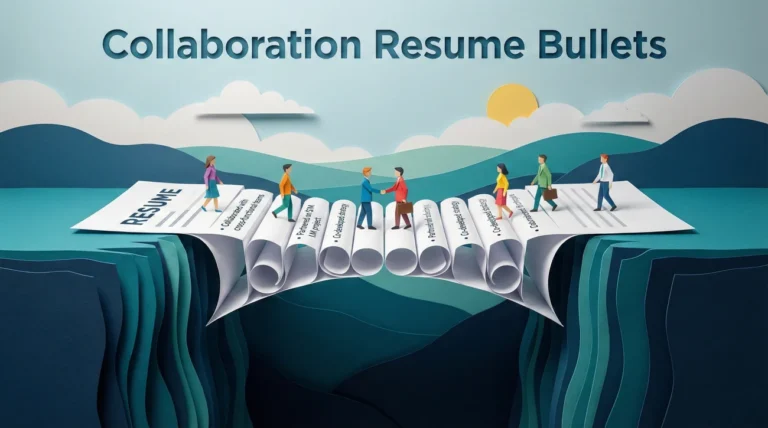
I teach this as a bridge paragraph. You are crossing a gap the reader might notice, without turning the bridge into the whole trip.
[Neutral separation line] + [Closed chapter signal] + [Forward proof line]
What each line must do
- Neutral separation line: Name the separation without drama. Avoid a story.
- Closed chapter signal: Make it clear it is resolved. No “still dealing with it”, no “ongoing conflict”.
- Forward proof line: One concrete signal you are stable and ready: a recent result, a tightened work process, or clear fit for the role.
Most bad termination paragraphs fail because they skip the closed chapter line. They accidentally sound like the situation is still happening.
Two paragraph templates you can actually use
Template 1: Performance mismatch, handled with accountability
This is for when you were fired for performance, fit, or an early mismatch, and you can describe what changed without self-punishment.
Use this when you can confidently point to a “new operating system”. If you cannot name a change, don’t invent one.
Template 2: Termination label, but the story is not misconduct
This is for situations where the company labeled it a termination, but the reality was restructuring, funding constraints, or a leadership change that ended the role.
Notice what’s missing: No villain, no anger, no “they did me wrong”. Just closure and direction.
💡 Pro Tip: If you need to include the idea that you were fired, try phrasing it as “my employment ended” or “my role concluded” unless the form explicitly requires the word “terminated”. You are not hiding, you are controlling tone.
Boundaries: What you never put in the paragraph

The three buckets that create instant doubt
I’m going to be blunt because I’ve seen these sink strong candidates.
- Blame language: “My manager had it out for me”, “politics”, “unfair”. Even if true, it sounds like future conflict.
- Emotional processing: “I’m still recovering”, “it was traumatic”, “it damaged my confidence”. This reads like instability, not honesty.
- Legal framing: “Wrongful termination”, “I’m disputing it”, “my lawyer advised”. This pulls the reader into risk mode immediately.
A small real-world example
Marcus, a hiring manager I worked with years ago, had a rule: “If I feel like I’m being recruited into your conflict, I’m out.” It wasn’t kind, but it was honest about how fast humans judge risk.
“I was unfairly terminated because my manager couldn’t handle feedback, and HR refused to listen, but I’m a hard worker and I just want a chance.”
The sentence above is exactly how candidates talk when they are still stuck in the story. It may be emotionally valid. It is strategically damaging.
Do not say list: Phrases that trigger the wrong interpretation

These phrases tend to create recruiter anxiety because they imply ongoing drama, poor judgment, or lack of closure.
- “I was blindsided”
- “It was a toxic environment”
- “They didn’t appreciate me”
- “I had no support”
- “I’m looking for a company that treats people better”
- “I had personal issues”
- “I’m still dealing with it”
Calmer replacements that still tell the truth without creating new risk:
- Replace “toxic” with “not the right fit”
- Replace “blindsided” with “my employment ended”
- Replace “no support” with “I learned what structure I need to deliver consistent results”
❌ Note: The cover letter is not the place to prove you were a good person in a bad situation. It is the place to prove you are predictable and effective in this role.
How to tailor the paragraph without making it longer
If the word “terminated” is unavoidable
Some systems use direct labels. If you need to reference it, keep it factual and short. This is where a terminated cover letter line can stay clean without sounding defensive.
If you want “fired” language, do it indirectly
Most people searching “fired cover letter” want a way to acknowledge the event without sounding like they are confessing. The trick is to describe the event, not the label.
If your termination is tied to an “end of role” story
This is the least risky version when it is true. It is also the cleanest for a cover letter for termination situation where the event is more about structure than behavior.
Each version stays under four sentences. That is not a random rule. It is a signal: “This is not the headline of my candidacy.”
Final: Your paragraph is a door, not a diary
I’ll leave you with one more real moment. A former colleague of mine once said: “I don’t mind a hard story. I mind a story that isn’t finished.” That’s the standard you’re aiming for.
If you choose to mention being fired, your job is not to sound heroic. Your job is to sound closed, calm, and forward. One paragraph. No blame. No emotional fog. No courtroom framing. Just a clean bridge back to what you can do right now.
That’s the whole point of a cover letter after being fired: Remove doubt, then let your strengths carry the rest.
❓ FAQ
🧩 Should I say “I was fired” directly in my cover letter?
Usually no. If you must address it, describe the separation in neutral terms and keep it to one short paragraph. Save deeper context for a direct question later.
🔍 What is the safest sentence to use if the form asks about termination?
Use a factual line plus closure: “My employment ended in [Month Year]. The situation is resolved, and I am fully available.” Then move back to fit for the role.
🧯 Can I mention it was a toxic workplace in the termination paragraph?
Avoid it. Even if true, it reads like future conflict. Focus on what you want next and what you can deliver, not the emotional evaluation of the last place.
📌 What if I was fired for performance?
Keep it short and focus on what changed. Mention a concrete improvement habit or structure, then immediately connect to why this job matches your strengths.
🧭 Will recruiters find out anyway?
Sometimes, yes. That’s why the goal is not to hide. The goal is to keep the topic from becoming the first thing they remember about you.
⚠️ Disclaimer: ResumeSolving provides resume, cover letter, job search communication, and career transition guidance for informational purposes only. Hiring practices vary by employer, role, location, industry, and individual circumstances. We do not guarantee interviews, job offers, ATS results, or other outcomes. Verify employer requirements directly and follow applicable laws and workplace policies. For sensitive situations, use only information you are comfortable disclosing and keep all statements accurate.