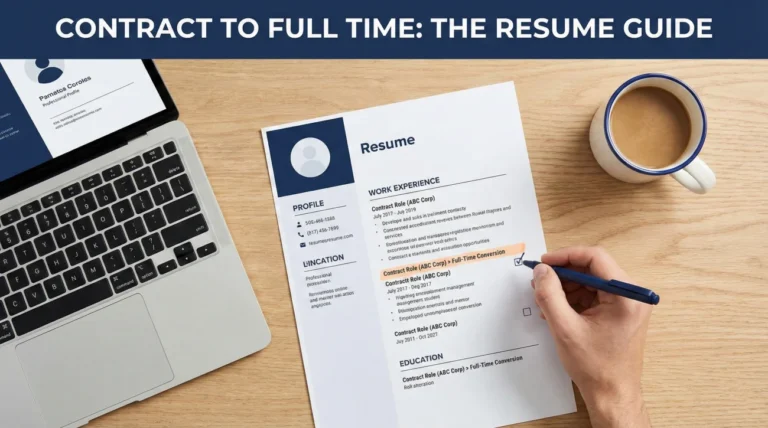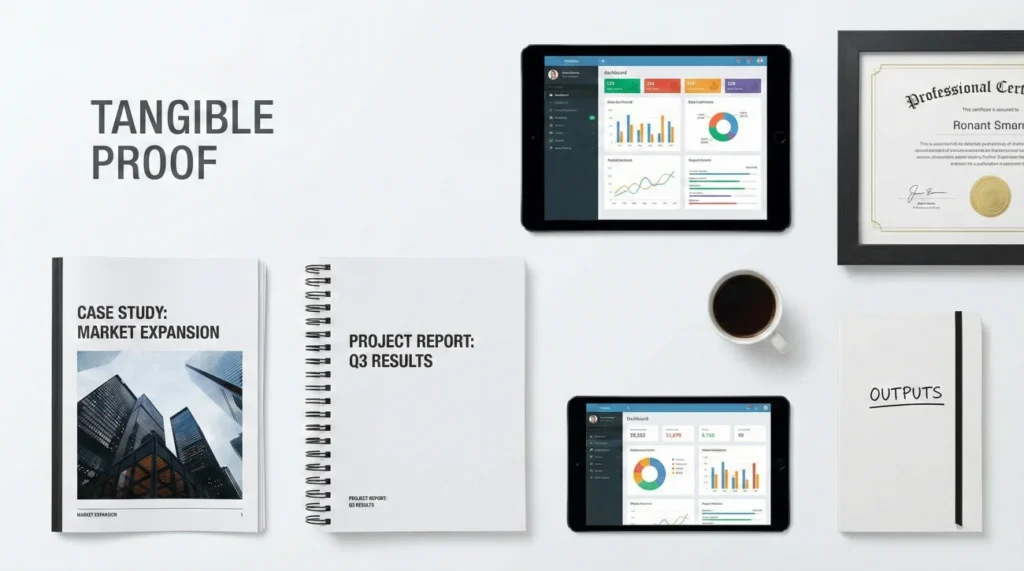
- If you lack the job title, your resume must show proof artifacts: Outputs, metrics, and real work samples beat “transferable skills” claims.
- Build a simple Proof Map: Requirement → Proof source → Artifact → One measurable line, then place it where recruiters actually look.
- Use 10 accepted proof sources (projects, internal work, volunteering, coursework with outcomes, case studies, side work) without inflating titles.
Career Change With No Direct Experience Is Not A Formatting Problem
Most people think a career change resume with no experience fails because it “doesn’t look right.” In reality, it fails because it reads like a promise without evidence. Recruiters do not need you to have the exact job title. They need to see proof that you can do the work the title represents.
I saw this clearly with Madra, a retail supervisor trying to move into Customer Success. Her first draft was polished, but it was basically: “Great communicator, problem-solver, passionate about customer experience.” No one called. Once we rewrote her bullets around real artifacts (ticket-like workflows, retention wins, training docs, escalation handling), she started getting screens again.
🗝️ Key Point: If your resume cannot point to something you built, improved, shipped, documented, measured, or owned, it feels like a guess.
This article is about proof, not pep talks. You will build a Proof Map, pick from 10 proof sources recruiters accept, and steal six ready-to-customize proof statements for a career change resume with no experience that sounds grounded.
The Proof Map That Stops You From Sounding Like You’re Trying To Convince Yourself
Career changers often do this backwards. They start with a target role, then try to decorate their past with new labels. A Proof Map flips it: You inventory what you can prove, then you translate it into the language of the new role.
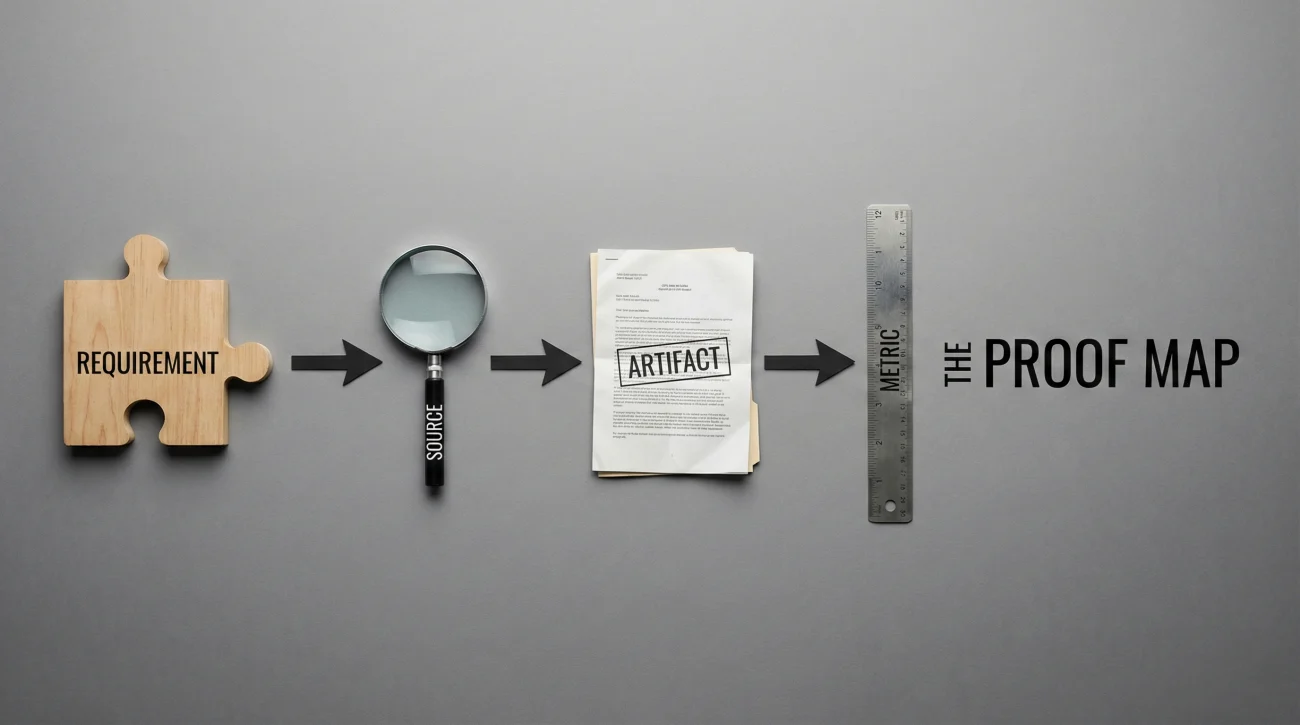
A Proof Map Is Just Four Boxes
Open a doc and write four columns. Keep it blunt. If you cannot prove it, it does not go in.
Proof source: [Where you did something similar]
Artifact: [Doc, dashboard, workflow, deliverable, output]
Evidence line: [One measurable sentence]
Andre used this when switching from teaching to data analysis. He did not claim “data analyst experience.” He used artifacts: A grading spreadsheet turned into a lightweight analytics model, a student outcomes dashboard, and a small A/B test he ran on assignment formats. Same skill family, different context.
Use This Sentence Formula For Each Proof Line
[Action] + [Artifact] + [Metric or decision impact] + [Stakeholder]
It sounds simple, but it forces reality. It also helps ATS because it naturally includes role keywords without stuffing.
💡 Pro Tip: If you have no metric, use a decision impact: Reduced escalations, shortened handoffs, improved accuracy, clarified ownership, standardized a process.
10 Proof Sources Recruiters Accept When You Don’t Have The Job Title
This is the missing piece in most “career change” guides. You are not limited to paid job titles. You are limited to what you can credibly show and explain.
| Proof source | What it proves | How to write it (starter) |
|---|---|---|
| Internal stretch work | You already did the function inside your old job | “Owned X workflow for Y team, delivering Z outcome.” |
| Projects (self-directed) | You can execute end to end without hand-holding | “Built X using Y, validated with Z users/results.” |
| Volunteering with real constraints | You can do the work in a real org setting | “Delivered X for nonprofit, improving Y by Z.” |
| Coursework with outcomes | You applied learning to produce outputs | “Completed X capstone, producing Y artifact used for Z.” |
| Case studies you wrote | You understand the role logic and can communicate it | “Wrote case study on X, including Y analysis and Z recommendation.” |
| Side work for a friend’s business | You can deliver for a stakeholder | “Improved X for small business, resulting in Y change.” |
| Internal transfer attempts | You mapped your skills to the new function | “Partnered with X team on Y initiative, owning Z component.” |
| Process fixes in your current role | You can solve messy problems | “Standardized X process, reducing Y and improving Z.” |
| Portfolio artifacts | You have tangible work to show | “Created X artifact (doc/dashboard), used by Y for Z.” |
| Competitions or hack-style builds | You can perform under constraints | “Built X in Y timeframe, demonstrating Z competency.” |
For an entry level career change resume, these sources matter because recruiters expect potential plus evidence. They do not expect a perfect match. They do expect you to have done something that resembles the work.
How To Write Proof Without Inflating Titles Or Sounding Defensive
The fastest way to lose trust is to rename your past into something it wasn’t. The second fastest is to over-explain why you are changing. Proof lines let you stay calm and specific.
Three Clean Swaps That Keep You Honest
These are pattern swaps I’ve used with candidates when building a career change no experience resume that still sounds senior in thinking.
| Instead of | Write | Why it works |
|---|---|---|
| “Experienced in X” | “Delivered X outcomes through Y work” | Moves from claim to evidence |
| “Passionate about X” | “Built X artifact and shipped it to Y stakeholder” | Passion becomes action |
| “Looking to transition into X” | “Already doing X-adjacent work: Here’s proof” | Reduces perceived risk |
Example:
“I don’t have the title yet, but I can show you the work. I built the workflow, tracked the outcomes, and documented the handoffs so the team could repeat it.”
⚠️ Warning: Do not use “consultant” or “analyst” as a cover title unless you were formally operating that way. Recruiters are fine with projects. They are not fine with disguise.
Where Proof Should Go On The Page So It Actually Gets Read
People obsess over the perfect template. Meanwhile, recruiters skim the same zones over and over. Put your best proof where it will be seen, then repeat it lightly in a second place.
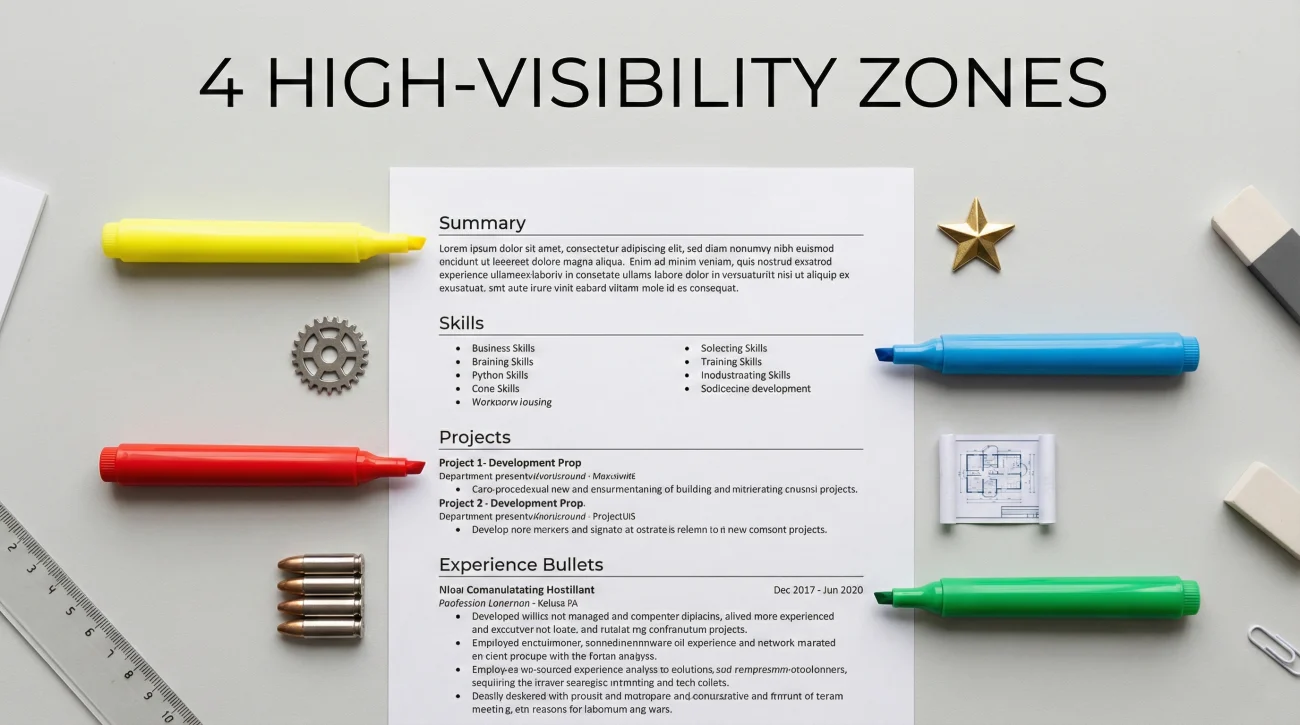
The Four Zones That Carry The Most Weight
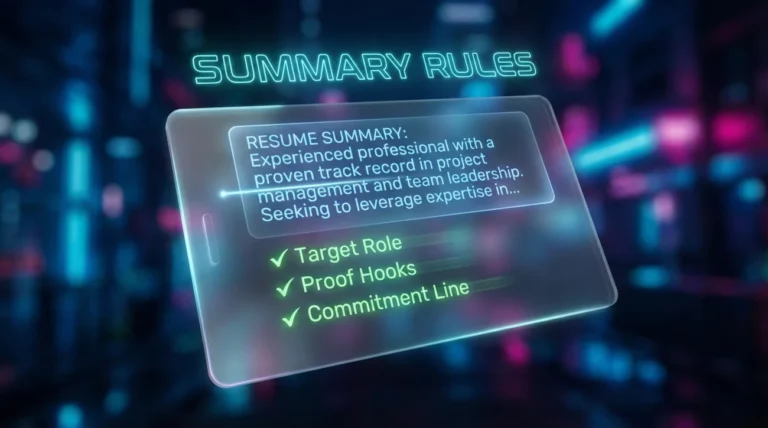
- Top summary: One sentence that anchors the pivot, one sentence that signals proof.
- Skills section: Only skills you can support with a line somewhere else.
- Projects: Your “bridge” section when your job titles do not match.
- Experience bullets: Translate old work into role-relevant outcomes without renaming the role.
Lisa was moving from hospitality into HR operations. Her instinct was to hide her past. We did the opposite: We pulled out proof that matched HR ops reality (scheduling systems, onboarding checklists, conflict de-escalation, policy enforcement). Her titles stayed true. Her bullets did the pivot.
Summary proof line:
Here’s a clean example of “translation,” useful for a switching careers no experience resume when the job title does not match:
Experience translation bullet:
Six Proof Statements You Can Steal And Customize
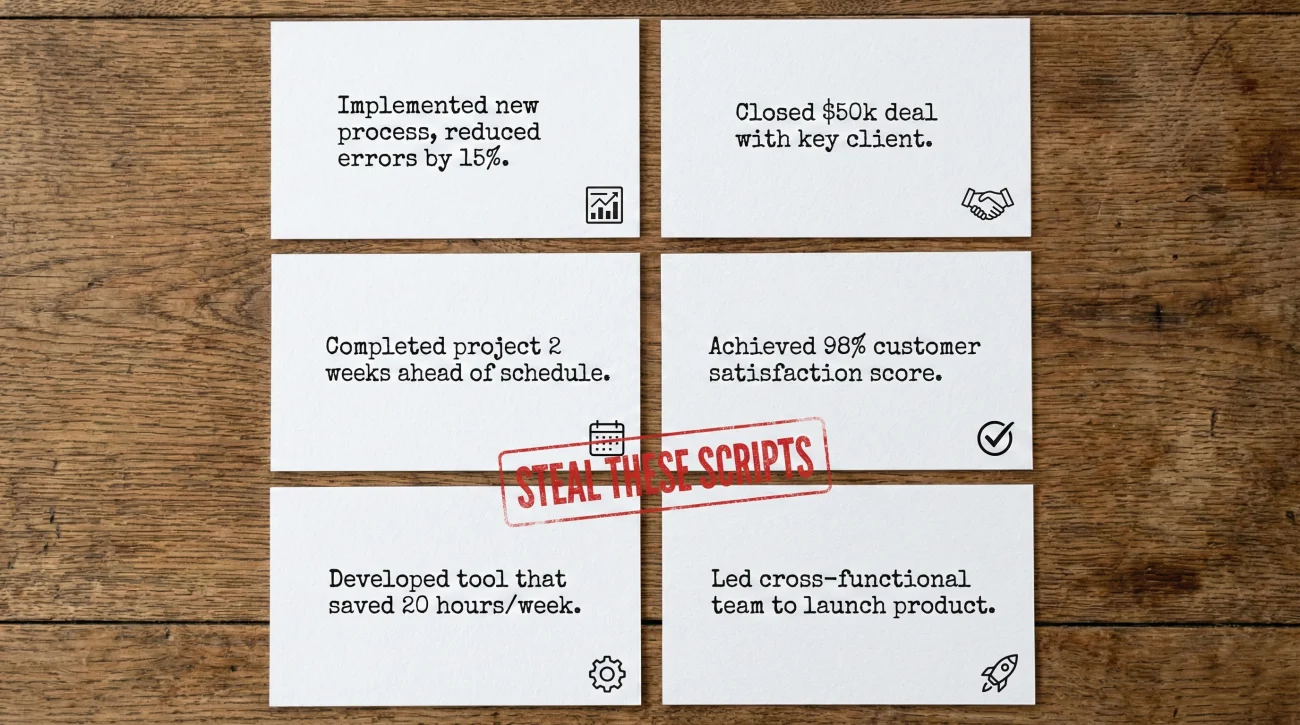
These are intentionally written to sound calm. Swap in your artifact, metric, and stakeholder. Keep the structure.
- Built a simple tracking dashboard for [process], enabling [team] to spot [issue] weekly and act within [timeframe].
- Led a cross-team handoff cleanup for [workflow], reducing rework by [metric] and clarifying ownership across [teams].
If your “proof” is coursework, the line must include an output and what it was used for.
- Completed a [capstone/project] analyzing [dataset/problem], producing a [report/dashboard] that supported [decision or recommendation].
- Created a case study on [business problem], outlining [method], [findings], and a prioritized recommendation plan for [stakeholder].
If your proof is volunteering or side work, make the constraint real: Budget, time, users, or stakeholders.
- Delivered [artifact] for a nonprofit within [constraint], improving [outcome] and documenting the process for future volunteers.
- Improved [business process] for a local business by building [tool/document], resulting in [measurable change] over [timeframe].
Final Evidence Beats Vibes Every Time
A career pivot is not won by saying you are adaptable. It is won by showing you already did slices of the work, with artifacts and outcomes that a stranger can believe.
When your career change resume with no experience is built on a Proof Map, you stop chasing the perfect phrasing. You start presenting the evidence you actually have, in the places recruiters actually read.
That is what lowers risk in their mind: Not confidence, not enthusiasm, but clear proof that your next role is a logical extension of work you have already done.
❓ FAQ
🎯 Do I need a functional resume if I’m changing careers with no experience?
No. Most career changers do better with a clear summary plus a strong Projects section. Functional resumes often hide context and can raise “What are they avoiding?” questions.
🧩 What if my proof is only coursework?
Coursework can work if you attach outputs: Capstone, report, dashboard, prototype, case study, or documented workflow. A class name alone is not proof. The artifact is.
🛠️ How many projects should I include?
Usually 2 to 4 is enough. Pick the ones closest to the target role’s core tasks, and make each one evidence-rich with artifacts and outcomes.
📌 Can I change my job title to match the new role?
Only if it was your official title. If not, keep the true title and translate the work in bullets. You can add a clarifier like “(Project Focus)” when accurate.
🔍 What does ATS care about in a career change resume?
ATS matches keywords, but humans decide. Use keywords naturally inside proof lines tied to artifacts. Avoid dumping a skills list with no supporting evidence elsewhere.
✅ What is the fastest way to make my resume sound credible?
Replace abstract traits with one proof line: Action, artifact, outcome, stakeholder. Then place it in your summary and repeat it once in Projects or Experience.
⚠️ Disclaimer: ResumeSolving provides resume, cover letter, job search communication, and career transition guidance for informational purposes only. Hiring practices vary by employer, role, location, industry, and individual circumstances. We do not guarantee interviews, job offers, ATS results, or other outcomes. Verify employer requirements directly and follow applicable laws and workplace policies. For sensitive situations, use only information you are comfortable disclosing and keep all statements accurate.