- If your resume sounds like you got bored, got into conflict, or left under pressure, recruiters read “flight risk” fast.
- Most job-hopping anxiety is triggered by a few phrases, not by the dates alone.
- Swap risky wording for neutral closure signals and keep short stints from looking messy without oversharing.
The Problem Usually Is Not The Timeline, It Is The Tone
I remember a candidate named Jana who had three roles in four years. On paper, it looked like a lot of movement, but it was not chaos. Two were restructures, one was a short contract that ended on schedule. The issue was her wording. Her resume kept saying she was “ready for something new” and “seeking a better fit.”
Recruiters did not call her a liar. They did something simpler. They assumed she would do the same thing again.
That is why I treat job hopping red flags as a language problem before I treat it as a history problem. When the tone sounds restless, defensive, or vaguely negative, the reader starts filling in blanks you never meant to create.
⚠️ Warning: A short tenure can be explained. A pattern of “soft blame” and “vague dissatisfaction” is much harder to sell.
What A Recruiter Thinks They Are Screening For

When hiring teams see several short stints, they are rarely angry about it. They are trying to avoid two expensive outcomes: hiring someone who leaves quickly, or hiring someone who struggled and is now rewriting the narrative. In internal debriefs, the language is blunt, even when the feedback to you is polite.
Key Point: Short stints do not automatically disqualify you. “Unstable story signals” do.
In practice, the screening questions tend to cluster into four fears:
- Flight risk: Will you leave as soon as things get hard or boring.
- Conflict pattern: Are you repeatedly clashing with managers or teams.
- Performance doubt: Did you exit before expectations caught up.
- Money-only moves: Will any counteroffer pull you away again.
Most blog advice stops at “focus on growth.” That helps for interviews, but it can backfire on resumes. On a resume, growth language often reads like you are already shopping again.
So instead of selling motivation, your resume needs to sell stability: You finished what you started, the change had a clear container, and the chapter is closed.
18 Red Flag Phrases And Safer Replacements
This is the part most pages skip. They tell you to “be positive,” but they do not show the exact phrases that trigger doubt. Below are swaps I use when I review resumes for candidates who are tired of being quietly filtered out.
| Phrase that triggers doubt | What it implies | Safer replacement (still honest) |
|---|---|---|
| “Seeking a better fit” | Conflict, vague dissatisfaction | “Role scope changed after a reorg; transitioned to a better-aligned function” |
| “Ready for a new challenge” | Boredom, short attention span | “Completed priority deliverables; moved into a role with larger ownership” |
| “Looking for growth opportunities” | Restless, already shopping | “Progressed into roles with increased scope and measurable impact” |
| “Company culture wasn’t right” | Hard to work with, blame | “Values misalignment; exited after a structured handover” |
| “Left due to management issues” | Recurring conflict | “Leadership changes; transitioned after project closeout” |
| “Wanted better work-life balance” | Availability concerns | “Shifted to a schedule-compatible role; maintained output and reliability” |
| “The job wasn’t what I expected” | Poor judgment, impulsive move | “Responsibilities differed materially from scope discussed; exited early” |
| “Toxic environment” | Drama, unverifiable claims | “Work environment concerns; prioritized a stable team setting” |
| “I wasn’t appreciated” | Low resilience, ego | “Recognition structure shifted; pursued a role with clearer performance criteria” |
Now the sneakier set. These often appear inside bullets, not in a reason line. They create motion without closure, so the reader assumes your work was unfinished.
What do risky phrases look like inside bullets?
They usually sound like “started” without “finished.” Lots of “helped,” “supported,” and “exposed to,” but not enough “shipped,” “closed,” “delivered,” or “handed off.” If you leave fast, your bullets must prove you still finished something.
- 🧨 “Joined to help with X” → “Brought in to deliver X; shipped Y within Z weeks”
- 🧨 “Explored initiatives” → “Launched initiative; measured outcome; documented playbook”
- 🧨 “Assisted the team” → “Owned a defined workstream; delivered a measurable result”
- 🧨 “Worked on various tasks” → “Owned the highest-priority tasks; delivered three outcomes tied to KPIs”
- 🧨 “Quickly adapted” → “Onboarded fast; produced a concrete deliverable by week X”
- 🧨 “Wore many hats” → “Covered scope during transition; kept core metrics stable”
- 🧨 “Looking for stability” → “Selected roles with defined ownership and clear success metrics”
- 🧨 “Needed a change” → “Exited after scope shift; moved into a role with defined ownership”
- 🧨 “Wanted higher pay” → “Moved for expanded scope with market-aligned compensation”
💡 Pro Tip: If you have multiple short stints, your bullets should read like completed chapters, not like unfinished notes.
A One Line Pattern That Reduces “Flight Risk” Without Oversharing

When candidates try to fix short stints, they often add too much emotion or too much detail. That creates new questions. The goal is a calm line that does three things: names the container, signals closure, and shows you did real work in that container.
[Container] + [Closure Signal] + [Proof Marker]
Here are three versions I use depending on what is true for you. Each one avoids drama and avoids sounding like you are still mid-problem.
One of my HR friends, Marcus, did two startups back to back that both cut headcount. His first resume version sounded defensive. The rewrite was boring, which is exactly what you want. He stopped getting the “so why do you leave so quickly” tone in screens and started getting normal questions about his work.
If A Bad Workplace Caused The Exit, Do This Instead Of Writing “Toxic”

People ask me about this constantly, usually in a whisper. They feel like they need to justify themselves. I get it. But “toxic” on a resume reads like a fight the recruiter cannot verify.
Instead, keep it factual and closed. You are not writing a courtroom statement. You are writing a stability signal.
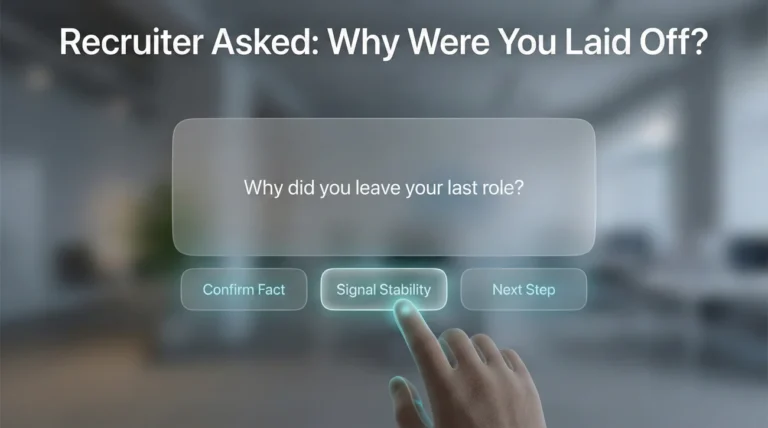
“Why did you leave so soon?”
“I realized the role expectations and the operating style were not a match. I wrapped my deliverables, documented the handover, and moved into a team environment where I can do my best work consistently.”
Quick Self Check: The 3 Minute Audit

This is the checklist I give candidates before we even touch layout. It catches the wording habits that quietly make short stints look suspicious, even when the real reasons were valid.
- ✅ Each short stint has at least one bullet that ends in a shipped deliverable.
- ✅ You use at least one closure word somewhere: “completed,” “closed,” “handed off,” “delivered.”
- ✅ You removed vague dissatisfaction phrasing like “better fit” and “needed a change.”
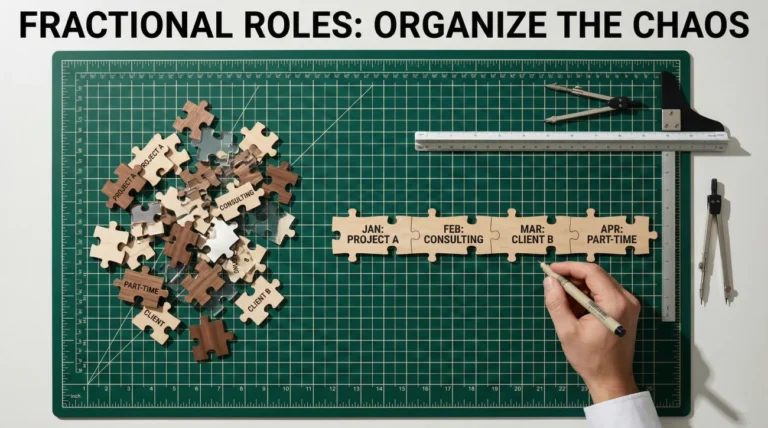
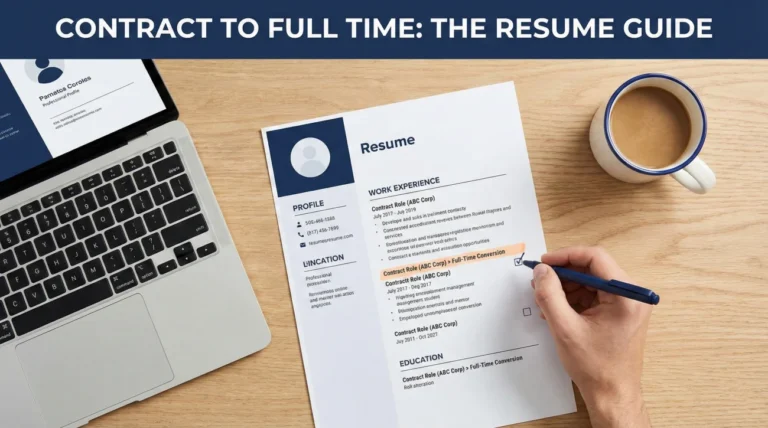
- ✅ If it was contract work, you label the container clearly instead of apologizing.
- ✅ You do not stack emotional labels that sound unprocessed.
- ✅ Your story still works if a reader only scans dates and the first bullet of each job.
If you want one extra boost, align your language across documents. Your resume line, LinkedIn story, and interview answer should not contradict each other. Contradictions create more suspicion than short stints do.
Final: Make Your Short Stints Read Like Finished Chapters
When a recruiter sees movement, they look for proof that you can stay long enough to finish something, even in messy environments. You do not need to defend every exit. You need to remove the phrases that accidentally signal boredom, conflict, or instability, then replace them with calm closure markers.
That is the clean way to handle job hopping red flags without sounding defensive: tighten the tone, show closure, and let outcomes carry the credibility.
❓ FAQ
🎯 Should I explain every short stint on my resume?
No. Explain patterns, not every detail. If the timeline is clean and your bullets show closure, you often do not need extra explanation. Add context only when silence creates a bigger question than a neutral line would.
🧩 Is it okay to write “Contract” next to a role?
Yes, if it is true. A clear container label helps the reader understand the role was designed to end. It reduces “flight risk” assumptions because the end date was part of the job definition.
🛑 What is the worst wording choice if I left a bad workplace?
Anything that sounds like a personal fight: “toxic,” “politics,” “micromanaged,” “unfair.” Even if it is accurate, it is hard to verify and it can read like a repeated pattern. Keep it neutral and closed.
🧠 What if my job changes were mostly layoffs or restructures?
Then your movement is really a market story. Use structural language like “reorg,” “RIF,” or “team resized,” and pair it with a closure signal plus one proof marker. The goal is factual and finished.
📌 Should I add a “Reason for leaving” line under each job?
Usually no. That format can make the reader fixate on exits instead of impact. Use a reason line only when you have repeated short stints and you can state the container neutrally in one sentence.
⚠️ Disclaimer: ResumeSolving provides resume, cover letter, job search communication, and career transition guidance for informational purposes only. Hiring practices vary by employer, role, location, industry, and individual circumstances. We do not guarantee interviews, job offers, ATS results, or other outcomes. Verify employer requirements directly and follow applicable laws and workplace policies. For sensitive situations, use only information you are comfortable disclosing and keep all statements accurate.