- Your self-employment rarely gets rejected for being “independent”. It gets rejected for sounding unverified, ongoing, or like a placeholder.
- Pick a label that matches how a background check would describe you, then add one credibility line that proves scope without oversharing.
- Use one consolidated entry with “Selected engagements” language, not 12 tiny gigs that read like job hopping.
- Avoid vague business-owner wording unless you are applying to business-owner roles. Most full-time hiring managers want role clarity, not identity.
Why “Self-Employed” Can Sound Riskier Than It Should
Elise was a solid designer. Two years of paid client work, repeat contracts, referrals, real outcomes. But her resume opened with one line: “Self-Employed, 2022 to Present.” No title, no context, no proof. In interviews, she kept hearing versions of the same question: “So are you available for full-time?”
That is the hidden problem behind how to list self employment on resume. Recruiters are not allergic to independence. They are allergic to uncertainty. If your wording creates uncertainty, they assume the worst: you are between jobs, still shopping around, or hard to verify.
“I like your portfolio. I just need to understand if you’re still freelancing full-time, or if this is a closed chapter.”
This article is a practical fix: 10 safe labels, 6 one-liners you can paste under the title, and a short do-not-do list that prevents the “placeholder” vibe.
The Real Hiring Manager Question Hidden Inside Your Label
When a hiring manager sees self-employment, they are usually trying to answer one question quickly: “Is this work comparable to a real role, with real accountability, and a timeline that makes sense?”
If your entry does not help them answer that in five seconds, they invent a story. The most common stories I see in screening notes are not cruel. They are lazy shortcuts: “unclear experience,” “still consulting,” “gap filler,” “can’t verify.”
💡 Pro Tip: Your goal is not to “prove you worked.” Your goal is to remove the need for assumptions.
| Label you use | What it signals | Common downside if you do nothing else |
|---|---|---|
| Self-Employed | Independent work, but undefined | Reads like a placeholder unless you add scope |
| Independent Consultant | Professional services, paid engagements | Can trigger “still consulting” assumption without closure language |
| Freelance [Role] | Role clarity, project delivery | Can look like gig-chasing if you list every client separately |
| Owner / Founder | Leadership identity | For full-time roles, can trigger “won’t take direction” bias |
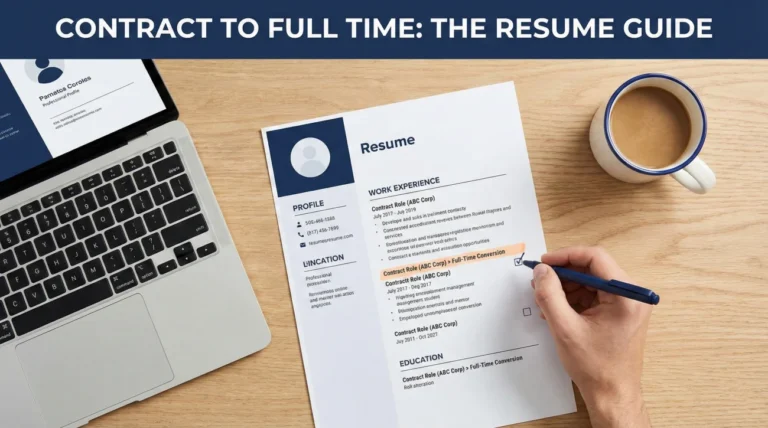
| Contract [Role] | Time-bounded work | Can read like job hopping if you over-segment dates |
So the fix is not “avoid self-employment.” The fix is: pick a label that matches reality, then add one line that makes the reality feel verifiable.
10 Labels That Sound Credible (And When Each One Is Safest)
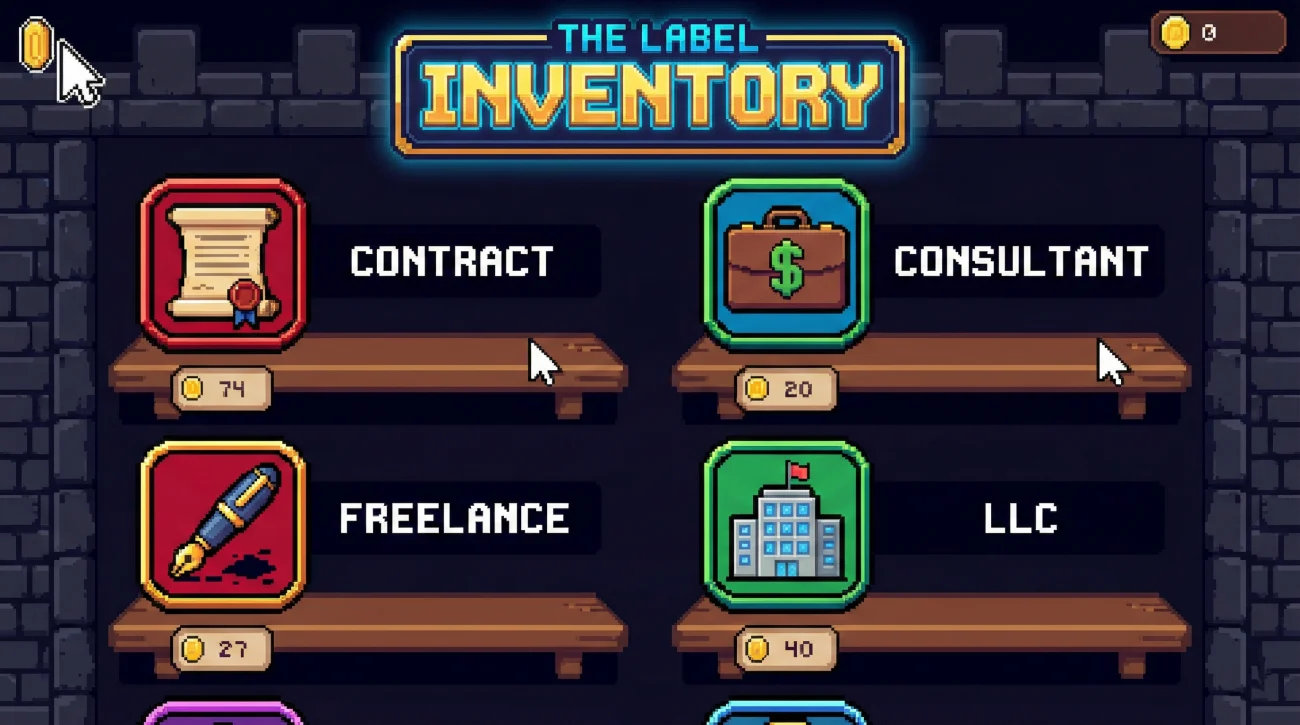
Use labels like tools. The “best” label is the one that matches how you would describe your work to HR during a background check.
Here are 10 options that tend to read cleanly for full-time hiring, especially when you are moving from independent work into a team environment.
- Independent [Role]: Best when you were essentially doing a normal job, just without payroll.
- Freelance [Role]: Best when your output is portfolio-friendly and the word “freelance” is normal in your industry.
- Contract [Role]: Best when engagements were time-bounded and you can summarize them without listing all clients.
- Consultant, [Function]: Best when your work was advisory or strategy heavy, not just execution.
- [Role] (Sole Proprietor): Best when you want accuracy but also formality, especially for finance, ops, or compliance-heavy roles.
- [Role] (LLC): Best when you have a registered entity and want the cleanest “employer” look.
- Principal, [Service]: Best when you delivered a narrow service with repeat clients and clear outcomes.
- Studio Lead / Practice Lead: Best for creative fields where a “studio” framing reads normal, not inflated.
- Independent Contractor: Best when contracts were through platforms or agencies and you want the most literal truth.
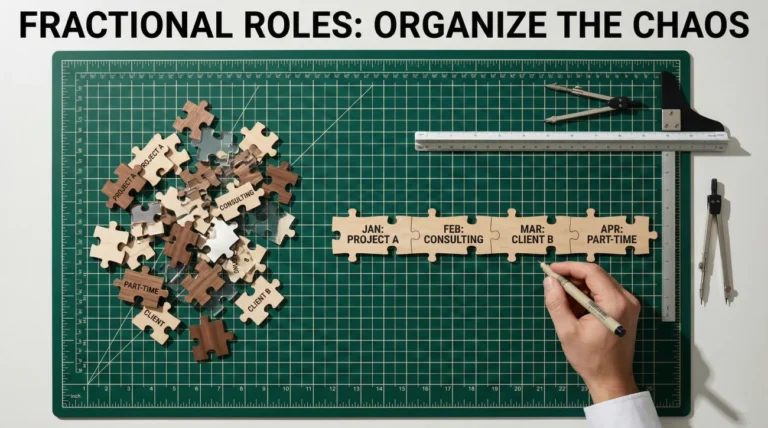
- Fractional [Role]: Best when you worked part-time across clients, but only use it if “fractional” is common in your target market.
⚠️ Warning: If you are applying to an individual contributor role, “Owner” and “Founder” can be accurate but still strategically noisy. Save identity-heavy labels for roles where leadership identity is the point.
Credibility Line Examples (Split by Role)
Below are the same examples, separated into role-based blocks so each one reads like a real entry, not a generic template. Use them as phrasing reference, then swap in your own scope, timeline, and proof points.
Independent Product Designer (LLC) | 2022 – 2025
This framing works when you want the clean “employer” feel of an entity, while still making it obvious you operated like a normal product team member with clear handoffs.
Credibility Line: Designed and shipped web flows for funded startups and mid-market teams on 3 to 6 month engagements, with documented deliverables and handoff.
Freelance Copywriter | 2021 – 2024
If your work was recurring and performance-linked, anchor it in lifecycle, conversion, and deadline ownership. That combination reads like a structured role, not a one-off gig.
Credibility Line: Wrote lifecycle and landing-page copy for DTC brands, tracked conversion lifts, and managed deadlines across recurring retainers.
Contract Data Analyst | 2023 – 2025
Data work can sound vague fast, so the strongest version names the audience and the workflow. Finance and ops leaders, Jira collaboration, and weekly reviews signal real stakeholders and real accountability.
Credibility Line: Built dashboards and KPI definitions for finance and ops leaders, collaborating through Jira and weekly stakeholder reviews.
Independent HR Consultant | 2022 – 2024
For HR consulting, credibility comes from showing you touched systems, not just advice. Interview kits, scorecards, and onboarding plans imply repeatable process design, not casual coaching.
Credibility Line: Led structured hiring process rebuilds for 20 to 80 person teams, including interview kits, scorecards, and onboarding plans.
Fractional Operations Manager | 2021 – 2023
Fractional roles are easy to misread as “side work,” so this version emphasizes cadence, vendor coordination, and SOPs. It lands as operational ownership across a real timeline.
Credibility Line: Ran weekly cadence, vendor coordination, and SOP creation for two small service businesses while owners scaled delivery.
Independent Software Engineer | 2020 – 2024
When client names are protected, the safest move is to describe the environment. Code reviews, QA handoffs, and release ownership make the work feel embedded in a real delivery process.
Credibility Line: Delivered production features for client apps under NDA, with code reviews, QA handoffs, and release ownership.
If You Cannot Name Clients, Use “Specific Without Identifying” Wording

A lot of real self-employment is locked behind NDAs, platform rules, or just common sense. You do not need client logos to sound legitimate.
What you do need is specificity that cannot be faked easily. “Various clients” is easy to fake. “B2B manufacturing teams” plus “reduced manual reporting by 8 hours per week” is much harder to fake.
Use one of these patterns:
- Client category + work type: “Supported healthcare clinics with scheduling workflow redesign and staff training.”
- Engagement shape + accountability: “Recurring retainers with weekly stakeholder reviews and documented handoffs.”
- Environment cues: “Worked in Jira, Slack, and shared QA cycles with internal teams.”
- Boundary cues: “NDA-protected clients; references available upon request.”
That last one matters for trust. It is a calm way to say: “This is real, and it is verifiable,” without forcing you to expose names on page one.
Do-Not-Do List: The Wording That Makes Recruiters Suspicious

This is the part most articles skip. In practice, self-employment gets downgraded when it looks like you are trying to hide something, even when you are not.
- Do not list 10 micro-entries for every gig. Consolidate as one role, then describe “selected engagements.”
- Do not use inflated company language unless it is true. “CEO of Global Agency” triggers instant skepticism.
- Do not write responsibilities without outcomes. Independent work needs results to feel anchored.
- Do not leave dates vague. If you are moving to full-time, clarity beats mystery.
- Do not imply you were an employee of your client if you were not. That can backfire hard when verified.
❌ Note: If your wording creates a background-check mismatch, recruiters tend to assume dishonesty, not confusion.
If you want to be extra safe, align your wording with your tax and contract reality. You can still present it cleanly without turning your resume into a legal document.
Final: The Cleanest Self-Employment Entry Feels Boring in the Best Way
The best self-employment resume entry does not try to win admiration. It quietly removes doubt. A clear title, a single credibility line, and a few outcome bullets make your independent work feel as real as any payroll job.
When people struggle with how to list self employment on resume, it is usually because they are describing an identity instead of a role. Hiring teams do not need your life story. They need to understand what you delivered, how it was structured, and whether you are ready to join a full-time team.
If you keep it role-first and verifiable, self-employment stops being a question mark and starts reading like experience.
❓ FAQ
🧩 Should I write “Self-Employed” or “Freelance”?
Use the label that matches your industry norms and your reality. “Freelance” often reads clearer in creative and marketing roles. “Independent” or “Contract” can read cleaner in corporate contexts. Whichever you pick, add one credibility line so it does not feel like a placeholder.
🔍 Do I need to list my business name?
No, but it can help if it is real and consistent with how you operate. If your “business name” is just your first and last name plus “Consulting,” that is still fine. The credibility comes more from scope and accountability than from branding.
🧾 What if I was paid in inconsistent ways or through platforms?
Then “Independent Contractor” or “Contract [Role]” is usually the safest wording. Keep the entry consolidated, describe the type of work and outcomes, and avoid implying employment relationships that did not exist.
🤝 How do I handle references if I cannot share client details?
Use “NDA-protected clients; references available upon request” only if you can actually provide references. You can also use a former manager, a partner you collaborated with, or a long-term client contact who is comfortable confirming scope.
⏳ Does self-employment look like a gap if I am applying for full-time?
It can, if your wording is vague or reads like “between jobs.” Dates, a clear title, and a credibility line fix most of that. The rest is handled by outcomes that look comparable to full-time delivery.
⚠️ Disclaimer: ResumeSolving provides resume, cover letter, job search communication, and career transition guidance for informational purposes only. Hiring practices vary by employer, role, location, industry, and individual circumstances. We do not guarantee interviews, job offers, ATS results, or other outcomes. Verify employer requirements directly and follow applicable laws and workplace policies. For sensitive situations, use only information you are comfortable disclosing and keep all statements accurate.