- If you want a full-time role, your label should reduce questions about stability and availability.
- “Freelance” can sound flexible and scrappy, but it can also read like side work unless you show continuity.
- “Contract” often signals structure and clear dates, but you must be precise about who employed you.
- Pick one label, write it consistently, and make your employer line match what a verification check would find.
The Real Problem Is Not The Word, It Is The Question It Triggers
I have seen candidates lose momentum in a hiring process for one boring reason: Their resume created an extra question that did not need to exist. Labeling independent work is one of the easiest places to accidentally do that.
Here is the framing I use with clients who are moving from independent work into a more traditional role: Your label is not a personality statement. It is a signal. It tells a recruiter what kind of work structure you operated in, how your timeline should be interpreted, and whether your experience will verify cleanly.
So if you are stuck on freelance vs contract on resume, do not start with definitions. Start with the reader. What do they need to understand in five seconds so they keep moving forward?
What Recruiters Usually Hear When You Say Freelance Or Contract
A recruiter friend once described it like this: They do not hear “freelance” and picture your invoices. They hear “freelance” and picture risk buckets. Same for “contract”. It is not fair, but it is how fast screening works.
| Label | Common Screening Signal | Works Best When | Risk If Misused |
|---|---|---|---|
| Freelance | Self-directed, variable projects, multiple clients | You can show continuity and outcomes across work | Sounds like side gigs or inconsistent work if the timeline looks scattered |
| Contract | Defined scope, defined period, structured engagement | You had clear start and end dates or a staffing agency arrangement | Raises employer-verification questions if you imply the client was your employer |
| Independent Consultant | Senior framing, advisory posture, business impact | You led strategy or owned outcomes, not just execution | Feels inflated if your bullets read like junior task lists |
| Self-Employed | Business ownership, long range continuity | You actually operated under a business name or clear independent practice | Invites “Why full time now” if you do not explain the pivot |
Key Point: The safest label is the one that matches how your work would be verified, while still making your experience easy to map to the target role.
One candidate I worked with, Cara, used “Freelance” for two years of product design work. Her portfolio was excellent, but her resume read like a chain of tiny gigs. We did not change her work. We changed the signal. We grouped her engagements, named two long-term clients in a clean way, and rewrote the bullets as outcomes. The interview rate jumped, because the reader stopped wondering whether she had steady work.
Decision Rules That Keep Your Label Honest And Clean

Use this as your decision filter. You do not need every rule. You need the first rule that removes doubt.
[How You Were Sourced] + [How You Were Paid] + [How The Work Was Structured]
Rule 1: If A Staffing Firm Paid You, Lead With Contract
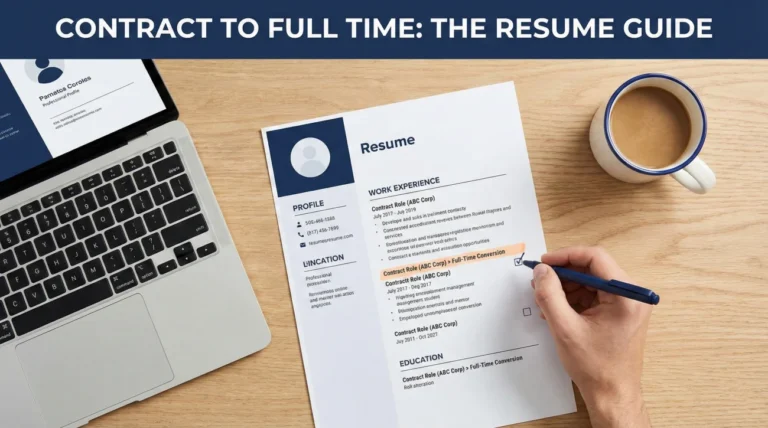
If you were paid through an agency or staffing firm, “Contract” usually reduces confusion. It also prevents a common mistake: Listing the client as your employer. You can still name the client as “Client” or “Engagement” in the bullets, but your employer line should reflect the entity that employed you.
Rule 2: If You Had Multiple Direct Clients, Freelance Can Be Cleaner
If you sourced clients yourself and ran multiple engagements, “Freelance” often matches the reality better. The fix is not changing the label. The fix is showing continuity so it does not look like random work.
That is where the phrase freelance vs contract difference matters on a resume: It is less about labor classification and more about the timeline story your reader builds in their head.
Rule 3: If You Want Senior Roles, Consider Consultant Only If Your Bullets Prove It
“Independent Consultant” can be a strong signal, but it has a price: Your bullets must sound like decisions, ownership, and measurable business impact. If your bullets are mostly execution tasks, keep it simple with “Freelance” or “Contract” and let the content do the selling.
⚠️ Warning: Do not mix labels across the same period. Switching between “Freelance”, “Contract”, and “Consulting” inside one year makes recruiters wonder what is being hidden.
Label Options You Can Use Without Sounding Weird
Below are options that read cleanly, even to someone skimming fast. These also play well with ATS because they look like standard employment entries.
– Shipped onboarding redesign that improved activation by 18% for a B2B SaaS client
– Built a reusable design system across 4 products, cutting design-to-dev handoff time by 30%
– Client: Enterprise FinTech platform, led redesign of dispute flow and reduced drop-off by 12%
– Partnered with PM and engineering to deliver 6 releases on a fixed quarterly roadmap
– Built lifecycle email program that increased repeat purchase rate by 9% across 3 ecommerce brands
– Audited acquisition funnel and reallocated spend, improving CAC efficiency by 22%
Notice what is happening in these examples: The label is not doing the hard work. The bullets are. That is also how you avoid overexplaining and still satisfy the reader.
Should I use “independent contractor” as my title?
You can, but it often reads more legal than professional. In most corporate hiring contexts, “Contract” or “Freelance” communicates the structure faster. If you do use the phrase, make sure your entry still reads like a standard role, not like paperwork.
When people search for independent contractor resume wording, what they usually need is not a label. They need a clean employer line, clear dates, and bullets that show outcomes.
How To Avoid The “Random Gigs” Look

This is the most common failure mode I see with independent work. The candidate did real work, sometimes better work than they did in a traditional job. But the resume reads like a list of tiny fragments.
Use One Umbrella Entry When The Work Is Similar
If your projects are in the same lane, group them under one role and one date range. Then show your strongest two or three engagements inside the bullets. This keeps the timeline calm and readable.
Name Clients In A Way That Protects Trust
If you can name them, name them. If you cannot, use a clear descriptor. Avoid vague labels like “Various Clients” without any anchor. You can write: “Client: Series B SaaS” or “Client: Regional Healthcare System”. The goal is clarity, not mystery.
💡 Pro Tip: If your reader is likely to worry about stability, “Contract” can be a stronger contract work resume label than “Freelance”. But only if the rest of your entry is accurate and verifiable.
My colleague Manny in HR told me about a painful pattern: Candidates list the client as the employer for contract work because it “looks better”. Then verification happens. Then the story changes. Even if the candidate did the work, the mismatch creates trust damage that is hard to recover from. The label is not the issue. The employer line is.
A Short Do Not Use List That Saves You From Unforced Errors
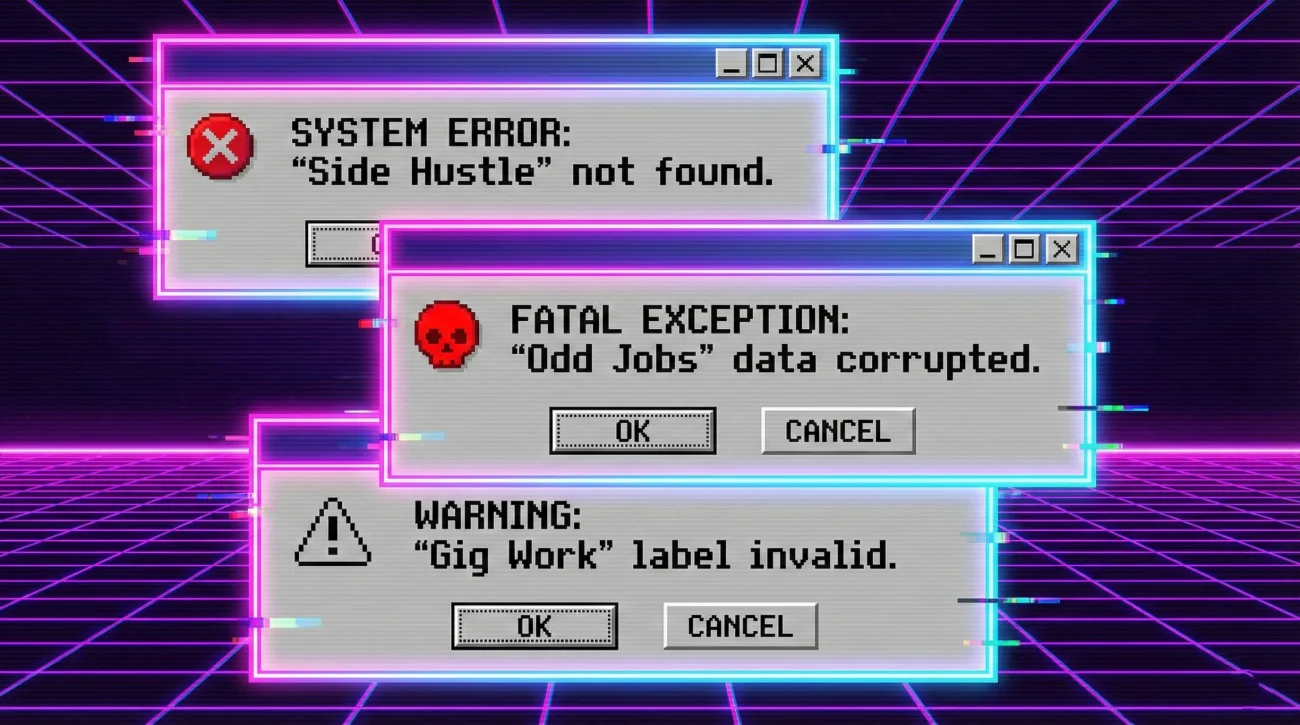
These phrases are not “wrong”. They are simply high-risk in a resume context because they invite the wrong questions.
- ❌ “Side hustles”. It frames your work as optional and secondary.
- ❌ “Odd jobs”. It signals low skill and low consistency, even when that is not true.
- ❌ “Gig work” as your headline label. It can undersell professional contracting.
- ❌ “Various clients” with no proof of continuity. It reads like chaos.
If you need a simple anchor, use “Freelance” when the work was client-driven and self-sourced, and use “Contract” when the work was structured through a firm, agency, or fixed engagement. Then let the bullets prove seniority and impact.
That approach also keeps your freelance resume wording professional and consistent across applications.
ATS And Verification: The Quiet Reasons Labels Matter
Most candidates think ATS is the big threat. In reality, trust and verification are the bigger threat for independent work, because the employer relationship is not obvious.
Make The Employer Line Match Reality
If you were paid by an agency, list the agency as the employer. If you were self-employed, list “Self-Employed” or your business name. If you were paid directly by the client, list your independent label and keep the client inside the bullets or as a client line.
Do Not Overcomplicate Titles
ATS likes standard titles. Humans also like standard titles. You can use “Software Engineer (Contract)” or “Graphic Designer (Freelance)” without inventing clever labels.
Key Point: If a label forces you to add three clarifying sentences, it is probably the wrong label for your goal.
One more real example: A candidate named Aliona had strong analytics work, but her resume used three different labels across one year. “Freelance Analyst”, “Contract Consultant”, and “Independent Contractor”. None of them were “wrong”, but the inconsistency created a “Which is it” feeling. We picked one label, standardized the format, and her callbacks improved because the resume felt calmer.
Final: Pick The Word That Makes Your Timeline Feel Obvious
The best label is the one that makes a recruiter feel like they understand your structure without asking for a second read. If you had multiple self-sourced clients, “Freelance” is often the cleanest truth. If you were engaged through an agency or fixed assignments, “Contract” often reads more structured.
Either way, the win is consistency. Choose one framing, match your employer line to what would verify, and write bullets that sound like real delivery. When you do that, freelance vs contract on resume stops being a debate and becomes a quiet non-issue in the reader’s mind.
❓ FAQ
🎯 Will “Freelance” make me look less serious?
Only if your entry reads like scattered gigs. If you show continuity, clear outcomes, and a stable date range, “Freelance” can look strong and modern.
🧾 Is it safer to write “Contract” for everything?
Not always. “Contract” is safest when it matches a structured engagement or an agency arrangement. If you truly ran multiple direct clients, “Freelance” may be more accurate and clearer.
🔍 Should I list the client as my employer?
If a staffing firm or consulting firm paid you, list that firm as the employer. You can still reference the client in a “Client:” line or in bullets, but keep the employer relationship accurate.
🧩 What if I did both freelance and contract in the same year?
Pick one umbrella label for the entry if the work is similar, and standardize the formatting. If the structures were truly different, separate entries can work, but keep the labels consistent within each entry.
💬 Do I need to explain why I want full time now?
Not on the resume. Your resume should prove capability and continuity. Save the “why full time” narrative for interviews, and keep it simple and forward-looking.
✅ What is one quick test to choose the right word?
Ask: “If someone verified this, would the employer line and label still make sense?” If yes, you are in the safe zone. If no, adjust the employer line or switch the label.
⚠️ Disclaimer: ResumeSolving provides resume, cover letter, job search communication, and career transition guidance for informational purposes only. Hiring practices vary by employer, role, location, industry, and individual circumstances. We do not guarantee interviews, job offers, ATS results, or other outcomes. Verify employer requirements directly and follow applicable laws and workplace policies. For sensitive situations, use only information you are comfortable disclosing and keep all statements accurate.