Fired for Attendance: Explain It Without Sounding Unreliable
Fired For Attendance Interview Answer

If you were fired for attendance, your goal is not persuasion. Your goal is predictability: One clean sentence, one fix, one proof marker. Never turn attendance into a life story. Give a closed chapter, then show a stability system you now run. Use two to three “stability signals” that match the job type (shift work, … Read more

Fired for Performance: A Calm Answer That Shows Growth Without Sounding Defensive

Fired For Performance Interview Answer

If you were fired for performance, your goal is not to “defend” yourself. Your goal is to sound stable, self-aware, and already corrected. A calm answer needs one ownership line, one concrete change, and one proof cue. Without proof cues, you sound like you are still guessing. Use two versions of the script: 20 seconds … Read more

What Did You Do Wrong: Answer Without Self-Sabotage (With 5 Accountability Patterns)

How To Answer What Did You Do Wrong Interview

This question is not about perfection. It is a test of ownership, judgment, and whether you build repeatable fixes. Pick a mistake that is real but containable, then anchor it to a change in process, not a dramatic personality confession. Answer once, cleanly. Then be ready for follow-up questions that try to push you into … Read more

Why Were You Fired: A 45 Second Interview Answer That Rebuilds Trust

Why Were You Fired Interview Answer

A good answer is not a confession. It is a risk-reduction story told in under a minute. The 45 second structure is: Neutral fact, ownership, specific fix, one proof point, then a bridge back to fit. Your goal is closure. If it sounds finished, most interviewers stop digging. Why This Question Feels Brutal: It Reopens … Read more

Termination on a Resume: 8 Short Lines That Sound Stable, Not Defensive

How To Explain Termination On Resume

Your resume does not need a confession. It needs a calm, closed-chapter signal. A safe termination line is: Neutral fact + one accountability cue + one stability cue. Use copy-ready lines, but match them to your risk level and your next role. Termination Lines Are Not About “Explaining”, They Are About Control If you are … Read more

Should You Put Being Fired on Your Resume: When to Label It and When Not To

Should I Put Being Fired On My Resume

You usually do not label “fired” on a resume. You decide whether to keep the job and how to position the timeline. Use a simple checklist: tenure, seniority, regulated roles, overlap risk, and whether the application will force the topic later. Pick one of three options: no note, neutral note, or brief context note. Then … Read more

Terminated vs Fired vs Let Go: What Recruiters Assume From Each Word

Terminated Vs Fired Vs Let Go

Recruiters don’t read “fired,” “terminated,” and “let go” as synonyms: They read them as risk signals. The safest wording is the one that is truthful and boring: Add one closure signal so the story feels finished. Use different language for resume, application forms, and interviews: One label does not fit every context. The Day One … Read more

Laid Off But Top Performer: How to Explain It Without Sounding Defensive

Laid Off But Top Performer

If you were laid off while performing well, the risk is not the layoff. The risk is sounding defensive or unfinished. Use a short script that includes scope, a calm closure signal, and one proof cue that is verifiable. Keep your “top performer” evidence factual, then pivot with humility so the interviewer feels steadiness, not … Read more

How to Explain a Layoff in a Cover Letter: One Paragraph That Removes Doubt

How To Explain Being Laid Off In A Cover Letter

If you mention a layoff in a cover letter, do it in one small paragraph, not as the theme of the letter. Use a neutral label (RIF, restructuring, position eliminated), then add one stability signal that closes the story. Skip the layoff paragraph entirely unless the timeline creates an obvious question (recent end date, current … Read more

Recruiter Asked About the Layoff: 3 Replies That Keep Momentum

Recruiter Asked Why I Was Laid Off

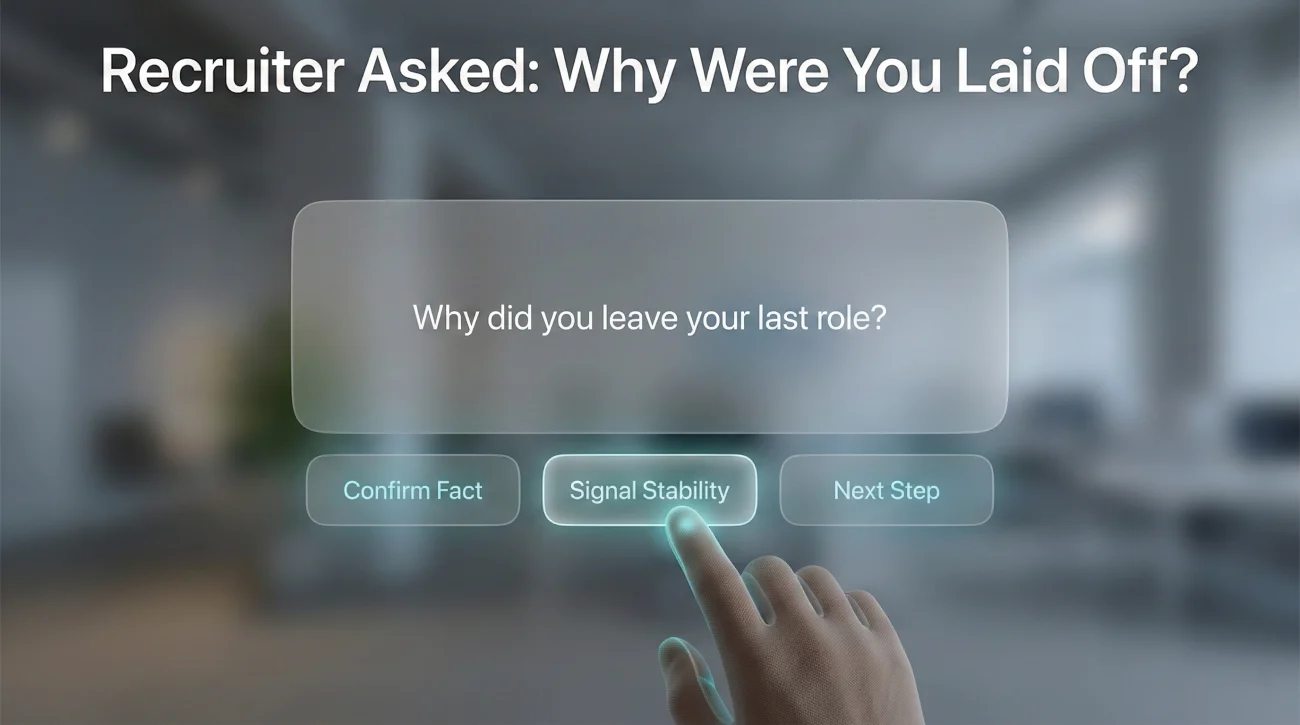
If a recruiter asks about a layoff, your job is to confirm the fact and protect momentum. Use a short structure that signals: It was business-driven, you are available, and you are already moving forward. Pick one of the three replies below based on how much detail you can safely share and how “cold” the … Read more

Why Did You Leave Your Last Job When You Were Laid Off

Why Did You Leave Your Last Job Laid Off

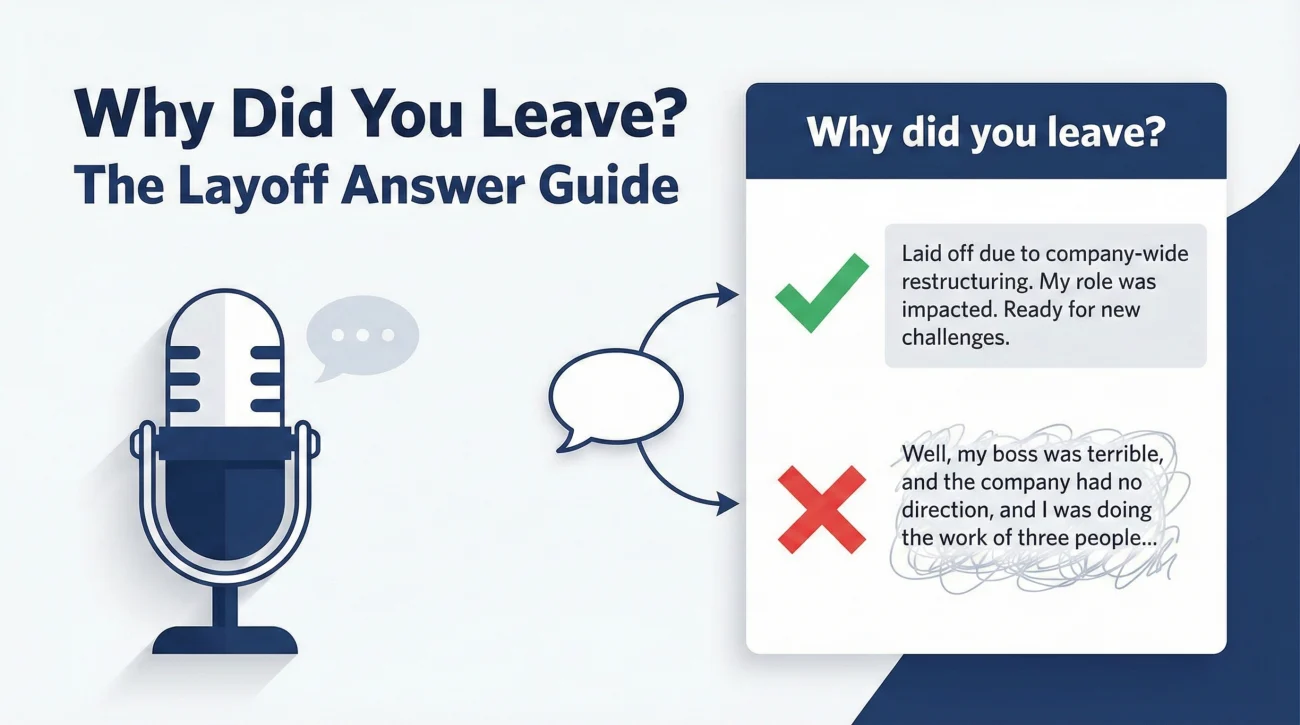
If you were laid off, your answer should sound factual, closed, and forward. Not emotional, not defensive. Use a 12-second structure. What happened, how big it was, what you delivered, what you are targeting next. Prepare two versions. A short answer for the first screen, and a longer answer only if they ask follow-ups. Why … Read more

Reason for Leaving Laid Off: Short Answers for Applications

Reason For Leaving Laid Off

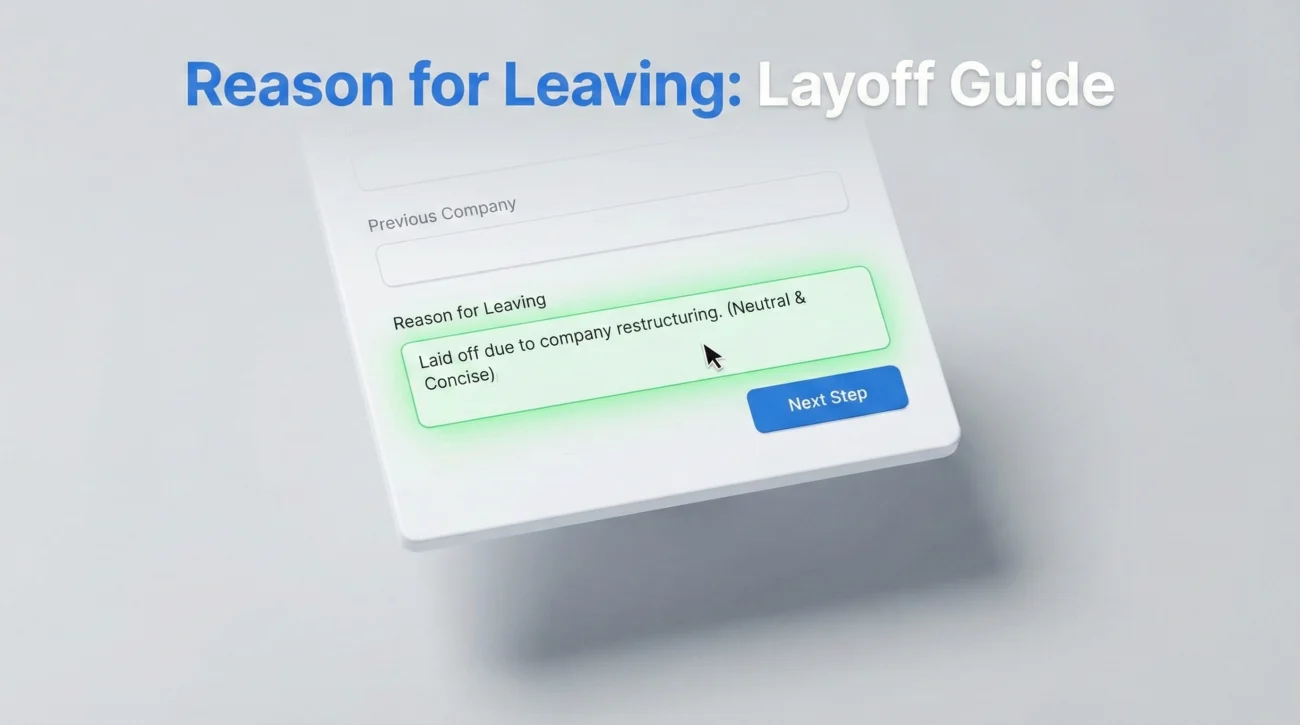
Your “Reason for leaving” field is a classifier, not your life story. Use one layoff label that matches what your company would confirm, then stop. Add one optional signal only when it reduces doubt, not to “sell” the layoff. The Quiet Problem With “Reason for Leaving” on Applications Most candidates treat the “Reason for leaving” … Read more

Company Shut Down: Resume Wording Plus Verification Answers That Keep It Simple

Company Shut Down Resume Wording

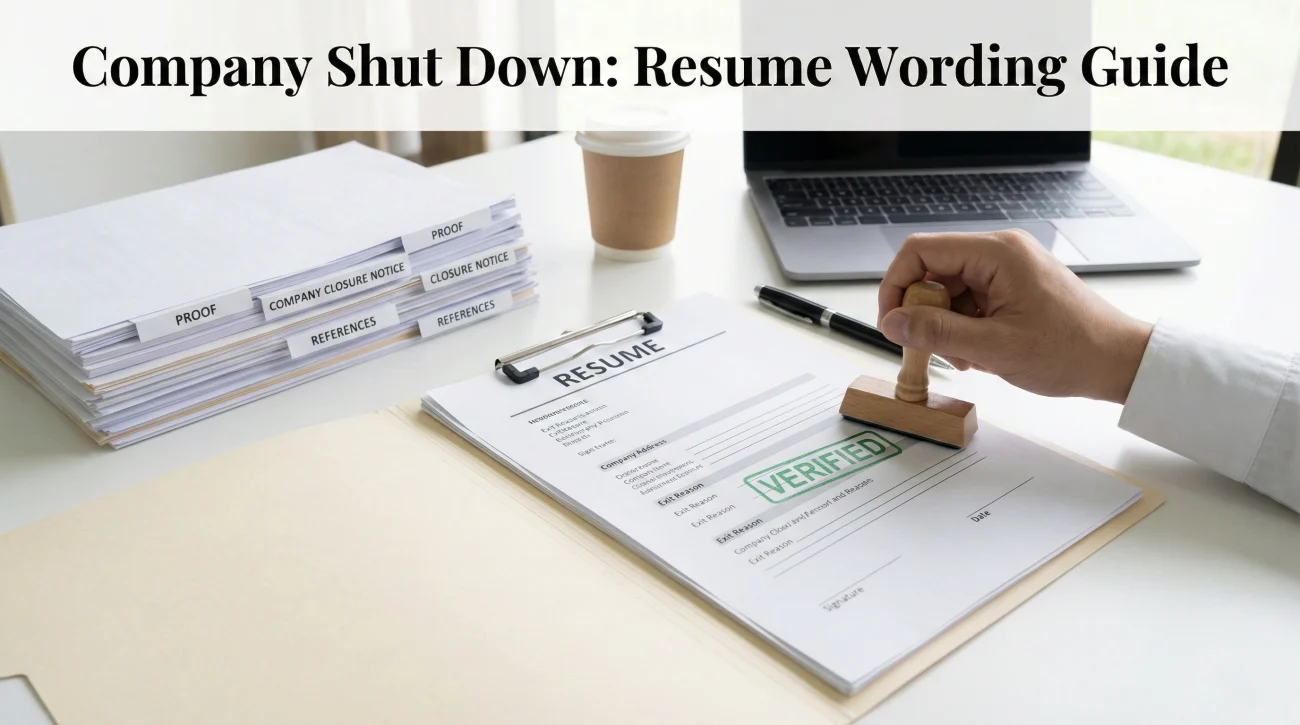
If your past employer shut down, your goal is verifiability, not a dramatic explanation. Use a neutral closure label only when it prevents confusion, not as a “confession line.” Prepare a simple verification path: One contact, one document, one calm sentence. When the Company Is Gone, Recruiters Stop Thinking About “Reasons” and Start Thinking About … Read more

Multiple Layoffs: How To Explain Being Laid Off Twice Without Looking Like a Pattern

Laid Off Twice How To Explain

If you were laid off twice, your goal is not to “prove you’re unlucky”. Your goal is to remove pattern doubt with a simple story spine and one proof hook. Use one consistent label, add one stability signal, and include one verification-friendly detail. That is enough for most screens. Prepare a short interview answer that … Read more

Laid Off After a Short Tenure: Explain It Without Triggering Performance Doubts

Laid Off After 3 Months

A three-month job loss gets evaluated twice: The layoff reason and the short-tenure signal. Your goal is not to prove innocence. Your goal is to make the story feel structurally normal and closed. Use one neutral label, one stability marker, and one forward-looking bridge, then stop talking. A Three-Month Layoff Is Two Problems, Not One … Read more

If They Hint It Was Performance: A Calm Follow Up That Keeps You Credible

Were You Laid Off For Performance Interview

If the interviewer hints “performance”, they are usually testing risk and maturity, not hunting for drama. Use a two sentence anchor answer, then add one proof cue instead of overexplaining. Have three calm boundary lines ready if they keep pushing for details you cannot share. When “Layoff” Sounds Like a Cover Story, They Push On … Read more