Reset

Employment Gaps and Background Checks: Keep Dates and Story Consistent

Employment Gap Background Check Explanation

Background checks verify employment dates and titles, not your gap explanations or health reasons Date mismatches between your resume and what former employers report are the most common verification failures Pick one source of truth for all dates and use identical wording across every document Prepare your references with a brief script so their answers … Read more

Recurring Health-Related Gaps: A Stability Story for Stop-Start Timelines

How To Explain Recurring Employment Gaps Due To Health

Multiple health-related gaps create a “pattern problem” that single gaps don’t face Stop explaining each gap individually and start telling one unified stability story Restructure your resume to emphasize skill continuity over chronological perfection Prepare specific interview lines that shut down gap-by-gap interrogations The Pattern Problem Nobody Talks About Most career advice treats employment gaps … Read more

The “Silent Market” Strategy: Why Tracking Applications Beats Mass Applying

The Silent Market Strategy

The Market Reality: Indeed Hiring Lab data shows job postings are flatlining, not crashing. This “low hire, low fire” environment creates a silence that feels like rejection. The “Spray and Pray” Trap: Applying to 50 jobs in a weekend doesn’t increase your odds; it destroys your quality control. HR systems flag serial appliers as low-intent … Read more

The Clean Exit Protocol: How to Resign Without Risk in a Low-Turnover Market

The Clean Exit Protocol

The Market Shift: With the quits rate dropping to 2.0% (BLS), the “Great Resignation” is over. Leaving a job is now a high-visibility event. The Narrative Trap: Recruiters view “messy” exits as risk signals. Your story must be consistent from your resignation letter to your next interview. The Paper Trail: Verbal resignations are dangerous. Always … Read more

The “Fine but Fuzzy” Trap: Why Resumes Fail in a 4.3% Unemployment Market

Why Resumes Fail In A 4

The Market Reality: Data from January 2026 shows a “soft freeze”: hiring is happening (+130k jobs), but standards have skyrocketed. The 7.4-Second Rule: Research confirms recruiters spend under 8 seconds scanning a resume. We don’t read for potential; we scan to rule out risk. The Cost of Risk: With bad hires costing up to 200% … Read more

A 2-Year Health Gap Explanation That Sounds Stable: The 3-Sentence Story

How To Explain A 2 Year Employment Gap For Health Reasons

Two-year gaps trigger stability questions that shorter breaks don’t face, so your explanation needs more structure Use the 3-sentence story formula: pause reason, recovery actions, current readiness Include proof signals like recent projects, certifications, or volunteer work to show momentum Keep your story consistent across resume, application forms, and interviews to avoid red flags during … Read more

If They Push for Details: Polite Boundary Scripts for Health-Related Gaps

How To Respond When Interviewers Ask For Health Details

You are never required to share medical details in interviews. “Health matter” is a complete answer. Boundary lines should be polite but firm. Redirect to qualifications, not defensiveness. If questions become truly inappropriate, you can end the interview. Some companies are not worth working for. When They Keep Pushing A marketing specialist named Dara had … Read more

Phone Screen Gap Question: A 10-Second Health Script That Moves On

How To Explain Employment Gap In A Phone Interview For Health Reasons

Phone screen answers should be 10 seconds maximum: acknowledge, reassure, pivot. The recruiter is checking a box, not conducting therapy. Give them what they need to move forward. Pivot immediately to the role or your qualifications. Do not wait for follow-up questions. Ten Seconds That Decide Everything A data analyst named Chantell had a nine-month … Read more

Employment Gap on Job Applications: 12 Short Answers That Do Not Overshare

What To Write For Employment Gap On Application

Application form answers should be 1-2 sentences maximum. The form captures basic information, not your full story. Keep answers short, neutral, and forward-looking. Do not over-explain or use emotional language. Your application, resume, and LinkedIn must tell the same story with matching dates. The Text Box Trap A project coordinator named Andre faced an online … Read more

Returning to Work After a Mental Health Break: Build a Recent Activity Section Recruiters Trust

Returning To Work After A Mental Health Break Resume

A Recent Activity section bridges the gap between your break and now, showing you are ready to work. Credible activities include courses, volunteer work, freelance projects, and professional development – not hobbies or self-care. Write bullets honestly. Do not pretend volunteer work was a job or inflate minor activities into major accomplishments. Proof You Are … Read more

Resume Formatting for Employment Gaps: 3 ATS-Safe Layouts

Resume Formatting Options For Employment Gaps

Three ATS-safe layouts handle gaps differently: chronological with gap line, selected experience, or projects-focused. Functional resumes that hide dates entirely often backfire. Recruiters notice and assume the worst. ATS systems break on tables, columns, headers/footers, and creative date formatting. Keep it simple. Format Shapes Perception A product manager named Jennifer had an 18-month gap after … Read more

Medical Leave on a Resume: List It or Leave a Clean Gap

Medical Leave Of Absence On Resume

Short medical leaves (under 6 months) often need no label. The gap between dates tells enough. Longer leaves benefit from a brief entry that accounts for time without inviting medical questions. Never use specific diagnoses or treatment details. “Medical leave” or “health-related absence” is sufficient. The Labeling Decision A financial analyst named Derek took seven … Read more

Mental Health Resume Gap Wording: 10 One-Line Options That Sound Stable

The Mental Health Resume Gap

Mental health gaps need one neutral line maximum. “Health-related leave” or “personal health matter” is enough. Never use clinical terms on your resume. Save specifics for interview if asked directly. The line’s job is to close the question, not open a conversation. One Line That Closes the Door A UX designer named Mira took eight … Read more

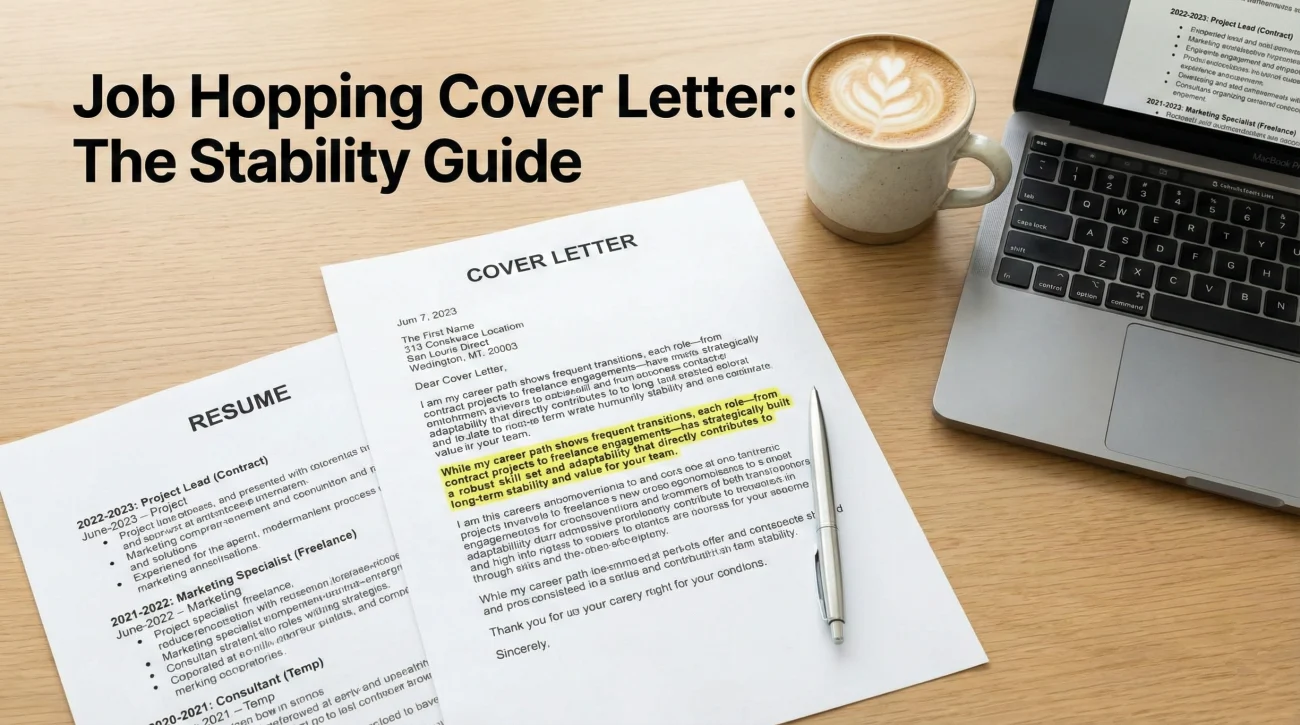
Cover Letters for Hard Cases: When One Paragraph Helps and When It Hurts

Cover Letter Sticky Situations

Cover letters cannot fix major concerns – they can only prevent minor concerns from becoming rejection reasons. Most sticky situations are better addressed in interviews than in writing. Written explanations become permanent records. When you do explain, one tight paragraph maximum. Anything longer sounds defensive. The Explanation Trap A operations manager named Giulia had a … Read more

Contract and Gig Context: Make a Contract-Heavy History Look Stable

Contract Work On Resume

Contract work creates a verification puzzle: the company you worked at daily may not be who HR calls to confirm employment. Display both agency and end client when possible. This prevents background check confusion and shows real scope. Grouped contract entries beat scattered short stints. Continuity framing changes how recruiters read your history. The Background … Read more

Dates, Gaps, and Education Cleanup: Fix the Timeline Without Creating New Questions

Resume Dates

Dates are signals, not just facts. Every format choice communicates something about stability, honesty, and attention to detail. Month/Year is standard for employment. Year-only raises questions. Exact days are unnecessary and look odd. Education dates over 15 years old can be removed. Recent graduates should keep them. The Hard Rules These are not suggestions. Violating … Read more