How to Write a Resume Summary: A Simple Formula That Sounds Human
How To Write A Resume Summary

A resume summary is not a mini bio. It is a proof-led positioning line that tells a recruiter what you do, where you fit, and what evidence backs it. Use a 4-part formula: Target role + Specialty + Proof anchor + Scope constraint. This is the fastest way to sound specific without sounding robotic. If … Read more
Resume Summary vs Resume Objective: Which One Works Now and Why

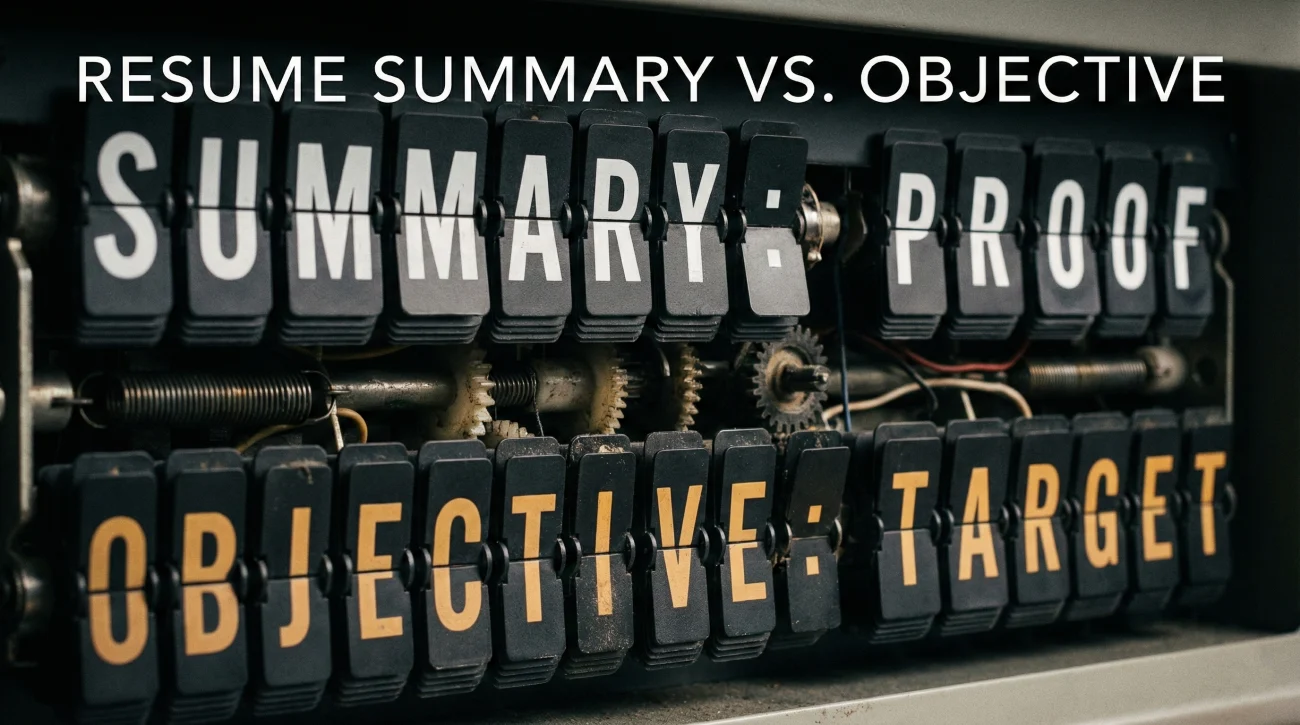
Resume Summary Vs Objective

If you can prove value, lead with a summary. If you need to prevent a wrong assumption, use a modern objective. The fastest decision rule: summary answers “What can you deliver?” objective answers “Where are you aiming, and why is it credible?” A 2026 objective only earns its space when it contains a target + … Read more

Downleveling After a Health Break: Explain Why This Level Now

How To Explain Taking A Lower Level Job After Health Break

If you are taking a lower level role after a health break, hiring teams are testing risk, retention, and readiness more than ambition. A strong explanation has three parts: the break is closed (without medical detail), the level is intentional, and your runway is stable. Pick one story framework and stick to it: Skill Anchor, … Read more

Resume Summary: Write 4-6 Lines That Make the Rest of Your Resume Easier to Believe

Resume Summary

A resume summary is not an introduction. It is a credibility snapshot that makes everything below it easier to believe. Four elements make summaries work: target role clarity, proof hint, scope signal, and professional tone. Miss any one and the summary falls flat. Keep it between 3 and 5 lines. Longer summaries read like you … Read more