- If the interviewer hints “performance”, they are usually testing risk and maturity, not hunting for drama.
- Use a two sentence anchor answer, then add one proof cue instead of overexplaining.
- Have three calm boundary lines ready if they keep pushing for details you cannot share.
When “Layoff” Sounds Like a Cover Story, They Push On Performance
People rarely google were you laid off for performance interview because they want a perfect script. They google it because the interviewer’s tone changes. It is not the polite “Why did you leave?” question. It is the version with an eyebrow raise, a pause, and a follow up that implies: “That was a layoff, but was it really?”
I have seen this exact moment play out in good companies and messy ones. Sometimes the interviewer is simply doing risk control. Sometimes they have been burned by a “layoff” story that later turned into a reference check surprise. Either way, your goal is the same: Answer like a stable adult, not like someone pleading their case.
This guide is built for the objection, not the first question. It gives you reassurance lines, proof cues, and clean boundaries so you stay credible even when they press.
Why They Hint It Was Performance
Most “performance suspicion” moments come from one of three triggers. If you can name the trigger in your head, your answer stops sounding defensive.
| What they noticed | What they fear | What you should do |
|---|---|---|
| Short tenure or sudden exit | Pattern risk or mismatch | Give a clean timeline, then one proof cue |
| Role title changed, org changed, vague wording | Story inconsistency | Use a neutral label and keep it consistent |
| They have internal context from the market | They will hear a different story later | Acknowledge limits, do not overclaim |
Key Point: The fastest way to look guilty is to argue your innocence. Your job is to sound clear, complete, and done.
Notice what is missing from that table: You do not need to prove the company was wrong, or that the manager was unfair. That is courtroom energy. Interviews reward calm closure.
Build a Two Sentence Anchor Answer
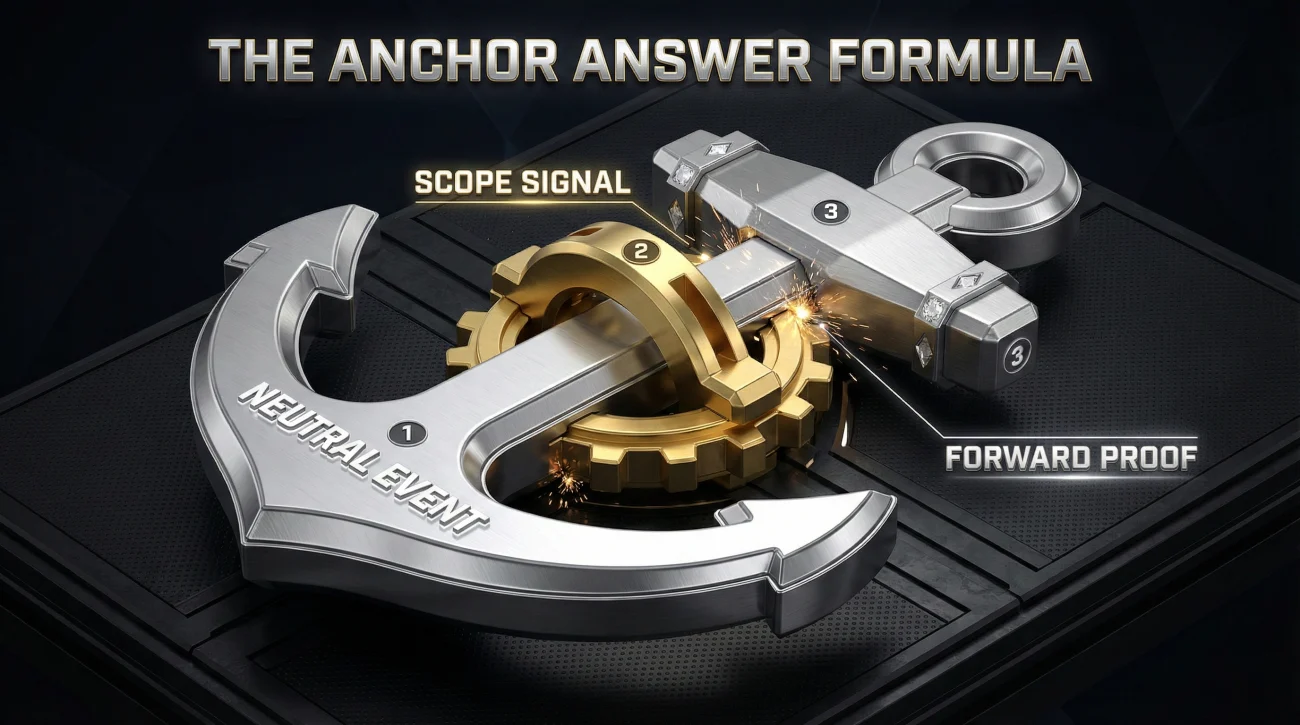
Generic advice online often stops at “Keep it brief.” That is correct, but it is incomplete. You need a brief answer that also prevents the next five follow ups.
Use this anchor structure:
[Neutral Event] + [Scope Signal] + [Forward Proof]
Here is what that sounds like in normal English:
“It was a reduction in force tied to a restructure. My team’s scope changed and my role was eliminated. Since then, I’ve been focused on roles where my strengths are a closer match, and I can walk you through the outcomes I delivered in my last two quarters.”
Before you move on, lock one version in your head. The goal is not variety. The goal is consistency.
💡 Pro Tip: Pick one version and repeat it everywhere. Consistency reads as truth.
Why it works: You gave a neutral event, you gave a scope signal, and you offered forward proof. You did not beg them to believe you.
Six Proof Cues That Reduce Performance Suspicion

Proof cues are not “evidence dumps.” They are small details that make a layoff sound structural, not personal. Use only one at a time unless they ask for more.
- A scope number: “Our org reduced headcount by about 20%.”
- A team signal: “My entire function was consolidated.”
- A timing signal: “This was part of a quarterly restructure.”
- A transition signal: “I documented handoffs and closed projects cleanly.”
- A performance context signal: “My last review was on track for goals at the time.”
- A forward proof signal: “Here’s a metric from the work I delivered right before the change.”
⚠️ Warning: Do not claim you had a “perfect review” unless you can stand behind it. Overclaiming is how a simple layoff story becomes a trust problem later.
One of my peers in HR, Jessie, coached a product marketer who kept losing interviews at the exact same moment. Her mistake was not the layoff story. Her mistake was adding extra “I was a top performer” lines that she could not support. We stripped it back to one proof cue and one forward proof. She stopped triggering the follow up trap.
What This Sounds Like In a Real Interview
This is the exchange that causes people to spiral. Read it once like a script, then read it again like a calm adult who is done with the topic.
Scenario: They ask the question that implies your “layoff” was actually performance.
Just to be clear, was this a performance situation or a layoff?
It was a restructure and a role elimination. My team’s scope shifted and the position was removed. I’m happy to walk you through the outcomes I delivered and the kind of environment where I perform best.
That answer labels the event, avoids a long defense, and pivots to value. The pivot sentence is what most generic guides fail to teach.
Ten Reassurance Lines You Can Use When They Hint “Performance”
These are not magic phrases. They are reassurance lines designed for different scenarios. Pick the one that matches your reality, then pair it with one proof cue from earlier.
1) Use when it was a classic RIF:
“It was a restructure, and the role was eliminated.”
Add one scope signal if you have it. Then pivot to outcomes.
2) Use when the company pivoted:
“My team’s priorities changed, and my position was no longer in the plan.”
This keeps the story structural, not personal.
3) Use when they are explicitly fishing for performance:
“The decision was about headcount, not day to day performance.”
Deliver it flat. Do not add extra commentary unless asked.
4) Use when you can safely reference status at the time:
“My last review cycle was on track when the org change happened.”
Only use if true. It is a proof cue, not a brag.
5) Use when you want to move them to evidence fast:
“I can share the outcomes I delivered in the months before the change.”
This shifts the conversation to your work product, which is the safest ground.
6) Use when the role was chaotic and you want to signal maturity:
“I learned what role conditions help me do my best work, and I’m targeting that fit.”
This signals growth without blaming anyone.
7) Use when the role is metric driven:
“The metrics I’m proud of are these, and I can explain how I got them.”
Pick one metric. One story. Keep it clean.
8) Use when you cannot share internal details:
“I’m careful to keep the details professional, but the category was a role elimination.”
This sets a boundary without sounding evasive.
9) Use when you want to reduce “drama risk”:
“I exited cleanly, handed over work, and left on professional terms.”
Short is stronger here. Do not narrate emotions.
10) Use when they keep probing and you want to reframe:
“If you’re assessing repeat risk, I can show how I manage priorities and communicate early.”
This turns the suspicion into a fit conversation.
One candidate, George, used to answer this objection with a five minute story. The longer he spoke, the more the interviewer doubted him. We switched him to one reassurance line plus one proof cue. He told me later the room literally relaxed after his answer, because it sounded complete.
Three Boundary Moves If They Keep Pushing
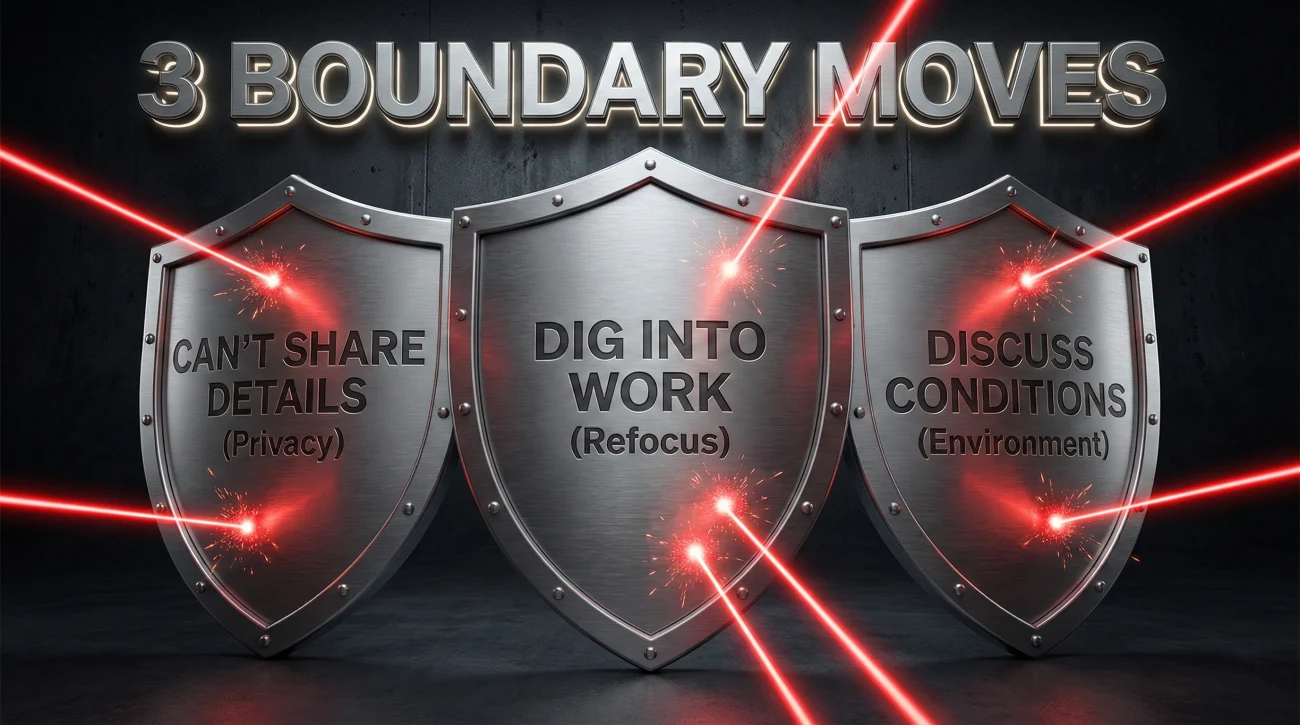
Sometimes the interviewer will not let it go. You do not need to “win.” You need to stay professional and protect yourself from oversharing.
Boundary move 1: Use when you cannot share internal details.
“I can’t share internal details beyond the category, but I can absolutely speak to my results and references.”
Boundary move 2: Use when they repeat the suspicion after you answered once.
“I understand the concern. The cleanest way to assess fit is to dig into how I work and what I delivered.”
Boundary move 3: Use when the role requires a very specific environment.
“If this role needs a very specific environment, I’m happy to discuss the conditions where I perform best.”
❌ Note: Do not say “They can’t verify that.” That invites verification.
These boundaries are not evasive when delivered calmly. They signal maturity. They also stop you from saying something inconsistent under pressure.
If It Was Not a Pure Layoff, Do Not Borrow the Word
This is the part many low quality guides dodge. If your exit was a mutual separation, an early end to a role, or a situation where performance was part of the context, you still can be honest without self destructing.
What you should not do is label it as a layoff if that is easy to contradict later. Borrowing a label that can be checked is how a simple story becomes a trust problem.
Instead, use a category you can stand behind, then move forward:
“We agreed the fit was not right as the scope changed. I took responsibility for what I could control, and I’m now targeting roles where the expectations and support match the way I deliver.”
That answer is not an essay. It is an adult sentence. It keeps the conversation professional, then points back to fit and outcomes.
A Calm Mini Framework You Can Practice
If you want something you can rehearse without sounding rehearsed, use this:
- Sentence 1: Label the event neutrally.
- Sentence 2: Add one proof cue.
- Sentence 3: Pivot to value and fit.
Try it with your own details until you can say it in one breath.
Common Mistakes That Make Suspicion Worse

These are the traps I see most often when candidates are stressed:
- Overexplaining the timeline, then contradicting yourself.
- Blaming a manager or calling the company “toxic.”
- Saying “It had nothing to do with performance” as an absolute statement.
- Trying to sound like a victim instead of a professional.
- Turning the answer into therapy instead of context.
The missing piece is not “be positive.” The missing piece is having a short anchor and a proof cue, so your answer sounds complete.
Final: Turn the Performance Hint Into a Fit Conversation
If the interviewer hints “performance,” do not argue. Anchor the event, add one proof cue, and pivot to the work you can do for them. That is how you stay credible without oversharing.
When you need a repeatable way to handle tense moments, treat it like crisis communication: Calm, consistent, and designed to reduce perceived risk. That is the spirit of were you laid off for performance interview.
❓ FAQ
🎯 Should I mention a performance improvement plan if they ask directly?
If you must answer, keep it factual and brief, then move to what changed in your approach. Do not share internal documents or emotional detail. Your goal is to show ownership and forward improvement, not to relive the situation.
🧩 What if the layoff happened right after a bad quarter?
Use the two sentence anchor and one proof cue tied to scope. Avoid arguing about blame. Highlight what you controlled and what you delivered despite constraints.
🛡️ How do I answer if I cannot share details due to policy?
Use a boundary line: You can share the category and your results, but not internal specifics. Then immediately offer proof through outcomes, portfolio, or references.
📌 Is “made redundant” a safe phrase everywhere?
It can be region dependent. Choose a label that fits your market, and keep it consistent across interviews, your resume, and any written applications.
🚦 What if they keep pressing even after I answer calmly?
Repeat your anchor once, then pivot to outcomes. If they cannot move on to your work after a clear answer, that is a signal about their culture. You do not need to escalate.
⚠️ Disclaimer: ResumeSolving provides resume, cover letter, and job search communication guidance for informational purposes only. It is not legal, medical, financial, or professional counseling advice. Hiring decisions vary by company, role, location, and individual circumstances, so we do not guarantee interviews, offers, or outcomes. Always use your own judgment, verify requirements directly with the employer, and follow local laws and workplace policies. When a situation is sensitive, we prioritize privacy-safe, recruiter-appropriate wording, and you never need to share personal details you are not comfortable disclosing.