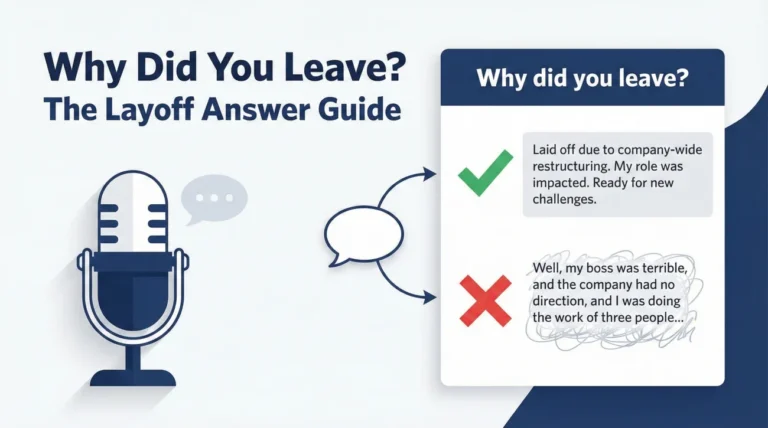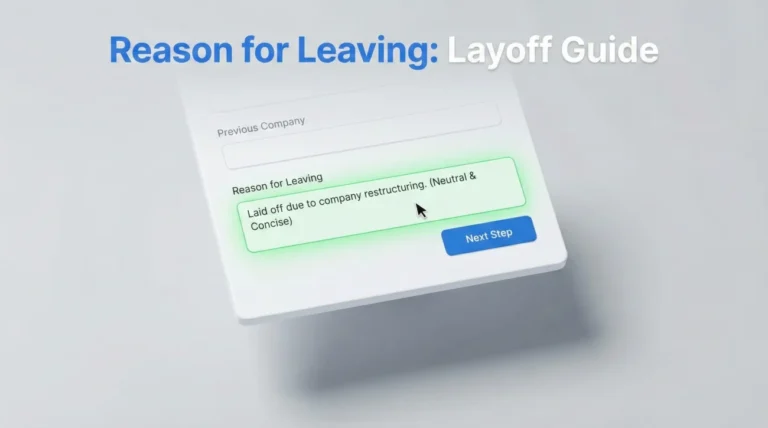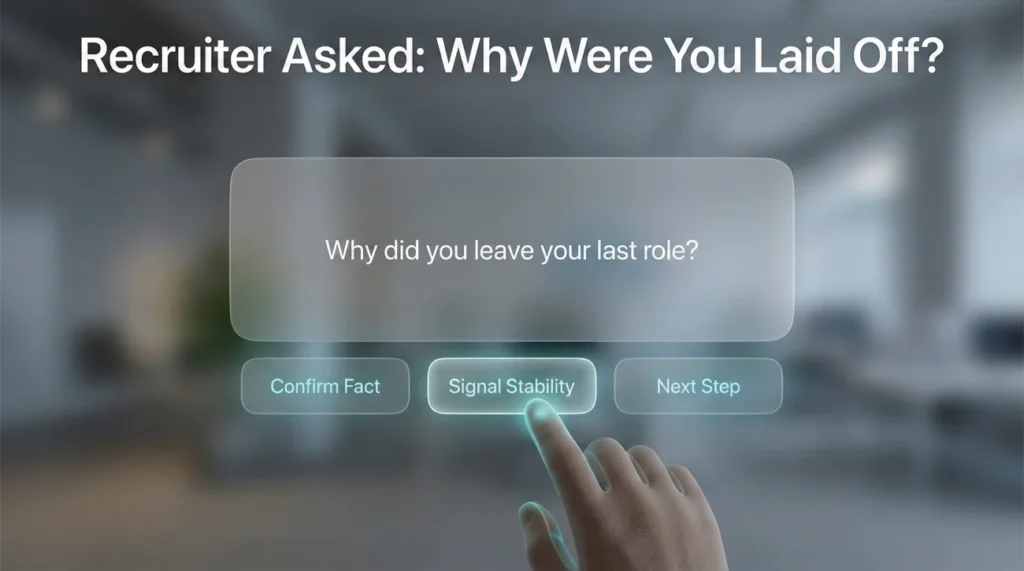
- If a recruiter asks about a layoff, your job is to confirm the fact and protect momentum.
- Use a short structure that signals: It was business-driven, you are available, and you are already moving forward.
- Pick one of the three replies below based on how much detail you can safely share and how “cold” the outreach is.
When A Recruiter Asks About Your Layoff, They Are Testing One Thing
I have seen the same pattern play out after a reduction in force. The recruiter is not asking because they are curious. They are asking because they want to know whether you will become complicated in the process.
The fastest way to keep momentum is to treat the question like a checkbox, not a confession. Confirm the fact, give one stability signal, and move the conversation forward with a clean next step.
In this guide, I am going to show you three written replies you can send the same day. Each one is designed to answer recruiter asked why i was laid off without oversharing, without sounding defensive, and without creating five more questions.
Key Point: Oversharing often creates new questions instead of resolving the one you were asked. Your reply should close the topic, not widen it.
Why This Is Harder In Email Than In An Interview
Most advice online is framed for interviews: You can use tone, pacing, and quick follow-up to steer the conversation. In email or LinkedIn, the words sit there. If you add extra detail, the recruiter can forward it, paste it into notes, or treat it as a “risk story” before you ever speak to a hiring manager.
That is why the goal is not to sound inspiring. The goal is to sound predictable and employable.
What Recruiters Are Really Listening For
When a recruiter asks about a layoff, they are usually sorting your answer into one of three buckets:
| What They Hear | What They Assume | What You Want Instead |
|---|---|---|
| Too many specifics, strong emotion, blame | This person may be hard to manage in process | Short, factual, forward-looking |
| Vague avoidance, weird phrasing, no clarity | It might be performance, conflict, or termination | Clear: It was a company decision |
| Factual confirmation plus next step | Low risk, ready to move | Momentum: Screening call, role fit, timing |
💡 Pro Tip: You do not need to “prove” a layoff. You need to make it sound like a closed event with no ongoing drama.
The Four-Part Sentence That Works In Real Life
This is the backbone I use with candidates when they want a reply that is calm and employable:
[Layoff Fact] + [Scope Signal] + [Forward Focus] + [Next Step Ask]
You will see that structure inside each template below. The wording changes, but the logic stays stable.
Should You Mention The Layoff First Or Wait Until They Ask
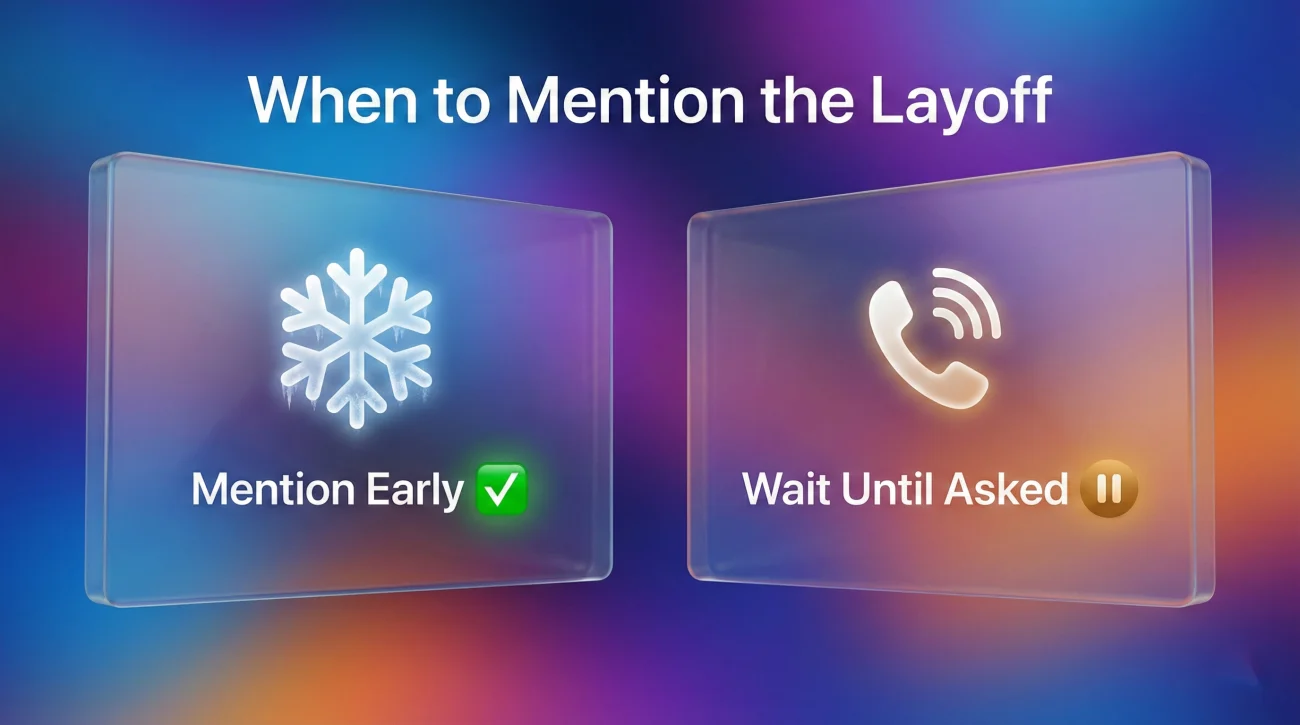
This is where generic advice fails people. “Always address it” can be wrong, and “Never mention it” can be wrong too. The right move depends on how the conversation started and whether your last role is already visible on LinkedIn.
Mention it early when the outreach is cold and your dates create questions: If the recruiter found you through a resume submission or a cold LinkedIn outreach, and your last role ended recently, they may be asking to confirm basic facts. In that case, answering quickly and cleanly reduces friction.
Wait when the recruiter has not raised it and you are already in a live conversation: If you are already scheduling a call and they have not asked, you do not need to volunteer it in a follow-up message. You can handle it if it comes up, but you do not have to lead with it.
⚠️ Warning: If you were laid off under an NDA or a confidential separation agreement, never hint at private details. You can be honest without being specific.
A Simple Rule That Stops You From Over-Explaining
If you catch yourself writing anything that sounds like a backstory, pause. In writing, backstory usually reads like risk. Keep it to one sentence that labels the event, one sentence that signals stability, and one sentence that asks for next steps.
If you want to share more, do it on a call after mutual interest is established. A live conversation gives you control over tone and pacing. A message does not.
Three Replies That Answer The Layoff Question And Keep Momentum
These are written for the moment a recruiter emails or messages: “I noticed you left your last role. Why?” or “Were you laid off?” The templates are short on purpose.
Each reply includes one stability signal and one next step ask. That combination is what moves you from “explaining” back to “being considered.”
| Reply Style | Best For | Risk It Avoids |
|---|---|---|
| The Clean Confirmation | Most layoffs, most industries | Oversharing, sounding emotional |
| The Fit-Forward Confirmation | When you want to steer back to the role fast | Recruiter assuming performance issues |
| The Confidentiality-Protected Reply | NDA, legal sensitivity, messy internal context | Getting pulled into details you cannot share |
Reply 1: Clean, Factual, And Done
This is the reply I recommend when you want the recruiter to stop digging and start scheduling. You confirm the layoff, show stability in one line, and immediately ask for the next step so the recruiter has something easy to do.
Subject: Re: [Role Title] | Quick Clarification
Hi [Name],
Yes, I was impacted by a company-wide layoff when the team was reduced. My performance was strong, and I left on good terms.
I am actively interviewing now and can move quickly. If it helps, I can share a few relevant projects aligned to this role. Would you prefer a brief call this week or a quick email screen?
Best regards,
[Your Name]
Reply 2: Confirm, Then Pull The Focus Back To Fit
A colleague of mine, Mercy, used a version of this after her startup reduced headcount. The turning point was simple: She did not defend herself. She treated the layoff as a company decision, then moved directly into what she could deliver next.
This reply works when you want to keep the conversation professional and tactical: Scope, success metrics, timeline. It also helps you avoid getting pulled into a back-and-forth about what happened internally.
Subject: Re: [Role Title] | Background And Timing
Hi [Name],
Correct, I was laid off during a broader reduction in force. Since then, I have been focused on roles where I can apply my experience in [Skill/Area] and drive outcomes like [Specific Result].
If you are open to it, I would love to confirm a few fit points: Reporting line, scope, and what success looks like in the first 90 days. If it is a match, I can make time for a quick call on [Two Time Windows].
Thanks,
[Your Name]
Reply 3: When You Cannot Share Details, But You Still Need To Sound Stable
Sometimes the layoff story is tangled: Confidential timelines, sensitive internal changes, or separation terms that limit what you can say. In those cases, hinting at drama hurts you more than it helps. A recruiter cannot “verify your side,” but they can decide you are complicated.
This reply is built for: You confirm the category, keep details private, and still make it easy to move forward.
Subject: Re: [Role Title] | Quick Clarification
Hi [Name],
Thanks for checking. Yes, my last role ended due to a business-driven restructure. I cannot share internal details beyond that, but it was not performance-related and I left on professional terms.
I am available immediately and I am actively interviewing. If the role is still open, could you share the compensation range, location or hybrid expectations, and the hiring timeline? If it looks aligned, I can do a quick call on [Two Time Windows].
Best regards,
[Your Name]
💡 Pro Tip: The phrase “Business-driven restructure” is a neutral label. It answers the category without inviting debate.
Six Subject Lines And Six Closers You Can Rotate
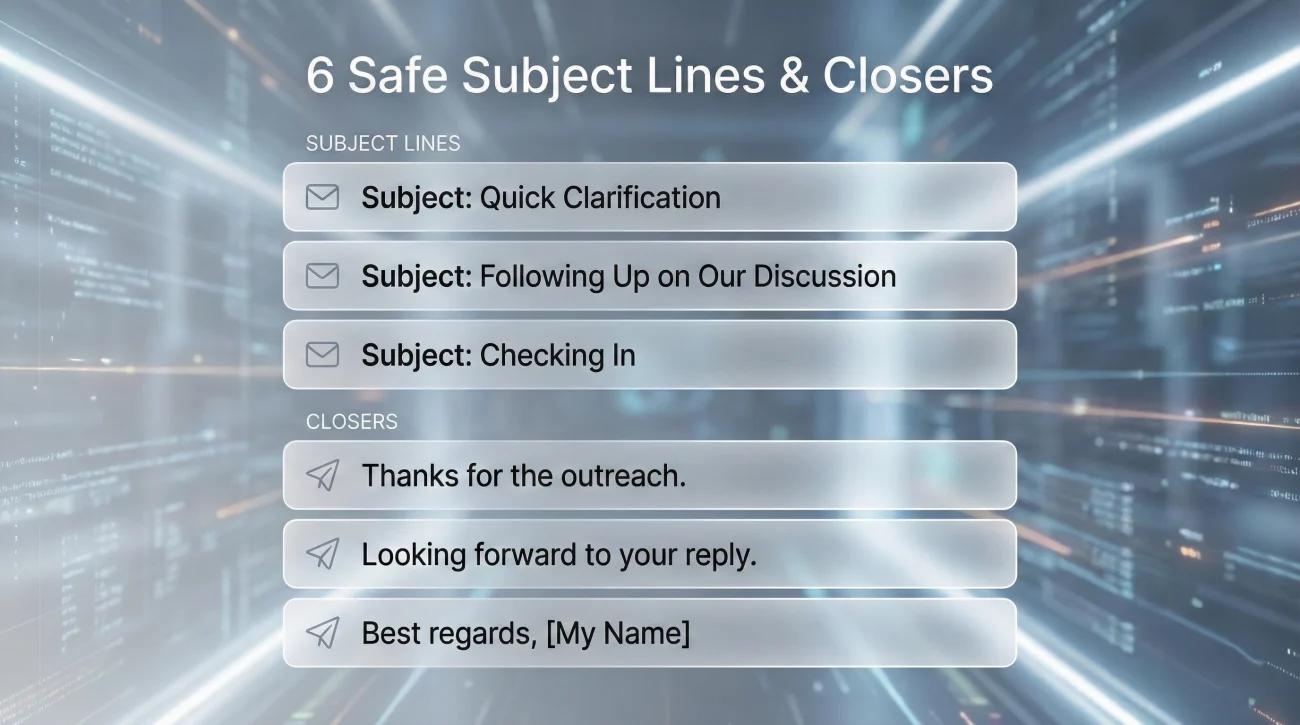
Most candidates reuse the same subject line and the same closing. That is not a huge deal, but rotating small details helps your message feel human, not copy-pasted.
Subject Lines
- Re: [Role Title] | Quick Clarification
- Re: [Role Title] | Availability This Week
- Re: [Company] | Background And Timing
- Re: Next Steps | [Role Title]
- Re: [Role Title] | Fit Check
- Re: [Role Title] | Scheduling Options
Closers
- ✅ Thanks for the outreach, I appreciate it.
- 📌 Happy to share a couple relevant projects if helpful.
- 🗓️ I can make time this week if you want to move quickly.
- 🤝 Looking forward to confirming whether this is a fit.
- 📩 If email is easier, I can answer a few quick screening questions.
- 💬 Either way, thanks for considering my background.
One small rule: If you use emoji in the closing list, keep it clean and consistent, and do not turn the email into a personality showcase. You are aiming for readable, not cute.
Common Mistakes That Turn A Layoff Into A Bigger Story
These mistakes are common because they feel emotionally “honest.” But honesty is not the same as helpful detail, especially in an async message. The recruiter is scanning for risk, and your job is to remove uncertainty, not add texture.
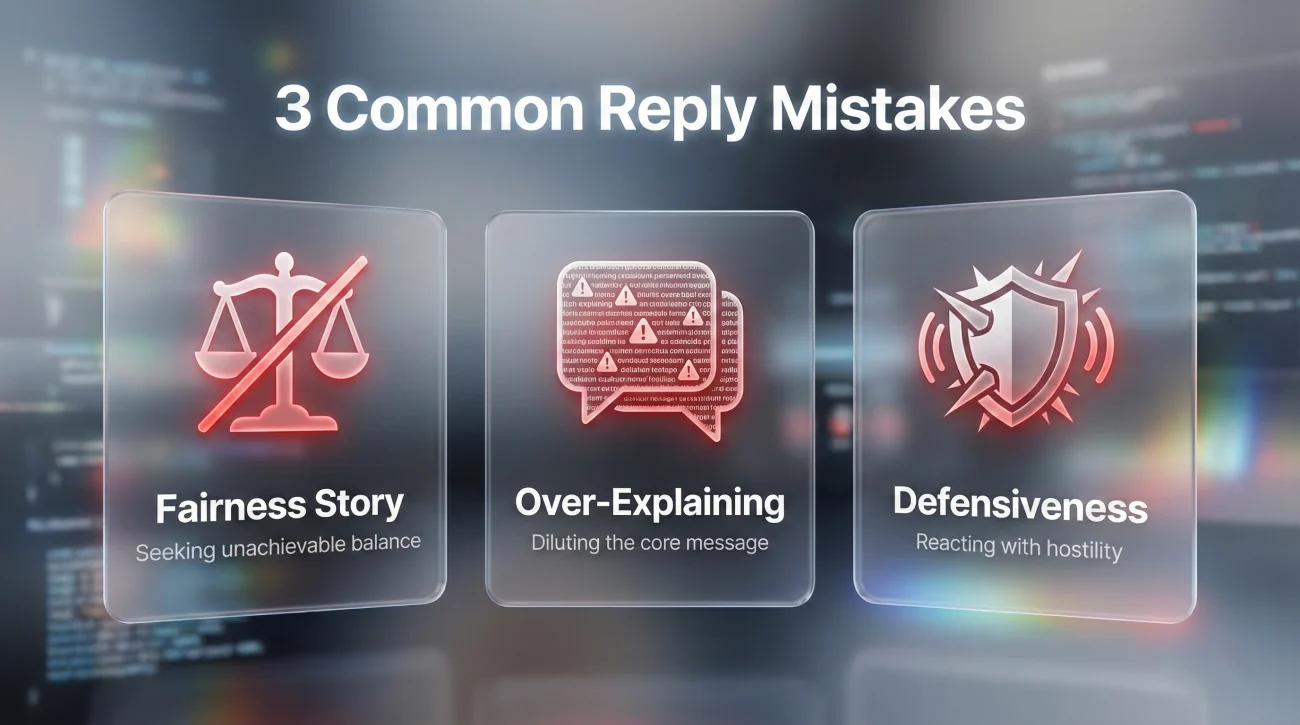
Mistake 1: Turning The Reply Into A Fairness Story
Many people write a mini-paragraph about how unfair the layoff was, how sudden it felt, or how confusing leadership became. That might be true, but it changes the tone of the conversation. The recruiter now has to manage your emotion, not just your candidacy.
A better move is to name the category once: “Company-wide layoff” or “Reduction in force,” then pivot to availability and next steps. That keeps the layoff contained.
Mistake 2: Naming Leaders, Politics, Or Internal Conflict
When you name internal politics, even subtly, it reads like blame. It also raises a trust problem: If you share sensitive context before you are hired, will you do the same after you are hired?
In writing, neutrality is power. A neutral label plus a forward focus beats a “let me explain what happened” every time.
Mistake 3: Over-Defending Your Performance
This is counterintuitive, but true: The more you argue you were not the problem, the more the reader wonders why you feel you have to argue. A calm sentence is stronger than a defense brief.
If you want a stability signal, keep it short and non-dramatic: “I left on good terms” or “My performance reviews were solid.” Then move forward.
Mistake 4: Adding Claims You Cannot Support
People throw in “Top performer” or “Best on the team” because they are anxious. If you cannot back it up with outcomes, it can sound like compensation. It also triggers the recruiter’s follow-up reflex.
If you want credibility, use a simple outcome reference: A project shipped, a metric improved, a system delivered. Or skip it and keep the message clean.
Mistake 5: Answering The Question Without Asking For The Next Step
This is the quiet killer. If you answer and stop, the recruiter has no action to take, so they may stop too. Momentum is a signal of stability.
End with something the recruiter can do immediately: Schedule a short call, confirm the hiring timeline, or send screening questions. You are making the process easy.
“I was laid off and it was honestly horrible. Leadership had no idea what they were doing and the whole thing was chaotic. I can explain the details, but it was definitely not my performance.”
That message might feel relatable, but it also hands the recruiter multiple new questions. You can keep your dignity without handing over your nervous system in text form.
A Quick Picker: Which Reply Should You Use Today
If you are staring at your inbox right now, here is the simplest way to choose:
- 📍 If the recruiter is neutral and you want speed: Use Reply 1.
- 🎯 If the role is competitive and you want to steer back to fit: Use Reply 2.
- 🔒 If you cannot share details safely: Use Reply 3.
⚠️ Warning: Do not mix them in one message. Combining “confidential” with “let me explain” creates confusion. Pick one lane and stay there.
One More Real-World Detail Recruiters Notice
A friend in internal recruiting once told me: The candidates who handle layoffs best do not sound surprised by their own story. Their message reads like they have rehearsed a clean version and moved forward. That calmness is not fake. It is a signal that the layoff did not break their professional rhythm.
Final: Answer The Layoff Question Like It Is A Checkbox, Then Move Forward
When you see the line recruiter asked why i was laid off, the temptation is to explain the full context so you do not feel misunderstood. In practice, the best reply does the opposite. It confirms the category, signals stability, and asks for the next step.
If you want a broader Crisis Management approach for handling sensitive career events without turning your resume or outreach into a long story, keep the message anchored to recruiter asked why i was laid off and keep the topic closed, factual, and forward-moving.
❓ FAQ
🎯 Should I say “laid off” or “position eliminated” in an email?
Either can work. “Laid off” is direct and widely understood. “Position eliminated” can sound slightly more formal. Pick one, keep the rest of the message short, then move back to role fit and next steps.
🧩 What if the recruiter asks if it was performance-related?
Answer once, calmly. You can say it was part of a broader reduction and you left on good terms. Then pivot back to fit and ask for the next step so the conversation does not become an interrogation.
🔒 What if I signed an NDA or separation agreement?
Confirm the category as business-driven and state you cannot share internal details. Then ask for the practical items that matter: Hiring timeline, scope, and screening process.
📩 Is it okay to answer this over LinkedIn message instead of email?
Yes. Keep it even shorter on LinkedIn. Confirm the layoff in one line, add availability, and propose a call. If they want more, move to email or a screen.
🗓️ How fast should I reply to this kind of question?
Fast is usually better, as long as it is calm and structured. A same-day reply helps you keep momentum and prevents the recruiter from filling in gaps on their own.
⚠️ Disclaimer: ResumeSolving provides resume, cover letter, and job search communication guidance for informational purposes only. It is not legal, medical, financial, or professional counseling advice. Hiring decisions vary by company, role, location, and individual circumstances, so we do not guarantee interviews, offers, or outcomes. Always use your own judgment, verify requirements directly with the employer, and follow local laws and workplace policies. When a situation is sensitive, we prioritize privacy-safe, recruiter-appropriate wording, and you never need to share personal details you are not comfortable disclosing.