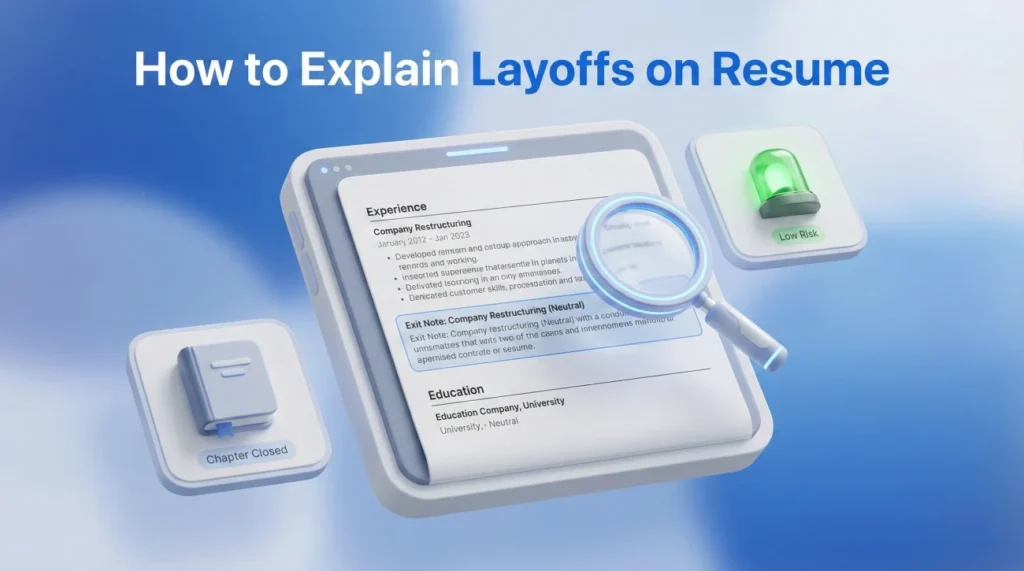
- You rarely need to “explain” a layoff. You need one placement decision that keeps the exit boring.
- A layoff note helps most when tenure is short, the exit timing looks abrupt, or you are applying to risk sensitive roles.
- Use one neutral line, then let achievement bullets do the persuasion. Avoid emotion, blame, and extra detail.
You Do Not Need A Story: You Need A Placement Decision
I worked with a candidate named Davor who had done everything “right” on paper: Solid performance reviews, a long run at one company, and a clean progression from Analyst to Manager. Then a restructure hit, his team was reduced, and he was out within a week. His first instinct was to protect himself by explaining everything.
He drafted a two sentence note under his last role, a mini timeline, and a line about the leadership decision. It was honest. It was also a magnet for follow up questions that did not help him.
That is the real trap with layoffs. Most people assume recruiters need the explanation. Recruiters usually need something simpler: A signal that the exit was structural, closed, and not a performance event. If you give them a whole narrative, you accidentally turn a normal layoff into a “case.”
In this guide, I will show you how to explain being laid off on a resume without overexplaining. The goal is not to convince someone you are a good person. The goal is to remove uncertainty, then get out of the way.
Key Point: A good layoff line is boring on purpose. It closes the loop and makes your bullet points the main story.
What Recruiters Are Actually Screening For After A Layoff
When recruiters see an end date, they do a fast mental check. They are not grading your emotions. They are trying to assess risk, speed, and fit. A layoff note only matters if it changes one of those judgments.
So what risk are they really worried about?
Usually one of these: Performance, stability, or availability. A messy layoff explanation can accidentally trigger all three.
| Recruiter Worry | What They Infer If You Overexplain | What Fixes It In One Line |
|---|---|---|
| Performance | “This sounds defensive. Was there a problem?” | Structural language: Team reduction, reorg, role eliminated. |
| Stability | “This keeps happening. Is this candidate risky?” | Closed chapter language: Affected by a reduction, then pivot to outcomes. |
| Availability | “Are they still tied up with the old employer situation?” | Neutral timing: End date is clear, note is short, no ongoing drama. |
Notice what is missing: Long explanations of what leadership did wrong, how unfair it was, or why it was not your fault. That content may be true, but it does not improve the screen.
When A Layoff Note Helps And When It Backfires
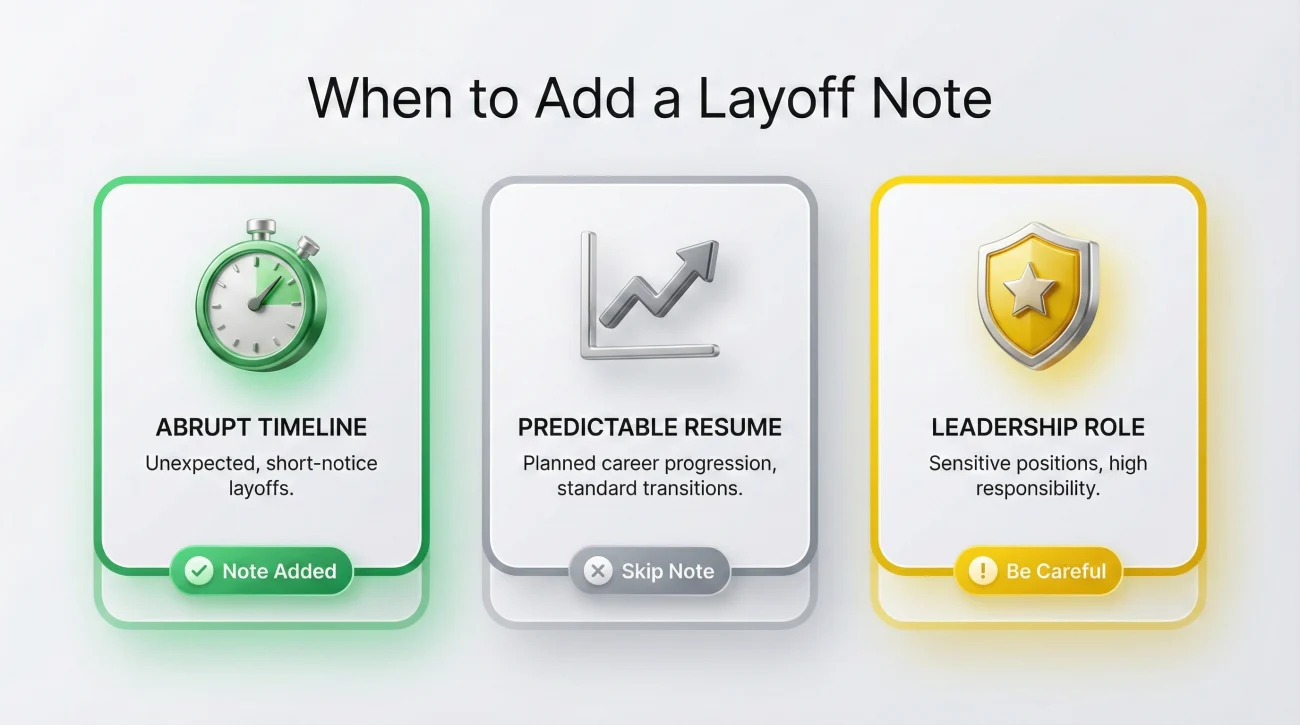
There is no universal rule like “Always mention it” or “Never mention it.” Real candidates live in context. I have seen both extremes hurt people, mostly because the advice ignored tenure length and role level.
💡 Pro Tip: Think like a recruiter skimming fast. If your resume already reads stable, a layoff note can be unnecessary. If your resume reads abrupt, a small note can prevent the wrong story.
Add A Layoff Note When The Timeline Looks Abrupt
If you were in a role for a short period, the end date can look like an exit event. In that case, a neutral note can stop the “Was this a firing?” assumption before it starts. This is where explain layoff on resume advice is most valuable, because the line is not about sympathy. It is about clarity.
I had a colleague in HR, Mara, who hired for ops roles. She told me she does not mind short tenures, but she hates ambiguity. If she sees four months with no context, she mentally flags it and moves on unless the resume is exceptional. If she sees “Role eliminated in a team reduction,” she keeps reading.
Skip The Note When Your Resume Already Looks Predictable
If you held the job for years, your bullets show outcomes, and you are not hiding dates, the layoff is rarely the headline. In those cases, adding a layoff note can do something weird: It can make the role feel less essential, as if the company could remove it easily.
If you have a strong next role or a clean transition, your best move is often to keep the experience section focused on results and let the timeline speak for itself.
Be Extra Careful In Leadership Roles
For Director and VP candidates, overexplaining is especially dangerous because senior hiring is risk averse. A long note can feel like baggage. A short note can feel like calm control. You want “structural event, closed chapter, still strong operator.”
One senior candidate I coached wrote: “Exited due to leadership conflict after strategy disagreement.” He thought it sounded confident. It sounded like ongoing drama. We replaced it with one neutral line and moved the leadership story into interview prep instead.
If the interviewer pushes for context, what is a clean way to answer?
I was part of a reduction after the reorg. I can walk you through the transition, but I would love to focus on the work I delivered and what I can do here.
Three Placement Options That Keep The Resume Clean
Most low quality guides give you a sentence. They do not tell you where to put it. Placement changes the signal.
Here are three options I use in real resume rebuilds, with the tradeoffs spelled out.
| Placement Option | Where It Goes | Best For | What It Signals |
|---|---|---|---|
| Inline exit note | Same line as the role, after dates | Short tenure, abrupt end dates | Clarity without drawing attention. |
| One line under the role | First bullet or a short standalone line before bullets | Mid tenure roles, leadership roles with sensitivity | Controlled context, then back to impact. |
| No note | Nothing added | Long tenure, stable progression, clean next step | Confidence and focus on results. |
⚠️ Warning: Do not invent numbers about workforce reduction unless you can prove them. “20% reduction” sounds specific, but if you cannot support it, it becomes a credibility risk.
Five Copy Ready Examples You Can Adapt
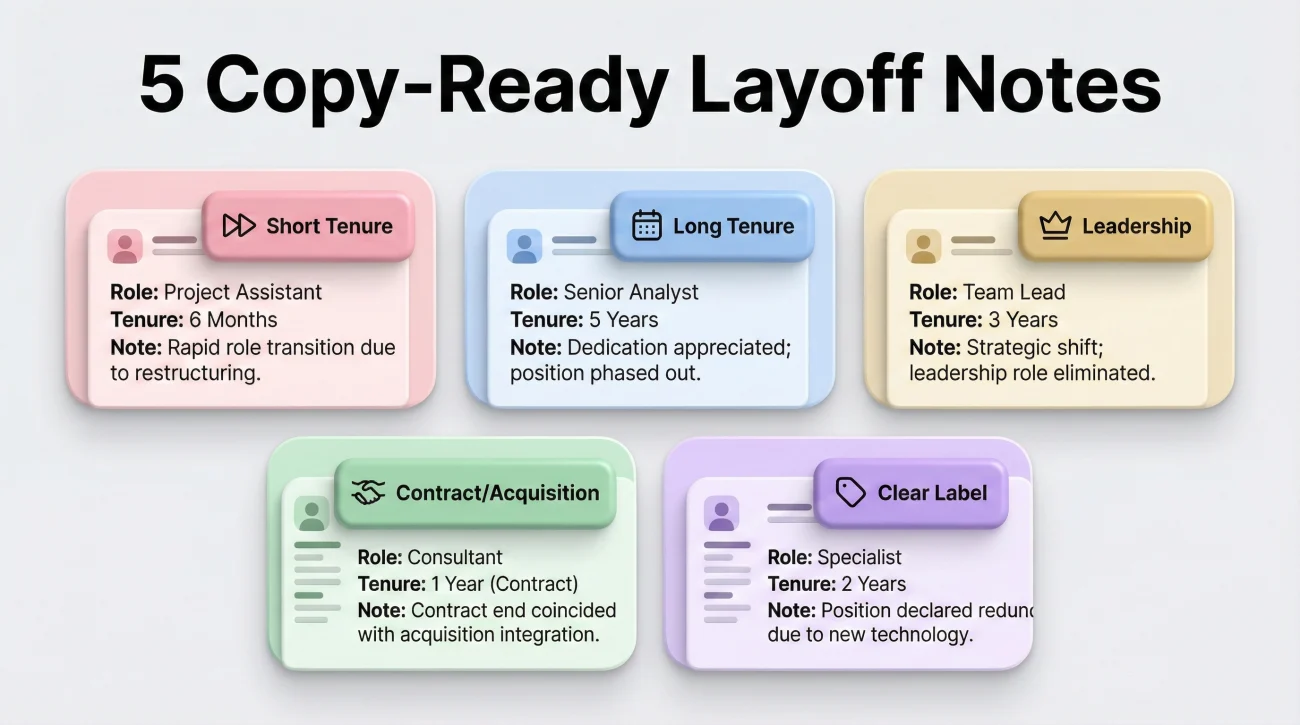
These examples are designed to be boring in the best way. Each one is short, neutral, and closed. Use them as patterns, not as scripts you paste without thinking.
This is the part most people mean when they search laid off on resume wording, but the bigger win is matching the line to your situation.
Example 1: Short Tenure, You Need Clarity Fast
If you were in the role for a few months, you want the line to prevent a performance assumption without sounding like a defense statement. Keep the note in the header line so the reader does not have to hunt for context.
– Built weekly KPI dashboard used by 3 managers to spot bottlenecks
– Reduced manual reporting time by 6 hours per week through automation
Example 2: Long Tenure, Keep It Minimal
If you were there for years, your job is to keep the exit line small and let your achievements dominate the scan. A single neutral line is enough, then you go straight back to impact.
One line note: Role impacted by restructuring in 2025
– Led retention plan that improved renewal rate by 9 points across a 120 account book
– Built onboarding playbook adopted by 6 CSMs and used in new hire ramp
Example 3: Leadership Role, No Drama Language
Senior roles get punished for emotional framing. This example stays structural and keeps the tone controlled. Notice the note does not name individuals, conflict, or blame.
One line note: Position impacted by reorganization following budget consolidation
– Rebuilt pipeline strategy and increased qualified leads by 34% in two quarters
– Managed a 9 person team across paid media, lifecycle, and content
Example 4: Contract Or Acquisition Confusion, Use A Neutral Label
Sometimes candidates were not laid off in the classic sense, but the role ended because the structure changed. Use language that closes the loop without implying blame. This keeps your exit aligned with how contracts and acquisitions actually work.
One line note: Engagement concluded after program consolidation
– Delivered rollout plan across 4 sites and trained 18 stakeholders
– Created documentation set that reduced onboarding time for new PMs
Example 5: You Want To Avoid “Laid Off” But Still Be Clear
If your industry reads “laid off” as very normal, you can use it. If your industry prefers formal phrasing, you can use “position eliminated.” The key is that the line stays short and the rest of the section proves value.
– Built variance model for monthly close and cut reconciliation time by 25%
– Partnered with FP&A lead to standardize reporting across 3 business units
One more detail people forget: Your resume should not be your only record. If your LinkedIn implies you are still employed but your resume shows an end date, that mismatch can raise more questions than the layoff itself. Keep the facts aligned, and keep the tone calm.
Five Things That Make A Layoff Look Messier Than It Was
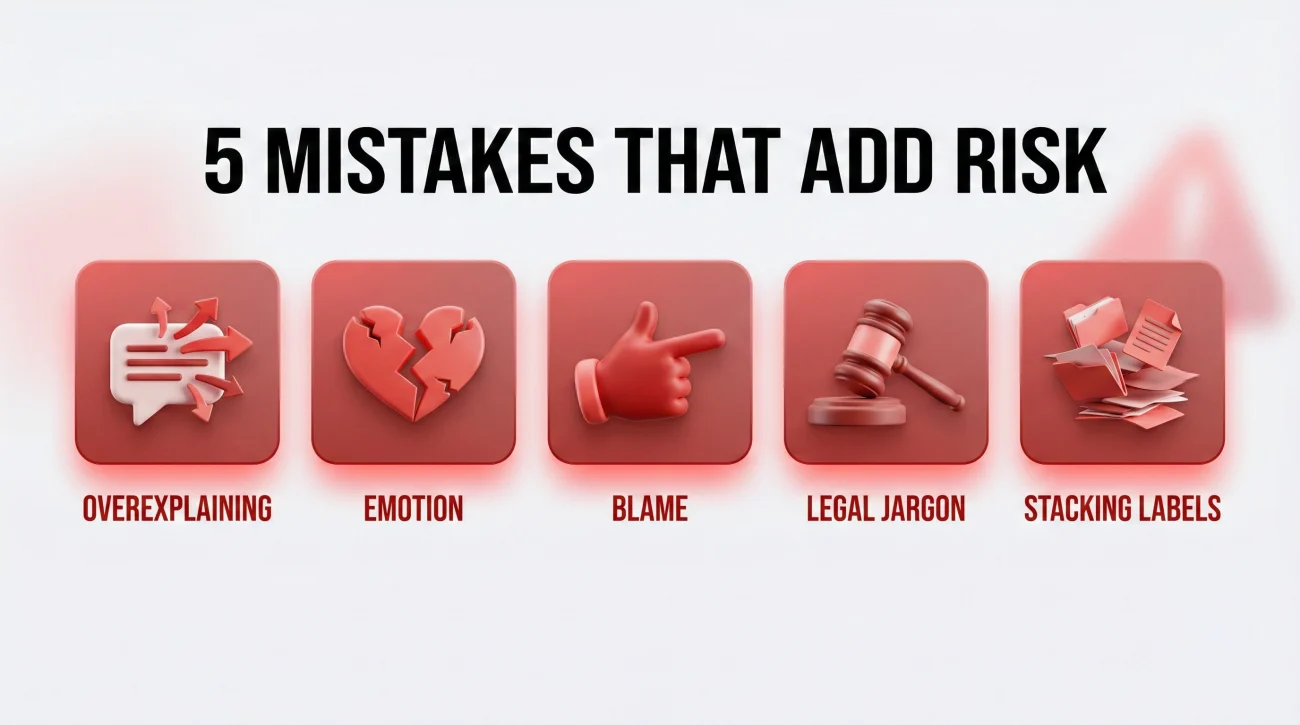
I have reviewed hundreds of layoff resumes. The ones that struggle are rarely the ones that were laid off. They are the ones that try to litigate the situation inside the resume.
These are the five patterns that turn a normal exit into a bigger story than it needs to be.
Overexplaining The Company Situation
Recruiters do not need a timeline of leadership decisions, market conditions, and internal politics. A resume is not a press release. One neutral clause is enough.
Emotion And Fairness Language
Phrases like “unfair,” “unexpected,” “heartbreaking,” or “blindsided” may be true, but they shift your resume into a personal narrative. That style can make the reader wonder if you are still processing the event.
Blame And Conflict Framing
Anything that hints at conflict, blame, or “leadership failed” invites the reader to wonder whether you were difficult to work with. Even if you were right, it is not useful inside a resume scan.
Using Legal Or HR Jargon
Terms like “wrongful termination,” “unlawful,” “retaliation,” or policy disputes belong in a different context. In a hiring funnel, they read as risk signals and can end the screening early.
Stacking Multiple Exit Labels
“Laid off, terminated, separated, mutual decision” looks confused and defensive. The reader does not know which part to believe, so they assume the worst.
❌ Note: If you feel tempted to add a second sentence, that is usually the moment to delete the first one and rewrite it shorter.
Final: Make The Exit Line Boring, Then Let Your Bullets Do The Work
A layoff does not need defending. It needs clarity. Decide whether a note improves the recruiter’s scan. If it does, add one neutral clause and stop. If it does not, skip it and let your achievements carry the story.
The simplest test is this: After reading your exit line, does the reader feel like the chapter is closed. If yes, you did it right. If no, your resume is starting a conversation you do not need.
If you want this to sit inside a wider crisis management approach, you can use how to explain being laid off on a resume as your reference point.
❓ FAQ
🎯 Should I write “Laid off” or “Position eliminated”?
Both can work. “Laid off” is direct and normal in many industries. “Position eliminated” reads more formal. Choose one tone and keep it consistent with the rest of your resume language.
🧩 Do I need a layoff note if I found a new job quickly?
Usually no. If the timeline looks clean and your experience reads stable, adding a layoff note can create an unnecessary topic. Use a note mainly when the timeline looks abrupt or ambiguous.
🛡️ What if my tenure was only a few months?
This is a common case where a short, structural note helps. It prevents the default assumption that the role ended due to performance. Keep it to one clause and move on to impact bullets.
🔎 Should my resume match my LinkedIn wording?
Yes, at the level of basic facts and tone. If LinkedIn implies you are still employed but your resume shows an end date, it can look sloppy. You do not need identical wording, but you do need alignment.
📄 Is it okay to say I was “Laid off from company” on a resume?
I would avoid that exact phrasing because it sounds informal and awkward. If you need clarity, use a cleaner label like “Role eliminated in team reduction” or “Position eliminated during reorg.” If your industry is casual, “Laid off” can still be fine as long as the line stays short.
⚠️ Disclaimer: ResumeSolving provides resume, cover letter, and job search communication guidance for informational purposes only. It is not legal, medical, financial, or professional counseling advice. Hiring decisions vary by company, role, location, and individual circumstances, so we do not guarantee interviews, offers, or outcomes. Always use your own judgment, verify requirements directly with the employer, and follow local laws and workplace policies. When a situation is sensitive, we prioritize privacy-safe, recruiter-appropriate wording, and you never need to share personal details you are not comfortable disclosing.