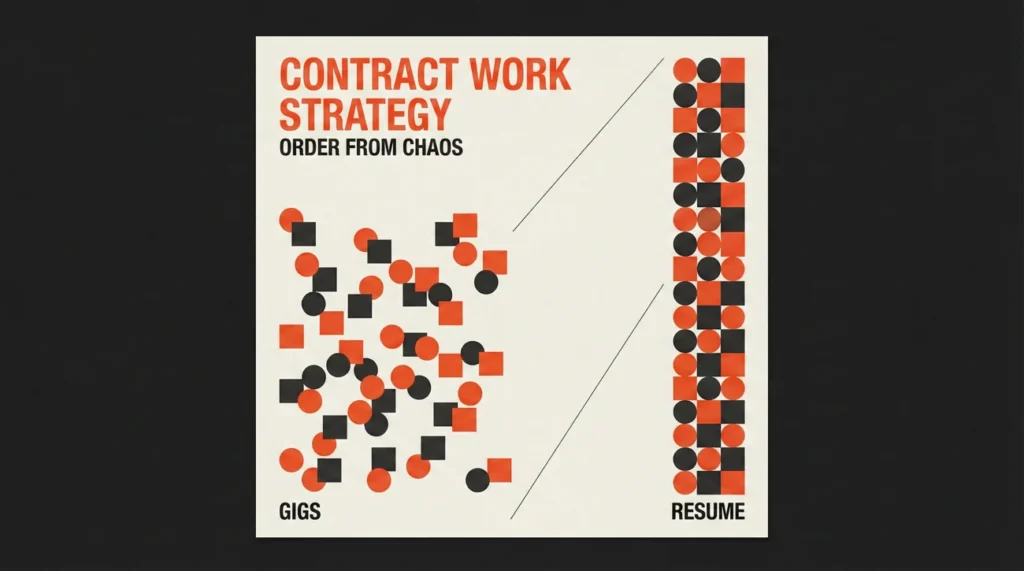
- Contract work creates a verification puzzle: the company you worked at daily may not be who HR calls to confirm employment.
- Display both agency and end client when possible. This prevents background check confusion and shows real scope.
- Grouped contract entries beat scattered short stints. Continuity framing changes how recruiters read your history.
The Background Check That Almost Cost an Offer
A data analyst named Kenji had worked at a Fortune 500 bank for two years. He sat in their offices, attended their meetings, used their systems, reported to their managers. But technically, he was employed by a staffing agency called TechStaff Solutions. His resume listed “Data Analyst | Major Bank | 2021-2023” because that is where he actually worked.
When he received an offer from a new company, the background check flagged a discrepancy. The bank had no record of employing him. TechStaff confirmed his employment, but the dates and title did not match what the bank’s project records showed. The hiring company’s HR department called Kenji asking for explanations. The offer was delayed two weeks while everyone sorted out the paperwork.
This happens constantly with contract work. The place where you physically worked, built relationships, and delivered results is not the entity that officially employed you. Your resume needs to reflect the reality of your work while also surviving verification processes that check legal employment records.
I have seen candidates lose offers over this confusion. I have seen others labeled as dishonest when they were simply formatting their contract work the way everyone else does. The rules are not intuitive, and most resume guides do not address the specific challenges of contract work on resume presentation.
This hub teaches you to display contract history in a way that shows your real experience, passes background checks, and does not look like job hopping.
Mistakes That Create Verification Nightmares

These formatting choices seem reasonable but cause problems during background checks:
🚫 Listing only the client when you were agency-employed.
The client has no record of employing you. Verification fails. You look like you lied about working there. Always include the agency relationship somewhere.
🚫 Creating separate entries for agency and client.
This makes it look like you had two jobs simultaneously. Background check companies flag overlapping employment. HR calls asking for explanations.
🚫 Using your functional title instead of agency title without explanation.
Your resume says “Senior Data Analyst” but the agency’s records say “Technical Consultant Level 3.” Without context, this looks like title inflation.
🚫 Omitting short contracts entirely.
If a background check discovers employment you did not list, it looks like concealment. Include all contracts, but group them strategically.
🚫 Listing end client as employer for W-2 agency work.
Tax records show the agency as your employer. If someone cross-references tax documents with your resume, discrepancies emerge.
🚫 Different formatting for contracts vs permanent roles.
Inconsistency draws attention. If your permanent jobs show Month/Year but contracts show Year-only, recruiters notice you are being vague about contract durations.
The Verification Problem
Background check companies call employers to verify three things: dates of employment, job title, and sometimes salary. Here is where contract work creates problems:
Who they call: Verification services call the legal employer on record. For contract workers, this is usually the staffing agency, not the end client. If your resume only lists the client, verification may fail entirely.
What records show: The agency’s records show your title with them (often generic like “Technical Consultant” or “Contract Associate”), not your functional title at the client site (“Senior Data Analyst”). Dates reflect your agency employment, which may not perfectly match your assignment dates.
What causes flags: Title mismatch between resume and verification. Date discrepancies of more than a few weeks. No record found when only the client is listed. Multiple employers claiming the same time period when you list both agency and client as separate entries.
Understanding these mechanics helps you format contract work in a way that survives scrutiny.
Agency vs End Client: How to Display
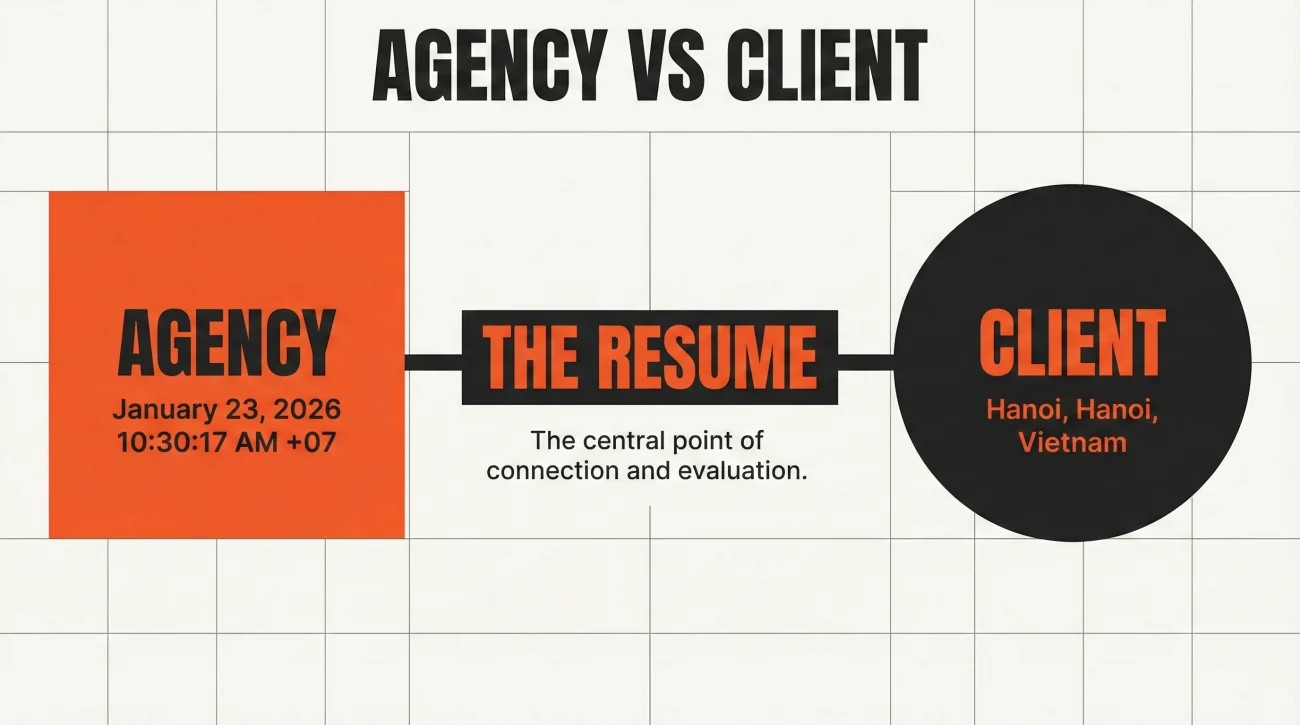
The core question: do you list the staffing agency, the client company, or both? The answer depends on your situation.
Option 1: Both Agency and Client (Recommended)
• Built predictive models for credit risk assessment…
• Collaborated with internal analytics team of 12…
This format shows where you actually worked while making the employment relationship clear. Background checks can verify through TechStaff. Recruiters see the recognizable client name. Everyone understands the arrangement.
Option 2: Client Focus with Agency Note
Contract position through TechStaff Solutions
• Built predictive models for credit risk assessment…
Leads with the client name for recognition, adds agency as clarifying note. Works well when client name is the selling point and agency is less known.
Option 3: Agency Umbrella with Client List
Contract assignments at multiple enterprise clients:Major Bank (March 2021 – June 2023): Senior Data Analyst
• Built predictive models…Tech Company (January 2020 – February 2021): Data Analyst
• Developed reporting dashboards…
Best for multiple contracts through the same agency. Shows continuity of agency relationship while displaying real client work. Reduces the appearance of job hopping.
Option 4: Client Only (Use Cautiously)
Listing only the client works when: the client will verify employment directly, you were converted to permanent, or the agency relationship was minimal (direct contract with the client). However, this risks verification failures if the client has no employment record.
⚠️ Never: List agency and client as two separate jobs for the same time period. This looks like you are padding your resume with overlapping roles and will cause confusion in background checks.
Grouping Strategies for Multiple Contracts

A history of many short contracts looks like job hopping even when each contract ended as planned. Grouping creates visual continuity that reflects the reality of contract careers.
Strategy 1: Single Agency Umbrella
When you worked through one agency on multiple assignments, group everything under that agency with nested client details. This transforms five “jobs” into one continuous relationship with varied assignments.
Contract Data Professional | DataStaff Agency | 2019 – 2024
Provided data analytics consulting across multiple enterprise engagements:
Financial Services Client (2022-2024): Led migration of legacy reporting to Tableau
Healthcare Client (2021-2022): Built patient outcome prediction models
Retail Client (2019-2021): Developed inventory optimization dashboards
Strategy 2: Independent Consulting Umbrella
When you contracted directly with multiple clients without an agency, create a consulting identity that groups the work.
Independent Data Consultant | Self-Employed | 2019 – 2024
Provided analytics consulting to mid-market companies:
• Retail client: Inventory optimization reducing overstock 23%
• Healthcare startup: Patient flow analysis improving throughput 15%
• Financial services firm: Risk model development and validation
Strategy 3: Functional Grouping
When contracts span different agencies but similar work, group by function with dates showing overall scope.
Contract Project Manager | Various Agencies | 2019 – 2024
Managed technology implementations across industries through staffing agencies including Robert Half, Insight Global, and TEKsystems:
• 8 completed projects ranging from 4-18 months
• Industries: healthcare, financial services, retail
• Average project budget: $2-5M
Interview Questions About Contract History
Expect these questions if your resume shows significant contract work:
Why have you been doing contract work instead of permanent roles?
Frame it positively: “I chose contract work to build diverse experience across multiple industries and company types. Each engagement added different skills. Now I am looking to apply that breadth in a permanent role where I can have longer-term impact.”
How do we know you will stay if we hire you permanently?
Address directly: “Contract work was a deliberate choice for a phase of my career. I am specifically targeting permanent roles now because I want to build something over years, not months. The variety was valuable, but I am ready for depth.”
Can you explain your employment history? It is a bit confusing.
Clarify the structure: “I worked through staffing agencies on assignments at client companies. The agency was my legal employer, but I worked on-site at [Client] doing [Function]. Background verification will go through the agency, but my actual work was at the client site.”
Were you ever offered permanent positions?
If yes, say so – it is a strong signal. If no, pivot: “The contracts were defined-scope engagements. I delivered what was needed and moved to the next opportunity. Now I am specifically seeking permanent roles.”
Continuity Signals
Beyond grouping, specific elements signal stability to recruiters scanning contract-heavy resumes. Each of these counters the “job hopper” assumption:
📅 Continuous dates.
Minimize visible gaps between contracts. If you had a month between assignments, consider whether the dates need that precision. “January 2021 – December 2021” followed by “January 2022 – Present” reads as continuous even if there was a brief gap.
🔄 Repeat clients or agencies.
Returning to the same client or working repeatedly with one agency demonstrates that people want to work with you again. Call this out: “Returned for second engagement after successful initial project.”
📈 Progressive scope.
Show how responsibilities grew across contracts. Starting as a contractor and taking on larger projects or team leadership demonstrates trajectory even within contract work.
🤝 Conversion offers.
If clients offered to convert you to permanent (even if you declined), this is a strong stability signal. “Offered permanent conversion; chose to continue consulting” shows you are wanted, not churning.
📋 Professional framing.
Language matters. “Contract assignments” sounds professional. “Temp jobs” sounds unstable. “Consulting engagements” sounds strategic. “Gigs” sounds casual. Choose words that frame your work as intentional career choices.
The Conversion Story
Contract-to-permanent conversions are common and valued. Here is how to present them:
Single entry showing progression:
Converted from contract (via StaffAgency) to permanent after 8 months
• Initial contract focused on reporting automation
• Converted to permanent to lead analytics team expansion
The conversion itself is proof of value – the company wanted you enough to bring you in-house. Highlight it rather than hiding the contract origin.
If you are currently on contract and seeking permanent roles, your resume should signal openness: “Contract Analyst | Company (via Agency) | 2023 – Present” followed by a summary that mentions seeking permanent opportunities.
Reference Strategy for Contract Workers
Contract workers face unique reference challenges. Your legal employer (the agency) may only confirm dates and title. The people who actually know your work (client managers) may not be authorized to give references.
Build references intentionally:
- Ask client managers if they can serve as professional references (not employment verification)
- Get LinkedIn recommendations from client contacts while still on assignment
- Keep agency recruiter contact information – they can speak to your reliability and rehire status
- Maintain relationships with fellow contractors who can speak to your collaboration
Brief your references: Explain the verification vs reference distinction. Employment verification goes through the agency. Professional references speak to your work quality. Make sure everyone understands their role so nothing contradicts.
Address proactively: In interviews, mention that employment verification will route through your staffing agency while professional references can speak to your client work. This prevents confusion later.
Detailed Guides
| Article | Description |
|---|---|
| Staffing Agency vs End Client: What to Put on Your Resume (So Verification Matches) | How to list the agency and the end client in a way that reads clean and stays consistent with background checks and employment verification. |
| Multiple Contracts at the Same Company: How to Show Continuity Instead of Churn | A structure that groups repeat contracts under one umbrella so it looks like ongoing value, not a string of short stints. |
| Temporary Jobs on a Resume: How to Keep Them From Looking Like Instability | How to present temp roles so the pattern signals demand and adaptability, not volatility or lack of commitment. |
| Contract to Full Time: How to Mention Conversion Without Sounding Like You Failed | How to reference conversion to full time without implying you were on probation or that the contract ended badly. |
| Fractional and Part-Time Roles: How to List Them Without Confusing the Timeline | Formatting options that make fractional work easy to scan and easy to understand, without creating messy overlapping dates. |
| Contract Work and Background Checks: Keep Employer Names and Dates Consistent | What to standardize across your resume and applications so dates and employer names match what verification will pull. |
| References for Contractors: Who to Use and How to Brief Them | Who to pick as references when you worked through an agency, plus how to brief them so their story matches yours. |
Make Contract Work an Asset
Contract work on resume does not have to look like instability. Display both agency and client clearly. Group multiple contracts to show continuity. Use professional framing that positions your history as strategic career building. Prepare for verification by understanding what background checks actually check. The contractor who presents their history confidently, with clear formatting and ready explanations, reads very differently than one whose resume looks like a scattered list of short jobs that did not work out.
❓ FAQ
🎯 Should I list every short contract separately?
Usually no. Multiple short entries look like job hopping. Group contracts under an agency umbrella or consulting identity. Individual contracts only need separate entries if they were long (12+ months) or the client name is a significant credential.
📝 What if the agency went out of business?
Note this on your resume: “TechStaff Solutions (no longer operating).” Background check companies have processes for defunct employers. Keep any documentation you have – offer letters, pay stubs, tax forms – in case verification requires extra steps.
💼 Can I leave off the staffing agency entirely?
Risky. If the client has no employment record for you, verification fails. Only omit the agency if you have direct documentation that the client will verify, or if you were directly contracted without a staffing intermediary.
🔍 How do I explain why I have been contracting instead of permanent?
Frame it as intentional: variety of experience, skill building across industries, flexibility during a life phase. Avoid sounding like you could not get permanent work. “I chose contract work to build expertise across multiple environments” reads better than “I kept looking for permanent but only found contracts.”
⚠️ Disclaimer: ResumeSolving provides resume, cover letter, and job search communication guidance for informational purposes only. It is not legal, medical, financial, or professional counseling advice. Hiring decisions vary by company, role, location, and individual circumstances, so we do not guarantee interviews, offers, or outcomes. Always use your own judgment, verify requirements directly with the employer, and follow local laws and workplace policies. When a situation is sensitive, we prioritize privacy-safe, recruiter-appropriate wording, and you never need to share personal details you are not comfortable disclosing.