- Background checks verify employment dates and titles, not your gap explanations or health reasons
- Date mismatches between your resume and what former employers report are the most common verification failures
- Pick one source of truth for all dates and use identical wording across every document
- Prepare your references with a brief script so their answers match yours
What Actually Gets Verified (And What Doesn’t)
Background check anxiety usually comes from not knowing what employers can actually find out. The truth is simpler than most people assume. Verification services contact your former employers and ask specific factual questions. They compare the answers to what you wrote on your application. That’s it.
Here’s what typically gets verified:
| Verified | Usually Not Verified |
|---|---|
| Employment dates (start and end) | Why you left |
| Job title | Your gap explanation |
| Employment status (full-time, part-time, contract) | Health-related reasons for breaks |
| Sometimes salary (with consent) | Personal circumstances during unemployment |
| Eligibility for rehire (at some companies) | What you did during gaps |
Notice what’s missing from the “verified” column. Nobody calls your former employer and asks, “Was their gap due to a mental health condition?” Former employers legally cannot share medical information, and verification services aren’t asking anyway. They want dates and titles. That’s where the landmines are.
A staffing manager named Keisha explained the process to me once: “We’re looking for red flags, not explanations. If someone says they worked somewhere from 2019 to 2022 but the company says 2019 to 2021, that’s a problem. If someone has a gap they explained as health-related, we don’t verify that. We can’t. We just note the gap exists and move on.”
The Mismatch Traps That Sink Candidates

Most verification failures aren’t from lying. They’re from inconsistency. You wrote one thing on your resume months ago, something slightly different on the application form, and your LinkedIn shows a third version. The background check flags the discrepancy, and suddenly you look dishonest even though you just forgot what you put where.
Common traps I’ve seen tank otherwise strong candidates:
The month vs. year problem. Your resume says “2020-2022” for a role. The application form asks for specific months. You guess “January 2020 to December 2022” but the company’s records show “March 2020 to October 2022.” Now you’ve added five months that don’t exist. Some employers dismiss this as human error. Others see it as resume padding.
The LinkedIn lag. You updated your resume for this job search but forgot to update LinkedIn. The background check company pulls both. Your resume says you left your last job in June 2024. LinkedIn still shows “Present.” Red flag.
The title inflation. You were “Marketing Coordinator” but your resume says “Marketing Manager” because that’s what you actually did. Your former employer’s HR system has your official title. Mismatch flagged.
The forgotten job. You left a three-month role off your resume because it wasn’t relevant. The application form asks for all employment in the past seven years. You skip it there too. But that employer contributed to a national employment database. The check finds it. Now you look like you’re hiding something.
⚠️ Warning: The Work Number, operated by Equifax, contains employment records from over 4.7 million employers. If you worked for a mid-to-large company, your dates are probably in there whether you list that job or not.
Establish One Source of Truth

Before you apply anywhere else, create a master document with your exact employment history. This becomes your single source of truth. Every resume, every application, every LinkedIn update, every interview answer pulls from this document.
What to include:
- Company name (exactly as it appears in their records, not a casual abbreviation)
- Your official job title (what HR has on file, not what your business card said)
- Start date (month and year)
- End date (month and year)
- Employment type (full-time, part-time, contract, temp)
- Supervisor name and contact (if you still have it)
If you’re unsure about exact dates, dig them up now. Check old tax returns, W-2s, offer letters, resignation emails, pay stubs, or your Social Security statement. Call former employers’ HR departments and ask. It’s better to spend an hour confirming dates than to have a verification come back with discrepancies.
For gaps, your source of truth document should note:
- Gap start and end dates
- Your standard one-sentence explanation (identical everywhere)
- Any activity during the gap you want to mention consistently
Key Rule: If you use months on your resume, use the same months on applications. If you use years only on your resume, request permission to use years only on applications when possible. Switching formats creates accidental mismatches.
Safe Wording for Application Form Fields
Application forms often include a “reason for leaving” field or an “explain any gaps” box. These answers become part of your permanent record with that employer. If you get hired, inconsistencies between your form answers and what you said in interviews can resurface during your employment.
Three safe gap explanations that work across most situations:
Option 1: Health-Related, Resolved
When to use: Any health-related gap including mental health, surgery, chronic condition management, recovery from injury. The word “resolved” signals closure without inviting follow-up questions.
Option 2: Personal Leave, Circumstances Changed
When to use: Gaps involving caregiving, family emergencies, personal crises, or situations you’d rather not categorize as health-related. Broad enough to cover many scenarios without requiring specifics.
Option 3: Career Break, Planned
When to use: When your gap included productive activity you can point to. The word “planned” removes the implication that something went wrong.
💡 Pro Tip: Copy and paste your chosen wording every time. Don’t paraphrase. Don’t improve it for different applications. Identical wording across all forms eliminates the risk of accidental variation.
The “Reason for Leaving” Field
When a gap follows a resignation or termination, the “reason for leaving” field matters as much as the gap explanation. Safe options:
| Situation | Safe Wording |
|---|---|
| You resigned before the gap | “Resigned to address personal/health matter” |
| Contract or project ended | “Contract completed” or “Project concluded” |
| Layoff | “Position eliminated” or “Company restructuring” |
| Terminated for performance | “Position was not the right fit” |
| Terminated for cause (serious) | Consult an employment attorney before applying |
Brief Your References Before the Check
Background checks often include reference calls. Even if your former employer’s HR only confirms dates, a listed reference might say something that contradicts your application. A quick heads-up prevents this.
Sample script to send via email or text:
“Hey [Name], I’m in the final stages for a role at [Company] and they’ll likely contact you as a reference soon. Quick heads-up on timing: I’ve listed my dates at [Previous Employer] as [Month Year] to [Month Year]. For any gap questions, I’ve been explaining it as a health-related break that’s now resolved. You don’t need to add anything beyond that if it comes up. Thanks for being a reference!”
This accomplishes three things. First, it reminds them of your dates so they don’t accidentally misremember. Second, it gives them your gap framing so their answer matches yours. Third, it signals that you don’t want them elaborating on health details.
Most references appreciate this guidance. They want to help you succeed, and they’re often relieved to know exactly what to say rather than improvising on a phone call.
If HR Calls Your Previous Employer
You can’t control what your former employer says, but you can prepare for what they’re likely to say. Most companies have strict policies limiting responses to dates, title, and eligibility for rehire. Some use third-party verification services like The Work Number that automate responses entirely.
If you’re worried about what a former employer might say, you have options:
Call their HR first. Ask what information they release for employment verification. Most will tell you their policy. If they only confirm dates and title, you’re covered.
Request your own records. Some companies will provide you with a copy of your personnel file. This lets you see exactly what dates they have on record so you can match them.
Provide documentation proactively. If you have offer letters, pay stubs, or W-2s that confirm your employment dates, you can provide these to the new employer as backup documentation. This is especially useful if your former employer has gone out of business or doesn’t respond to verification requests.
For gaps specifically: remember that HR departments don’t explain gaps. They report what’s in their system. If you worked January 2019 to March 2021, that’s what they’ll say. The gap after March 2021 is for you to explain, not them.
The Consistency Checklist
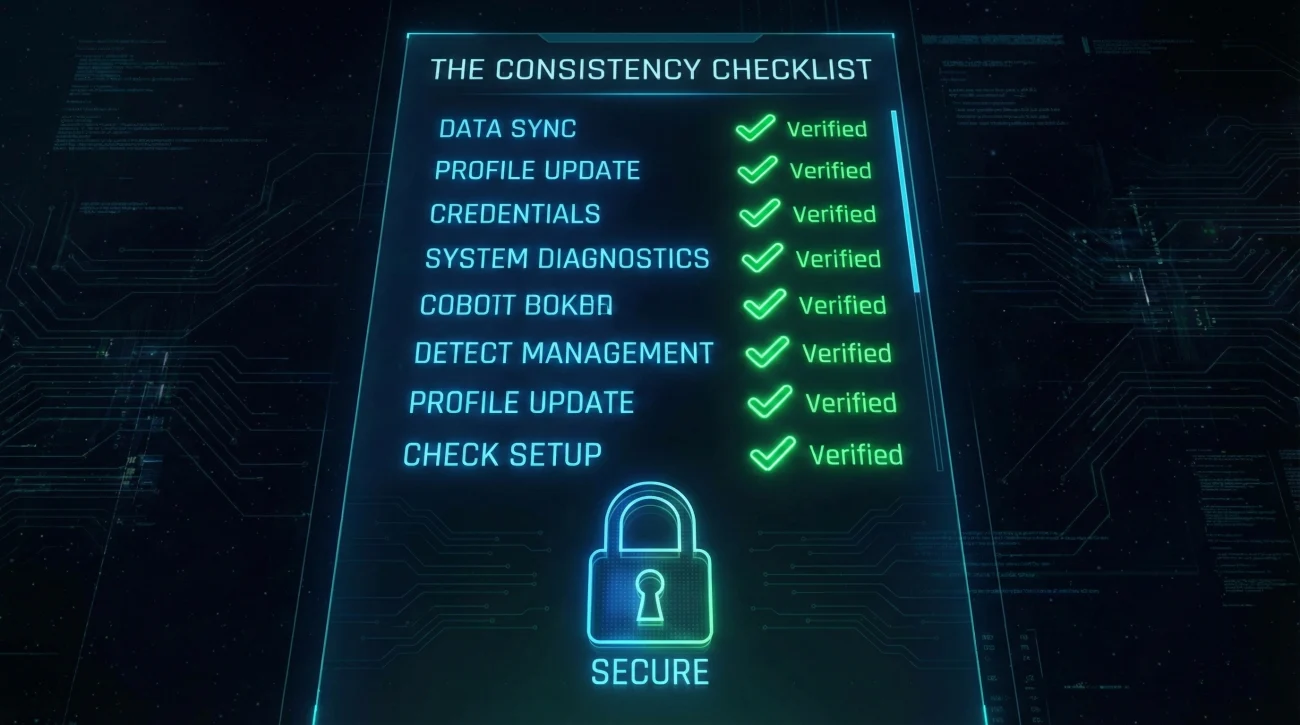
Before submitting any application, run through this checklist:
- ✅ All employment dates match your source of truth document exactly
- ✅ Job titles match what HR has on file (check if unsure)
- ✅ LinkedIn dates and titles match your resume
- ✅ Gap explanations use identical wording across all forms
- ✅ “Reason for leaving” answers are consistent for each position
- ✅ References are briefed on your dates and gap framing
- ✅ You haven’t omitted any jobs the form specifically asks about
- ✅ Date format is consistent (all months or all years, not mixed)
One HR consultant I know describes this as “giving the background check nothing to find.” Not because you’re hiding anything, but because there are no loose threads to pull. When everything matches, the verification completes quickly and you look like exactly what you are: an organized professional who keeps accurate records.
Verification Is About Accuracy, Not Judgment
Background checks feel invasive, but they’re mechanical. A computer or a clerk compares what you wrote to what your former employers have on file. They’re not evaluating your reasons for gaps or judging your health history. They’re checking whether the facts line up.
That’s actually good news. It means the employment gap background check explanation question isn’t about convincing anyone your gap was acceptable. It’s about making sure your dates are right, your story is consistent, and nothing surprises the employer after they’ve already decided to hire you. Get those details locked down, and the verification becomes a formality instead of a hurdle.
❓ FAQ
🕵️ Can a background check find jobs I didn’t list?
Potentially yes. Large employers often contribute to databases like The Work Number. If the application asks for all employment in a certain timeframe and you omit a job that shows up in these databases, it looks like you’re hiding something. When in doubt, list all positions the form requests, even short ones.
📞 Will they verify why I left my previous job?
Most employers only confirm dates and title. Some will answer “eligible for rehire” questions. Very few share reasons for separation because of liability concerns. However, what you write on the application becomes your official record with the new employer, so keep it honest and consistent.
📅 What if my dates are off by a month or two?
Small discrepancies are usually flagged but not disqualifying. Be prepared to explain: “I listed January but my records show March. I apologize for the error.” Genuine mistakes look different from deliberate padding. The issue is when discrepancies add months or years that didn’t happen.
📝 Should I explain my gap on the application even if they don’t ask?
Only if there’s a field for it. Don’t volunteer information in margins or additional notes sections unless specifically prompted. If the form doesn’t ask about gaps, your opportunity to explain comes in the interview or cover letter instead.
⚠️ What happens if the background check finds a discrepancy?
Under the Fair Credit Reporting Act, employers must give you a copy of the report and a chance to dispute inaccuracies before making an adverse decision. If you know a discrepancy exists, prepare your explanation in advance. Having documentation (pay stubs, offer letters) that supports your version helps resolve disputes quickly.
⚠️ Disclaimer: ResumeSolving provides resume, cover letter, and job search communication guidance for informational purposes only. It is not legal, medical, financial, or professional counseling advice. Hiring decisions vary by company, role, location, and individual circumstances, so we do not guarantee interviews, offers, or outcomes. Always use your own judgment, verify requirements directly with the employer, and follow local laws and workplace policies. When a situation is sensitive, we prioritize privacy-safe, recruiter-appropriate wording, and you never need to share personal details you are not comfortable disclosing.