- Your resume does not need a confession. It needs a calm, closed-chapter signal.
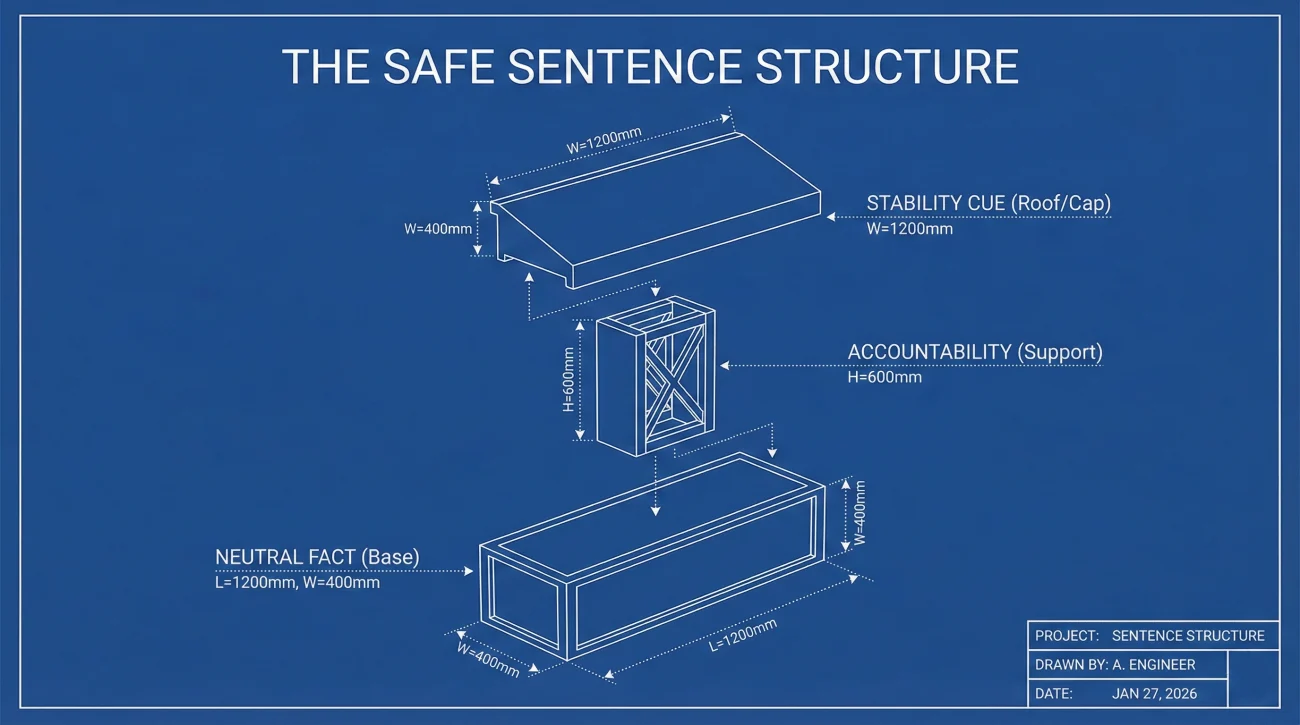
- A safe termination line is: Neutral fact + one accountability cue + one stability cue.
- Use copy-ready lines, but match them to your risk level and your next role.
Termination Lines Are Not About “Explaining”, They Are About Control
If you are searching for how to explain termination on resume, you are probably not trying to “tell a story”. You are trying to stop a recruiter from filling in the blanks with the worst possible version.
I have watched this play out from the HR side: When a resume feels slippery, the conversation shifts from “Can you do the job?” to “What else is missing?” The frustrating part is that most candidates do not realize they triggered that shift. They think they are being “professional”.
Lucy (a marketing lead I screened last year) had a clean track record, but her last role ended abruptly. Her resume did not say anything, which is usually fine. The problem was her job application later used a vague phrase that sounded like a dodge. The recruiter did not reject her because she was terminated. The recruiter rejected her because the language created uncertainty that did not need to exist.
This article gives you short lines that feel boring in the best way. Not dramatic. Not defensive. Just stable.
What Recruiters Actually Try to Verify (So You Stop Overwriting)
Most resume advice fails because it treats termination like a moral problem. Recruiters treat it like a consistency problem.
Here is the practical difference: Your resume is a marketing document. Your application and verification steps are closer to an audit. You do not need to put the audit language on the marketing document, but you do need your story to stay consistent across both.
| Hiring step | What they are looking for | What triggers concern |
|---|---|---|
| Resume screen | Role fit, trajectory, stability signals | Vague “soft exit” language that reads like avoidance |
| Job application | Reason for leaving, dates, titles | Mismatches between what you write and what verification returns |
| Reference or verification | Dates, title, sometimes rehire eligibility | Anything that suggests you lied or are still in conflict |
| Interview | Judgment, learning, accountability | Blame, oversharing, or a story that feels unresolved |
⚠️ Warning: Your goal is not to “win the argument” about what happened. Your goal is to look employable, predictable, and ready.
The One-Sentence Formula That Keeps You Out of Trouble
When people try to write a termination line, they usually do one of two bad things: They either hide it in awkward wording, or they over-explain with emotion.
Use this instead:
[Neutral end-of-role fact] + [Accountability cue] + [Forward stability cue]
This is not about making termination sound “good”. It is about making it sound finished.
💡 Pro Tip: A good accountability cue is not a confession. It is a signal that you can name the lesson without spiraling into detail.
Eight Termination Lines You Can Use Without Sounding Defensive
These lines are designed to reduce recruiter anxiety. Each one stays factual, avoids emotional language, and points forward. Think of them as “clean labels” for a messy moment.
Also, you do not need to use the word “terminated” unless a form requires it. On a resume, clarity beats harshness.
| Resume line | When it works | What it signals |
|---|---|---|
| Role ended following a performance reset; completed transition and moved into targeted upskilling. | You had a performance issue, but you can show learning | Accountability + closure |
| Employment ended after a policy misalignment; addressed the gap and refocused on roles with clearer expectations. | There was a rule or process mismatch, not misconduct | Boundary setting, not chaos |
| Position ended during a leadership change; I am now pursuing roles aligned with my scope and strengths. | Org dynamics shifted, your role became unstable | Stability through alignment |
| Contract concluded earlier than planned; delivered handover and moved into roles with longer runway. | Short tenure, restructure, budget freeze, or “early end” scenario | No drama, just a closed chapter |
| Role ended after an operational restructure; I am now focused on environments with stronger onboarding and tooling. | You can reasonably point to process gaps without blaming | Maturity and self-awareness |
| Employment concluded following a team reset; since then I have strengthened core execution habits and delivery cadence. | You want to keep it general but not evasive | Improvement, not excuses |
| Role ended after scope redefinition; I am targeting positions with clear ownership and measurable outcomes. | The job changed into something else | Preference for clarity |
| Employment ended; I am now fully available and focused on long-term roles in this function. | You need the simplest possible line | Availability and forward motion |
If you are tempted to write “mutual decision”, pause. That phrase often reads like a cover story, which is the opposite of what you want.
Six Pivot Lines That Move the Reader Back to Your Value
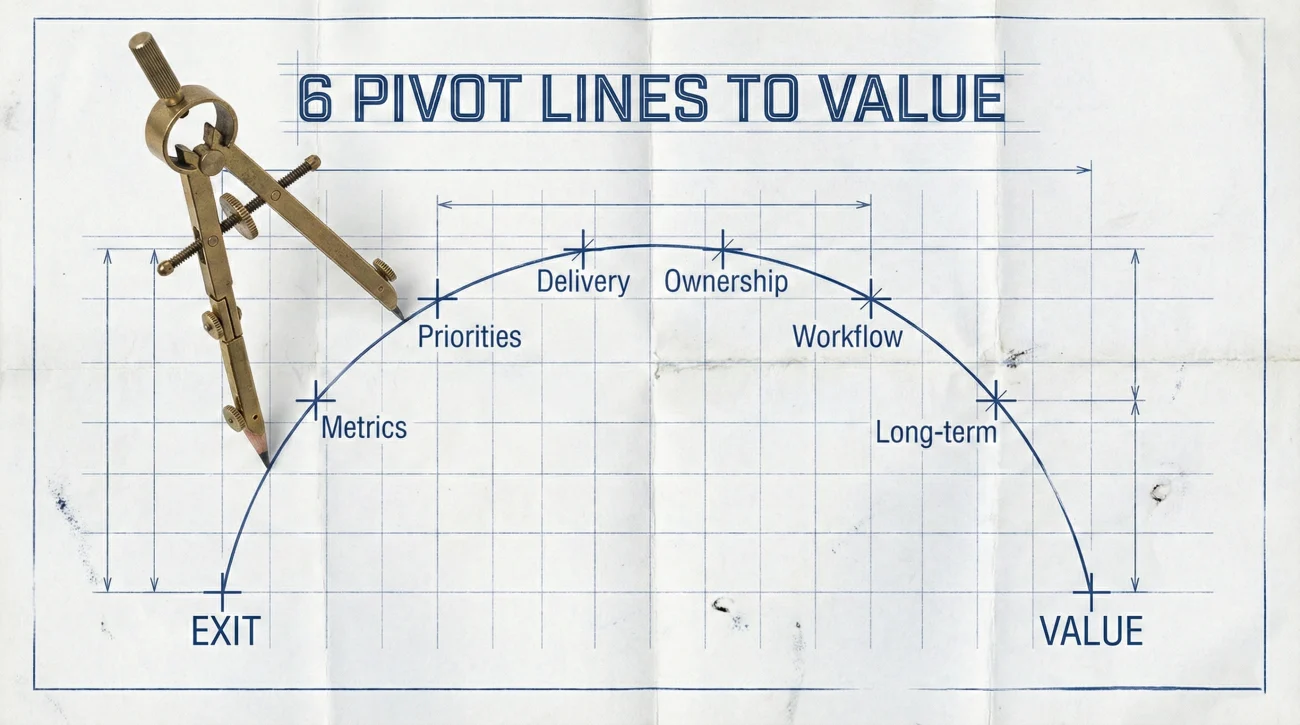
The resume line closes the chapter. The pivot line opens the next chapter. This matters because recruiters do not reject “a termination”. They reject a termination that feels like it will repeat.
Use these after your short line, in your summary, or in a cover letter sentence where you need a smooth transition.
- A clean termination line does not need extra detail. What matters is what you have done since and what you can deliver next.
- I am applying for roles where execution metrics are explicit, because that is where I consistently perform best.
- The experience sharpened how I manage priorities, communication, and delivery cadence under pressure.
- I am looking for a team with clear ownership boundaries, because I thrive when accountability is defined.
- Since that role, I rebuilt my workflow around measurable outcomes and weekly delivery commitments.
- I am focused on long-run environments where I can compound impact, not reset every quarter.
💡 Pro Tip: A pivot line should sound like an adult making a choice, not like a person asking to be forgiven.
What This Looks Like in Real Hiring Conversations
I will give you three quick stories, because templates without context create bad outcomes.
Story 1: The Vague Exit That Looked Like a Lie
Lucy wrote what many people write: a soft phrase that implied the separation was “mutual”. The hiring manager did not believe it. Not because the manager had proof. Because the phrasing sounded like avoidance.
We replaced it with a neutral statement and one forward cue. She did not suddenly “win everyone over”. She simply stopped triggering distrust. That was enough to get her back into serious interview loops.
Story 2: The Overshare That Made the Termination Feel Ongoing
A colleague of mine, Marcus, once coached a candidate who wrote a mini essay inside a resume gap line. It included emotion, context, and blame. The candidate thought it proved honesty. The recruiter read it as unresolved conflict.
We moved the detail out of the resume entirely and used a calm sentence plus a pivot. The interview became the place to show judgment and learning, not the resume.
Story 3: The Short Tenure That Needed One Closure Signal
Jon had a three-month role that ended. He wanted to delete it. In his case, the role contained critical experience that matched the new job. Leaving it off would create a more confusing timeline.
We kept it, added one clean closure line, and avoided anything that sounded like legal language. It became a footnote, not a headline.
Key Point: Recruiters do not need the full truth. They need a stable, consistent version that does not create new questions.
Ten Wording Mistakes That Make Termination Feel Risky
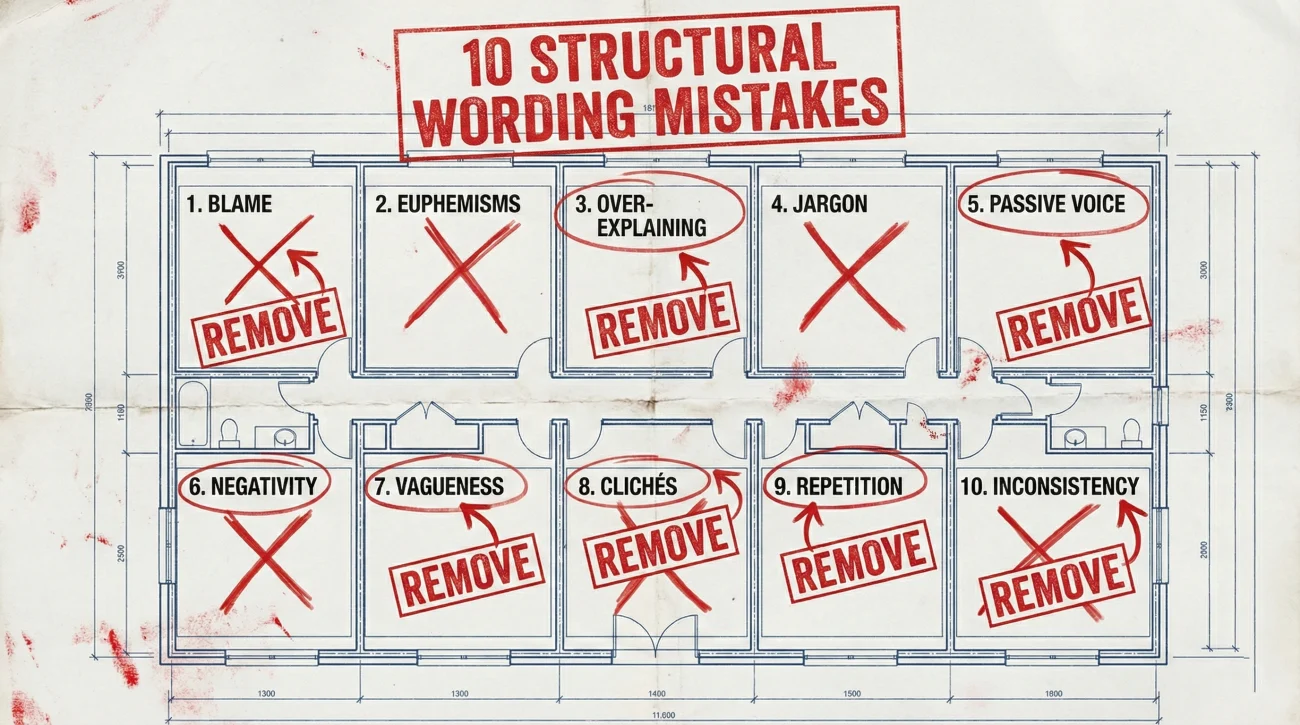
If you only remember one thing, remember this: You are not fighting the word “terminated”. You are fighting the feeling that the situation is still alive.
These are the most common problems I see when people try to write a termination line on a resume.
- Writing like a courtroom statement, which signals conflict instead of closure.
- Using euphemisms that sound like a cover story (“mutual”, “agreed to part ways”).
- Blaming leadership, coworkers, culture, or “politics” with no accountability cue.
- Over-explaining the reason in emotional language.
- Sounding uncertain about your own timeline or dates.
- Adding a “still figuring it out” tone, which reads like instability.
- Trying to “prove you were right”, which makes the separation feel unresolved.
- Using harsh labels on a resume when a neutral fact would do.
- Writing a line that is longer than your actual accomplishments.
- Mixing different stories across resume, application, and interview.
⚠️ Warning: If your wording makes the recruiter curious in the wrong way, you will not get the chance to “explain it later”.
Do You Even Need to Mention It on the Resume?
Most people hear “termination” and assume they must address it in the resume. In reality, the resume usually only needs one of two things: A clean timeline, or a clean closure signal.
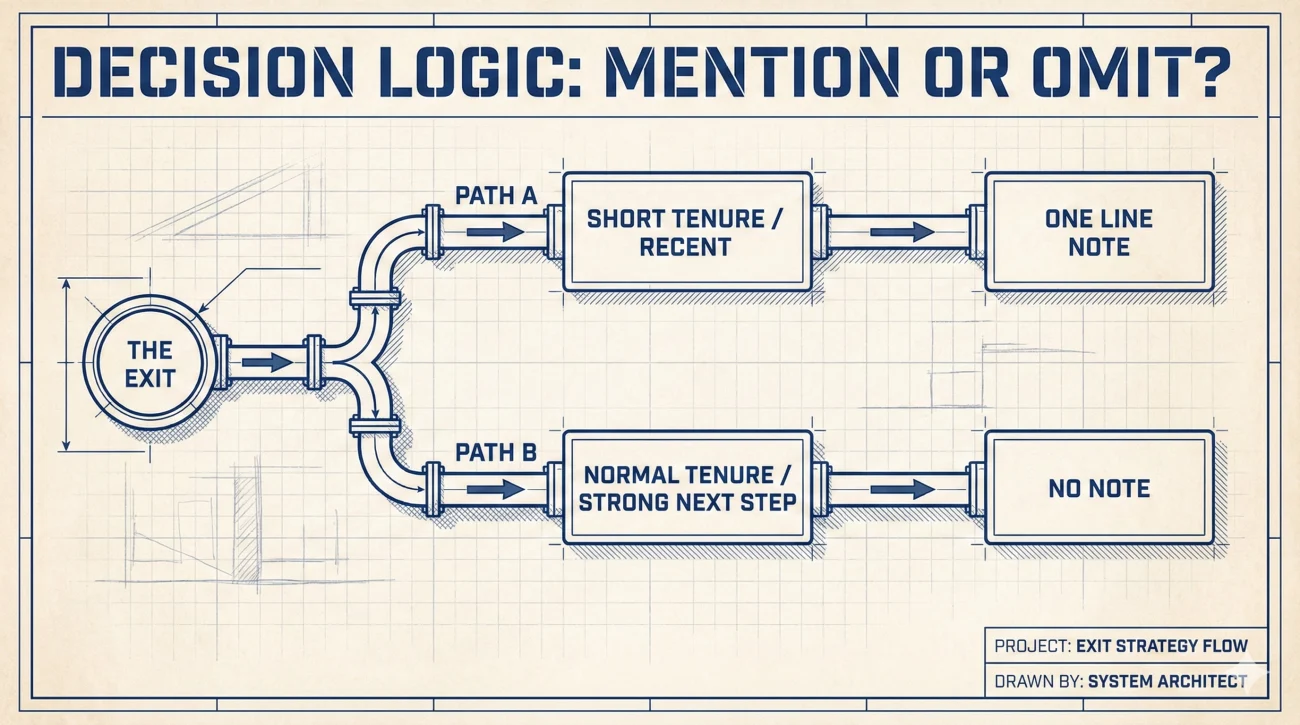
If it was a normal-length job and you have a strong next step
In many cases, you do not need to mention the termination at all. Your bullet achievements do the work. The separation reason belongs in the application field if asked, and in the interview if it comes up.
This is where people overreact and add a “reason for leaving” line that creates more risk than it removes. Remember: Resumes are not forms.
If it was a short tenure, a recent event, or a visible gap
Short tenures create recruiter questions because they can indicate pattern risk. This is where a single line can help. Not to defend yourself, but to close the loop quickly so the reader returns to your skills.
If your last role ended very recently, you may also want a simple availability cue. That is not desperation. That is clarity.
If the new role is in a high-trust environment
Some roles and industries will run deeper checks and care more about risk management. That does not mean you need to write a confession. It means you should avoid clever wording and stick to consistency.
When candidates ask me “Should I say fired?”, I usually ask a different question: “Can you keep the story consistent across every hiring step?” That is the real test.
Mini Examples You Can Adapt (Without Turning Your Resume Into a Diary)
Examples work best when they do two jobs: Close the “what happened” question quickly, then pull attention back to outcomes.
Here are three mini patterns, with a short cue before each one so the blocks do not feel stacked.
Example 1: A Performance Reset That Sounds Finished
This one works when the issue is execution, not ethics. The line is short, the achievements do the heavy lifting, and the tone stays calm.
Role ended following a performance reset; completed transition and moved into targeted upskilling.
Key wins: Reduced weekly reporting time by 35% by automating recurring data pulls; built KPI dashboard adopted by 3 teams.
Example 2: A Short Tenure That Does Not Look Like Chaos
Short jobs feel risky because recruiters fear a pattern. This version makes it read like an operational outcome, then immediately anchors you in delivery.
Contract concluded earlier than planned; delivered handover and moved into roles with longer runway.
Key wins: Closed 9 mid-market deals in 10 weeks; improved discovery script adoption across the team.
Example 3: The Cleanest Possible Closure Plus Availability
If you want the lowest-drama option, keep it simple. This is useful when you do not want the separation to dominate the page.
Employment ended; I am now fully available and focused on long-term roles in Customer Success.
Key wins: Reduced churn by 18% across a 40-account portfolio; rebuilt onboarding sequence with measurable adoption milestones.
If your instinct is to soften the situation with fancy wording, go the other direction. Plain language usually reads more stable.
Final: A Termination Line Should Close the Topic, Not Invite a Debate
A termination is rarely the thing that ends your chances. What ends your chances is when the resume makes the situation feel unresolved, emotional, or inconsistent.
Keep the line boring on purpose. Use a neutral fact, add one small accountability cue, and include one forward signal that shows you are already moving. That is the quiet logic behind how to explain termination on resume: the line closes the topic so your work can do the talking.
❓ FAQ
🎯 Should I write “terminated” on my resume?
Usually no. Unless a form requires the word, a resume is better served by a neutral end-of-role line that creates closure without sounding harsh or defensive.
🧭 What if the application asks “Reason for leaving”?
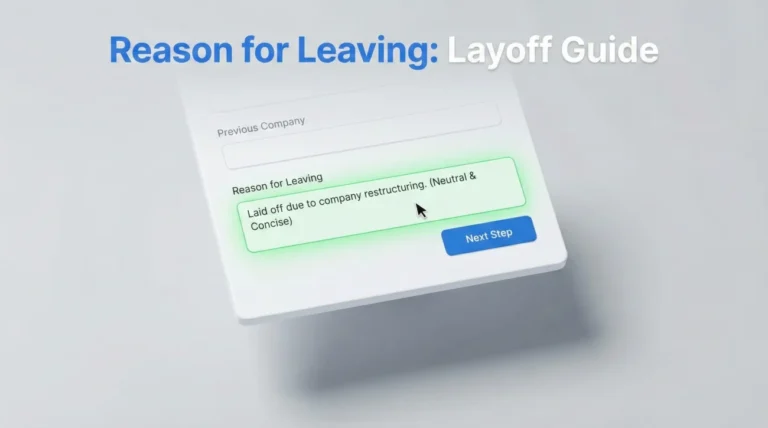
That field is different from a resume. Keep it brief, factual, and consistent with your interview version. Do not try to be poetic or “clever” in a form field.
🛡️ Can a recruiter find out I was fired?
Sometimes. Some checks confirm only dates and title, while others may ask additional questions such as rehire eligibility. The bigger risk is inconsistency, not the fact of termination itself.
🔍 Should I leave a short job off the resume if it ended badly?
Only if removing it improves clarity. If the role contains critical experience for the next job, leaving it off can create timeline confusion. In that case, keep it and use a single closure line.
✅ What is the safest tone to use?
Neutral and finished. One sentence, no blame, no emotional language, and a forward cue that signals you are ready for the next role.
⚠️ Disclaimer: ResumeSolving provides resume, cover letter, and job search communication guidance for informational purposes only. It is not legal, medical, financial, or professional counseling advice. Hiring decisions vary by company, role, location, and individual circumstances, so we do not guarantee interviews, offers, or outcomes. Always use your own judgment, verify requirements directly with the employer, and follow local laws and workplace policies. When a situation is sensitive, we prioritize privacy-safe, recruiter-appropriate wording, and you never need to share personal details you are not comfortable disclosing.