- You usually do not label “fired” on a resume. You decide whether to keep the job and how to position the timeline.
- Use a simple checklist: tenure, seniority, regulated roles, overlap risk, and whether the application will force the topic later.
- Pick one of three options: no note, neutral note, or brief context note. Then keep your interview answer consistent.
The Real Question Is Not “Fired”
When people type should i put being fired on my resume, they are usually trying to solve a different problem: “How do I keep my story clean without creating a lie I have to maintain?”
A resume is not a legal document. It is a positioning document. That does not mean you get to make things up. It means you choose which facts belong where, and you do it in a way that prevents the recruiter from inventing the worst story in their head.
In my HR world, the “fired” detail almost never belongs on the resume. The decision is usually about whether you keep the role listed, how you handle dates, and how you prepare for the moment the topic might come up later in the process.
💡 Pro Tip: Most hiring teams do not reject someone because they were terminated. They reject someone because the candidate made the termination feel ongoing, chaotic, or hidden in a way that suggests bigger risk.
Where The “Fired” Truth Actually Lives
One reason the internet advice feels messy is because people mix up resume rules with application rules. They are not the same thing, and the same wording can be smart in one place and reckless in another.
| Step | What It Is For | What You Include | What You Usually Do Not Include |
|---|---|---|---|
| Resume | Earn an interview | Role, dates, achievements, scope | Reason for leaving, termination label |
| Job application form | Create an official record | Employment history as requested, sometimes reason for leaving | Long narratives and emotional explanations |
| Background screening | Verify facts you provided | Dates, titles, sometimes rehire eligibility depending on employer and vendor | Your “side of the story” |
| Reference conversations | Reduce hiring risk | Work habits, outcomes, reliability | Overly detailed backstory unless asked |
So the practical framing becomes: “What keeps the resume accurate and calm, while keeping me consistent with what will show up later?”
Key Point: The resume is not where you “confess.” The resume is where you prevent confusion, and you keep your story consistent with whatever the application or screening stage may surface.
I saw this play out with a candidate I will call Keith. He was let go from a fast-moving SaaS company after a new VP arrived. He wanted to write “terminated” next to the role because he thought honesty meant full labeling. What actually helped him was boring accuracy: the job stayed on the resume, the achievements stayed on the resume, and the “why” lived in a short, practiced interview answer. That is what got him hired.
A 7 Question Checklist That Makes The Decision Obvious
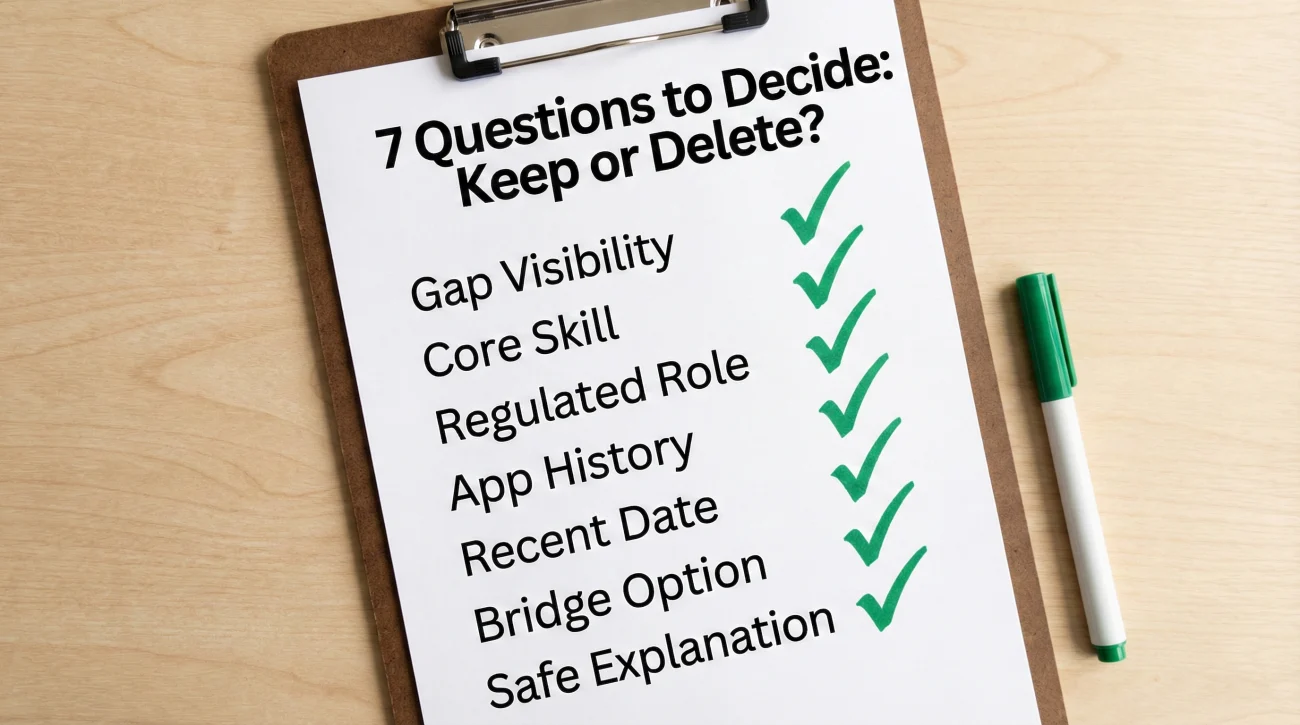
This is the checklist I use when a friend texts me, panicking, because they were fired on Friday and they want to apply on Monday. Answer these honestly, and you will know which positioning option to use.
- ✅ Did the role last long enough that removing it creates a visible gap or an unexplained downgrade in seniority?
- ✅ Is this role the only place you gained a core skill you need for the next job (tools, domain, leadership scope)?
- ✅ Are you applying into a regulated environment or a role with heavy verification expectations?
- ✅ Will the application form require a complete employment history that will include this job anyway?
- ✅ Is your end date recent enough that pretending you are still there could be easily disproven?
- ✅ Is there a clean alternative “bridge” you can list (consulting, contract, caretaking, study) that is truthful and reduces timeline anxiety?
- ✅ Can you explain the separation in 30 to 45 seconds without blaming, spiraling, or oversharing?
⚠️ Warning: If your plan requires you to remember a lie under pressure, it is not a plan. It is a future mistake waiting for a tired moment.
My colleague Yoshie once coached a sales leader who tried the “still employed” approach because he saw it suggested online. It worked right up until the offer stage, when the company asked for a verification form with dates and permission to confirm. He spent the final week of the process trying to patch the story. He did not lose the offer because he was fired. He lost it because he looked unreliable.
Three Positioning Options: Pick One, Do Not Mix Them
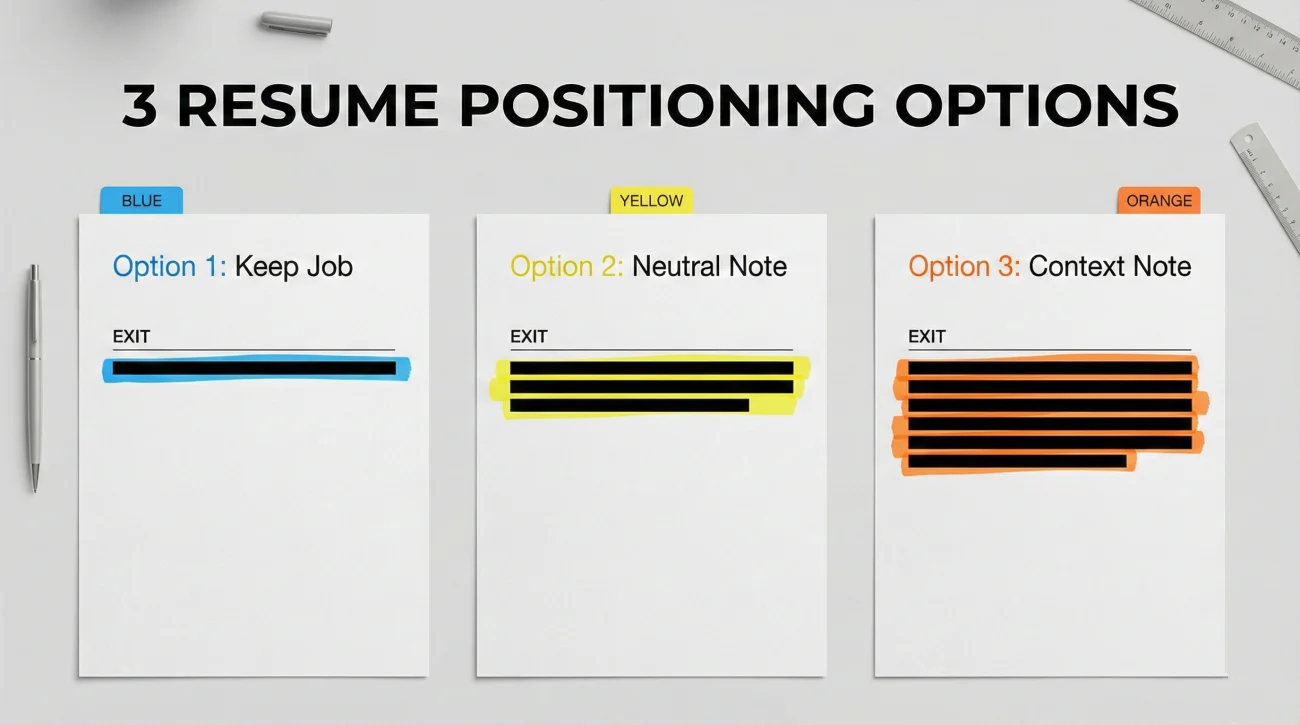
Most low quality articles treat this like a moral question. It is not. It is a risk and clarity question. Here are the three options that cover almost every realistic situation.
Option 1: Keep The Job, No Note
This is the default for most people. You list the role, you list the dates, you focus on outcomes. You do not label the separation. The resume stays clean, and you handle the topic if it comes up later.
This option is best when your tenure is meaningful, your work is relevant, and labeling would only invite questions too early. If you are trying to move fast, the resume should open doors, not open debates.
💡 Pro Tip: If you are worried the recruiter will assume you are “still there,” add an accurate end date. That solves the ambiguity without adding a termination label.
Option 2: A Neutral Note That Closes The Chapter
You use a short, calm line that communicates “this ended” without inviting curiosity. This is not a confession. It is a closure signal.
This can help if the job was short and the recruiter might assume a performance issue anyway. The neutral note reduces the space where they invent a story.
Use neutral language. Avoid emotional phrases, blame, or anything that sounds like a courtroom defense.
Option 3: A Brief Context Note Only When It Prevents A Bigger Problem
This is for higher verification environments, leadership roles with public visibility, or situations where the separation will almost certainly be discussed later and you want the resume to feel aligned with the rest of your process.
It still should not say “fired.” It should explain the context in one sentence, and then move on.
❌ Note: If your “brief note” turns into a paragraph, you are not clarifying. You are signaling instability.
Now, the important part: whichever option you choose, you have to keep the story consistent in interview answers and in the application. Consistency is what rebuilds trust after a messy exit.
Language That Looks Honest But Actually Raises Doubt
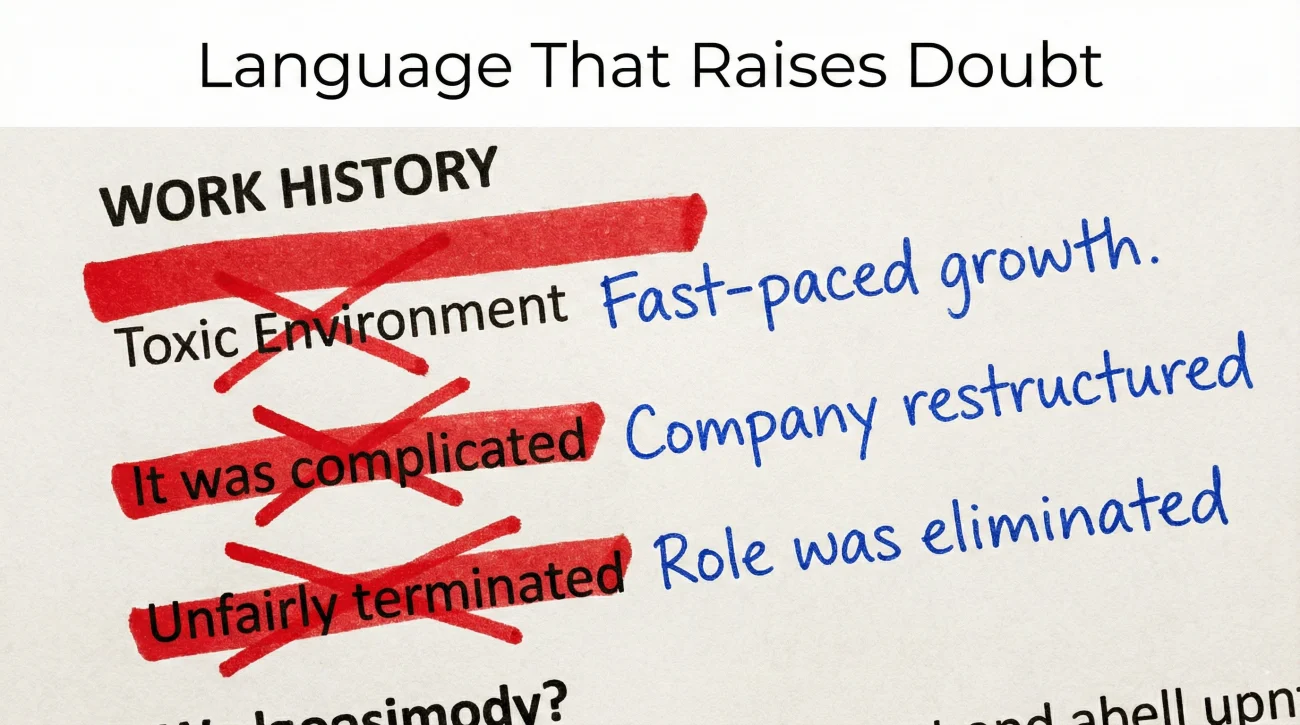
A lot of people accidentally sabotage themselves with wording that sounds transparent, but reads like ongoing drama. Here are patterns I see repeatedly.
- Over-explaining: You are trying to prove you are the victim, and the recruiter hears “high maintenance.”
- Passive-aggressive blame: It makes you look like you will repeat the same conflict in the next job.
- Vague chaos language: “Things happened,” “it was complicated,” “they were toxic.” It invites the recruiter to imagine the worst.
- False precision: Listing a “termination” label when the job ended for more complex reasons makes you look like you are framing it badly.
There is a way to be truthful without giving the recruiter a mystery novel. The best language is boring and stable.
And yes, people ask about it directly. If you have been wondering how to say you were fired on resume without wrecking your chances, the answer is usually: you do not. You keep the resume factual, and you prepare a calm interview explanation that matches your end date and your application history.
Five Resume Examples You Can Copy And Adapt
These examples show the three positioning options in real resume style. Each one keeps the resume accurate and calm. None of them write “fired.”
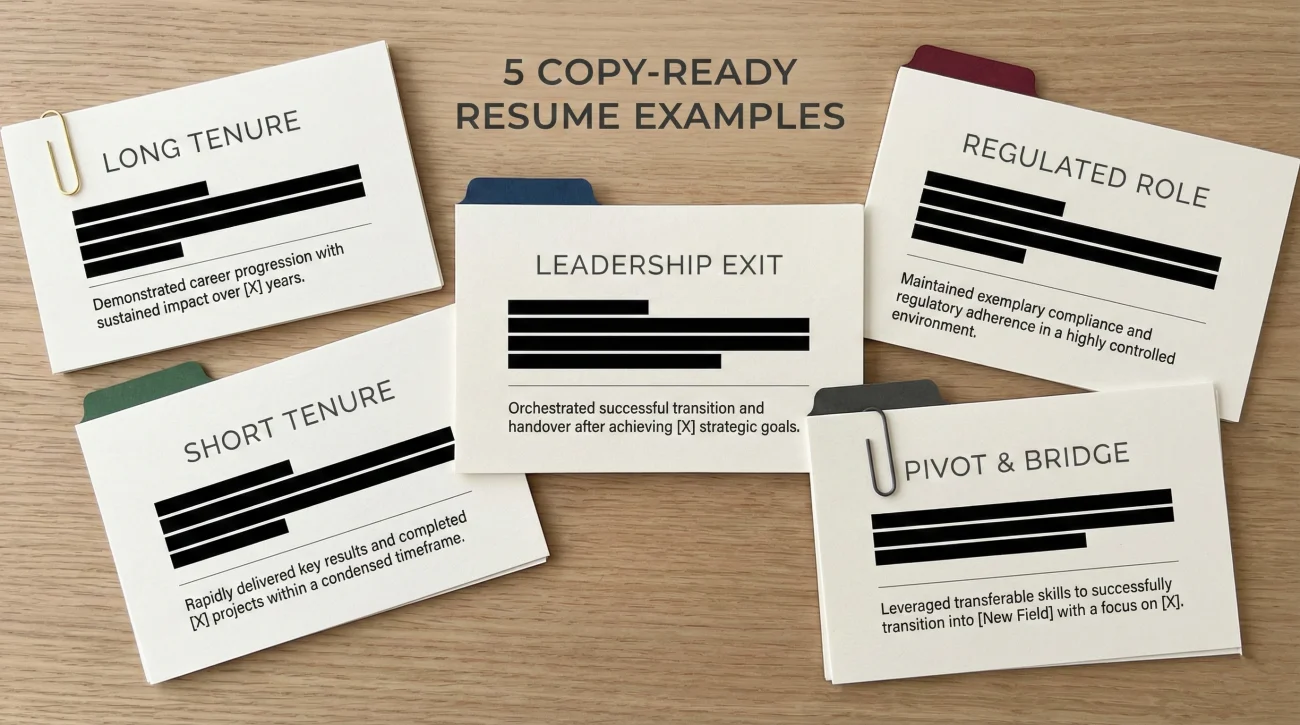
Example 1: Long Tenure, Strong Achievements (Option 1)
Keep the role. Keep the outcomes. Let the end date do the closure work.
– Reduced fulfillment errors by 28% by rebuilding QA workflows across two sites
– Led a 14 person team through a WMS transition with no downtime incidents
– Built weekly KPI reviews that improved on-time shipment rate from 91% to 97%
Example 2: Short Tenure, Role Still Relevant (Option 2)
This is where a neutral closure note can prevent the recruiter from inventing a story.
– Managed 60+ SMB accounts and improved renewal forecasting accuracy
– Built onboarding templates that cut time-to-first-value by 9 days
Note: Role ended during team restructuring
Example 3: Leadership Role, Ended Fast (Option 3)
Leadership exits get scrutinized. A brief context note can reduce “what happened?” energy without turning your resume into a courtroom statement.
– Rebuilt demand gen tracking and reduced CPL variance across channels
– Set quarterly campaign priorities and aligned reporting to revenue targets
Note: Leadership change led to a shift in org direction
Example 4: Regulated Or High Verification Work (Option 3)
If the industry is strict, your goal is alignment across resume, application, and screening.
– Supported internal audits and maintained evidence logs across policy updates
– Improved case documentation quality and reduced rework cycles by 22%
Note: Position concluded after performance recalibration period
Example 5: Pivot With A Clean Bridge (Option 1 plus bridge)
Sometimes the smartest move is to keep the role listed, then add a truthful bridge that shows stability after the exit.
– Coordinated vendor timelines and improved rollout accuracy across 30 stores
– Built status tracking that reduced missed dependencies in weekly launchesIndependent Project Support | Oct 2025 – Present
– Supported short-term client projects in scheduling, documentation, and reporting
Notice how these examples make it possible to include termination on resume history truthfully without printing the word “termination” on the page. You are not hiding employment. You are choosing the right place for explanations.
If They Ask Directly: A Calm 45 Second Answer
Even if you do everything right on the resume, you should assume the question may come up. The goal is not to win the argument. The goal is to restore trust and move forward.
Here is the structure I coach:
[One sentence context] + [One sentence ownership] + [One sentence fix] + [One sentence forward fit]
When a candidate needs to disclose fired resume context later in the process, this structure keeps them from spiraling into defensiveness.
“I was let go after a reset in expectations during a leadership change. I take ownership for where my approach did not match what they needed. I tightened my execution system and got specific feedback on the gaps. I am looking for a role with clearer success metrics and I can show you the results I have delivered in that environment.”
💡 Pro Tip: Practice until you can say it without anger. The recruiter is not judging the firing as much as they are judging your emotional control around it.
One of my friends, Dessie, got terminated early in a new product role. Her first draft answer was technically honest, but it sounded like a fight. We rewrote it to be calmer and more specific about what she changed. She did not “win” the story. She made the story safe. That is what moved her forward.
Final: Keep The Resume Clean, Keep The Story Consistent
Most of the time, you do not need to print a label like “fired” on the page. What matters is whether the role belongs on your resume, whether the dates are accurate, and whether the story feels predictable instead of messy.
If you keep the job listed, let the achievements carry the weight and let the end date quietly close the chapter. If you add any note at all, keep it neutral and short, only when it prevents a bigger misunderstanding. The win is simple: A resume that reads stable, and an interview explanation you can repeat without rewriting your past.
That is why should i put being fired on my resume usually has a calm answer: Keep the timeline honest, keep the wording boring, and save the “why” for the moment someone actually asks.
❓ FAQ
🎯 Do I have to say I was fired on my resume?
No. A resume normally lists roles, dates, and outcomes. The separation reason is usually handled in interview answers or application forms when asked.
🧩 What if the job was only a few months?
If removing it creates confusion or a skills gap, keep it and use either no note or a neutral closure note. If it adds little value and you have a truthful bridge, you can consider omitting it.
🧠 Will a background check show I was fired?
It depends on the employer and the screening process. Assume your dates and titles can be verified, and keep your story consistent across resume, application, and interviews.
🛡️ Should I write “terminated” next to the role?
Almost never. That label invites early doubt before the recruiter even knows your strengths. Use positioning, not labeling.
🚀 What is the safest way to explain it in an interview?
Keep it short: context, ownership, what you changed, and why the next role fits better. Do not blame. Do not overshare. Do not turn it into a story about the company.
⚠️ Disclaimer: ResumeSolving provides resume, cover letter, and job search communication guidance for informational purposes only. It is not legal, medical, financial, or professional counseling advice. Hiring decisions vary by company, role, location, and individual circumstances, so we do not guarantee interviews, offers, or outcomes. Always use your own judgment, verify requirements directly with the employer, and follow local laws and workplace policies. When a situation is sensitive, we prioritize privacy-safe, recruiter-appropriate wording, and you never need to share personal details you are not comfortable disclosing.