- Recruiters don’t read “fired,” “terminated,” and “let go” as synonyms: They read them as risk signals.
- The safest wording is the one that is truthful and boring: Add one closure signal so the story feels finished.
- Use different language for resume, application forms, and interviews: One label does not fit every context.
The Day One Word Changed The Interview Mood
A candidate I’ll call Jules had a strong background: Clean promotions, solid metrics, and references that actually answered the phone. The resume was fine. The experience made sense. The call started warm.
Then I asked a simple question about their last role ending. Jules said, “I was terminated.” No extra context. No closure signal. Just that one word.
I watched the interviewer’s tone shift in real time. Not because they assumed Jules was a bad person. It was more mechanical than that. Their brain started scanning for hidden risk: Policy issues, misconduct, conflict, paperwork, drama. That is what ambiguity does in a hiring conversation.
This is why terminated vs fired is not a dictionary debate. It is a perception problem. If you pick the wrong label, the recruiter fills in the blank for you. And they rarely fill it in kindly.
💡 Note: Your goal is not to sound “innocent.” Your goal is to sound stable, employable, and resolved.
What Recruiters Usually Hear When You Say Each Word
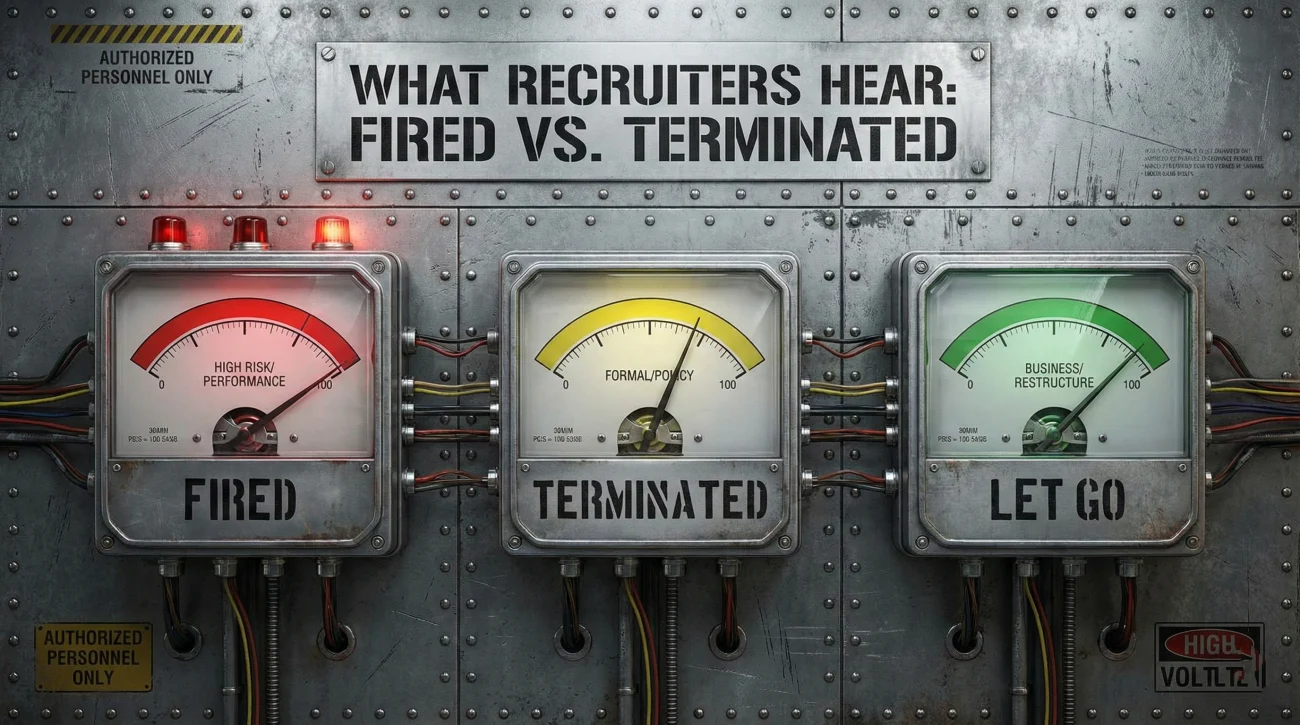
When you say: Fired
Most recruiters translate “fired” into a performance or behavior story, even if you never say those words. The internal script looks like this: Someone struggled, they were coached, the gap didn’t close, the company ended it.
That assumption is not always accurate. I have seen “fired” used for situations that were basically a mismatch, a rushed hire, or a manager change. But the point is: Fired tends to trigger follow up questions.
If you choose “fired,” you should be ready for a short explanation that closes the loop. If you cannot explain it calmly in one breath, it is usually safer to choose a neutral umbrella label instead.
When you say: Terminated
Many candidates pick “terminated” because it sounds professional. Recruiters often hear it as heavier than “fired,” not lighter. It signals formal paperwork, HR language, and sometimes policy. In regulated industries, it may be normal. In other settings, it can feel like a hint that something is being withheld.
The tricky part: You can be telling the truth and still accidentally spike the recruiter’s anxiety. If you use “terminated,” you usually need one stabilizer right away: Role ended, position eliminated, business restructure, end of contract.
⚠️ Warning: “Terminated” without a closure signal often invites the recruiter to imagine the worst version of the story.
When you say: Let go
“Let go” tends to read softer and more human. Recruiters often map it to restructuring, budget shifts, leadership change, or “not the right fit.” It can be a good choice when the ending was involuntary but not dramatic.
However, “let go” can also sound vague. Vague is risky. Vague makes the recruiter wonder if the situation is still active or if you are disguising something.
When “let go” works well, it includes one clean closure signal that makes the ending feel finished and businesslike.
Recruiter reality: Hiring teams don’t punish endings. They punish ambiguity that feels like future risk.
A Simple Translation Table: Word, Assumption, Best Use
| What you say | What it often implies | When it works | What to add |
|---|---|---|---|
| Fired | Performance or behavior issue | When you can explain it cleanly and briefly | One lesson learned, one forward focus |
| Terminated | Formal HR action, possibly policy | When the paperwork language is rigid or it is the accurate category | A neutral closer like “role ended” |
| Let go | Business change or broad mismatch | When the ending was involuntary but not conflict-driven | Restructure, role eliminated, leadership change |
| Laid off | Role eliminated for business reasons | When the role truly disappeared or there was a reduction in force | Keep it simple, do not over explain |
Most online advice stops here. It gives definitions. What candidates actually need is decision rules: How to pick the least risky truthful label, in the real world, with a real recruiter on the other side.
Decision Rules: How To Pick The Least Risky Truthful Label
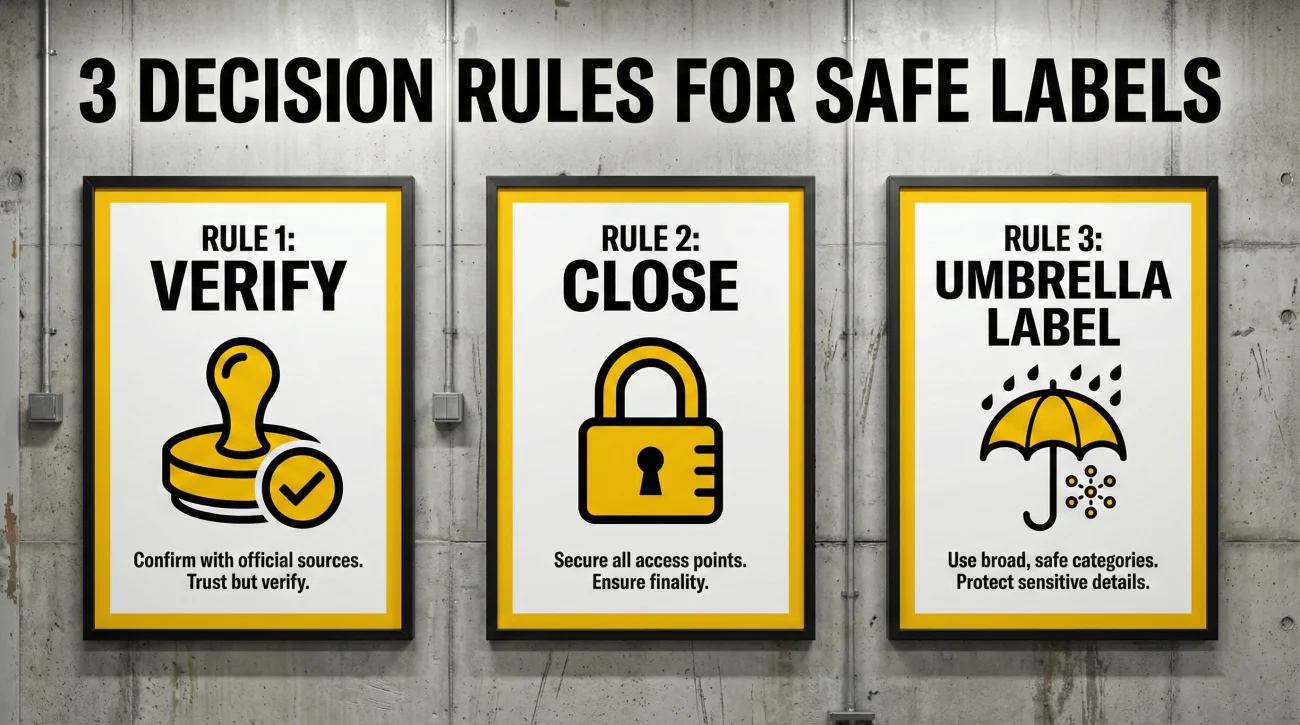
Rule 1: Match the label to what can be verified
I have seen candidates trip over this more than once: They treated the label like branding, not like consistency. A form asked a direct question, they answered one way. In conversation, they used a different label because it sounded softer. That mismatch is what creates trust issues.
One colleague in HR shared a case where a candidate casually said “laid off” in the interview, but the application checkbox said “terminated.” The recruiter did not assume evil. They assumed sloppiness or evasiveness. Either way, it cost the candidate momentum.
So the practical rule is simple: If a job application forces a category, use the accurate category there. Then craft an interview answer that is stable and brief.
Rule 2: Add one closure signal to stop the guessing
A closure signal is one neutral fact that makes the ending feel finished. It tells the reader: This is not ongoing conflict. This is not unresolved drama. This is a closed chapter.
Good closure signals are boring business reasons: Team restructure, department closed, role eliminated, end of contract, leadership change, funding shift. The more emotionally charged your wording becomes, the more it looks like the story is still alive.
✅ Closure pattern: Label + One closure signal + Forward focus.
Rule 3: If the story is mixed, use a neutral umbrella label
Not every ending fits a neat category. Sometimes the manager changed. Sometimes the job was scoped wrong. Sometimes you burned out. Sometimes expectations shifted without warning. In those cases, pushing yourself to pick the most dramatic label often backfires.
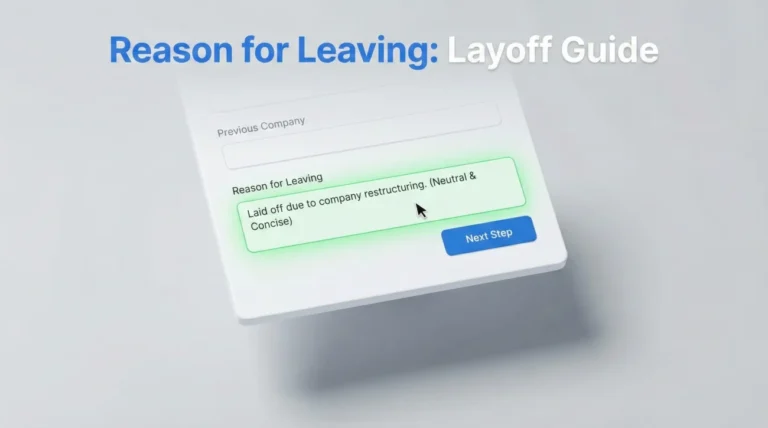
A neutral umbrella label like “involuntary separation” or “role ended” keeps you honest without handing the recruiter a mystery novel. It also gives you room to steer the conversation back to what matters: Your work quality.
One candidate, Mina, had a short tenure at a startup that pivoted three times in six months. She wanted to call it “fired” because she felt ashamed, then wanted to call it “laid off” because it sounded safer. The truth was messier than both. We used “role ended after a team restructure” with a simple forward focus. She stopped sounding defensive, and her interviews improved quickly.
Resume vs Application vs Interview: Use Different Language On Purpose
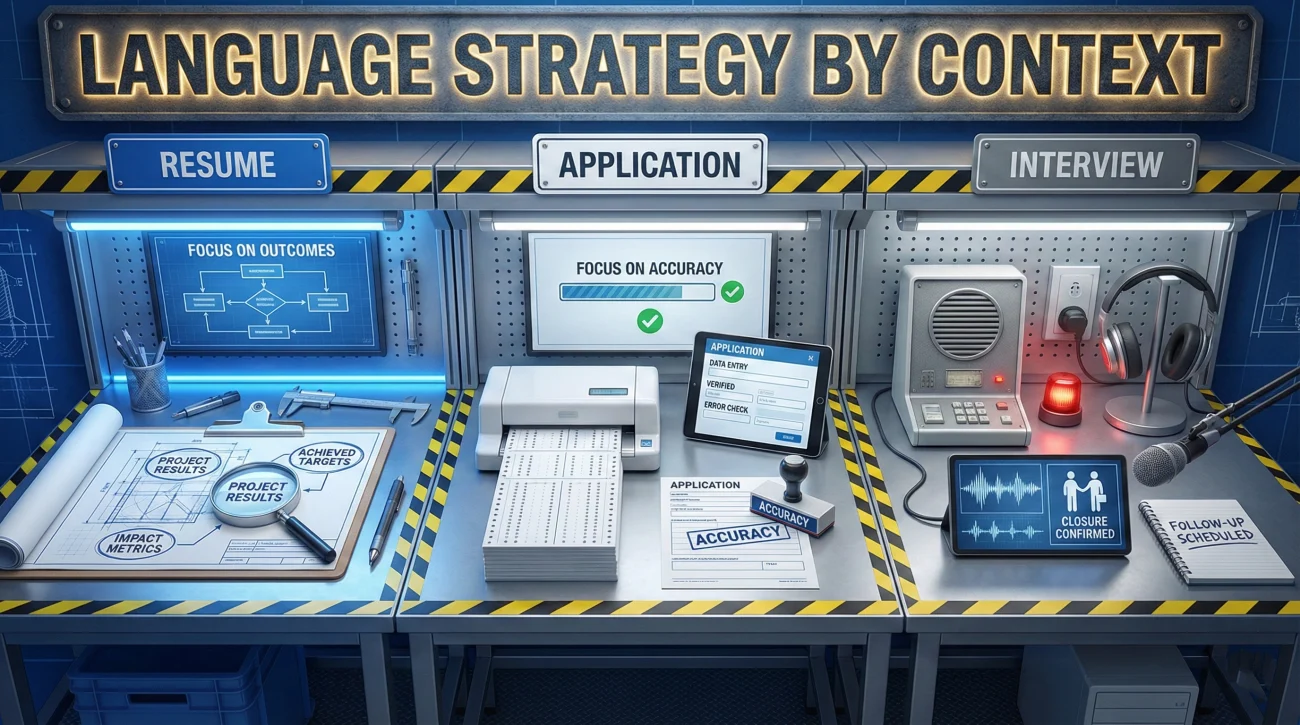
On a resume
Your resume is not a confession booth. In most cases, you do not need to write “fired” or “terminated” on the resume at all. Your resume should anchor the reader in outcomes, scope, and proof.
If the role was short and you worry the recruiter will guess, you can add one neutral closure line. Keep it businesslike, not emotional. One line is enough.
– Built territory rules that reduced lead duplication by 22% across the team
– Automated weekly pipeline reporting, cutting manual work by 6 hours per week
– Role ended after department restructure; seeking sales ops roles in growth-stage teams
On an application form
Application forms are different because they can force categories. If the form asks “Were you terminated?” or “Were you fired?” answer accurately. Accuracy here is not about oversharing. It is about avoiding contradictions later.
If there is a free text field, keep it neutral and short. Do not use charged phrasing. Do not write a mini essay. Your goal is consistency, not persuasion.
In an interview
Interviews are where you add a human sentence. One sentence. Maybe two. Enough to show the ending is resolved and you learned something. Then you pivot to what you deliver.
If you feel the urge to defend yourself at length, treat that as a signal: The label you chose might be too charged, or your closure signal is missing.
10 Truthful Label Options That Usually Read Stable
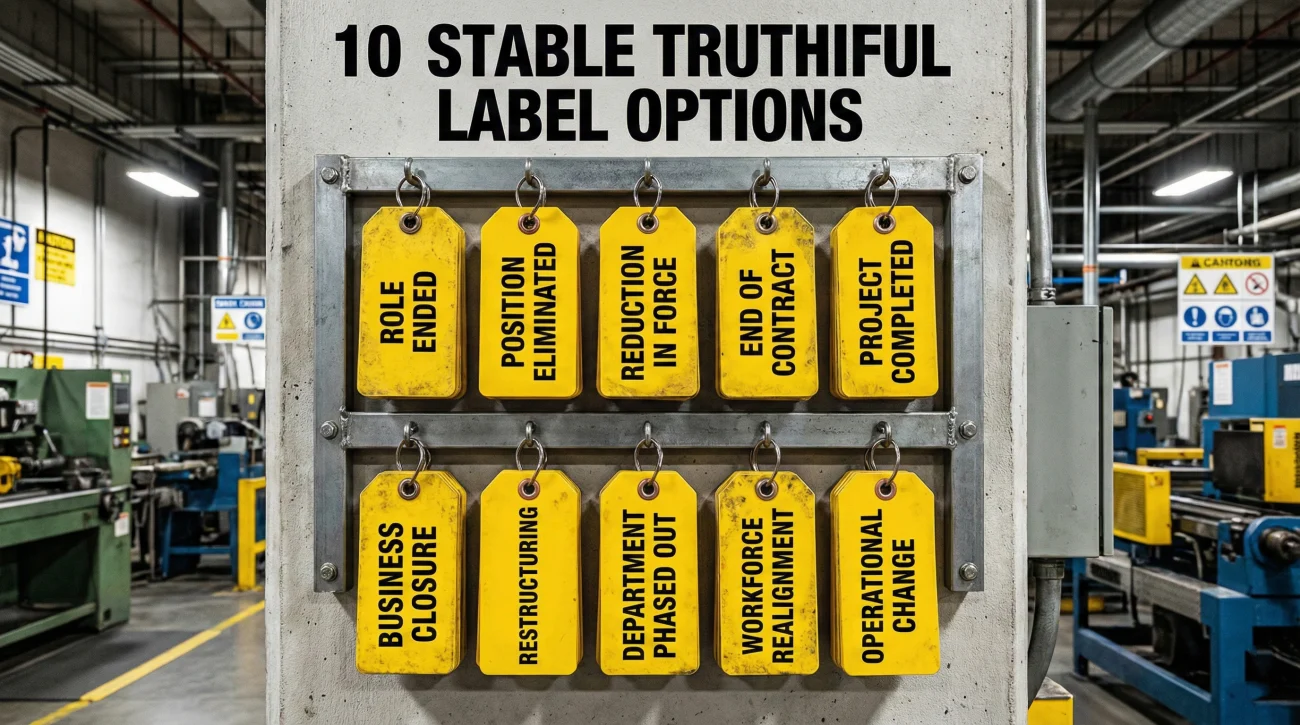
These are not magic words. They are practical labels that reduce unnecessary fear. Use the ones that match your reality.
- Involuntary separation: Useful when the ending was not your choice and you want neutral framing.
- Role ended: Clean and simple for short tenures or ambiguous exits.
- Position concluded: Slightly formal without sounding heavy.
- Position eliminated: Clear and business-driven.
- Reduction in force: Works in corporate environments where that phrase is common.
- Department restructure: Best when the team or reporting lines actually changed.
- End of contract: Strong when you were project-based or contract-based.
- Project completed: Useful in agencies, consulting, and fixed-scope work.
- Leadership change: Helpful when a new leader shifted expectations or priorities.
- Role no longer aligned with business needs: Longer, but accurate for “not the right fit” endings.
One HR friend calls these “boring labels.” That is the compliment. Boring labels keep the recruiter’s attention on your results, not your exit.
💡 Tip: If you use a neutral label, make sure your bullet points show proof. Proof is what pulls the reader out of story-mode and back into hiring-mode.
8 Labels To Avoid Because They Imply Conflict Or Misconduct
I am not saying these phrases are morally wrong. I am saying they tend to make the recruiter imagine risk. That is not the movie you want playing in their head during first contact.
- Wrongful termination: Sounds like legal conflict and ongoing dispute.
- Blacklisted: Signals fallout and unresolved issues.
- Escorted out: Implies security or misconduct.
- Forced out: Sounds like a fight, invites interrogation.
- Management targeted me: Even if true, it frames you as volatile.
- Bullied out: Heavy claim that rarely helps you in early hiring stages.
- Fired for no reason: Reads like denial, not clarity.
- Terminated for cause: A loaded phrase that increases perceived stakes fast.
❌ Note: If you feel pulled toward these labels, you might be looking for emotional validation in a process that is designed for risk control.
Short Interview Answers That Close The Loop
The core template
A good answer does three things: It states the ending in neutral language, it signals learning, and it pivots to what you deliver next. It does not become a courtroom argument.
“It was an involuntary separation after expectations shifted during a leadership change. I tightened my execution and stakeholder updates, and I’m focused on roles with clear success metrics like this one.”
If you choose the word “fired”
If you use “fired,” keep it steady. Do not over explain. One clean sentence about what changed, one sentence about what you learned, then back to your strengths.
“I was fired because my early ramp up was not meeting the role’s expectations. I took the feedback seriously, improved how I track priorities and communicate progress, and I’m now targeting roles where I can show the operating rhythm that has worked for me.”
If you must use “terminated”
Sometimes “terminated” is simply the accurate category, especially in formal HR processes. If you use it, add a neutral closer quickly so it does not sound like a hidden story.
“My employment was terminated and the role ended during a department restructure. I used the transition to sharpen my process habits, and I’m ready to bring that structure into my next role.”
I coached a candidate named Carlos who kept trying to justify every detail. When he shortened the answer and added a closure signal, his interviews stopped turning into investigations. The content did not change much. The tone did.
Common Mistakes That Make The Story Feel Worse Than It Is
Mistake 1: Treating the label like a confession
You do not earn points for self-punishment. You earn points for stability. A recruiter does not need your guilt. They need to know you will not bring unresolved chaos into their team.
Mistake 2: Adding emotional adjectives
Words like “unfair,” “toxic,” “shocking,” and “devastating” are human. They are also risky in early hiring. They make the reader feel like the story is still active. Save emotional processing for personal spaces. Keep hiring language calm.
Mistake 3: Creating inconsistencies across documents
Resume says “role ended.” Form says “terminated.” Interview says “laid off.” None of those are automatically disqualifying alone, but together they create a trust problem. Consistency is a career safety feature.
✅ Practical checkpoint: Pick one truthful umbrella label, then keep your wording consistent across contexts, adjusting only for form constraints.
Final: Make The Ending Feel Finished, Then Let Your Work Speak
Most candidates don’t get rejected because their last job ended. They get rejected because the wording makes the ending feel unresolved. If you choose a label that invites guesswork, the recruiter will fill in the blanks. If you choose a label that feels clean and complete, the recruiter moves on to what actually matters: Your results.
The safest move is simple. Use a truthful label that sounds boring, add one closure signal, and stop. Then let your impact bullets carry the conversation. That’s how terminated vs fired stays a detail, not the headline of your candidacy.
❓FAQ
🎯 Is “terminated” always worse than “fired”?
No. In some companies it is simply the formal HR term. The risk is that it can sound heavier without a closure signal, so pair it with a neutral closer like “role ended” when appropriate.
🧭 Should my resume say “fired” or “terminated” directly?
Usually no. Most resumes do better with neutral framing and strong proof bullets. Add a closure line only if the tenure was short and you need to prevent guessing.
🛡️ What if the application form forces me to pick “terminated”?
Pick the accurate category on the form. Then prepare a short interview explanation that includes a closure signal and one learning point, without oversharing.
🧩 Can I say “let go” if I was fired for performance?
Only if it remains truthful and consistent with what a form or reference check could reasonably confirm. If you are unsure, use a neutral umbrella label like “involuntary separation.”
💬 What is the shortest safe way to answer if they press for details?
Use label plus closure plus forward focus. Example: “It was an involuntary separation after expectations shifted; I improved my execution habits, and I’m focused on roles with clear success metrics like this one.”
⚠️ Disclaimer: ResumeSolving provides resume, cover letter, and job search communication guidance for informational purposes only. It is not legal, medical, financial, or professional counseling advice. Hiring decisions vary by company, role, location, and individual circumstances, so we do not guarantee interviews, offers, or outcomes. Always use your own judgment, verify requirements directly with the employer, and follow local laws and workplace policies. When a situation is sensitive, we prioritize privacy-safe, recruiter-appropriate wording, and you never need to share personal details you are not comfortable disclosing.