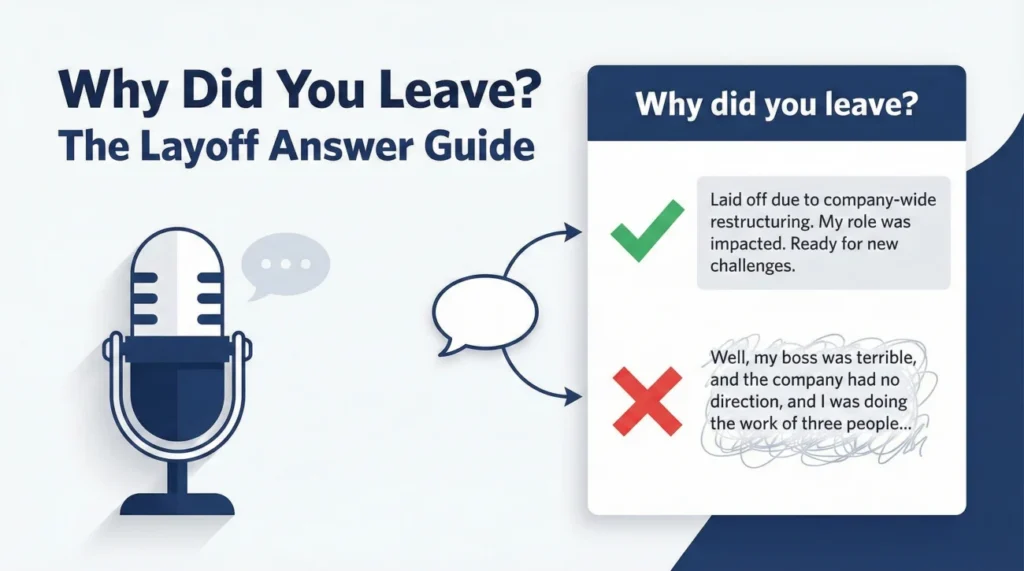
- If you were laid off, your answer should sound factual, closed, and forward. Not emotional, not defensive.
- Use a 12-second structure. What happened, how big it was, what you delivered, what you are targeting next.
- Prepare two versions. A short answer for the first screen, and a longer answer only if they ask follow-ups.
Why This Question Feels Simple But Hits Like A Trap After A Layoff
The most annoying part about being laid off is that you can do everything right and still end up explaining it to strangers. Then the first interview comes and you hear: “Why did you leave your last job?” If you answer too casually, it can sound like you quit. If you answer too intensely, it can sound like you were pushed out for performance.
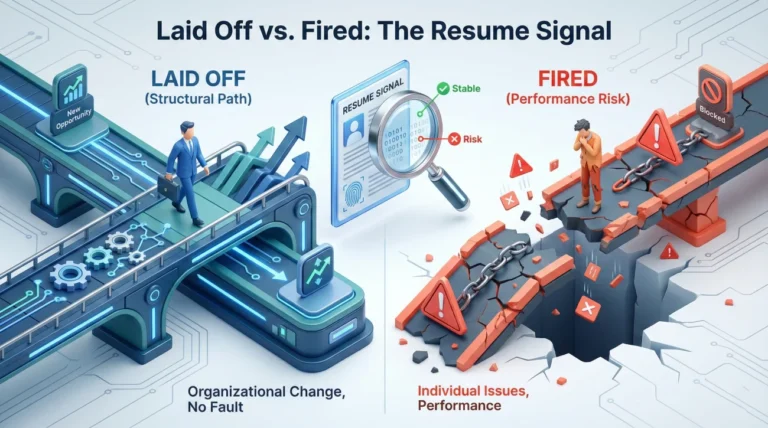
I have coached candidates through this exact moment more times than I can count. The pattern is predictable. The question is not really about your exit. It is about whether you are a stable hire now.
So this guide is built around one goal. Helping you answer why did you leave your last job laid off in a way that closes the topic fast, without sounding rehearsed, bitter, or vague.
Quick real-world example. A product analyst I worked with, Melinda, froze on this question because her layoff happened right after a re-org. She kept trying to “prove” she was good. The more she explained, the more it sounded like she was defending something. We rewrote it into a 12-second answer. She stopped rambling. Her interviews got calmer. Her conversion rate improved.
What The Interviewer Is Actually Checking When You Say “Laid Off”
Most advice online tells you to be honest and stay positive. True, but incomplete. In practice, interviewers are quietly checking three risk signals. If your answer covers them, the question stops being scary.
| What they are really checking | What triggers concern | What calms it |
|---|---|---|
| Was it performance or integrity? | Vague wording, over-explaining, blaming “politics” | Neutral label, scope or context, one proof marker |
| Are you employable right now? | Messy timeline, “still processing,” no current direction | Clear target role, current activity, forward motion |
| Will you be hard to manage? | Anger, sarcasm, long story about leadership | Composed tone, respectful framing, quick pivot to work |
Key point Your job is not to convince them the layoff was unfair. Your job is to make the layoff feel normal, finished, and unrelated to your ability to deliver.
One more story. My colleague Marcus (HRBP in a tech startup) told me he screens for “emotional spillover.” Not because candidates are wrong to feel hurt, but because the role he is hiring for needs steady execution. When your answer sounds steady, you signal “safe hire” without saying it.
The 12-Second Answer Formula That Works In Most Layoff Scenarios
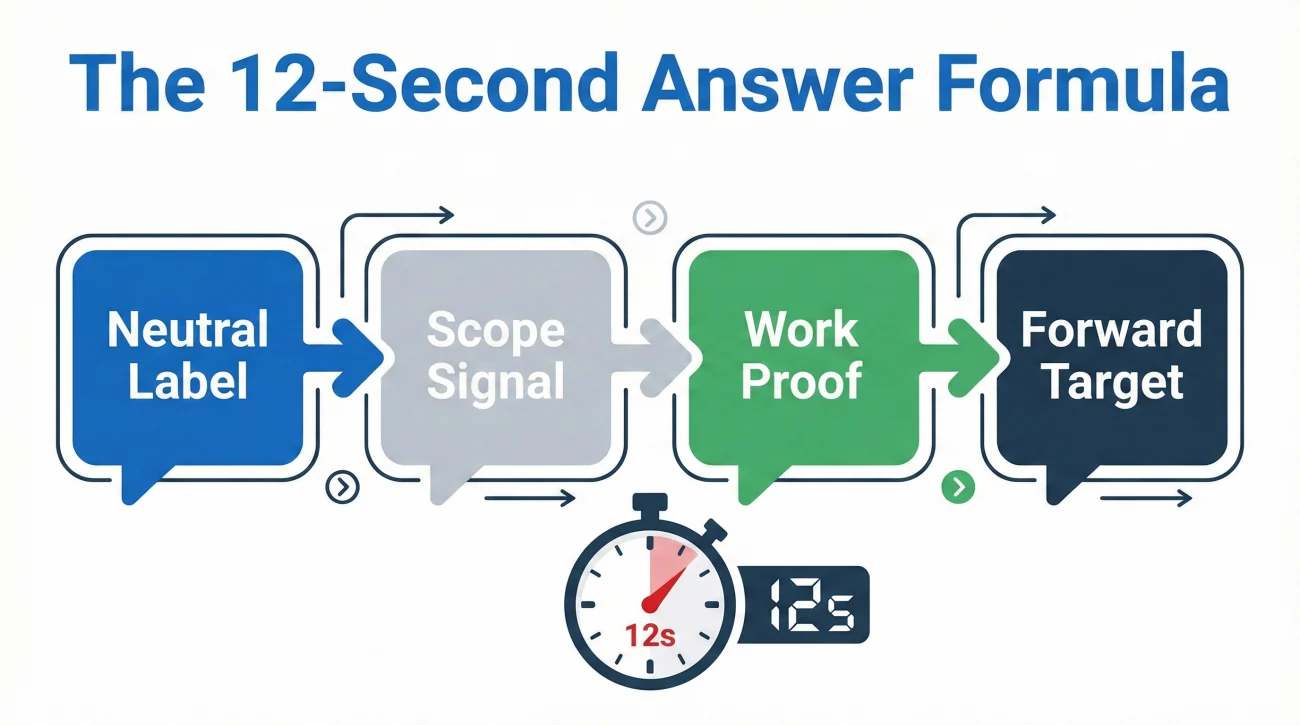
If you only take one thing from this article, take this structure. It is short enough for a first-round screen, but complete enough to avoid follow-up suspicion.
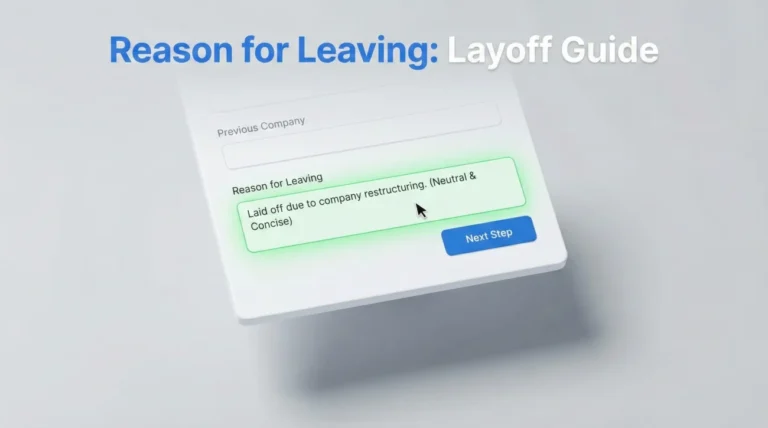
[Neutral Layoff Label] + [Scope Signal] + [Your Work Proof] + [Forward Target]
Here is what each piece does:
- Neutral Layoff Label: Makes it clear this was not a resignation or termination.
- Scope Signal: One line that shows it was bigger than you. A re-org, a funding shift, a department reduction.
- Your Work Proof: One deliverable or metric that anchors performance without bragging.
- Forward Target: The role or direction you are moving toward, stated calmly.
💡 Pro Tip: Say the label once, then move on. The longer you sit in the layoff, the more it starts to feel like the main story.
One small discipline helps here. Keep your answer businesslike and closed. You can be human without letting the topic expand.
⚠️ Warning: Avoid naming individuals or accusing leadership. Even if you are right, it reads like future conflict.
Before we jump into scripts, a tiny tone rule matters. Your voice should sound like you are describing a schedule change, not a personal wound. You can still be human. Just keep it contained.
Five Short Answers For First-Round Screens
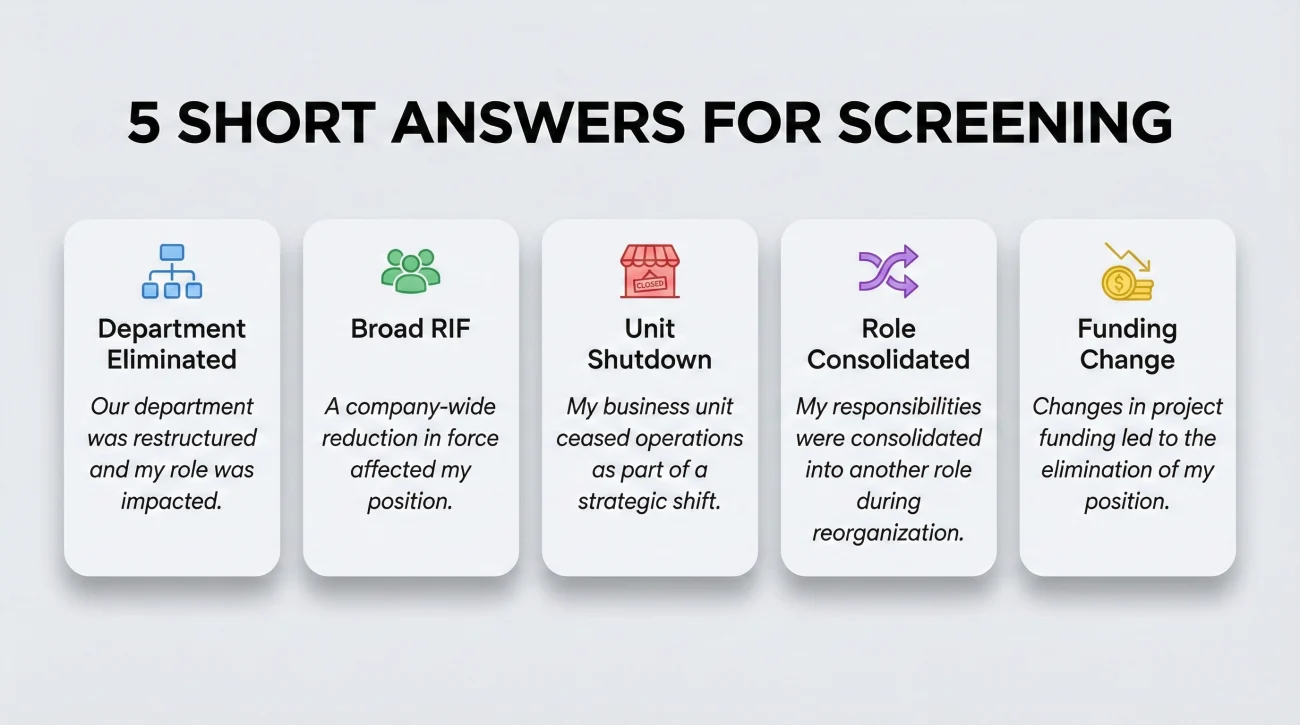
These are designed for the early stage when you have 30 to 60 seconds total. Each one follows the same pattern, but the vocabulary changes so you can pick what matches your situation. Read them out loud and choose the one that sounds like something you would actually say.
Short Answer 1, Department Eliminated
“I was laid off when the company eliminated our analytics pod during a re-org. I delivered the Q3 churn model and the rollout plan, and I am now targeting product analytics roles where I can own retention and experiment design end to end.”
This works because it labels the event, shows scope, then lands on proof and direction. It does not invite debate.
Short Answer 2, Broad Reduction In Force
“I was laid off as part of a broader reduction in force tied to budget cuts. I left with strong performance feedback, and I am focused on roles where my reporting automation and stakeholder alignment can drive measurable efficiency.”
This works because it avoids speculation about “why me” and uses a simple credibility anchor without sounding like a performance speech.
Short Answer 3, Business Unit Shut Down
“I was laid off when our business unit was shut down after a strategy shift. I owned onboarding flow improvements that reduced time-to-value, and I am looking for customer lifecycle roles where I can scale that work.”
This works because the story is closed. The next step is clear, so the interviewer can move on.
Short Answer 4, Role Consolidated
“I was laid off when two roles were consolidated after leadership changes. I completed a vendor renegotiation that lowered costs, and I am now pursuing operations roles where I can keep building process and spend discipline.”
This works because the cause is structural and the proof marker is specific, not vague praise.
Short Answer 5, Funding Timeline Changed
“I was laid off when the company adjusted its funding timeline and reduced headcount. I shipped an integration milestone before the change, and I am targeting implementation roles where I can keep working close to customers and technical teams.”
This works because it sounds like a business event, not a personal crisis.
Notice what these do not include. No blame, no long explanation about leadership, no emotional replay. That restraint is what makes the answer feel safe.
Five Longer Answers For When They Ask Follow-Ups
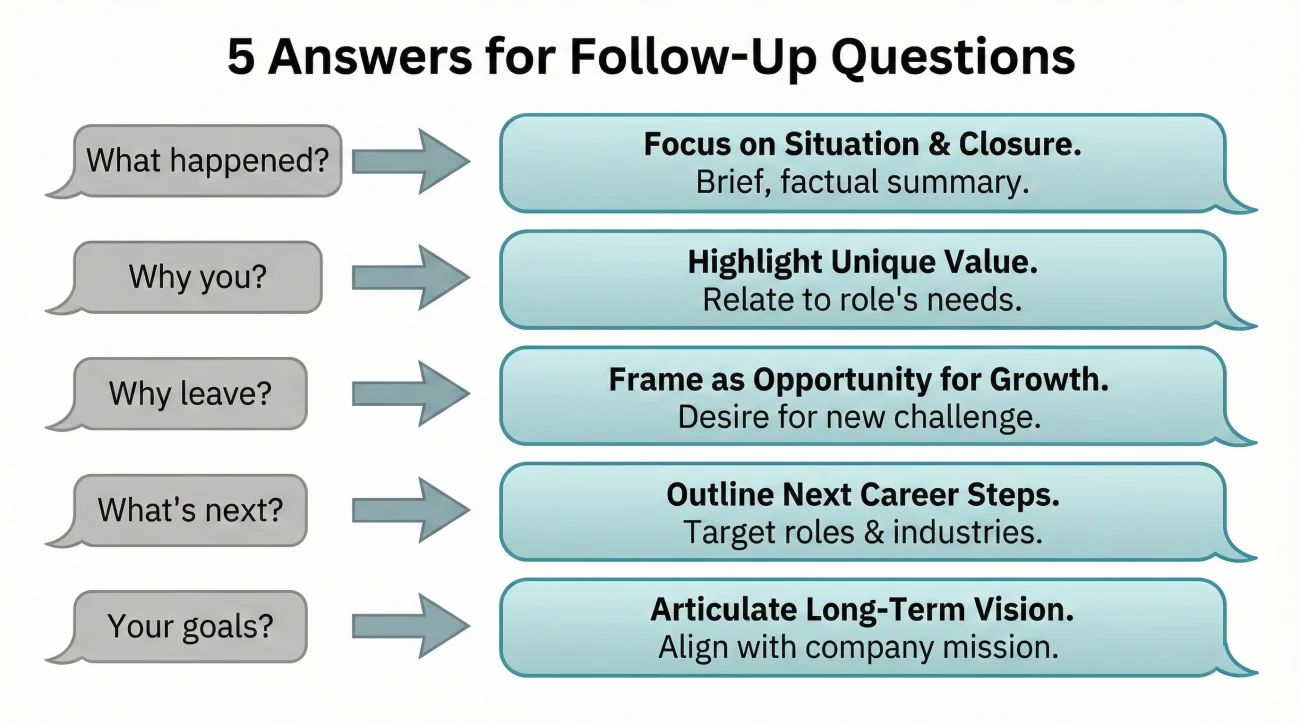
Sometimes the interviewer will ask a second question immediately, or you can feel they need a little more context. These versions are still controlled, but they give just enough detail to feel credible. The goal is clarity, not catharsis.
Longer Answer 1, If They Ask What Happened
“It was a company-wide reduction in force after a revenue reset. My team’s scope was reduced and my role was impacted. I completed the reporting rebuild that cut weekly manual work, and since then I have been targeting roles where analytics ties directly to retention and product decisions.”
Use this when they want context. Stop after the last sentence. Do not keep stacking details.
Longer Answer 2, If They Ask Why You
“The decision was role-based, not performance-based. They removed a layer and consolidated responsibilities. My outcomes were strong, including the cost-to-serve dashboard I owned, and I am focusing on roles that match my lane where I build repeatable systems and communicate insights to partners.”
It answers the question without guessing what leadership thought. That is the important part.
Longer Answer 3, If Your Tenure Was Short
“I joined during a growth phase, and within months the business shifted priorities and reduced headcount. The role changed quickly and then was eliminated. I still stabilized the workflow and documented the handoff, and I am targeting teams with a clearer runway where I can build over longer cycles.”
Short tenure needs two signals. It was structural, and you behaved professionally until the end.
Longer Answer 4, If They Ask About Performance
“No, it was a structural layoff. I left with positive feedback and completed the quarter goals I owned. I understand why the company made the decision, and I am focused on bringing my execution style into a team investing in this function.”
Keep it plain. If you try to prove too hard, it can sound like there is something to prove.
Longer Answer 5, If They Ask What You Did After
“I took a short reset, then treated the search like a project. I refreshed my portfolio, sharpened two core skills, and focused on roles that match the work I want to keep doing. I am ready to step back into a stable role.”
This gives forward motion without sounding like a motivational speech.
💡 Pro Tip: A longer answer should add clarity, not emotion. If it adds emotion, it usually adds risk.
Six Pivot Lines That Move The Interview Back To Your Value

Most candidates lose control after they answer the layoff question. They keep talking because they think silence means suspicion. These pivot lines give you a clean bridge back to the role.
- ✅ “What I am looking for now is a team where I can do that work at a deeper level, which is why this role stood out.”
- 🎯 “The part I want to focus on is the same part this job is hiring for. Results and execution.”
- 🧩 “If it helps, I can walk you through a recent project that shows how I work in practice.”
- 📌 “The layoff was a structural change. My focus is what I delivered and what I can deliver here.”
- 🧠 “Since then I have been intentional about targeting roles that match my strongest lane, and this one does.”
- 🚀 “Happy to share more context, but the short version is that it was a layoff and I am ready for the next build.”
These lines matter because they make you sound like a person who has processed the event, not a person still stuck inside it.
When They Press For Details: Stay Honest Without Oversharing
Some interviewers are just curious. Others are stress-testing your story to reduce hiring risk. Either way, your move is the same. Answer the question they asked, then return to the role.
What if they ask why you were selected?
Keep it role-based. Mention consolidation, scope reduction, or elimination. Then add one proof marker and pivot. Avoid any line that implies you were “less valued” than peers, even indirectly.
What if they ask whether you were on a performance plan?
If the truthful answer is no, say no plainly and stop. If the truthful answer is yes, keep it short, factual, and closed. State what changed and what you learned without turning it into an argument.
What if they ask whether they can contact your manager?
Most employers have reference policies, and some managers will still speak informally. You do not need to promise anything dramatic. Offer references who can speak to your work and keep it professional.
“Totally fair question. It was a role elimination tied to a restructure. I can share references who can speak to my work, and I am happy to walk you through a project outcome that shows how I delivered in that role.”
If you are searching for how to explain a layoff in an interview without sounding suspicious, this is usually the missing piece. The fix is not more explanation. It is cleaner structure.
Mistakes That Accidentally Make A Layoff Sound Like You Were Fired
Layoffs are common. The problem is not the layoff. The problem is language that makes it feel like a performance event.
| Mistake | Why it backfires | Better move |
|---|---|---|
| “They were toxic, so they let people go.” | Sounds like conflict and blame | Neutral label, then pivot to work |
| “It came out of nowhere and I was devastated.” | Signals instability, even if human | One calm sentence, then forward target |
| “I think they chose me because…” | Invites speculation and insecurity | Role-based reason, not personal theory |
| Over-sharing internal details | Can look careless with confidentiality | High-level context only |
❌ Note: Do not try to “sound impressive” by revealing sensitive details about budgets, executive disagreements, or internal politics. The interviewer is not impressed. They are calculating risk.
If you want a simple check, re-read your answer and ask one question. Did you make the layoff feel bigger than it is. If yes, tighten it and bring it back to outcomes and direction.
Final Thoughts You Can Use In The Room
A layoff does not require a dramatic defense. It simply needs a controlled explanation. By labeling the event neutrally and anchoring it with a specific scope signal, you can quickly pivot the conversation toward your future value. This discipline prevents hiring managers from speculating about performance issues and keeps them listening to your potential.
Mastering the precise language for why did you leave your last job laid off allows you to maintain this consistency across every interview stage. It ensures your story feels stable rather than defensive, helping you navigate the explanation without letting it define your candidacy.
❓FAQ
🎯 Should I say “laid off” or “position eliminated”?
Both can work. “Laid off” is direct. “Position eliminated” is slightly softer. Pick the one that matches the truth and your paperwork, then move on quickly.
🧾 Do I need to mention how many people were laid off?
Only if it helps context and you can say it simply. One short scope signal can reduce suspicion, but it is not required.
🧠 What if I was laid off after a short time at the company?
Short tenure needs clarity, not defensiveness. Explain it as structural, show you handled the handoff professionally, then pivot to why this role is a better match.
📌 What if they keep asking follow-ups about performance?
Answer once calmly with a factual statement and one proof marker. If you keep proving yourself, it can sound like there is something to hide.
🚀 Can I mention I am interviewing elsewhere to show demand?
You can, but be careful. It only helps when your tone stays calm and non-combative. Your best demand signal is a clear direction plus clear outcomes.
⚠️ Disclaimer: ResumeSolving provides resume, cover letter, and job search communication guidance for informational purposes only. It is not legal, medical, financial, or professional counseling advice. Hiring decisions vary by company, role, location, and individual circumstances, so we do not guarantee interviews, offers, or outcomes. Always use your own judgment, verify requirements directly with the employer, and follow local laws and workplace policies. When a situation is sensitive, we prioritize privacy-safe, recruiter-appropriate wording, and you never need to share personal details you are not comfortable disclosing.