- Application form answers should be 1-2 sentences maximum. The form captures basic information, not your full story.
- Keep answers short, neutral, and forward-looking. Do not over-explain or use emotional language.
- Your application, resume, and LinkedIn must tell the same story with matching dates.
The Text Box Trap
A project coordinator named Andre faced an online application with a dreaded field: “Please explain any gaps in employment.” He had taken eight months off for mental health treatment. Wanting to be thorough, he wrote three sentences explaining his situation, what he learned, and why he was ready to return.
The result: his application was filtered out before a human ever saw it. The keyword-scanning system flagged the length and certain words. Even if a recruiter had seen it, the detailed explanation raised more questions than it answered.
We rewrote his answer to seven words: “Personal health matter, now fully resolved.” His next application moved forward to a phone screen. In that conversation, he could share as much or as little as he chose. The form just needed enough to check a box.
Understanding what to write for employment gap on application forms means understanding what these fields actually capture and why they exist. They are administrative checkpoints, not confession booths. Give them what they need to move your application forward to a human reviewer, nothing more.
What Application Forms Actually Capture
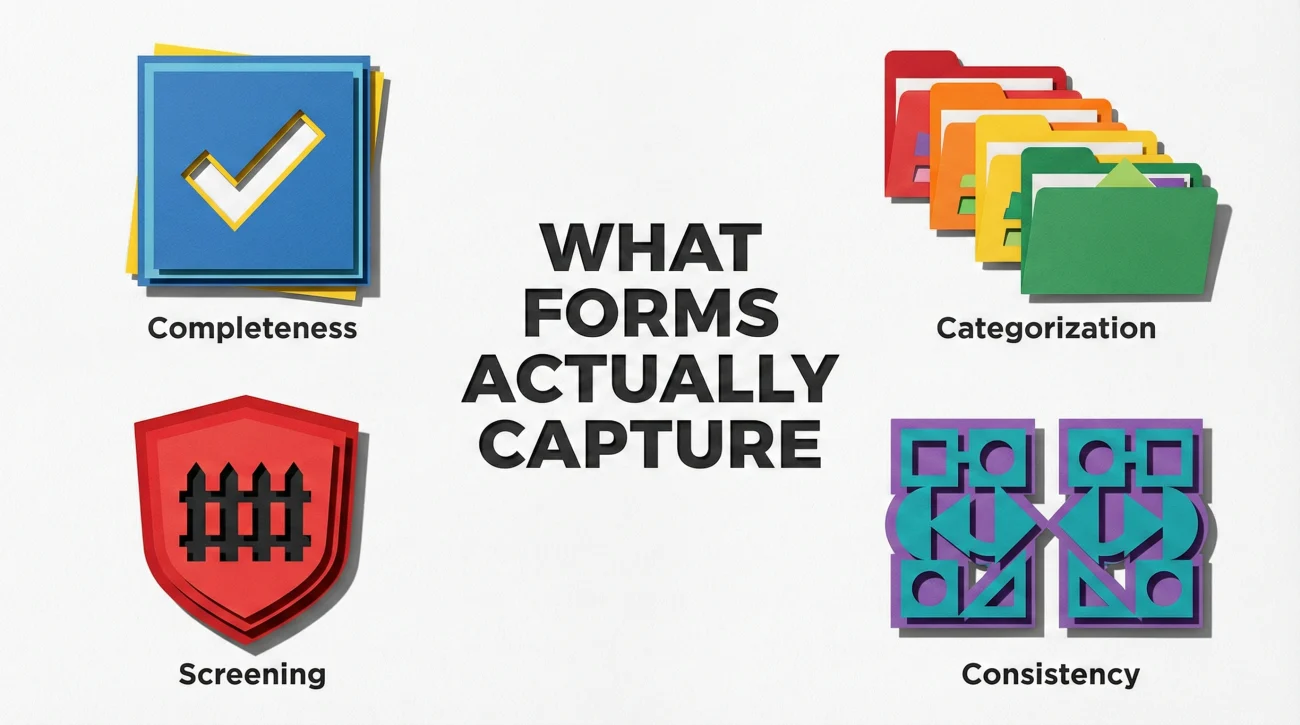
Application systems serve specific administrative purposes that should shape how you answer gap questions:
Completeness check. The form wants to confirm you did not accidentally skip a time period. An unanswered gap field may flag your application as incomplete and prevent it from being submitted or reviewed.
Basic categorization. HR systems often categorize gaps into buckets: medical, family, education, job search, other. Your answer helps route your application appropriately within their workflow.
Red flag screening. Certain words, phrases, or patterns trigger closer review or automatic rejection by ATS systems. Long explanations, emotional language, legal terminology, and clinical terms can all create flags that sink your application.
Consistency verification. Your form answers will be compared to your resume and potentially LinkedIn during the review process. Discrepancies create concerns about honesty that often result in rejection.
The form is not asking for your full story, your emotional journey, or a detailed justification. It is asking for a category and confirmation that you are aware of and can account for the gap. A brief, neutral answer satisfies all these administrative purposes without creating new problems.
3 Rules for Application Gap Answers
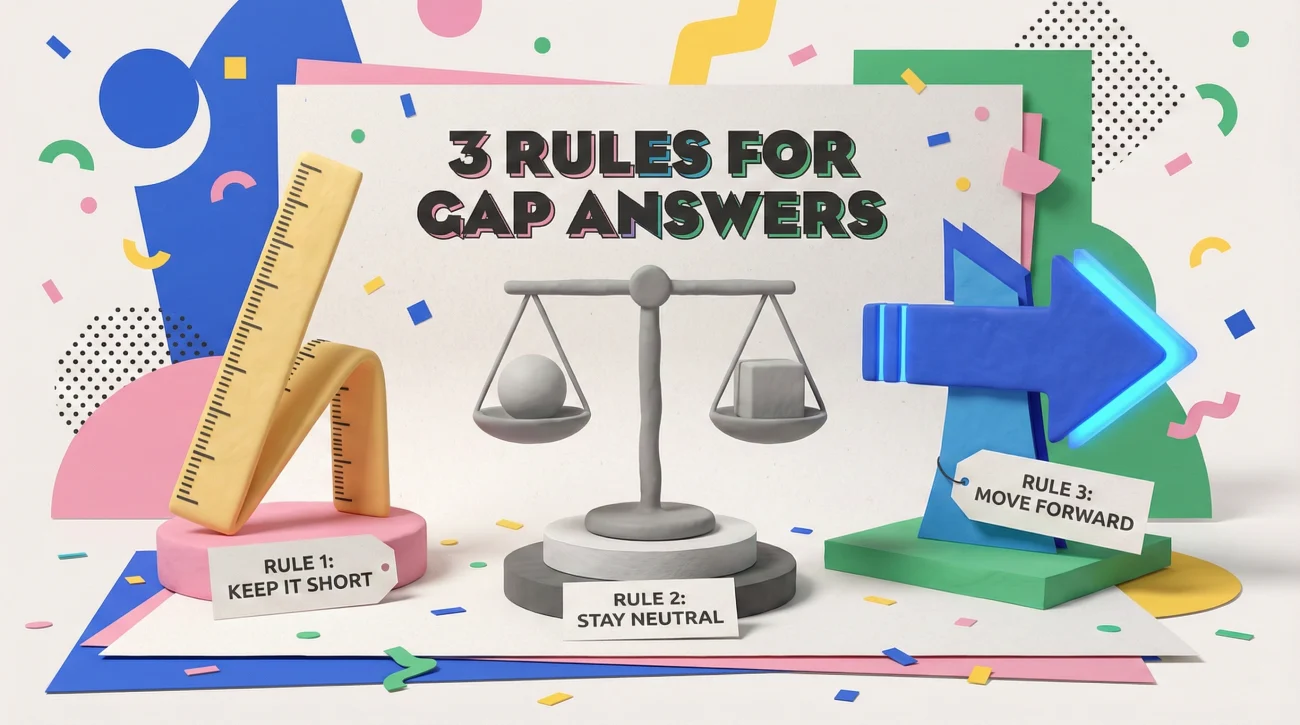
These three rules apply to every gap explanation you write on any application form:
Rule 1: Keep It Short
One to two sentences maximum, regardless of how large the text box appears. If the form has a character limit, stay well under it. Long answers suggest you are defensive, over-explaining, or expect rejection. Brief answers suggest confidence and suggest you have nothing to hide.
Rule 2: Stay Neutral
No emotional language, no blame, no detailed backstory. Neutral language signals professionalism and emotional maturity. Emotional or defensive language signals unresolved issues that might affect your work.
Rule 3: Look Forward
End with closure or current readiness, not with the problem or its impact. The last thing they read should be about your current availability and status, not your past situation or what you went through.
12 Copy-Ready Answers by Situation
Choose and adapt based on your specific situation. All templates are designed to be brief, neutral, and sufficient for application purposes. Copy directly or modify slightly with one relevant detail:
Health-Related Gaps
Family and Caregiving Gaps
Job Search and Transition Gaps
Relocation Gaps
Education and Development Gaps
💡 Customize lightly: These templates work as-is, but you can add one specific detail if relevant (certification name, location). Do not add emotional context or extended explanation.
3 Consistency Rules
Your application, resume, and LinkedIn must tell the same story. Recruiters check all three, and discrepancies raise serious concerns about honesty that can disqualify you immediately.
Rule 1: Dates Must Match Exactly
If your resume shows a gap from March 2023 to November 2023, your application must show the same dates. If your LinkedIn shows different dates, fix it before applying. Background checks will verify dates with previous employers – discrepancies of more than a few weeks need explanation.
Rule 2: Reason Categories Must Align
If your resume shows “Career Break – Family Caregiving” and your application says “Personal health matter,” you have created a problem. Choose one framing and use it everywhere. The specific wording can vary slightly, but the category must be consistent.
| Document | Consistent Example | Inconsistent Example |
|---|---|---|
| Resume | Career Break – Health leave, resolved | Career Break – Health leave |
| Application | Personal health matter, now resolved | Family caregiving responsibilities |
| Career Break – Health and well-being | Sabbatical – Travel |
Rule 3: Level of Detail Must Be Proportional
Your application answer should be the shortest version. Your resume can have slightly more context. Your interview answer can include the most detail. Never put more information on the application than you would on your resume.
Words That Trigger ATS Flags

Application systems scan for certain words and patterns. Avoid these in your gap explanations:
🚫 Legal terminology. “Wrongful termination,” “hostile work environment,” “discrimination,” “harassment,” “attorney,” “settlement” – these words flag potential legal risk and often result in immediate rejection.
🚫 Clinical language. “Depression,” “anxiety,” “bipolar,” “PTSD,” “therapy,” “medication,” “hospitalization” – these create discomfort and may trigger bias. Use “health matter” or “medical leave” instead.
🚫 Negative descriptors. “Toxic,” “terrible,” “nightmare,” “abusive,” “horrible” – these suggest you might be a complainer or difficult employee.
🚫 Desperation signals. “Desperately seeking,” “willing to take anything,” “need this job,” “please give me a chance” – these lower your perceived value and suggest problems.
🚫 Excessive qualification. “Unfortunately,” “sadly,” “I’m sorry to say,” “I regret” – apologetic language suggests you expect rejection.
Stick to neutral, factual language. The form is not the place to tell your full story or process your emotions about what happened.
Common Form Fields and How to Handle
Different form fields require different approaches. Here is how to handle the most common ones you will encounter:
“Reason for leaving” (for the job before your gap)
Keep it factual and brief: “Position eliminated,” “Company restructured,” “Contract ended,” “Relocated,” “Pursued other opportunity,” “Personal reasons.” If you left for health reasons, “Personal reasons” or “Health matter” is sufficient without detail. Do not write “Quit due to burnout” or anything that invites follow-up questions.
“Please explain any gaps in employment”
Use one of the 12 templates above, adapted to your specific situation. This field specifically asks about gaps, so address it directly but keep your answer brief and neutral.
“May we contact this employer?”
Generally say yes unless there is a specific reason not to (such as a current employer who does not know you are job searching). Saying no to past employers raises questions about what happened there.
“Reason for leaving” (dropdown menu)
Choose the closest match. If your reason is not listed, choose “Other” or “Personal” rather than forcing a mismatch. Some systems require selection before you can proceed.
“Additional information” or “Is there anything else?”
This is optional. You do not need to re-explain your gap here. If you have something positive to add (recent certification, specific interest in the company), you can include it briefly. Otherwise, leave blank or write “No additional information.”
Check the Box, Move Forward
Knowing what to write for employment gap on application forms comes down to understanding their purpose: administrative checkpoint, not personal confession or therapy session. Give them a brief, neutral answer that satisfies the field requirement and moves your application forward to human review.
The goal is not to win the job with your gap explanation. The goal is to not lose the opportunity before you have a chance to interview. Save the real conversation for interviews where you control the narrative, can read reactions, and can respond to actual questions rather than anticipating every possible concern a text box might trigger.
❓ FAQ
🎯 What if the form requires more detail than I want to share?
Most forms accept brief answers even if the text box is large. Write your 1-2 sentence answer and stop. If the system rejects it for being too short (rare), add one neutral detail: “Maintained professional certifications during this time” or “Available immediately for full-time work.”
📝 Should I mention my gap if the form does not ask?
No. If there is no specific field asking about gaps, do not volunteer the information. Your resume dates will show the gap. Let them ask if they want to know more. Do not create problems where none exist.
💼 What if I have multiple gaps?
Address each briefly if the form asks. For multiple gaps, keep each explanation to one sentence: “2019-2020: Family caregiving. 2022-2023: Health leave, resolved.” Do not write a paragraph for each gap.
🔍 Can I leave gap explanation fields blank?
Not recommended. Blank required fields may prevent submission. Blank optional fields about gaps may flag your application for review. A brief, neutral answer is better than leaving recruiters to assume the worst.
⚠️ Disclaimer: ResumeSolving provides resume, cover letter, and job search communication guidance for informational purposes only. It is not legal, medical, financial, or professional counseling advice. Hiring decisions vary by company, role, location, and individual circumstances, so we do not guarantee interviews, offers, or outcomes. Always use your own judgment, verify requirements directly with the employer, and follow local laws and workplace policies. When a situation is sensitive, we prioritize privacy-safe, recruiter-appropriate wording, and you never need to share personal details you are not comfortable disclosing.