- You do not need to invent a job title to survive a long unemployment gap.
- Replace “empty time” with verifiable proof artifacts: Outputs, links, references, and measurable deliverables.
- Use a proof-first section plus bullet templates that show scope and results, without pretending it was employment.
If you have been unemployed for years, your resume needs proof, not a “story”
I still remember the look on Kerri’s face when she said: “I have three years of nothing.” She had not done “nothing.” She had cared for her dad, rebuilt a budget that kept the lights on, and quietly taught herself Excel modeling to help a friend’s small business stop bleeding cash. But when she opened her resume, it looked like a cliff.
That is why this guide is about what to put on resume when unemployed for years. Not in a motivational way, but in a recruiter-proof way. When the gap is long, your resume has to answer one silent question fast: “Can I verify that you are still capable of doing the work?”
Most generic advice tells you to “highlight skills,” “add courses,” and “include volunteer work.” Those are fine starts, but they often fail after a long gap because they are not specific enough to be trusted. A hiring manager does not need more adjectives. They need evidence they can evaluate in under a minute.
💡 Pro Tip: Think of your resume as a menu of proof. The longer the unemployment, the more your resume should shift from “timeline” to “evidence.”
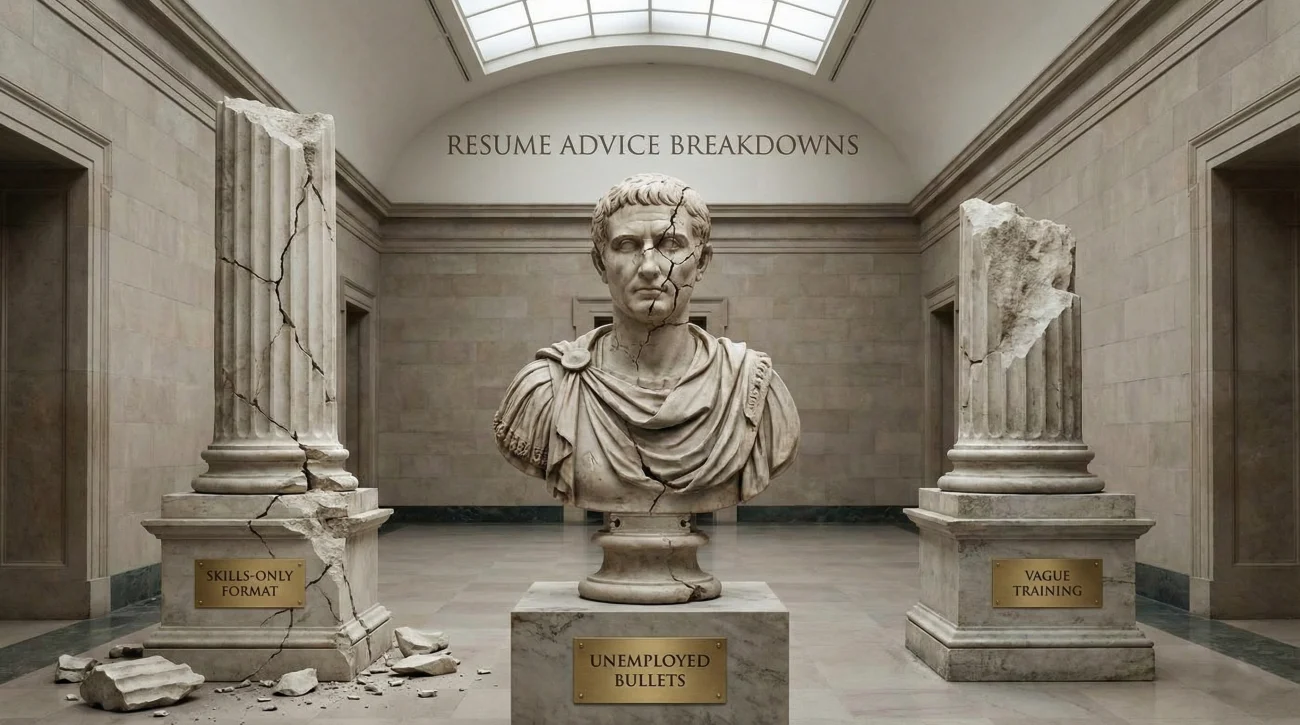
Why common resume advice breaks down after a long unemployment gap
When you are applying after a long break, you are not competing on “potential.” You are competing on perceived risk. Recruiters, hiring managers, and even ATS screeners are scanning for signals that you can perform now, not just that you once performed.
A lot of mainstream templates accidentally increase risk because they either look like they are hiding dates, or they fill space with low-credibility activities. You want less attention on the gap, not more doubt about what is missing.
Problem 1: Skills-only formats can look like you are hiding dates
Yes, a functional resume can reduce focus on timeline. But after years of unemployment, removing dates entirely can also trigger the “what are they not telling me” reflex. In HR reviews, I have seen screeners label a skills-only resume as “hard to verify” even when the candidate was genuinely strong.
If you use a skills-forward layout, keep some structure that anchors the reader: A short Employment section with years, then a proof-heavy Projects section with links and outcomes. That way, your resume still feels transparent, while your best evidence stays near the top.
Problem 2: Listing “Unemployed” bullets usually communicates activity, not capability
I have seen templates that add an “Unemployed” line item with bullets like “searched for jobs,” “attended networking events,” or “updated resume.” It is honest, but it does not help a hiring manager predict performance. They read it as effort without output.
A better substitute is simple: Replace those bullets with deliverables. If you built a dashboard, wrote a playbook, audited a website, volunteered a process fix, or published a short case study, you are giving the reader something they can evaluate. That is what makes the gap stop feeling like a black hole.
Problem 3: “Add training” is too vague unless it becomes verifiable proof
Training can help, but “Completed online courses” rarely moves a hiring decision. The reader cannot tell if you watched videos for a weekend or built skills they can rely on. Especially for a long gap, vague training reads like filler.
What works is training that produces artifacts: A credential with a verification link, a capstone project, a scored assessment, or a work sample that uses the tool the job requires. That turns learning into proof.
Key Point: Long unemployment is not automatically disqualifying. Unverifiable unemployment is what scares people.
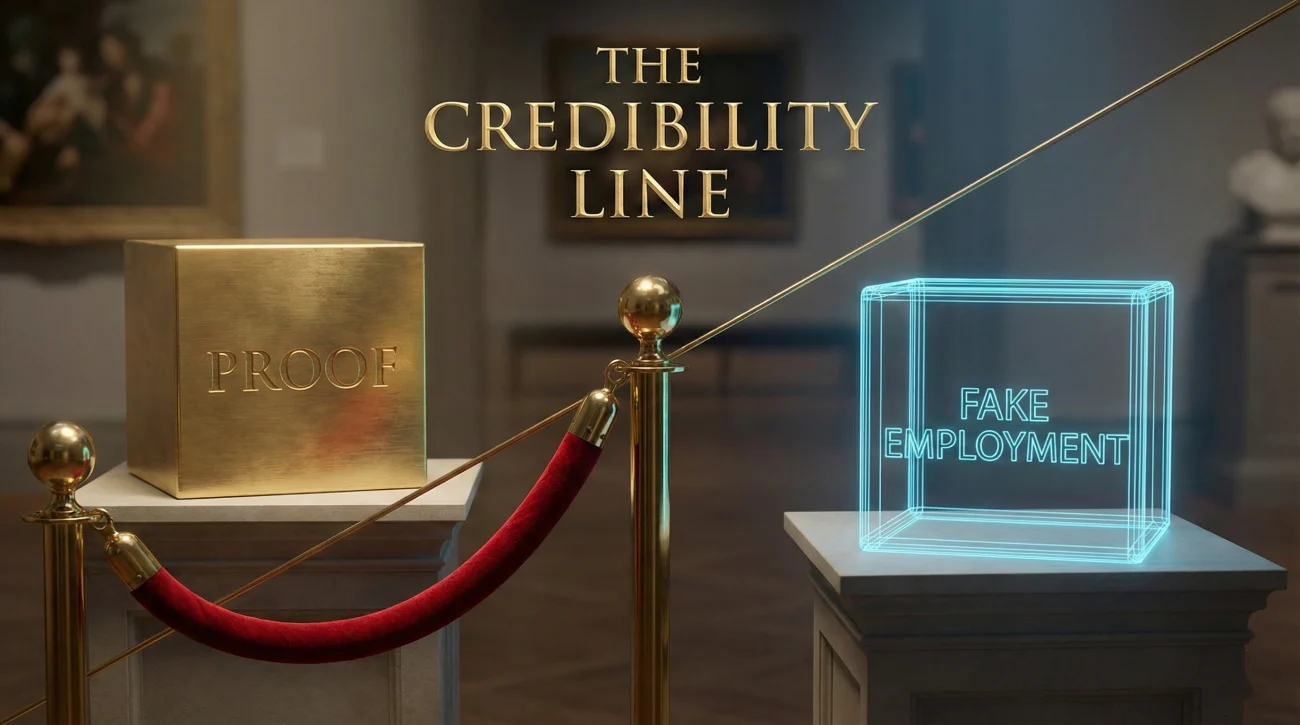
Proof vs fake employment: The line you cannot cross
When people get anxious, they start “decorating” the gap. You will see suggestions like inventing a job title, using a vague “consultant” label with no clients, or adding a fake company name that cannot be checked. It might feel like self-defense, but it creates a bigger risk: A trust collapse during verification or interview probing.
So here is the distinction I teach candidates: Proof is a real output you created. Fake employment is pretending you were hired when you were not.
Truth-check rules: How to stay honest while still looking strong
These rules keep your resume credible, especially if a recruiter asks follow-ups or if a company runs a standard verification process. If a line on your resume cannot survive simple questions, it will cost you more than the gap ever did.
- Do not claim an employer unless they paid you as an employee.
- Do not list a client unless you can name them, describe the scope, and they would confirm it.
- Do not add a “job title” that implies employment if it was personal work. Use “Independent Project” or “Portfolio Project” language.
- Every bullet should point to something concrete: A deliverable, a metric, a link, or a reference.
- If you cannot explain it in two sentences in an interview, it does not belong on the resume.
⚠️ Warning: If your plan is “I will call it consulting and hope nobody asks,” that is not a plan. That is a future panic moment.
When we rebuilt Kerri’s resume, our private rule was fill resume gap honestly. The resume never announced “I am being honest.” It simply showed proof that made honesty obvious.
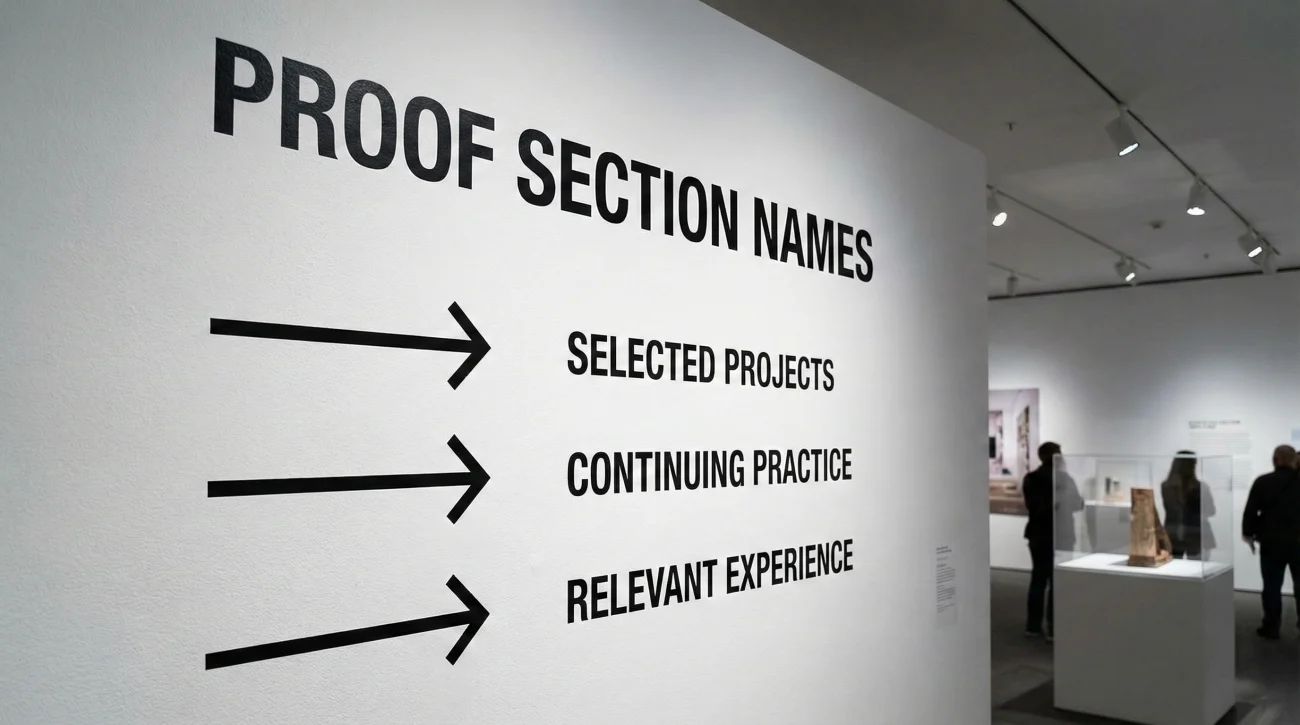
Where to put the proof on your resume: Section names that recruiters read correctly
If you are asking what to put on resume after being unemployed, the answer is usually not “add more explanation.” It is “add a section that makes the gap less important.” Section names matter because they signal whether this is employment, projects, or continuing practice.
Below are three naming options that work in real screening. The goal is clarity: The reader instantly knows what they are looking at, and you avoid labels that invite suspicious follow-up questions.
Option 1: Selected Projects. Best when your proof is project-based: case studies, mock projects, audits, code, writing, decks. This reads as capability, not as employment. It also gives you a natural place to add links and references without your resume feeling like a timeline defense.
Option 2: Continuing Practice. Best when you want to show you stayed sharp during the gap. This works well for design, analytics, engineering, writing, operations, and HR. The tone is “I kept doing the craft,” which is exactly what a worried hiring manager wants to see.
Option 3: Relevant Experience (Including Projects). Best when you have a mix of paid work, freelance, volunteer outputs, and personal projects. It lets you list them together while staying honest about what is employment and what is not. The trick is to label each entry clearly so nothing feels slippery.
💡 Pro Tip: If your last role is 2 to 5 years back, putting proof above Employment often improves response rates because the top third of the page leads with evidence, not absence.
Placement rule: What goes on top depends on how long the gap is
Here is the pattern I use in real resume reviews. It is not about hiding the timeline. It is about controlling what the reader evaluates first.
- If your last role is recent, keep Employment first, then Projects.
- If your last role is 2 to 5 years back, Projects often goes above Employment, so proof leads the page.
- If you are building a resume after 3 years unemployed, the top third of the page must carry evidence: Work samples, outcomes, and verification paths.
My colleague Marcus once coached a candidate who kept Employment first because “that is the rule.” The candidate had a two-year gap. Screeners never reached the projects at the bottom. Once we moved “Selected Projects” above Employment, interviews started coming in. Same candidate, same skills, different reading experience.
9 bullet templates that show scope and results without pretending it was employment
Most people with a gap write bullets that sound like learning. Hiring managers want bullets that sound like doing. The trick is to describe outcomes and constraints, then make the artifact verifiable.
Use these templates for projects, volunteer deliverables, or independent work. They are designed to read like real work, while staying truthful about what the work actually was.
Template set 1: Outcome-first bullets that feel like real work
Outcome-first bullets are the fastest way to reduce “gap anxiety” in the reader. They start with what you delivered, then explain who used it and what changed. This is especially useful when you are competing with candidates who have recent job titles.
– Improved: [Process/System], by: [Change], impact: [Metric or measurable benefit]
– Built: [Tool/Asset], to solve: [Problem], proof: [Link/Artifact]
One practical tip: If you do not have a clean metric, use “signal metrics” that still show reality, such as time saved, error reduction, steps removed, or number of stakeholders served.
Template set 2: Constraint-based bullets that explain the gap without oversharing
Constraint bullets work well when the gap included caregiving, health recovery, relocation, or financial stress. You do not need personal details. You simply show that you delivered under realistic limits, which is a strong capability signal.
– Recreated: [Real-world scenario] with: [Dataset/Brief], validated by: [Method/Benchmark]
– Delivered: [Outcome] in: [Timeframe], despite: [Constraint], proof: [Artifact]
Keep constraints professional: Time, access, budget, scope, and tooling. Avoid emotional explanations. The resume is not a diary, it is a risk-reduction document.
Template set 3: Credibility bullets that make verification effortless
These are designed for hiring managers who want to click, confirm, and move on. The best “proof” bullets reduce their work: They show where the evidence lives and what it demonstrates.
– Contributed: [Change] to: [Project], merged via: [PR], proof: [Link]
– Earned: [Credential], verified at: [Badge/ID], applied in: [Capstone/Project]
If your proof cannot be shared publicly, you can still write “Available upon request,” but you must actually be ready to provide it quickly. Otherwise it reads like vapor.
⚠️ Warning: Avoid bullets that only describe effort: “Studied,” “Reviewed,” “Learned.” Those belong in your head, not in your top half page.
How to label the gap without making it the headline of your resume
Some candidates want a timeline line item so the resume looks continuous. That can work if you label it cleanly and do not overclaim. The goal is to reduce questions, not invite them.
If you need a timeline line, keep it neutral and proof-linked
Neutral does not mean vague. It means factual and non-dramatic. You are not trying to convince the reader you “had a job.” You are showing you remained capable.
– Selected Projects: Data cleaning pipeline, budget model, and reporting dashboard (links available)
This format works because the label is clean, and the proof is what fills the space. If asked in an interview, you can stay consistent without explaining your personal life.
If you did caregiving or health recovery, protect your privacy without sounding vague
In HR, I have watched good candidates overshare because they want to be believed. You can be believable without giving details. “Family responsibilities” is enough. “Health recovery” is enough. The proof section does the heavy lifting.
What hurts is emotional wording or ongoing-sounding language that makes a closed chapter feel open. Keep it simple, then redirect attention to what you can do now.
Do not confuse “continuous dates” with “continuous trust”
A clean timeline can still feel suspicious if it is padded with titles that imply employment. Recruiters are trained to probe unclear roles. If your label invites questions you cannot answer, you are adding friction.
A former coworker shared this story from a candidate she coached. It stuck with me because it is painfully common:
“I panicked and wrote ‘Consultant’ because I thought the blank space would kill me. In the interview, they asked for clients, scope, and a reference. I felt my stomach drop.”
We did not “fix” it by polishing the lie. We removed the risky label and replaced it with proof artifacts that were real, specific, and easy to check. That is how you sound stable without pretending anything.
Mistakes that quietly trigger unemployment bias
This part is uncomfortable, but it matters. Bias exists. Your job is to reduce avoidable signals that amplify it. The good news is: Most “bias triggers” are not about your gap itself. They are about how unclear your resume becomes when the gap is long.
Mistake 1: Using titles that imply someone hired you
“Operations Manager (Self-Employed)” can be legitimate if you had real clients, invoices, and references. If you did not, it reads like smoke. Screeners may assume you are masking unemployment with a label.
Use “Independent Projects” language when it is personal work. It is less flashy, but it is safer. And safety is exactly what you need when you are trying to reduce perceived risk.
Mistake 2: Making the gap the center of the resume
If the first thing I learn about you is that you were unemployed, the resume has already lost time. Your first impression should be capability: Skills, scope, proof, and outcomes.
One quick check: Look at the top third of page one. If it is mostly explanation, replace some of that space with proof artifacts. A reader cannot “evaluate” an explanation, but they can evaluate a work sample.
Mistake 3: Proof that cannot be opened, clicked, or confirmed
“Built a portfolio” is not proof. A link is proof. “Helped a nonprofit” is not proof. A deliverable plus a reference name is proof. If you cannot share the artifact publicly, you can still say “Available upon request,” but be ready to provide it quickly.
Credibility is often about friction. If it takes effort to confirm what you did, many screeners will simply move on. Make confirmation easy, and you make “years unemployed” feel less relevant.
❌ Note: If your proof is “trust me,” you are asking a stranger to take a risk they do not need to take.
Final: What to put on your resume is anything that proves you can do the job now
If your unemployment has been long, you are not trying to “explain time.” You are trying to make time less relevant. The strongest resumes I have seen after long gaps do one thing consistently: They offer proof artifacts that can be verified, and they describe them with outcome-first bullets.
Kerri did not get hired because we wrote a beautiful paragraph about resilience. She got hired because her resume showed three projects, a clean budget model, and a short case study that proved she could still think clearly under pressure. The gap stopped being the main story.
When you are deciding what to put on resume when unemployed for years, choose the items that reduce risk for the reader: Real outputs, clear scope, and verification paths. That is how you sound stable without pretending anything.
❓ FAQ
🧭 Should I write “Unemployed” as a job on my resume?
I rarely recommend it. It is honest, but it does not help a hiring manager evaluate capability. A better move is a proof section like “Selected Projects” that shows what you produced and how it can be verified.
🧩 What if I have no projects, no volunteer work, and no certificates?
Then the resume needs a small proof sprint before you apply broadly. You only need one to three artifacts that match the job: A work sample, a short case study, and one verifiable learning outcome. Start small, make it real, and make it checkable.
📌 Where should I place “Selected Projects” if the gap is long?
If your last role is several years back, put the proof section above Employment so the top third of the page leads with evidence. You are shaping what the reader notices first.
🧾 Can I call myself a consultant if I did personal projects?
Only if you had real clients and you can verify the work. If it was personal work, use “Independent Projects” or “Portfolio Projects.” The goal is credibility, not a prettier label.
🛡️ How do I mention caregiving without oversharing?
Use a neutral phrase like “Family responsibilities” and let your proof section carry the resume. You do not owe details. You owe clarity about what you can do now.
🚀 What is the fastest “proof artifact” that works for most roles?
A one-page case study plus a concrete work sample is the fastest combo. It shows how you think and what you can produce. Add a verification path, even if it is “available upon request.”
⚠️ Disclaimer: ResumeSolving provides resume, cover letter, and job search communication guidance for informational purposes only. It is not legal, medical, financial, or professional counseling advice. Hiring decisions vary by company, role, location, and individual circumstances, so we do not guarantee interviews, offers, or outcomes. Always use your own judgment, verify requirements directly with the employer, and follow local laws and workplace policies. When a situation is sensitive, we prioritize privacy-safe, recruiter-appropriate wording, and you never need to share personal details you are not comfortable disclosing.