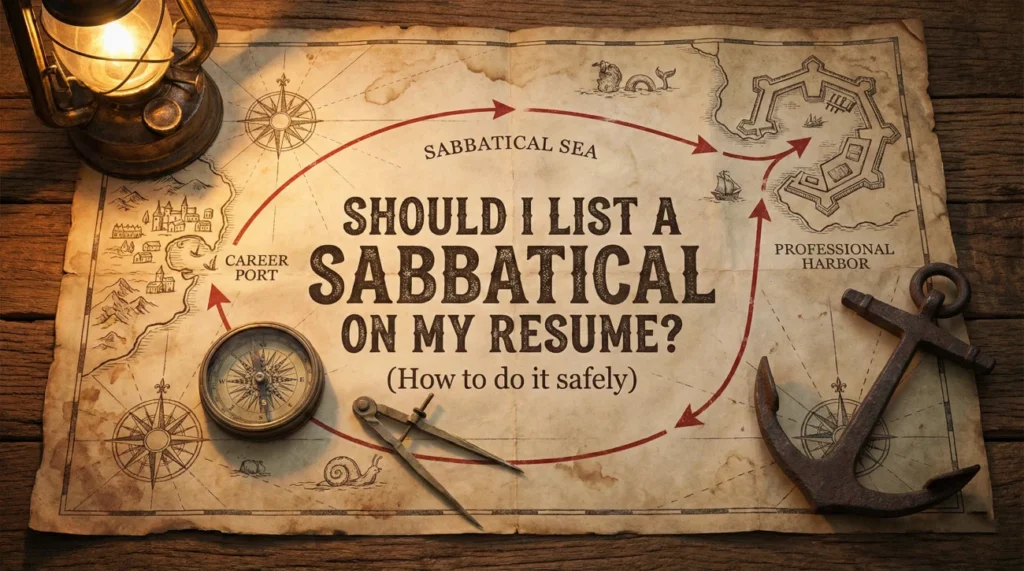
- The question is not “Do I mention it?”, it is “Which version reduces flight risk and removes mystery?”
- Use the 7-question checklist to choose one of three sabbatical-safe options: Experience, Additional Information, or leave it blank on the resume.
- Then copy one of the length-based examples (3, 6, 12, 18, 24 months) and keep it consistent across resume, LinkedIn, and applications.
You are not listing “time off”, you are managing assumptions
I once worked with a product manager named Elise who took a clean 12-month sabbatical after a brutal launch cycle. She did not want to “sell” it. She just wanted to come back and get hired. The funny thing is: the resume was not judged on honesty. It was judged on what it made a stranger assume in six seconds.
That is why should i include sabbatical on resume is a better question than it looks. You are choosing a label that either reduces friction or creates a new concern.
Key Point: A blank gap triggers “What happened?”, a loud sabbatical label can trigger “Will they leave again?” Your job is to reduce both signals.
This decision guide is focused on flight risk signals. It is not about medical leave, and it is not about proving caregiver availability.
One more thing: if you over-explain the sabbatical, you can accidentally make it the most memorable part of your resume. Most of the time, that works against you.
What recruiters assume when they see a sabbatical or a blank gap
Recruiters do not have time to investigate your life. They pattern-match. When a timeline stops, they quickly sort the situation into a few buckets.
| What they see | Common assumption | Risk you must reduce |
|---|---|---|
| Resume ends, then nothing for months | Something went wrong, or the candidate is hiding it | Mystery gap that invites extra questions |
| “Sabbatical” listed like a job with lots of detail | The candidate might do this again when stressed or bored | Flight risk signal |
| Short, neutral label with a clear return cue | Planned break, now fully back | Minimal, if consistent everywhere |
| Resume, LinkedIn, and applications do not match | The candidate is careless or evasive | Consistency risk, often worse than the gap itself |
⚠️ Warning: If your resume and your application form tell different stories, the gap becomes a consistency problem. Consistency problems are harder to recover from than a simple break.
One recruiting manager I know put it bluntly: “I can handle a break. I cannot handle a break that feels like an open door.” That is the lens to use.
The 7-question checklist to decide how to label it
Think of this as a practical sabbatical resume decision tool. Answer honestly, then follow the decision notes below.
| # | Question | If “Yes”, it suggests |
|---|---|---|
| 1 | Is the break longer than 6 months? | Labeling is often safer than silence |
| 2 | Is the break your most recent timeline gap (right near the top of the resume)? | A neutral label can prevent the “what happened” detour |
| 3 | Do you have at least one proof anchor (output, structured upskilling, contract work, volunteer deliverable)? | You can label it without sounding empty |
| 4 | Are you applying to roles that require trust and continuity (regulated, client-facing, leadership)? | Keep wording calm and add a clear return cue |
| 5 | Is your work history already “choppy” (multiple short tenures)? | A loud sabbatical label can amplify flight risk, keep it minimal |
| 6 | Does your resume show months (not just years), making the gap visually obvious? | Either label it, or remove months consistently everywhere |
| 7 | Can you describe the break in one calm sentence without oversharing? | Labeling works best when you stay brief |
When you do label the break, use this structure: [Time Frame] + [Neutral label] + [Return cue]
💡 Pro Tip: The return cue is what reduces flight risk. It tells the reader the chapter is complete and you are fully back.
Three sabbatical-safe options, and when each one is the least risky
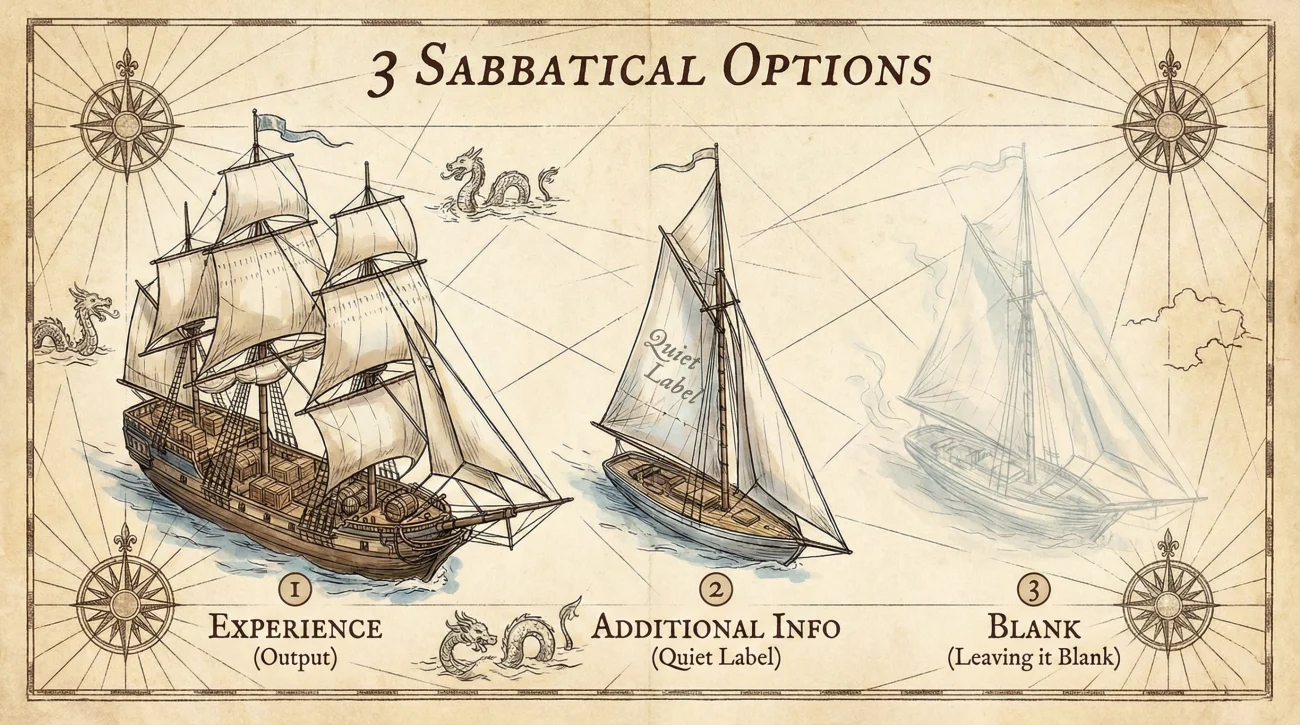
Most generic advice says “put it in Experience.” That can work, but it is not always the best choice. Pick the option that removes mystery without creating a new fear.
1️⃣ Option 1: Put it in Experience (best when you have work-like output)
Use this when you can attach the break to something that looks like momentum: a portfolio output, a contract, a structured program, or a volunteer deliverable.
💯 Best for: 6 to 24 months, especially when you can point to one concrete proof anchor.
⚠️ Watch-out: If it reads like a lifestyle choice with no return cue, it can trigger flight risk.
2️⃣ Option 2: Put it in Additional Information (best when you want it visible but small)
This is the quiet label. It answers the timeline question without taking real estate from your real experience.
💯 Best for: 3 to 12 months, or when your resume is already dense.
⚠️ Watch-out: Too vague looks like a cover story. Add a simple return cue.
3️⃣ Option 3: Leave it blank on the resume (best only when formatting will not create a loud hole)
This is a formatting choice, not a lie. It only works when your resume style does not make the gap scream.
💯 Best for: Very short breaks, or when you use years instead of months consistently.
⚠️ Watch-out: If applications require exact dates, the break will surface anyway. If your story is inconsistent across platforms, this option backfires.
If your market is sensitive to churn, avoid labels that make travel the headline. Your resume should signal stability first.
Three sabbatical-safe wordings that reduce flight risk
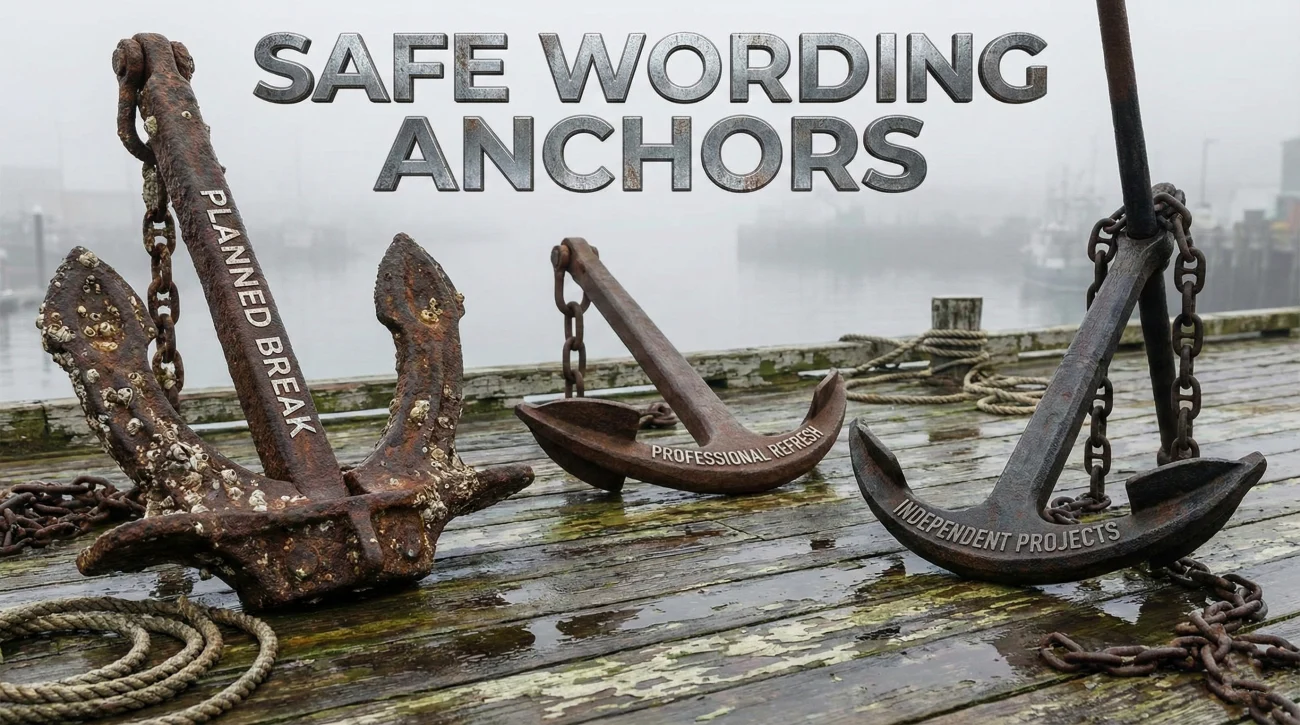
Pick one label and stick to it. The goal is clarity, not drama.
- Planned Career Break (Sabbatical): neutral, stable, low drama.
- Sabbatical (Professional Refresh): best if you have one proof anchor you can explain quickly.
- Sabbatical (Independent Projects): best if you have small scoped outputs and can describe them honestly.
Now add one return-cue line if needed. Keep it short and calm:
- “The break is complete and I am fully available for a long-term role.”
- “That chapter is closed and I am focused on stable, full-time work.”
- “I am prioritizing continuity and long-term growth in a full-time role.”
A return cue is more credible than a long explanation. Keep the resume calm, then let the interview handle details if needed.
Five length-based examples you can copy (3, 6, 12, 18, 24 months)
Use the shortest version that removes mystery and reduces flight risk. Longer is not better.
Example: 3 months
Planned Career Break (Sabbatical) | Apr 2025 – Jun 2025
The break is complete and I am fully available for long-term roles
Example: 6 months
Planned time away from full-time work. Returned and actively interviewing for full-time roles
Example: 12 months
Maintained role-relevant skills through structured practice and a targeted return plan into full-time work
Example: 18 months
Took a structured break, stayed engaged with the field, and returned with clear long-term role focus
Example: 24 months
Structured break completed. Fully available and committed to long-term full-time work
Key Point: The longer the break, the more important the return cue becomes. It reduces “open door” energy without oversharing.
Consistency across resume, LinkedIn, and applications
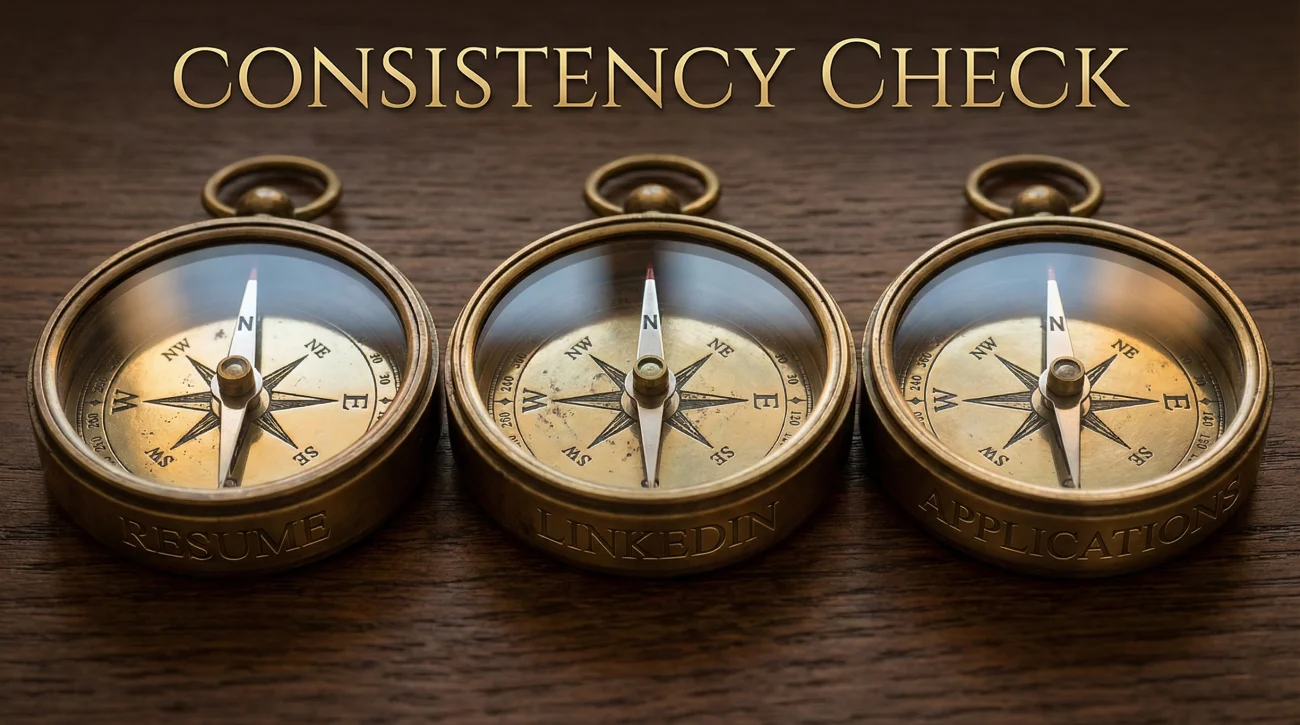
Most low-quality advice ignores the place where candidates actually lose trust: inconsistency. You do not need the perfect label. You need one story everywhere.
- Resume: keep the sabbatical entry short. One line, or one line plus one return cue.
- LinkedIn: do not contradict your resume timeline. If you label a break, use compatible wording.
- Applications: dates must match the logic of what your resume implies. Avoid a different story in a form field.
If you only fix one thing, fix this: do not let the same time period look like “sabbatical” in one place and “unemployed” in another. That mismatch is what makes people stop trusting the rest of your story.
Mistakes that make a sabbatical look suspicious
- Listing the sabbatical like a full-time job with multiple long bullets.
- Using vague “personal growth” language with no return cue.
- Making the sabbatical more detailed than your actual work experience.
- Changing the wording across resume, LinkedIn, and applications.
- Trying to “win” the gap question by oversharing life details.
A sabbatical entry should be boring. It is a label that prevents confusion, not a highlight that competes with your career.
Final
If the break is short and your formatting will not create a loud hole, leaving it blank can be clean. If the break is longer than 6 months, a small neutral label is usually safer than silence, as long as you add a clear return cue and keep it consistent across platforms.
The best answer to should i include sabbatical on resume is the option that removes mystery and reduces flight risk at the same time.
❓ FAQ
🧭 Will listing a sabbatical automatically hurt my chances?
No. It hurts when it reads open-ended or unstable. A short label plus a return cue often performs better than an unexplained stop.
🔒 What is the simplest return cue that reduces flight risk?
Use a line that clearly closes the chapter, for example: “The break is complete and I am fully available for a long-term role.” Keep it calm and short.
🧩 Should I put my sabbatical in Experience or Additional Information?
Experience works best when you have work-like output to reference. Additional Information works best when you want clarity without giving it too much space.
🗓️ If I use years instead of months, can I skip mentioning it?
Sometimes. But make sure your LinkedIn and application dates will not contradict what your resume implies.
🧠 Do I need to prove I was productive during my sabbatical?
No. Your goal is stability and trust. If you have a relevant proof anchor, mention it briefly. If not, keep it neutral and focus on the return cue.
⚠️ Disclaimer: ResumeSolving provides resume, cover letter, and job search communication guidance for informational purposes only. It is not legal, medical, financial, or professional counseling advice. Hiring decisions vary by company, role, location, and individual circumstances, so we do not guarantee interviews, offers, or outcomes. Always use your own judgment, verify requirements directly with the employer, and follow local laws and workplace policies. When a situation is sensitive, we prioritize privacy-safe, recruiter-appropriate wording, and you never need to share personal details you are not comfortable disclosing.