- The label you choose is a signal about control, availability, and trust, not just a synonym for “time off.”
- If your break was not planned, you can still write it cleanly without calling it a sabbatical.
- Use a simple decision rule: Can you explain the start, the purpose, and the return plan without story bending?
Why “Sabbatical” And “Unemployment” Feel Like Different Stories To Recruiters
I have reviewed a lot of resumes where the dates were not the problem. The label was. A gap labeled “Sabbatical” reads like choice, planning, and boundaries. A gap that reads like unemployment can trigger questions about momentum, stability, and whether the candidate is still in a rough patch.
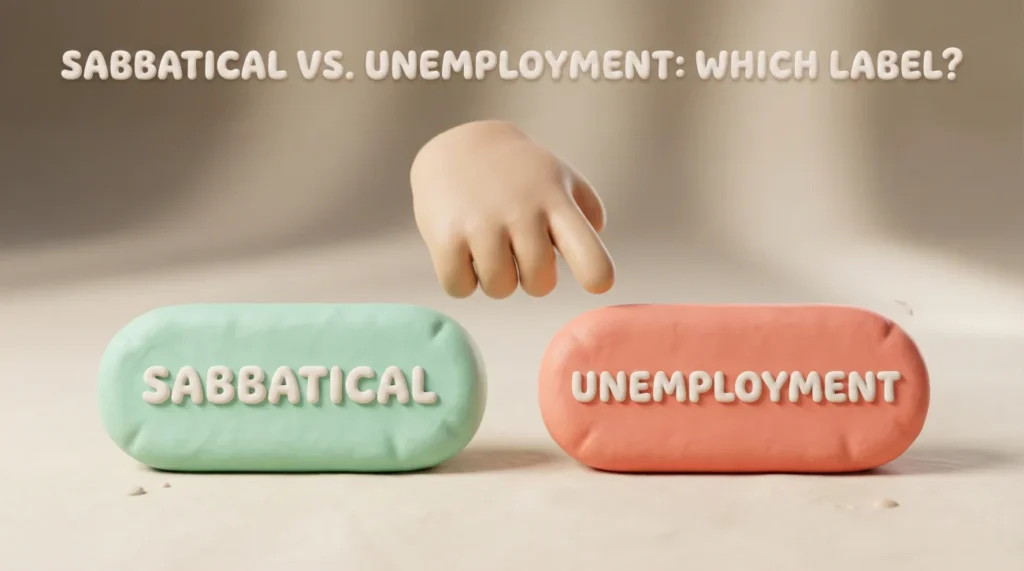
That is why sabbatical vs unemployment on resume is not a wording debate. It is a signal debate.
A few years ago, a product manager I will call Gina sent me two versions of her resume. Same dates. Same skills. Same outcomes. Version A said “Career Sabbatical.” Version B said nothing and left a blank gap. Recruiters reacted differently to each, even though the facts were identical. The difference was what they assumed about her control and her readiness.
This article is a practical guide to choosing the label that helps you, not the label that creates follow up suspicion. You will get decision rules, labeling examples, and a consistency checklist so your story stays stable across every screen it touches.
What Each Label Signals In A Six Second Scan
Most advice online defines sabbatical as a planned break and unemployment as a jobless period. That is true, but recruiters rarely stop at definitions. They read implications, then decide what questions to ask next.
| Label On Resume | Common Recruiter Assumption | Risk If The Assumption Is Wrong |
|---|---|---|
| Sabbatical | You chose the break and you can choose to return | If it was actually forced, it can look like polishing the truth |
| Unemployed | You were searching and the market decided the timeline | Some recruiters may over index on “still stuck” even if you are ready |
| Career Break | A neutral pause with a reason you may or may not share | If too vague, it invites guessing and guesswork is rarely kind |
| Professional Development | You used the time actively and stayed current | If there is no evidence, it can feel like filler |
Here is the part most “how to list a sabbatical” posts skip: the label also signals how you handle risk. A sabbatical implies you had enough runway to step away, and enough clarity to come back. If that is true, it helps. If that is not true, the label becomes the story.
Key Point: Recruiters rarely punish you for a break. They punish confusion. The fastest way to trigger confusion is to pick a label that your timeline cannot support.
I have seen this play out with a candidate named Mathias. He was laid off when funding dried up. He wrote “Personal Sabbatical” because he did not want the word unemployment on the page. In the interview, he casually mentioned “the layoff.” Nothing dramatic happened, but the interviewer’s face changed. Not because he was laid off, but because the label felt like a dodge.
Decision Rules: When “Sabbatical” Helps And When It Hurts
Let’s make this simple and practical. If you want to use the word sabbatical, you need to be able to answer three questions without twisting yourself into a performance.
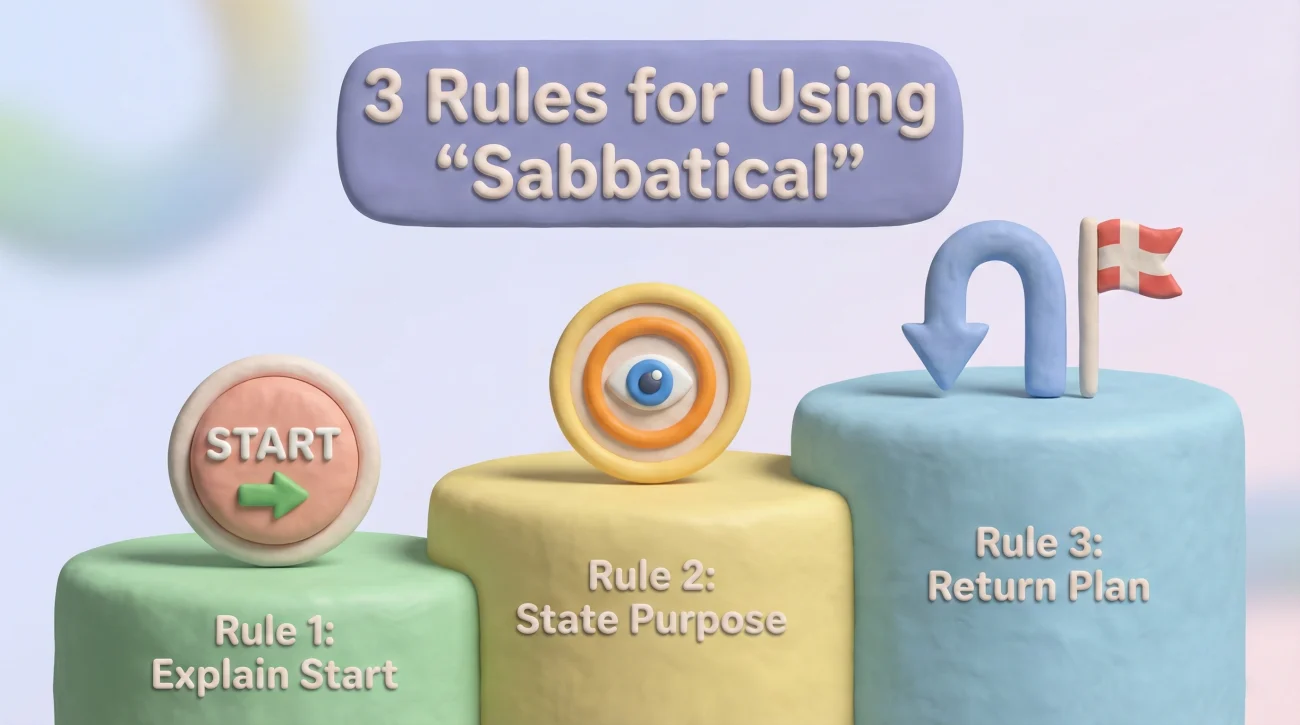
Rule 1: You Can Explain The Start Without Story Bending
A sabbatical usually starts with a choice. That choice can be personal or professional, and it does not need to be approved by an employer. But you should be able to explain the start as a planned decision, not as a reaction you are trying to rename.
⚠️ Warning: If the break started because you were laid off, terminated, or your contract ended unexpectedly, calling it a sabbatical can backfire. You can still write the period cleanly, but choose a neutral label instead.
Rule 2: You Can State A Purpose In One Sentence
The purpose does not need to be inspiring. It needs to be coherent. Travel, caregiving, recovery, study, relocation, building a portfolio, or completing certifications can all be real purposes.
Short does not mean vague. Short means it should not compete with your professional experience. It should simply prevent guessing.
Rule 3: You Can Show A Return Plan Or A Closure Signal
This is where most resumes get wobbly. Recruiters worry about availability. A sabbatical label works best when it includes a closure signal, even a small one: “Completed,” “Concluded,” “Returning to full time work,” or “Available immediately.”
Use this quick mental check for sabbatical vs unemployment resume choices:
- If it was planned and purposeful, “Sabbatical” can be accurate and helpful.
- If it was forced, “Career Break” or “Professional Development” is safer and cleaner.
- If you are still in it, “Currently on Sabbatical” works only if you can show clear availability and a reason you can stand behind.
I had a colleague in HR, Jade, who took a true planned break to care for a parent, with a clear return date. She labeled it as a sabbatical and added one line: “Family caregiving sabbatical, concluded.” Nobody blinked. The label matched the reality and it removed doubt.
Six Labeling Examples You Can Copy Without Sounding Like A Template
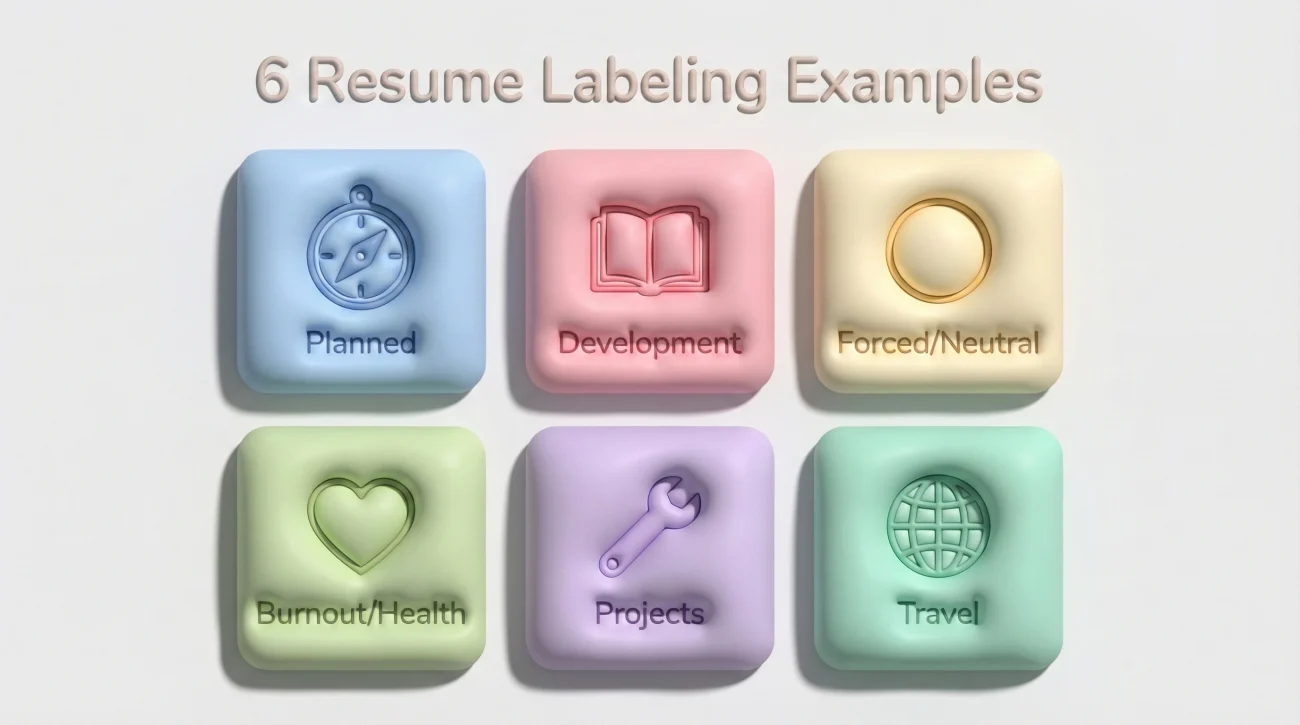
This is where generic advice tends to fail. People want examples they can paste, but examples that are too polished sound fake. The goal is a line that reads like a normal human wrote it, and like it can survive an interview follow up.
🧭 Example 1: A planned personal sabbatical with a clear closure signal
Planned break for family responsibilities and skills refresh. Concluded. Available for full time roles.
👉 Why it works: It gives a reason without oversharing, and it clearly signals closure and availability.
📚 Example 2: A sabbatical framed as professional development, with proof baked in
Completed SQL and analytics training and rebuilt portfolio projects relevant to product roles.
👉 Why it works: It is short, specific, and easy to expand on if asked. It also avoids dramatic language.
🧩 Example 3: A forced gap written neutrally, without the word sabbatical
Transition period after role ended. Focused on targeted upskilling and active search.
👉 Why it works: It does not pretend the break was optional. It prevents recruiters from inventing a worse story.
🧠 Example 4: A burnout recovery break that avoids sounding ongoing
Took time for recovery and reset. Concluded. Returned to full work capacity.
👉 Why it works: It signals stability. It avoids implying you are still unavailable.
🛠️ Example 5: An “independent projects” label for people worried about unemployment stigma
Built and shipped two portfolio projects and contributed to open source. Active search alongside.
👉 Why it works: It is honest if you actually did the work. It also reduces blank space without pretending you were employed.
🌍 Example 6: Travel sabbatical that still sounds employable
Planned travel period. Maintained industry learning and returned ready for full time work.
👉 Why it works: It acknowledges travel without romanticizing it. It brings the reader back to readiness.
If you are stuck between two labels, treat it as career break vs unemployment labeling, not as a morality test. Your job is not to sound perfect. Your job is to sound consistent.
Five Consistency Checks That Prevent “Story Drift”
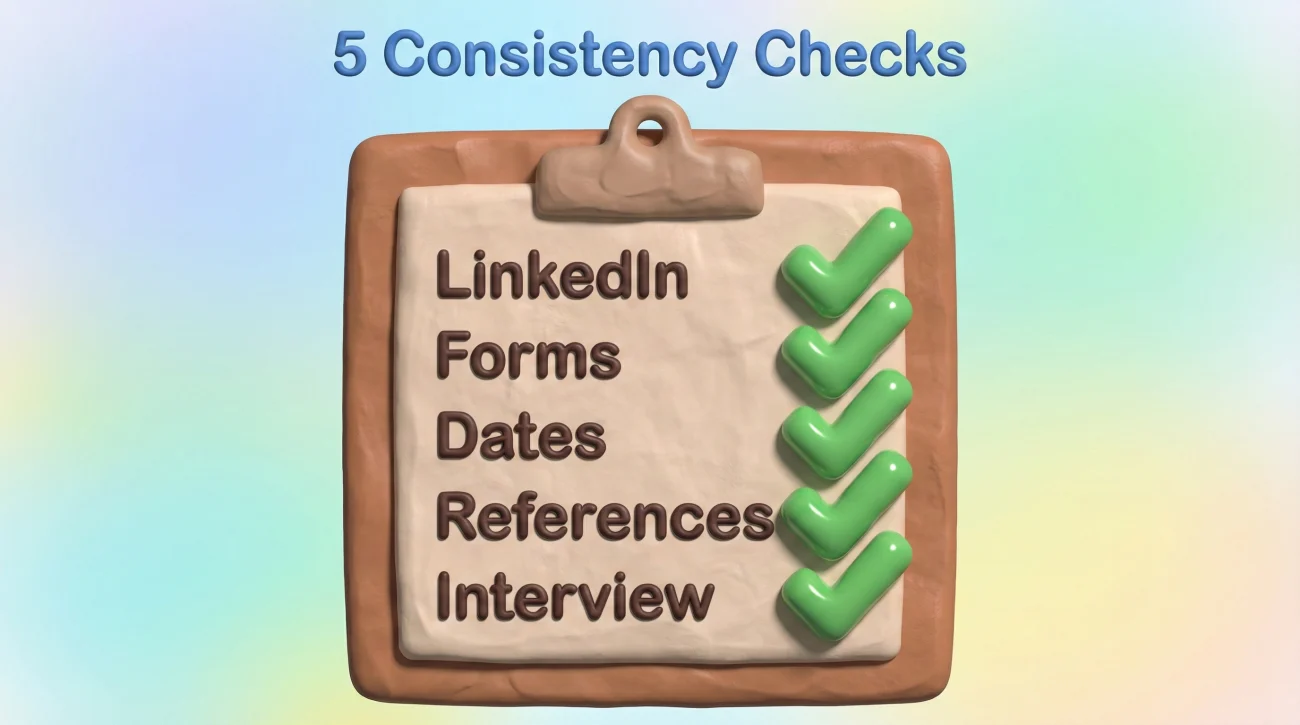
Most candidates focus on the resume and forget the rest of the system. Recruiters do not live in one document. They compare across platforms. If your story shifts between resume, LinkedIn, forms, and interviews, the label becomes a problem even when the gap itself is not.
- Resume vs LinkedIn: If LinkedIn shows “Open to Work” with a gap but your resume shows a sabbatical, be ready to explain the difference cleanly.
- Resume vs Application Form: Many forms ask for employment history. If you list a “position” called sabbatical, do not make it look like an employer.
- Dates: Pick month and year and keep it consistent everywhere. Do not round in one place and use exact dates in another.
- References: If a reference expects you to say layoff and you say sabbatical, your story can split without anyone trying to sabotage you.
- Interview Follow Up: Prepare one calm sentence that matches your label and does not add extra drama.
💡 Pro Tip: Consistency is not about revealing everything. It is about avoiding contradictions. You can keep details private and still keep the story aligned.
One candidate I coached, Joyce, labeled her gap as “Professional Development.” In the interview, she said she was laid off and used the time to finish a certification. That was perfectly fine because the label did not claim the break was chosen. It simply described what she did with the time. The story stayed stable.
A Simple Choice Framework If Your Break Was Not Neatly Planned
Real life rarely fits clean labels. Sometimes you were laid off, took a breath, cared for someone, and then started searching. Sometimes you were searching the whole time but also trying to keep your head above water. That is normal.
The question is not “Can I call it a sabbatical?” The question is “What is the least misleading label that still protects my candidacy?”
If The Break Started As Unemployment
Use a neutral label: Career Break, Transition Period, Professional Development, Independent Projects. These labels can be true without implying you chose the situation.
Then add one sentence that shows direction: targeted search, skills refresh, portfolio work, contract exploration. Keep it real. Keep it short.
If The Break Was A Mix Of Forced And Chosen
This is the most common case. You did not plan the end of the job, but you did choose how to use the next months. In that case, Professional Development or Independent Projects is often the cleanest bridge between truth and signal.
Think of it as difference sabbatical unemployment in recruiter math:
- Sabbatical signals: “I stepped away and I am stepping back.”
- Unemployment signals: “I am in transition and I am actively moving.”
- Neutral labels signal: “I am not hiding the gap, and I am not asking you to guess.”
“I did not plan for my role to end, but I used the transition period intentionally. I kept my skills current and I am ready to return full time.”
That line is not magic. It is simply calm. Calm is persuasive because it feels true.
Final: The Best Label Is The One You Can Defend In One Breath
If there is one thing I want you to take from this, it is this: the label is a promise. If you label your gap as a sabbatical, recruiters will assume planning, purpose, and readiness. If you label it as unemployment or a neutral transition, recruiters will assume you navigated uncertainty and kept moving.
Neither story is shameful. The risk is when the label and the reality do not match.
So when you are deciding sabbatical vs unemployment on resume, choose the option that keeps your story consistent across resume, LinkedIn, forms, and interviews. That is how you reduce recruiter anxiety without oversharing.
Gina, the product manager I mentioned earlier, eventually used a simple Career Break label with one line about upskilling and a clear available now closure signal. It was not flashy. It was stable. She stopped getting follow up suspicion and started getting normal interviews, which is the whole point.
❓FAQ
🎯 Is it dishonest to call unemployment a sabbatical?
If the break was not planned and you are using “sabbatical” mainly to avoid the word unemployment, it can read as polishing. A safer approach is a neutral label like Career Break or Professional Development, which can be true without implying choice.
🧩 What if I was unemployed but I traveled and studied too?
Use a mixed label that stays accurate, such as Career Break with one line about study or portfolio work. You can mention travel briefly, but keep the emphasis on readiness and relevance.
📌 Should I add the sabbatical as a “job” on LinkedIn?
Only if you can label it clearly as a break and not as an employer. The goal is consistency. If LinkedIn and your resume tell different stories, recruiters will notice and ask.
🧠 Will the word “unemployment” automatically hurt me?
Not automatically. Many recruiters care more about clarity than the label. If you choose a neutral label and show momentum, you can avoid the still stuck assumption without pretending the break was planned.
✅ What is the simplest safe line if I am unsure?
Career Break or Transition Period with one sentence about what you did and a closure signal like Available for full time roles. Short, calm, and consistent usually wins.
⚠️ Disclaimer: ResumeSolving provides resume, cover letter, and job search communication guidance for informational purposes only. It is not legal, medical, financial, or professional counseling advice. Hiring decisions vary by company, role, location, and individual circumstances, so we do not guarantee interviews, offers, or outcomes. Always use your own judgment, verify requirements directly with the employer, and follow local laws and workplace policies. When a situation is sensitive, we prioritize privacy-safe, recruiter-appropriate wording, and you never need to share personal details you are not comfortable disclosing.