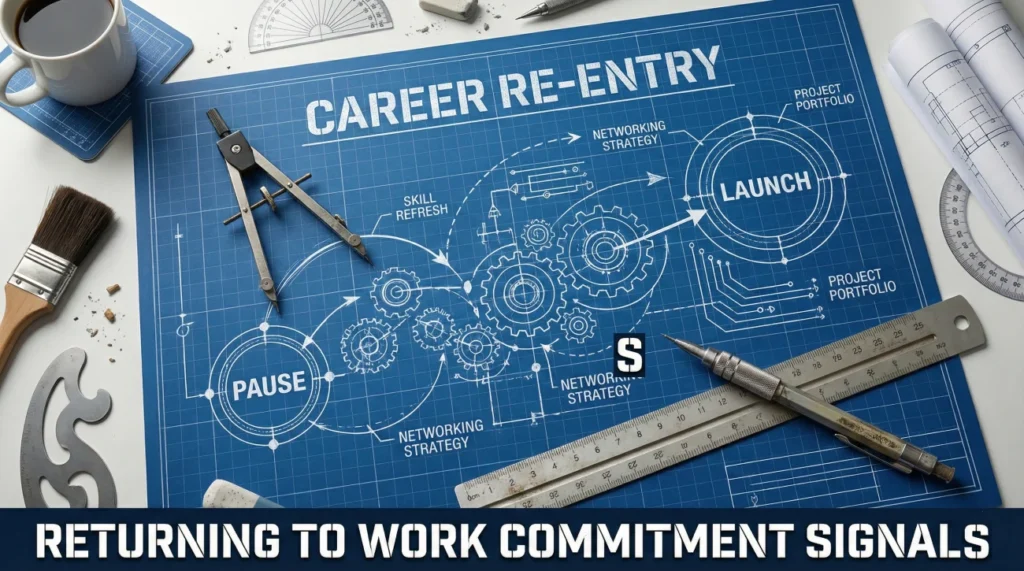
- Your sabbatical is not the problem. The uncertainty is.
- Recruiters look for proof that you are available, stable, and done with the “other chapter”.
- Use a simple proof plan. Pick 3 to 5 signals, then show them consistently on your resume, LinkedIn, and in your first interview answers.
The real question behind “So, what have you been doing?”
Two candidates can take the same nine month sabbatical and get wildly different reactions.
I once screened a product marketer named Lina who had taken time off after a burnout. Her resume was polished. Her skills were current. But the hiring manager’s first comment was not about her impact. It was this: “Is she actually back?”
That sentence is the whole game. When a recruiter worries, they are not judging your rest. They are trying to predict risk. And the fastest way to reduce that risk is to show returning to work after sabbatical commitment signals that feel concrete, boring, and true.
“I’m not worried you took time off. I’m worried you’re still halfway in it.”
This article is a practical map for that moment. Not “how to list a sabbatical”. Not “spin it positively”. A proof plan that makes your return feel real.
What recruiters mean when they say “commitment”
In hiring, “commitment” rarely means loyalty forever. It usually means three smaller, testable things.
Availability shows that you can take the schedule, the start date, and the workload without “mostly” or “once things settle”.
Stability shows that your setup fits consistent work. Recruiters infer it from small cues like location clarity, start date clarity, and the absence of vague “transitioning” language.
Priority shows that the job search is your main focus now. If your resume reads like the sabbatical is the main story and the job is a side quest, you will feel risky.
💡 Pro Tip: You do not need to “prove you will never take a break again”. You only need to prove you are back now.
The three fears hiding under a sabbatical
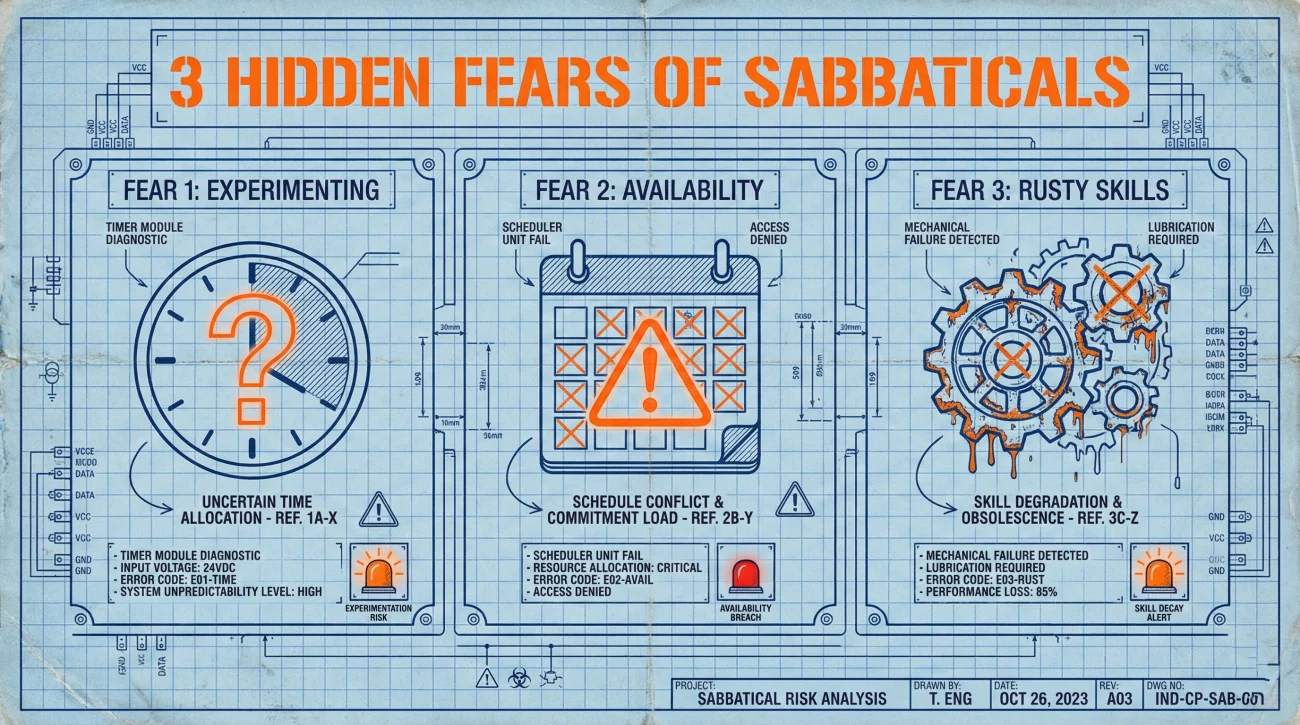
When people get rejected after a sabbatical, it is often because the resume accidentally triggers one of these fears.
- 🕒 Fear 1: You will not stay long because you are still experimenting.
- 📅 Fear 2: You are not actually available because something is ongoing.
- 🔁 Fear 3: You are rusty and will need a long ramp to get “current” again.
Most generic advice attacks Fear 3 only. “Take a course. Show skills.” Helpful, but incomplete.
This post focuses on Fear 1 and Fear 2, because those are the ones that quietly kill interviews. This is where returning from sabbatical commitment signals matter most.
Key Point: Recruiters trust what looks consistent across your resume, your timeline, and your first answers. One strong signal is good. Three matching signals are better.
A 12 item proof plan recruiters actually believe
You do not need all twelve. Pick the ones that are true for you, then show them in small, repeatable ways.
| Proof option | What it signals | How to show it fast | Common mistake |
|---|---|---|---|
| Clear end date | Closure | “Sabbatical, Mar 2024 to Nov 2024 (completed)” | Using “Present” when it is not true |
| Start date commitment | Availability | “Available to start Feb 10” in a short summary | Vague “open to opportunities” only |
| Location clarity | Stability | City, timezone, remote readiness stated once | Hiding location, sounding nomadic |
| Recent manager reference | Social proof | A reference ready to vouch for reliability | Only personal friends as references |
| Short contract project | Back in work mode | One scoped project with a deadline and output | Listing hobbies as “projects” |
| Volunteer work with deliverables | Execution | Metrics, outcomes, deadlines | Volunteer entry with no results |
| Recency in tools | Currency | 1 or 2 relevant tools used recently | Listing 12 tools you barely touched |
| Portfolio refresh date | Current readiness | “Portfolio updated Jan 2026” on a resume line | Old portfolio, last updated years ago |
| Consistent weekly routine | Reliability | Short mention: “Now on a full time schedule” | Overexplaining your personal life |
| Return narrative in one sentence | Priority | Neutral reason plus closure signal | Emotional oversharing |
| Interview scheduling flexibility | Low friction | Offer clear time windows | Only “I’m busy this week” replies |
| Forward looking goal | Direction | One target role, one target environment | Applying everywhere, sounding lost |
⚠️ Warning: Do not invent signals. The fastest way to fail is inconsistency. If you say “available immediately” but you cannot take calls for two weeks, recruiters feel misled.
Three real world patterns I see when candidates “feel risky”
These are not dramatic. They are subtle. That is why they matter.
Pattern 1: The sabbatical sounds ongoing
A designer named Amir once wrote “Personal Sabbatical, 2023 to Present” and then tried to explain in interviews that he was “ready now”. The recruiter’s brain saw only one word: Present. The rest became harder.
If your sabbatical is done, mark it done. If it is not done, do not pretend. Use a different strategy. Show a transition plan with a start date you can keep.
Pattern 2: The resume tells a travel story, not a work story
I get it. Travel is meaningful. But a hiring process is not a memoir contest.
If your bullets read like a diary, the recruiter learns nothing about how you work now. Keep personal color light. Put the weight on outcomes, scope, and closure.
Pattern 3: The candidate cannot say what they want next
After time off, many people apply to “anything that seems decent”. In interviews they sound flexible, but not focused. That triggers Fear 1.
Focus is a commitment signal. So is a clear “why this role, why this team, why this timing”.
❌ Note: The biggest red flag is not the sabbatical. It is vagueness about what your life looks like now.
Eight resume bullet examples that signal closure and readiness
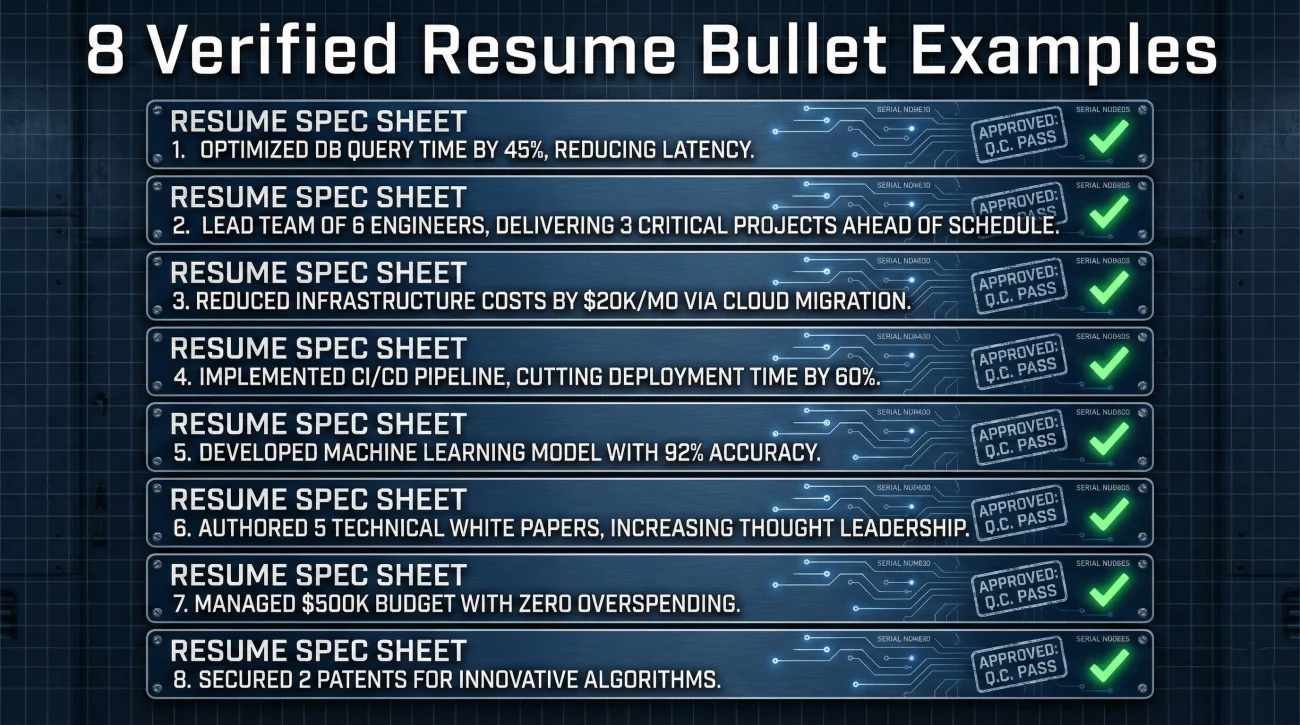
If you want to borrow these, keep the logic simple. One line closes the chapter and removes ambiguity. One line proves you can still deliver work-like output right now.
You can also swap the second line for any “proof option” from the table if that is the most honest proof you have today.
Personal Sabbatical (Completed) | Mar 2024 – Nov 2024
- Planned career break after a high intensity launch cycle; returned to a full time schedule and active search as of Dec 2024
- Completed a scoped analytics refresh project, rebuilt weekly reporting, and presented findings to two former stakeholders
Family Care Sabbatical (Completed) | Jun 2023 – Jan 2024
- Primary caregiver during a defined family health period; care responsibilities concluded and availability restored for full time work
- Delivered volunteer marketing support for a local nonprofit, improving email open rate and donation follow through in a six week sprint
Professional Development Sabbatical (Completed) | Sep 2024 – Dec 2024
- Completed role relevant upskilling in modern tooling and workflows; resumed full time job search with updated portfolio and references ready
- Built two case studies from real datasets to demonstrate current approach to experimentation and reporting
Relocation Sabbatical (Completed) | Apr 2024 – Aug 2024
- Planned relocation and setup period; now based in Hanoi, working hours aligned to GMT+7 and open to remote or hybrid roles
- Reconnected with prior managers and secured two references to confirm performance and reliability
Health Recovery Sabbatical (Completed) | Jan 2024 – May 2024
- Completed a recovery and treatment plan; returned to full capacity and structured routine with consistent weekly availability
- Delivered a short contract project to re-enter execution mode and validate current output pace
Entrepreneurship Pause (Completed) | 2023 – 2024
- Closed a small side venture and transitioned back into team environments; seeking full time roles with clear ownership and cross functional work
- Documented learnings into operational playbooks and improved stakeholder communication style
Career Reset Sabbatical (Completed) | Jul 2024 – Oct 2024
- Planned break to reassess target function; now focused on B2B lifecycle roles and actively interviewing with an immediate start window
- Completed an end to end audit of lifecycle flows for a volunteer client, delivered a prioritized roadmap with expected lift estimates
Sabbatical (Completed) | Feb 2024 – Sep 2024
- Time off for personal priorities within a defined period; returning with a clear target role, updated tools, and full time availability
- Built a portfolio refresh with two recent projects to demonstrate current standards and speed
Notice the shared pattern: neutral reason, defined timeframe, closure signal, then a work-like output. This is how you build sabbatical re-entry credibility without sounding defensive.
A short readiness narrative you can use in interviews
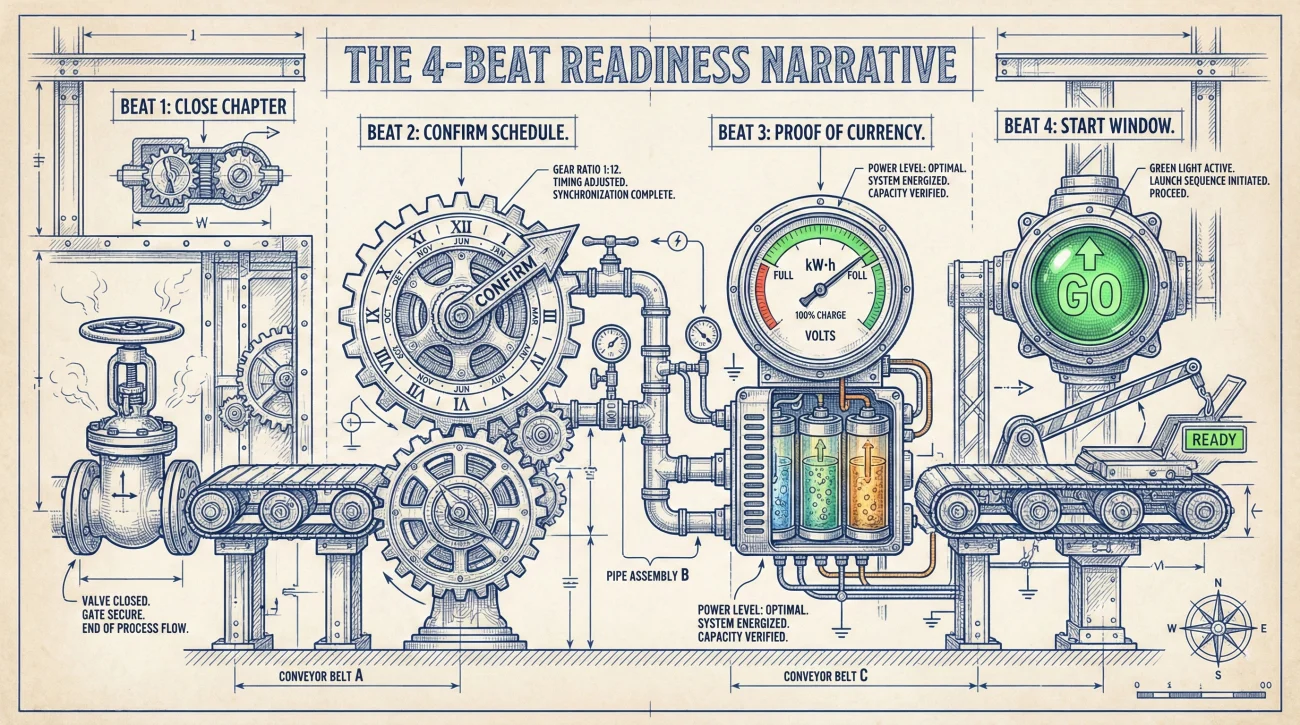
When this comes up in interviews, recruiters are listening for four things. They want closure, they want schedule clarity, they want proof you can still execute, and they want a believable start window.
Here is the same answer broken into four clean beats, so it does not sound like one long prepared speech.
Beat 1: Close the chapter
I took a planned sabbatical for a defined period, and that chapter is complete now.
Beat 2: Confirm your schedule and focus
I am back on a full time schedule and focused on returning to [target role] work.
Beat 3: Show a simple proof of currency
During the break, I kept my execution muscle active through [one proof option], so my tools and pace are current.
Beat 4: Give a start window and reduce “try out” fear
I can start on [date], and I am choosing roles where I can stay and grow, not roles to “try out”.
💡 Pro Tip: Keep the delivery calm. When the beats are clear, you usually do not have to “defend” the sabbatical again.
If your sabbatical is still ongoing, do this instead of pretending
This is where many resumes quietly self-destruct. If you are still traveling, still caregiving, still finishing a big life task, do not label it as completed. But you can still reduce uncertainty.
Scenario: You are still traveling but ready to work
State your end date and your schedule clearly. Example: “Travel sabbatical through Mar 2026, relocating back to HCMC on Apr 5, available for full time interviews now, start date Apr 15.” Then reinforce it with one proof option that looks like work, not like vibes.
- One short scoped project with a deadline and output
- A portfolio refresh date that is recent and visible
- A reference ready to vouch for reliability
Scenario: Caregiving duties are reducing but not zero
Recruiters do not need details. They need a stable plan. Say what is stable: your weekly availability and your support arrangement in one sentence. Then show execution: recent deliverables, even small, beat long explanations.
- Define hours you can keep, and do not oversell
- Show one recent output that proves you can deliver on time
- Keep the caregiver story neutral and short
Scenario: You are switching fields after the sabbatical
Switching fields already raises uncertainty. Your commitment signal must be stronger. Pick three proofs and keep them consistent everywhere. Your goal is to prove you are back after sabbatical and also prove you are not “wandering”.
- A scoped project in the new field with clear output
- A mentor, manager, or stakeholder who can validate your seriousness
- A clear target role statement that does not change from application to interview
⚠️ Warning: If your timeline is not stable yet, applying widely can backfire. Recruiters remember uncertainty. Wait until you can state a truthful, predictable plan.
Final: The simple rule that makes recruiters relax
Here is the rule I wish more candidates knew.
Do not try to “sell” your sabbatical. Prove the sabbatical is over, and prove your work mode is back.
Pick 3 to 5 proof options from the table, then align your resume bullets, your short narrative, and your interview scheduling behavior. When those signals match, your sabbatical stops being a headline and becomes a footnote.
❓FAQ
🧭 Should I list my sabbatical as “Present” if I am job searching now?
Only if it is still ongoing. If the sabbatical is done, mark it completed. “Present” creates uncertainty, even when you explain later.
🧩 Do I need to explain why I took the sabbatical?
Give a neutral reason in one line, then move to outcomes and closure. Oversharing personal context usually increases risk, not trust.
📌 What is the strongest commitment signal if I have no recent work samples?
A short scoped project with a deadline is often the fastest. It can be volunteer, contract, or a real case study, as long as it looks like work and produces an output.
🕰️ How long does a sabbatical “hurt” in the eyes of recruiters?
It depends less on length and more on uncertainty. A long break with strong closure signals can be easier than a short break that reads ongoing.
🧪 Will ATS screen me out because of the sabbatical?
ATS usually does not “judge” your break. Humans do. Your goal is to make the timeline readable and remove ambiguity so the recruiter does not assume risk.
🤝 What if the recruiter asks: “Are you going to take another break soon?”
Answer with stability, not promises. Confirm your priorities now, your schedule, and why the role fits your next chapter. Then pivot to your impact history.
⚠️ Disclaimer: ResumeSolving provides resume, cover letter, and job search communication guidance for informational purposes only. It is not legal, medical, financial, or professional counseling advice. Hiring decisions vary by company, role, location, and individual circumstances, so we do not guarantee interviews, offers, or outcomes. Always use your own judgment, verify requirements directly with the employer, and follow local laws and workplace policies. When a situation is sensitive, we prioritize privacy-safe, recruiter-appropriate wording, and you never need to share personal details you are not comfortable disclosing.