- A personal sabbatical line works when it reads as planned, time-bound, and finished.
- Your label choice matters more than your explanation. Pick the lowest-risk label that still feels true.
- Use one sentence that signals closure and commitment. Save the story for the interview.
What recruiters actually do when they see “personal sabbatical”
I want to start with a small moment I’ve seen a hundred times. A recruiter opens a resume, scans dates, and their eyes catch a break. They do not panic. They do not “reject you for a gap” as a rule. They do one thing: they try to guess what the break means.
When the wording is clean, the guess is boring. “Planned break, now back.” When the wording is fuzzy, the guess gets loud. “Is this ongoing.” “Are they ready to commit.” “Are they hiding something.”
That is why personal sabbatical on resume wording is not just a label problem. It is a trust problem.
Rhea (a product designer) once sent me a resume where the break line said: “Personal sabbatical to explore life goals.” She was talented, but the line sounded open-ended. We changed it to a more bounded entry with a closure signal. She did not suddenly become “more qualified.” She just became easier to trust on a first skim. Two weeks later she emailed me: “People stopped getting stuck on the break and started asking about my portfolio.”
Another example is Jon, an operations manager who took nine months off after a difficult family situation. He was private and he should have been. But his resume said: “Time off for personal matters.” In a vacuum that is fine, yet it can read like “There is more here.” We adjusted the line to keep it private while also sounding complete. He still got asked once or twice. The difference was that the question sounded like a formality, not suspicion.
Key Point: Your goal is not to justify the break. Your goal is to stop the reader from inventing a story you did not write.
The three signals that make a sabbatical entry feel safe
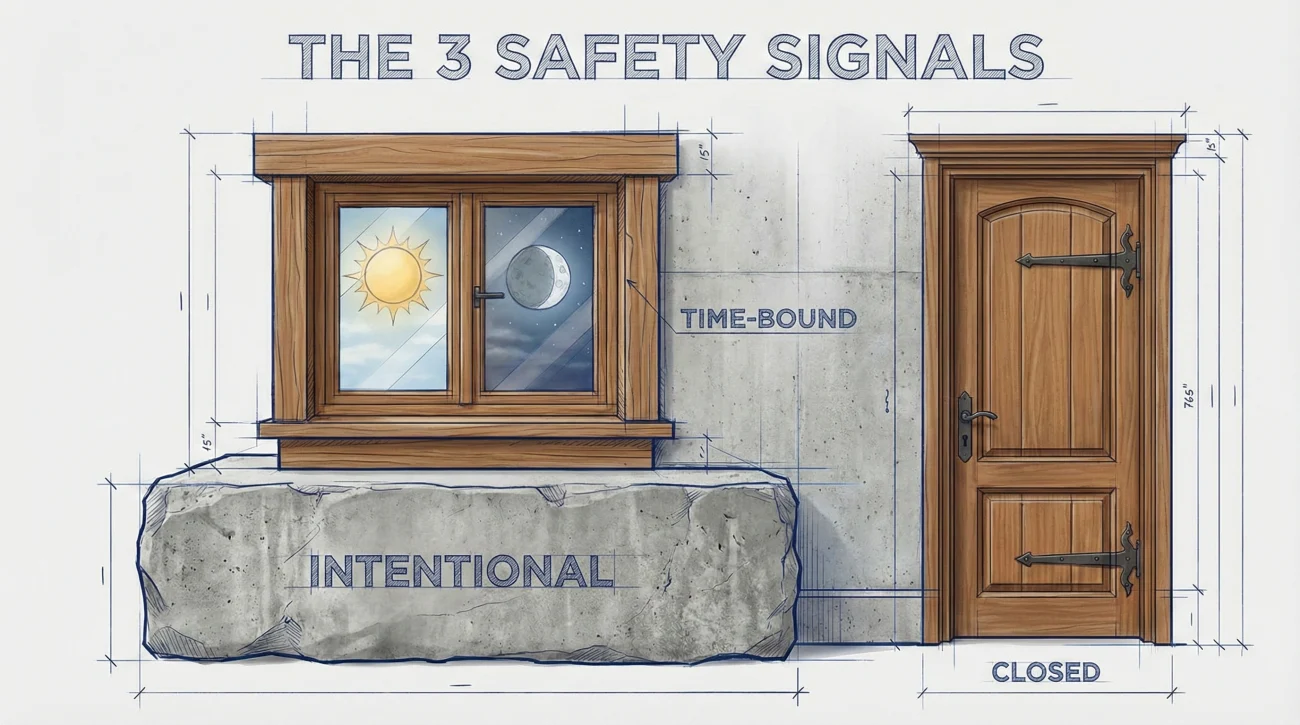
Every good sabbatical line has three signals, even when it is only one sentence.
- Intentional: It sounds chosen, not chaotic.
- Time-bound: It has a clear date range.
- Closed: It gives a subtle “Back and ready” cue.
Here is the simplest framework I use with candidates when we want privacy without vagueness.
[Date Range] + [Neutral Label] + [Light Reason Optional] + [Closure Signal]
💡 Pro Tip: If you have to choose between “Reason” and “Closure,” choose “Closure.” Most hiring managers care more about readiness than details.
Notice what is missing from the formula. There is no emotional essay. There is no dramatic adjective. There is no over-explaining. A resume is not your diary. It is a document that lets someone say yes to a first call.
10 label options ranked by risk
Most articles list labels but do not tell you which ones create doubt. This is the part that saves people. Here are ten labels, ranked from lower risk to higher risk. “Risk” here means: how likely the label is to trigger follow-up questions or assumptions on a fast skim.
| Label | Risk Level | Best When |
|---|---|---|
| Planned Career Break | Low | You want simple, neutral, and widely understood wording. |
| Personal Leave (Planned) | Low | You want privacy and a formal tone, especially in corporate settings. |
| Family Leave | Low | The break involved caregiving and you want a familiar frame without details. |
| Medical Leave (Optional) | Low to Medium | You are comfortable naming it and it reduces speculation, not increases it. |
| Sabbatical (Planned) | Medium | You are in a field where sabbaticals are common or understood. |
| Personal Sabbatical | Medium | You can add a closure signal so it does not feel open-ended. |
| Professional Development Break | Medium | You did training or structured learning and can name one concrete theme. |
| Independent Study | Medium to High | You can support it with a real outcome without overclaiming. |
| Travel Sabbatical | High | You are applying to culture-forward companies and can anchor it with dates and return intent. |
| Life Reset / Life Break | Highest | Avoid if possible. It reads emotional and invites guessing. |
Two quick notes from the field.
⚠️ Warning: “Life reset” style labels are not “honest,” they are just vague. Vague is what causes people to invent worst-case stories.
💡 Pro Tip: If you are unsure, “Planned Career Break” is the most universal label. It rarely offends, and it rarely raises questions.
Now, where does “Personal Sabbatical” sit. It is not bad. It is just sensitive to tone. If it reads like a lifestyle choice that might continue, it triggers a flight-risk thought. If it reads like a planned pause that ended, it reads normal.
8 one-sentence descriptions that sound private but credible
This is the missing piece in most guidance. People do not need “tips.” They need sentences that work in the real world, without sounding like a template. Below are eight patterns you can adapt. Use one, not three. If you stack multiple sentences, you start to sound defensive.
Also, this is where personal sabbatical resume wording matters. The sentence should reduce questions, not raise new ones.
| One-Sentence Pattern | Use It When |
|---|---|
| [Month YYYY – Month YYYY] Planned Career Break. Returned to the market and actively pursuing [Role Type]. | You want the safest, most neutral option. |
| [Month YYYY – Month YYYY] Personal Sabbatical (Planned). Break concluded, now available for full-time roles. | You want to use “sabbatical” but need a clear closure signal. |
| [Month YYYY – Month YYYY] Personal Leave (Planned). Time off is resolved and I am fully available. | You want privacy and a formal tone. |
| [Month YYYY – Month YYYY] Family Leave. Transition complete, returning to [Industry] roles. | You had caregiving responsibilities and want a common frame. |
| [Month YYYY – Month YYYY] Professional Development Break. Focused on [Skill Area], now applying it in new roles. | You have a genuine learning theme you can defend in an interview. |
| [Month YYYY – Month YYYY] Medical Leave. Fully recovered and returning to work. | You are comfortable naming it and it prevents speculation. |
| [Month YYYY – Month YYYY] Sabbatical (Planned). Ready to commit long-term and seeking [Role Type]. | You are worried about “commitment” assumptions and want to address them directly. |
| [Month YYYY – Month YYYY] Independent Projects (Non-commercial). Returning to full-time work and prioritizing stability. | You did personal projects but do not want to oversell them as a business. |
Here is the biggest tone shift I push for: avoid “discovering myself” language on the resume. You can be a whole human. Your resume just needs to sound employable.
Break concluded. Available for full-time roles and actively pursuing Operations Manager positions.
That example does two things. It keeps the reason private. It makes the status clear.
❌ Note: Do not write a sentence that sounds like you might keep extending the break. Words like “exploring,” “figuring out,” and “open to possibilities” can be great in life and terrible on a resume.
Should you add bullets under the sabbatical entry
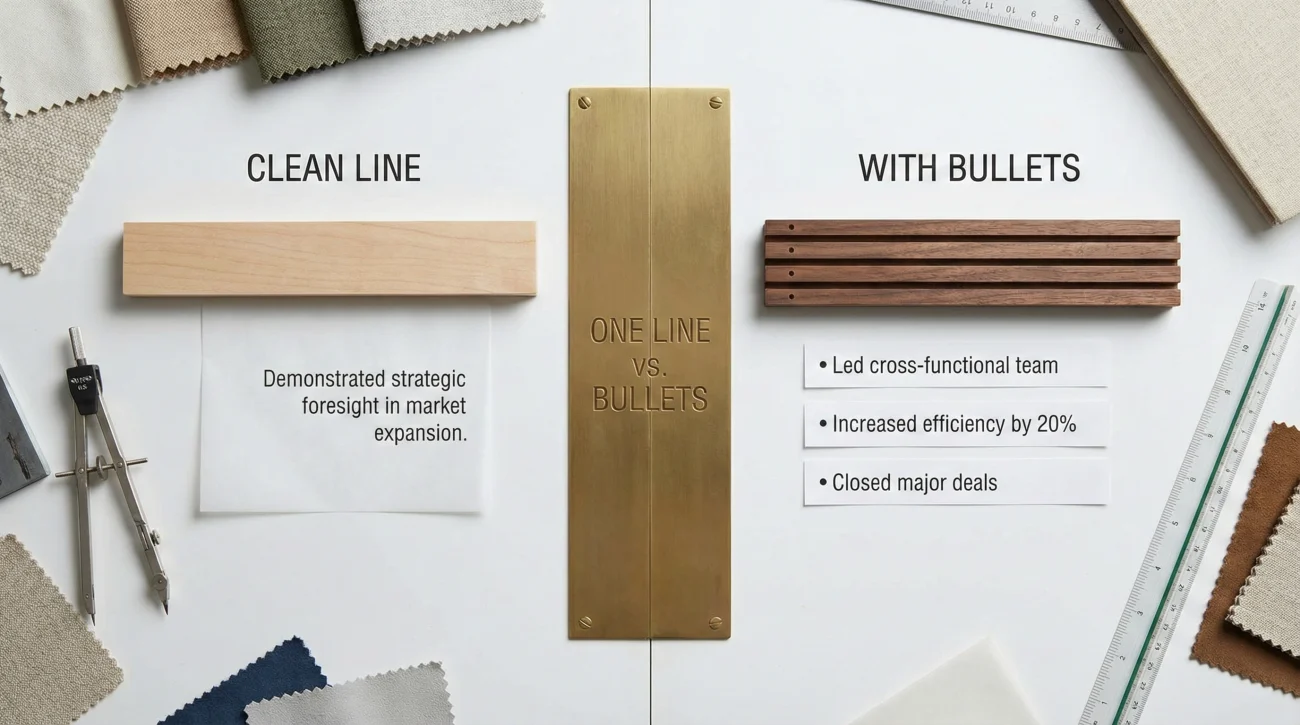
Most people get stuck here because the internet implies you must “treat the sabbatical like a job.” You do not. Sometimes that advice helps. Sometimes it makes you look like you are padding.
Use bullets only if they do one of these things.
- They prove a relevant skill you can discuss in an interview.
- They clarify that the break is finished and you are ready to return.
- They show a light, verifiable output, not a heroic narrative.
Here are three bullet styles that tend to read well. Each one has a different purpose, so you can pick the style that matches what you actually did.
Example 1: Skill refresh
Use this when you completed structured learning and can name a concrete output without sounding like you are padding.
– Completed structured coursework in SQL and reporting fundamentals
– Built two portfolio dashboards to refresh analytics workflow
– Returned to job search in Sep 2024 and interviewing for Analyst roles
Why it reads well: It stays specific, avoids hype, and ends with a clear return-to-market signal.
Example 2: Private but credible
Use this when you mostly took time off, but you still want the entry to feel intentional and finished.
– Focused on personal priorities and family commitments
– Maintained professional readiness through targeted reading and industry updates
– Re-entered the market in Jan 2024 and available for full-time roles
Why it reads well: It keeps the reason private, shows light “stayed current” behavior, and clearly signals availability.
Example 3: Light development
Use this when you have one or two relevant activities and you want to keep it short.
– Refreshed project management toolkit with updated templates and reporting cadence
– Volunteered on a short-term community project to practice stakeholder communication
Why it reads well: The bullets are believable, work-related, and not trying too hard to “sell” the break.
Notice that the second example does not pretend it was a startup. It gives a calm, believable story. That is what most hiring managers need.
💡 Pro Tip: If your sabbatical had no “resume-worthy” bullets, skip bullets. A clean one-sentence line is better than fluff.
6 interview pivot lines that keep you private and move forward
The resume gets you into the room. The interview is where you reassure someone you are ready. Most candidates overshare because they feel they owe an explanation. You do not owe details. You owe clarity.
Here are six pivot lines that work across industries. These are especially useful when the interviewer asks, “So, what happened during the break.”
“I took a planned personal break, and it is fully concluded now. What I am excited about is bringing my operations experience back into a stable, long-term role.”
“It was a planned sabbatical for personal reasons. Everything is resolved, and I am focused on roles where I can commit for the long run.”
“I stepped away for a defined period, and I am back in the market now. I would love to walk you through how I approach [Key Skill] because that is where I create results.”
“I kept it private for a reason, but I can share that the break is behind me. I am ready for full-time work and I am being intentional about the type of team I join.”
“The break gave me a chance to reset and return stronger, and it is complete. I am now prioritizing consistency and impact in my next role.”
“I took time away, and I am fully available now. If it helps, I can explain the timeline, but I would rather focus on how I would tackle the challenges in this role.”
This is the moment to keep your tone steady. Not defensive. Not apologetic. The pivot works best when you say it once, then immediately shift to your value.
Two details matter a lot here.
- If the break is still ongoing, do not pretend it ended. Instead, say you are available now and specify what availability means.
- If you are using a more formal label on the resume, mirror that label in the interview for consistency.
That consistency is what makes personal leave resume sabbatical phrasing feel legitimate instead of “rebranding.”
A quick consistency check for resume, LinkedIn, and applications
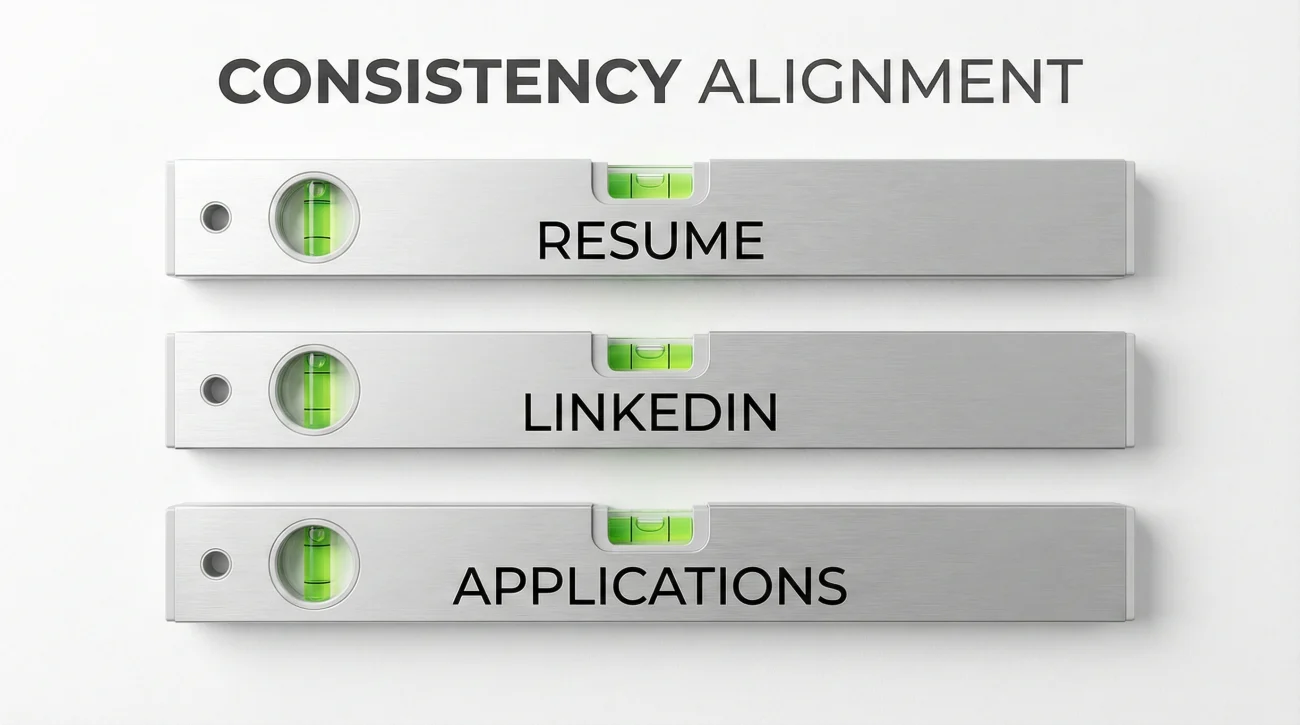
Even if you only post your resume, employers may see your LinkedIn dates or ask you to fill an application later. You do not need to copy the same sentence everywhere, but the timeline must match.
- Dates: Keep the same month and year range across documents.
- Label: Use one main label, not three different labels that sound like different stories.
- Status: If the break is over, say it is over. If you are returning now, say you are returning now.
⚠️ Warning: The fastest way to trigger doubt is to look inconsistent. Inconsistency looks like hiding, even when it is accidental.
If you want a clean, minimal approach, use a neutral “Career Break” label on LinkedIn and keep the richer wording on the resume. If you do that, keep the dates aligned. The point is coherence, not perfection.
Final
A personal sabbatical does not have to be a red flag. Most of the damage comes from vague language that forces the reader to guess. Pick the lowest-risk label that still feels true, add a clear date range, then add one closure signal that says you are ready to commit.
If you only take one thing from this, take this: The resume line is not the place to tell the story. It is the place to make the story feel finished.
And if you are rebuilding confidence after a rough stretch, treat this like a small win. Clean wording is a form of career recovery. Your next step is to keep the rest of the resume aligned with that calm tone, and that is exactly why personal sabbatical on resume wording belongs inside a bigger “Back to stable work” plan.
One last reminder: Your break can be personal. Your resume just needs to be clear.
That is the heart of sabbatical description resume strategy done right.
❓ FAQ
🎯 Should I write “personal sabbatical” or “planned career break”
If you want the safest option across industries, “Planned Career Break” is usually lower risk. If you prefer “Personal Sabbatical,” add a closure signal like “Break concluded” so it does not read open-ended.
🧭 Do I need to list what I did during the sabbatical
No. If you have one or two concrete, relevant items, a bullet can help. If you do not, a clean one-sentence line is better than filler that reads like padding.
🧩 What if my sabbatical is still ongoing
Do not pretend it ended. Use dates honestly and clarify availability. For example, “Planned Break (Concluded and available for full-time roles)” only works if it is true. If you are available now, say exactly what that means.
🛡️ Will this trigger a background check problem
A sabbatical entry is not usually a problem by itself. Issues tend to come from inconsistent dates or conflicting stories across resume, LinkedIn, and applications. Keep the timeline consistent and avoid exaggerated claims.
💬 What is the best way to answer “Why did you take time off” in an interview
Keep it short, neutral, and closed. Name it as a planned break, confirm it is resolved, then pivot to your readiness and your fit for the role. The less defensive you sound, the safer it lands.
⚠️ Disclaimer: ResumeSolving provides resume, cover letter, and job search communication guidance for informational purposes only. It is not legal, medical, financial, or professional counseling advice. Hiring decisions vary by company, role, location, and individual circumstances, so we do not guarantee interviews, offers, or outcomes. Always use your own judgment, verify requirements directly with the employer, and follow local laws and workplace policies. When a situation is sensitive, we prioritize privacy-safe, recruiter-appropriate wording, and you never need to share personal details you are not comfortable disclosing.