- Short medical leaves (under 6 months) often need no label. The gap between dates tells enough.
- Longer leaves benefit from a brief entry that accounts for time without inviting medical questions.
- Never use specific diagnoses or treatment details. “Medical leave” or “health-related absence” is sufficient.
The Labeling Decision
A financial analyst named Derek took seven months off for cancer treatment. When he returned to job searching, he faced a choice: label the gap explicitly as medical leave, or leave a clean gap and explain only if asked.
His first instinct was full transparency. He added “Medical Leave – Cancer Treatment and Recovery” to his resume. The response was not what he expected. Some recruiters appreciated the honesty but worried about recurrence. Others felt uncomfortable with the level of medical detail. A few simply moved on to candidates without health question marks.
We revised his approach. The resume now showed “Medical Leave – Resolved” with no diagnosis. In interviews, he could share as much or as little as he chose about what “resolved” meant. His response rate improved, and conversations focused on his qualifications rather than his health history.
The question of whether to list medical leave of absence on resume has no universal answer. It depends on gap length, your comfort level, the role you are targeting, and what documentation exists. This guide walks you through the decision with a clear checklist and practical examples.
The Core Question
You have two legitimate options, and neither is inherently wrong:
Option A: Label the gap. Add an entry that acknowledges medical leave. This accounts for the time explicitly and may prevent speculation about worse scenarios (termination, job search failure).
Option B: Leave a clean gap. Let the dates speak for themselves. Be prepared to explain verbally if asked, but do not draw attention on paper to a situation that might not need explanation.
Neither is inherently right or wrong. The best decision depends on your specific circumstances and what serves your job search most effectively.
7-Question Decision Checklist

Work through these questions to determine your best approach:
1. How long was the leave?
Under 4 months: Clean gap usually fine. Normal job transition timing.
4-6 months: Borderline. Consider your other factors.
Over 6 months: Labeling often helps. Unexplained long gaps invite speculation.
2. Is the gap obvious from your dates?
If your resume shows “January 2022 – March 2023” at one job and “January 2024 – Present” at the next, the gap is visible. Addressing it prevents assumptions. If the gap falls within a longer tenure or is obscured by date formatting, it may not need explicit mention.
3. Is your condition resolved or ongoing?
Resolved conditions are easier to label – you can signal closure. Ongoing conditions that are well-managed can also be labeled, but language must emphasize stability: “condition well-managed” rather than “managing condition.”
4. Are you comfortable with potential questions?
Labeling medical leave invites follow-up. Even brief labels prompt curiosity. If you are not comfortable discussing your health at all, a clean gap with prepared verbal explanation gives you more control.
5. Does your industry have particular stigma?
Some industries (high-stress finance, startups, physical labor) may view health gaps with more concern. Others (healthcare, nonprofits, education) may be more understanding. Know your audience.
6. Do you have activity during the gap?
If you completed certifications, did volunteer work, or maintained professional activity during leave, labeling lets you mention this. “Medical leave; maintained PMP certification and completed online coursework” is stronger than an unexplained gap.
7. What will background checks show?
If you were on company-sponsored medical leave, the employer will likely confirm dates that include that period. If you resigned before leave or your leave caused a gap between employers, the leave itself may not appear in verification. Consider what paper trail exists.
When Listing Helps
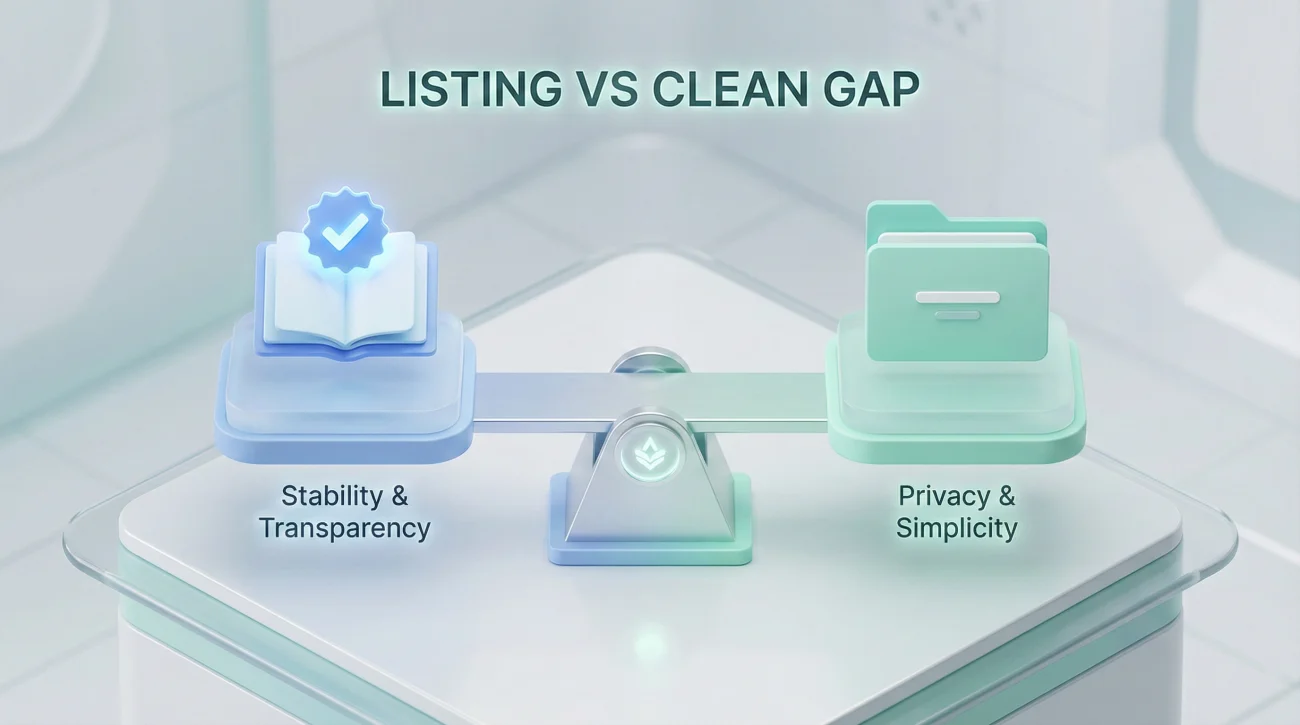
Explicit labeling is usually better when:
- Gap is 6+ months and clearly visible on resume
- You have a simple, resolved situation you can describe briefly
- You want to prevent speculation about termination or failed job search
- You did something productive during leave worth mentioning
- Your target industry is generally understanding about health matters
- You prefer addressing it on paper rather than being surprised by questions
Listing gives you control of the narrative. You define what the gap was rather than letting recruiters guess.
When Clean Gap Is Better
Leaving the gap unlabeled is usually better when:
- Gap is under 4 months – normal transition timing
- Your condition is stigmatized or difficult to explain briefly
- You strongly prefer not to discuss health in any professional context
- The gap is not immediately obvious from your date formatting
- You are targeting industries with known health-related bias
- Your verbal explanation is stronger than anything you could write
Clean gaps work when you have a good verbal answer ready. The resume gets you to the interview; you handle the explanation in person where you can read reactions and adjust.
3 Safe Labels
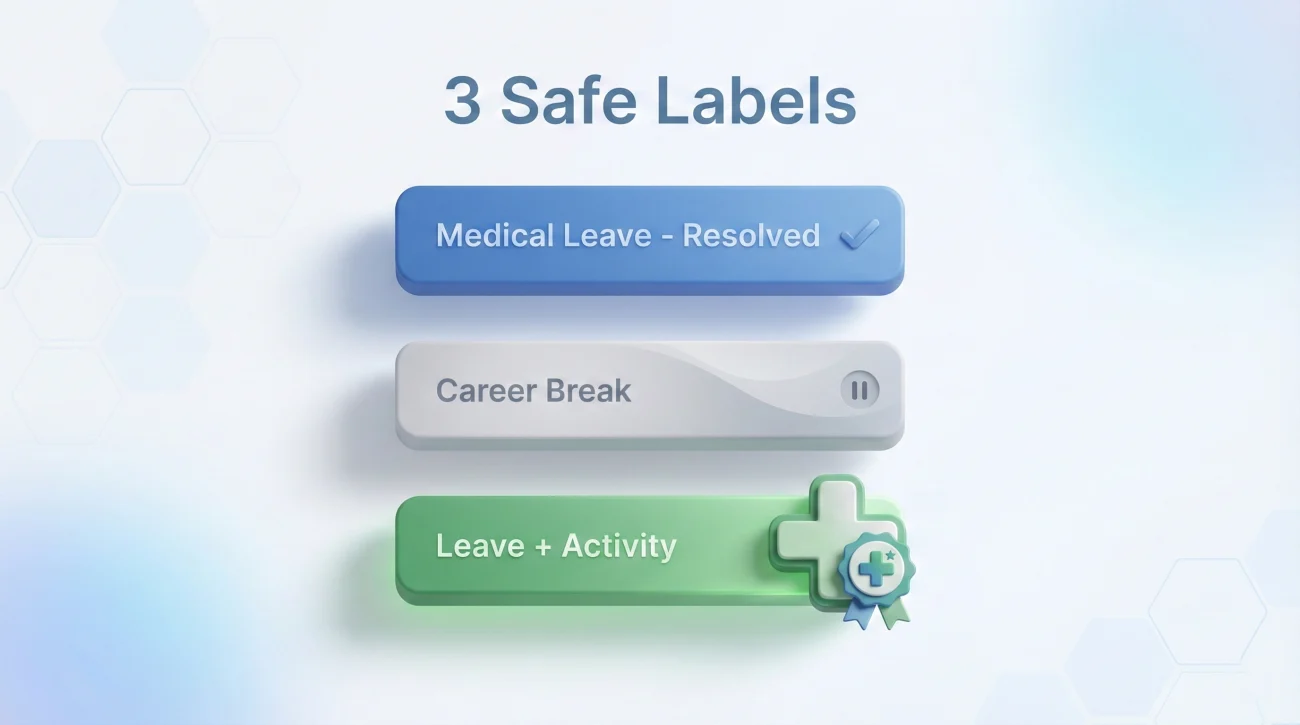
If you decide to label, these options are professional, appropriately vague, and tested in real job searches. Choose based on your situation:
Label 1: Medical Leave – Resolved
Health matter resolved; fully available for work
Best for: Clear-cut situations where you are fully recovered. The word “resolved” provides closure without inviting questions about what was resolved.
Label 2: Health-Related Career Break
Health-related leave; now fully available
Best for: Situations where you want even more distance from medical terminology. “Career break” is neutral; “health-related” explains why without medical language.
Label 3: Leave of Absence + Activity
Personal health matter; completed Google Analytics certification during recovery
Best for: Longer leaves where you maintained professional activity. The certification or activity shifts focus from health to continued professional development.
⚠️ Avoid: Specific diagnoses (cancer, surgery, mental health conditions), treatment details (chemotherapy, hospitalization, therapy), or ongoing/uncertain language (recovering, managing, coping with).
3 Placement Examples
Where you position the label affects how prominently it reads and how much attention it draws. The goal is acknowledgment without making the leave the focus of your resume:
Placement 1: Standalone Entry in Experience Section
• Current role bullets…Medical Leave | March 2023 – December 2023
Health matter resolved; maintained professional certificationsSenior Analyst | Previous Company | June 2019 – February 2023
• Previous role bullets…
Best for: Long leaves (6+ months) that need clear accounting. Creates a proper timeline entry.
Placement 2: Single Line Between Roles
• Current role bullets…Career break: Health-related leave, March – December 2023, resolvedSenior Analyst | Previous Company | June 2019 – February 2023
• Previous role bullets…
Best for: Medium leaves (4-6 months) where you want acknowledgment without creating a full entry. Lower visual weight.
Placement 3: Note Within Previous Role
• Role bullets…
• Additional bullets…
Note: Took approved medical leave March – August 2022; returned to full duties
Best for: Leaves that occurred during employment at a company (FMLA, short-term disability). Shows you took leave and returned, which is actually a positive signal – the company wanted you back.
Staying Minimal While Credible
The goal is accounting for time without creating new concerns or inviting extensive questioning. These principles keep your entry professional and appropriately brief:
One line maximum. If your medical leave entry is longer than one or two lines, you are over-explaining. Brief entries invite fewer questions than detailed ones.
Closure over detail. “Resolved” and “fully available” matter more than explaining what happened. Recruiters want to know you are ready now, not the specifics of what you went through.
Activity when possible. Any professional activity during leave (certifications, volunteer work, freelance projects) gives you something positive to mention and shifts focus from health to continued engagement.
Match your verbal story. Whatever you write on your resume, be prepared to say something similar in interviews. Consistency matters. If your resume says “resolved” but you seem hesitant discussing it, that mismatch creates concern.
Do not apologize or over-explain. Your label should be factual and neutral. Phrases like “unfortunately had to take” or “due to unforeseen circumstances” sound defensive. State the facts plainly.
Application Forms and Other Documents
Your resume is not the only place this question arises:
Application forms: Some applications ask directly about gaps or reasons for leaving. Keep answers brief: “Medical leave” or “Health-related absence” is sufficient. Do not elaborate unless specifically required.
LinkedIn: You can add a “Career Break” entry to your LinkedIn profile with the “Health and well-being” reason. This is optional – many people leave LinkedIn gaps unexplained. If you do add it, keep the description minimal.
Cover letters: Generally avoid mentioning medical leave in cover letters unless specifically asked. Your cover letter should focus on qualifications, not explanations. One brief sentence maximum if you feel compelled to address it.
Background checks: Background verification confirms employment dates, not reasons for gaps. Your medical leave is private information. If you were on leave from a company, you were still technically employed there, which simplifies verification.
Account for the Time, Protect Your Privacy
The decision to list medical leave of absence on resume comes down to gap length and personal comfort. Short gaps often need nothing – the dates tell enough, and verbal explanation handles the rest. Longer gaps benefit from brief, neutral labels that account for time without inviting medical conversations or speculation about worse scenarios.
Whatever you choose, keep it minimal, signal closure, and save the real discussion for interviews where you control the conversation and can read how your explanation lands. Your health history is private. Your resume just needs to show you are ready to work now.
❓ FAQ
🎯 What if my leave was for a family member’s health, not mine?
Use “family medical leave” or “caregiving leave” instead. This is actually easier to discuss since it does not raise questions about your own health. “Family caregiving responsibilities – resolved” works well.
📝 Should I mention FMLA specifically?
Not necessary and potentially confusing. FMLA is a legal protection, not a type of leave. Simply saying “medical leave” or “approved leave of absence” communicates the same thing without legal jargon.
💼 What if I’m still dealing with the condition?
If you are stable and able to work, your resume should reflect readiness. “Health matter addressed” or “condition well-managed” signals stability without claiming complete resolution. Many people work effectively while managing ongoing health conditions.
🔍 Can employers verify medical leave?
They can verify employment dates, which may include leave periods. They cannot access your medical records or ask your previous employer about your diagnosis. If you were on company leave, verification will likely show you as employed during that period, which simplifies things.
⚠️ Disclaimer: ResumeSolving provides resume, cover letter, and job search communication guidance for informational purposes only. It is not legal, medical, financial, or professional counseling advice. Hiring decisions vary by company, role, location, and individual circumstances, so we do not guarantee interviews, offers, or outcomes. Always use your own judgment, verify requirements directly with the employer, and follow local laws and workplace policies. When a situation is sensitive, we prioritize privacy-safe, recruiter-appropriate wording, and you never need to share personal details you are not comfortable disclosing.