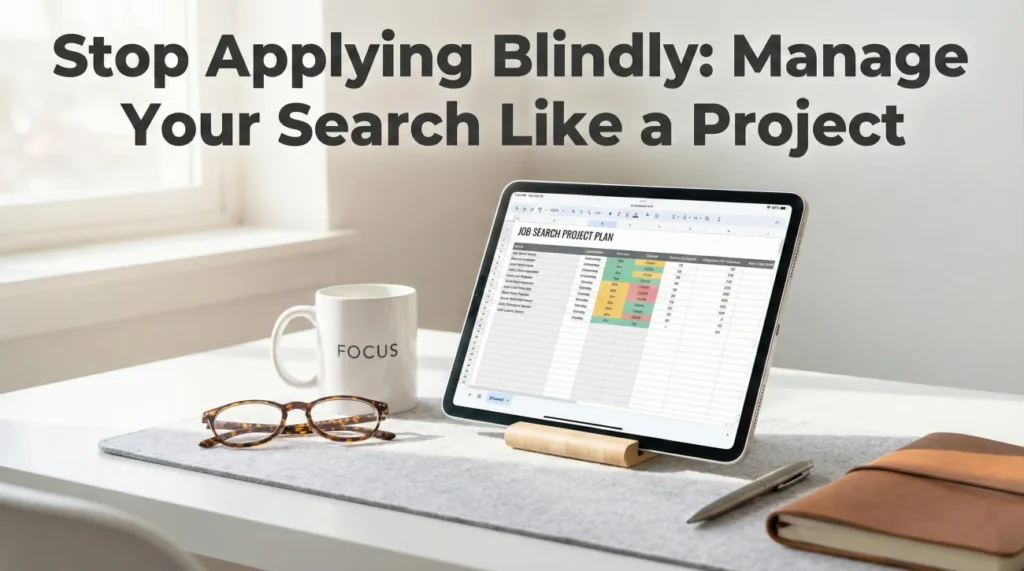
- The Market Reality: Indeed Hiring Lab data shows job postings are flatlining, not crashing. This “low hire, low fire” environment creates a silence that feels like rejection.
- The “Spray and Pray” Trap: Applying to 50 jobs in a weekend doesn’t increase your odds; it destroys your quality control. HR systems flag serial appliers as low-intent candidates.
- The Fix: Stop applying blindly. Use a “Version Control” tracking system to ensure you never answer a recruiter call with “Wait, which job is this?”
You Don’t Need a Crash to Feel Stuck
There is a misconception that you only struggle to find work when the economy crashes. That isn’t true. The most frustrating job market is a “flat” market.
According to the Indeed Hiring Lab Data Portal, the Job Postings Index for major economies has settled into a baseline that is significantly lower than the post-pandemic boom but higher than pre-pandemic levels. We aren’t in a freefall; we are in a stalemate. Economists call this a “low hire, low fire” dynamic.
For you, this manifests as silence. You apply, and nothing happens. No rejection email, no interview invite, just a void.
Key Insight: In a high-volume, low-response market, the silence isn’t usually because you aren’t qualified. It’s often a consequence of two operational failures on the candidate’s side: lack of target clarity and “resume version drift.”
Field Note: The “Mass Apply” Trap
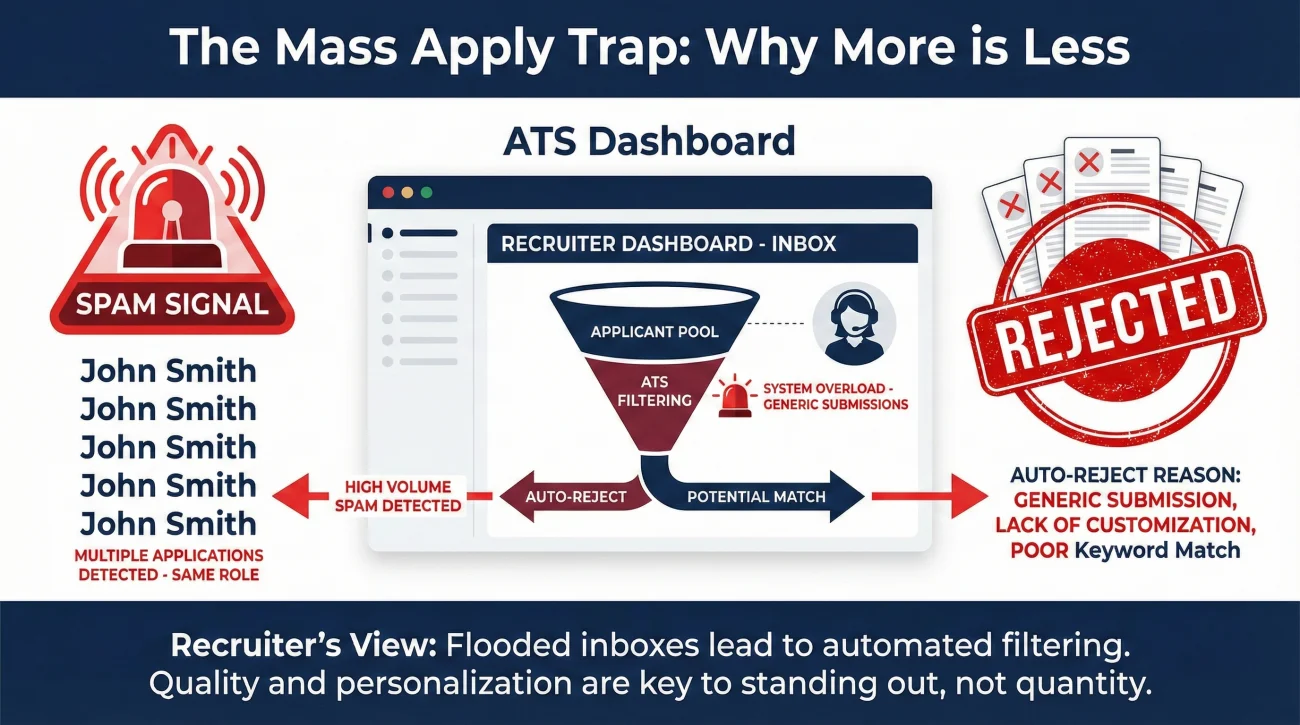
When candidates panic, they tend to over-apply. I see this constantly in the Applicant Tracking System (ATS). A single candidate might apply to 15 different roles at my company in a span of 48 hours, ranging from “Marketing Manager” to “Customer Support Lead.”
📝 The “Spam” Signal
From the HR operations side, “mass applying” looks like spam. When I see your name pop up 12 times for 12 different departments, I don’t think, “Wow, they are eager.”
I think: “This person has no idea what they want. They are desperate, and they are hoping I will figure out where they fit.”
In a slow market, I don’t have time to be your career counselor. I simply reject all 12 applications to clear the queue.
Research from CareerBuilder has suggested that 75% of candidates who apply to jobs they aren’t qualified for (the “spray and pray” method) are knocked out of the running for roles they were qualified for, simply because their reputation in the system was diluted.
A Real Story: 12 Applications, 0 Replies
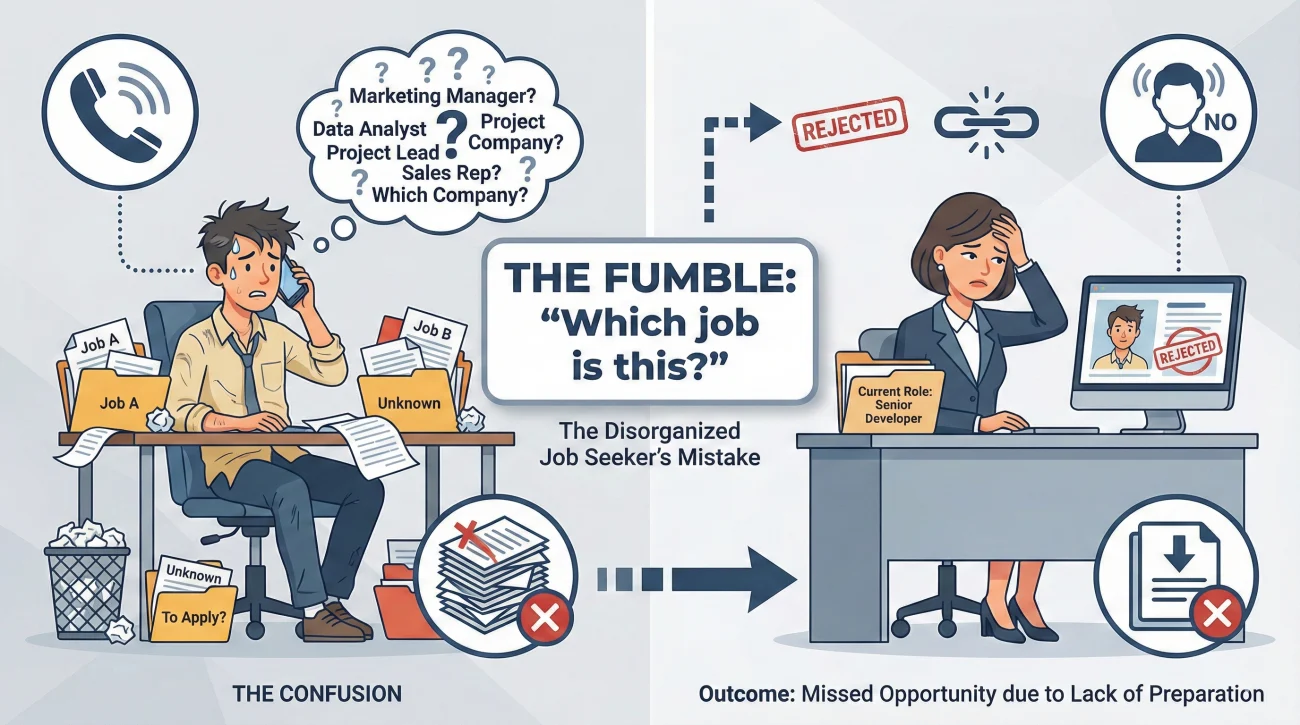
Let’s look at why volume without tracking leads to failure.
The Situation: Danny, a Data Analyst, applies to 30 jobs on Sunday night using the “Easy Apply” button. He doesn’t save the job descriptions or the specific resume versions he used.
The Call: On Tuesday, a recruiter calls. “Hi Danny, I’m calling about your application for the Analyst role.”
The Fumble: Danny pauses. “Oh, right. Which company is this again? Is this for the Senior role or the Junior one?”
The Result: The call ends in 2 minutes. The recruiter hears “disorganized” and “low interest.” Danny is rejected not because of his skills, but because he treated the application like a lottery ticket instead of a business proposal.
A Simple Tracking System That Actually Works
You don’t need complex software. You need a spreadsheet (Excel, Google Sheets, or Notion). The goal is to solve “Resume Version Drift”—the problem of forgetting which version of your story you told to whom.
Create a table with these exact columns:
| Company | Role Title | Date Sent | Resume Version | Status / Next Step |
|---|---|---|---|---|
| TechCorp | Sr. Product Mgr | Oct 12 | Resume_Prod_v4.pdf | Follow up on Oct 19 |
| FinStart | Product Lead | Oct 14 | Resume_Fintech_v2.pdf | Screening call booked |
💡 Pro Tip: Always save a PDF copy of the Job Description (JD) when you apply. Companies often take down the post before they call you. If you get an interview, you will need that original JD to prepare.
The Shift: From Spam to Strategy
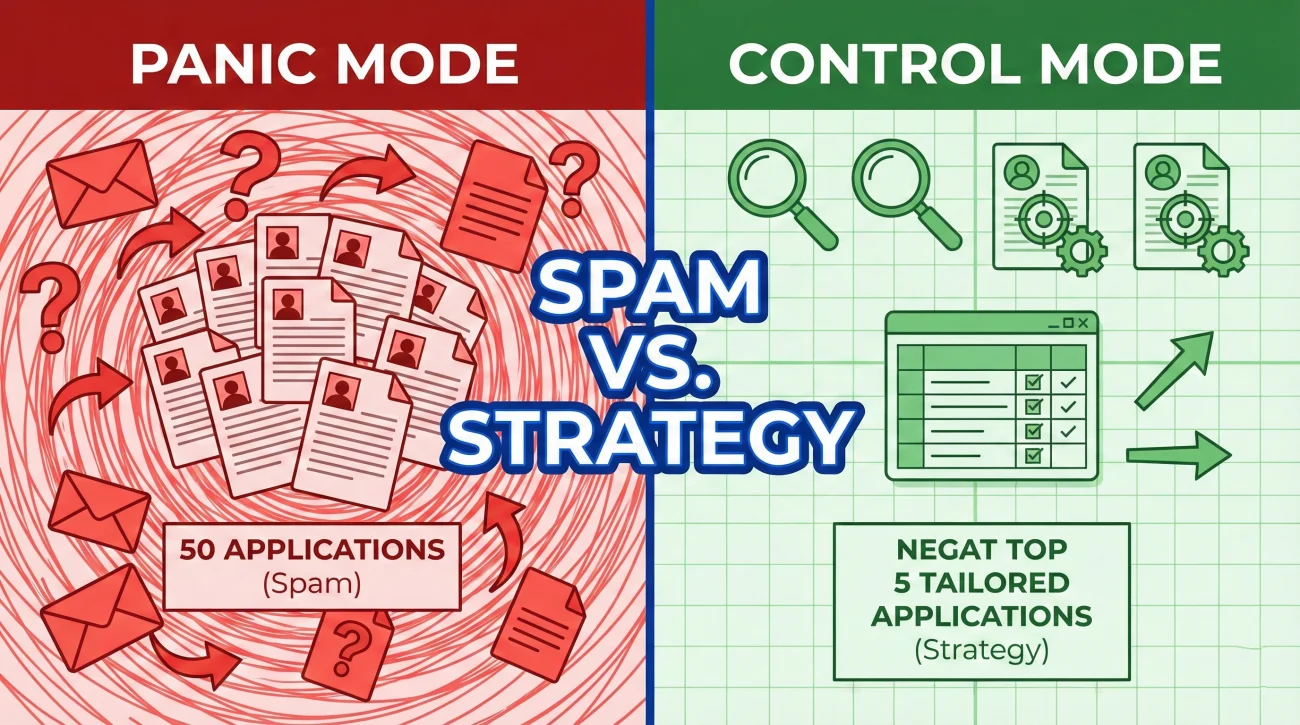
The difference between a frantic job search and a strategic one is data control.
Applying to 50 jobs/week. No log. Generic resume. Forgetting who you applied to. Feeling ignored.
Applying to 5 jobs/week. Logged in a sheet. Tailored “proof lines.” Follow-up reminders set. Feeling professional.
Common Mistakes in Application Hygiene
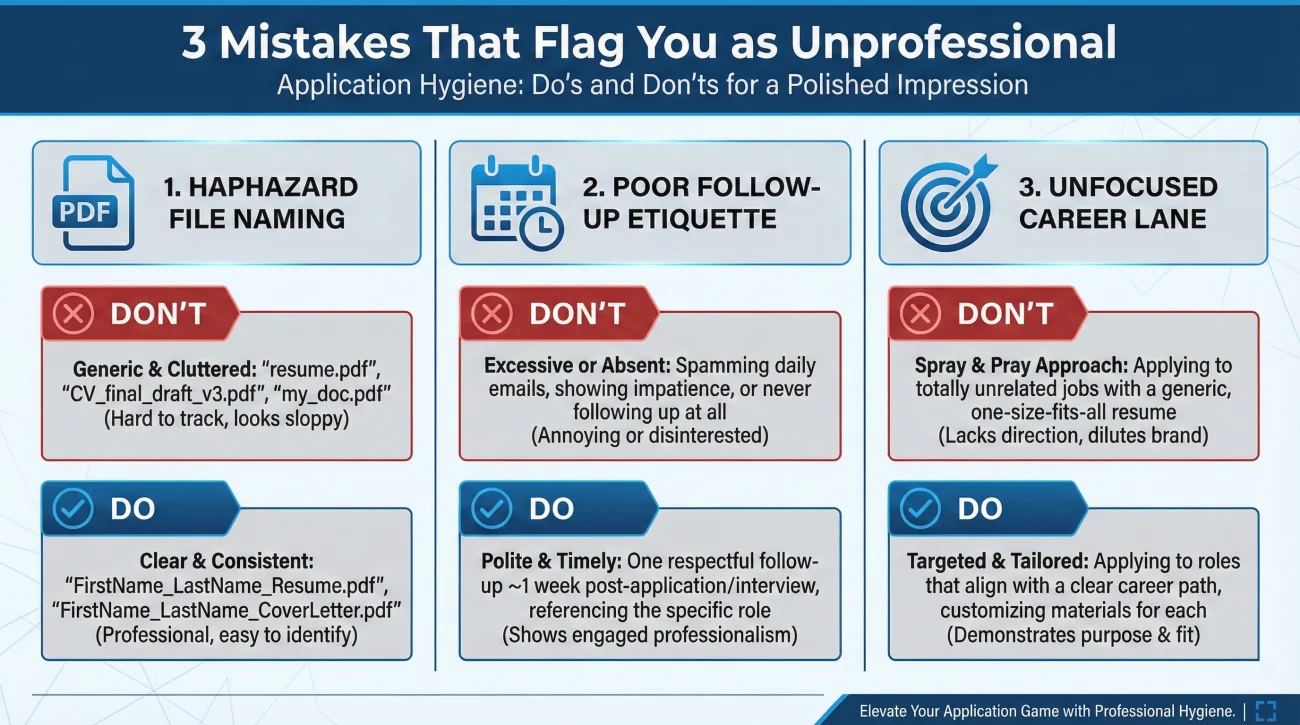
Even organized people make these errors when the pressure is on.
- ❌ No Version Control: Saving files as “Resume_Final” and “Resume_Final_Final.” Always use meaningful names like “Resume_[YourName]_[Role]_[Date].”
- ❌ Ignoring the Follow-Up Window: Applying and walking away. If you don’t track the date, you don’t know when to send a polite nudge (usually 5-7 business days later).
- ❌ Applying to “Anything”: If you apply to the CEO role and the Intern role at the same company, you are flagged as “unserious.” Pick your lane.
Final Thoughts
In a steady, “low hire” market, volume is not your friend. Precision is.
When you reduce the noise, you increase the signal. By applying to fewer jobs but tracking them religiously, you regain your confidence. You stop waiting for the world to pick you, and you start managing your search like a project manager. That shift in mindset – from “begging” to “managing” – is often the variable that leads to the offer.
❓ FAQ
📧 How long should I wait before following up on an application?
The standard professional window is 5 to 7 business days. Following up sooner can seem desperate; waiting too long risks the role being filled. One polite follow-up is expected; three is harassment.
📎 Should I send a cover letter even if it’s optional?
In a slow market, yes. But not a generic one. A short, 3-paragraph note connecting your specific “proof points” to their specific pain points can be the tie-breaker between you and a “resume-only” candidate.
🔢 Is it okay to apply to 2 different roles at the same company?
Yes, if the roles are closely related (e.g., “Senior Manager” and “Lead Manager”). No, if they are in completely different departments (e.g., “Sales” and “HR”). That signals a lack of self-awareness.
📂 What is the best way to name my resume file?
Use the format: FirstLast_Role_MonthYear.pdf. For example: SarahJenkins_ProjectManager_Oct2026.pdf. This makes it easy for the recruiter to find you in a crowded download folder.
📚 Data Sources & References
This article uses market data to explain the mechanics of the current hiring environment. References include:
- Indeed Hiring Lab Data Portal:
Data Point: Job Postings Index trends indicating a “flat” or stabilized hiring demand (not crashing, but not growing).
Context: Used to validate the “silent market” experience and the “low hire, low fire” dynamic.
View Indeed Data Portal - CareerBuilder Applicant Research:
Data Point: Estimates that up to 75% of applicants for a given role are underqualified.
Context: Illustrates the noise in the system that forces recruiters to rely on “reject first” filtering logic.
View CareerBuilder Insights
⚠️ Disclaimer: ResumeSolving provides resume, cover letter, and job search communication guidance for informational purposes only. It is not legal, medical, financial, or professional counseling advice. Hiring decisions vary by company, role, location, and individual circumstances, so we do not guarantee interviews, offers, or outcomes. Always use your own judgment, verify requirements directly with the employer, and follow local laws and workplace policies. When a situation is sensitive, we prioritize privacy-safe, recruiter-appropriate wording, and you never need to share personal details you are not comfortable disclosing.