- This question is not about your personal story. It is about coverage, predictability, and whether deadlines are protected.
- The answer that works has 3 parts: Support structure, schedule clarity, and one proof marker of steady delivery.
- Use the scripts as templates, but choose one lane and stay consistent across rounds.
The Moment This Question Shows Up, Your Interview Changes
Most candidates notice it instantly. The tone shifts just a little, and the interviewer asks, “Will you still be caregiving?”
People hear that and assume they are being judged as a person. In hiring rooms, it is usually simpler and colder than that. They are trying to forecast risk. Not character. Coverage.
I’ve watched good candidates spiral here because they try to prove they are a good family member. That instinct is human, but it does not answer the hiring question. The hiring question is, “Can you show up reliably for this role now, and can you keep showing up when life gets noisy?”
This guide is built for that exact moment. It gives you language that keeps your privacy, makes your availability clear, and then brings the interview back to performance where it belongs.
💡 Pro Tip: Your best answer is the one you can repeat with the same wording in every round.
What They Mean When They Ask “Will You Still Be Caregiving?”
When a hiring team asks this, they are usually trying to resolve one of three concerns. If you answer the wrong concern, you sound vague. If you answer the right concern, the question often disappears and the interview moves on.
| The concern behind the question | What they are afraid of | What a strong answer provides |
|---|---|---|
| Schedule unpredictability | Last-minute absences, missed handoffs | Predictable hours, clear coverage plan |
| Ongoing crisis | Energy drain, recurring emergencies | Stability now, calm boundaries |
| Role mismatch | Travel, on-call, spikes that collide with your reality | Clear alignment, or a clean early mismatch call |
A recruiter friend of mine put it bluntly after a debrief: “I am not asking for their family story. I am asking whether I can plan the rota.” That is the frame you should answer.
Key Point: The goal is predictability, not a confession.
Pick Your Lane Before You Speak: Three Availability Types
People get into trouble here because they improvise. They start in one lane, drift into another, then add extra details to patch the drift. The interviewer hears inconsistency and asks more questions.
Choose the lane that matches your reality, then stay in it.

Lane A: The Caregiving Chapter Is Not A Scheduling Factor Now
This is for candidates who are fully available, or whose caregiving is resolved in a way that does not affect work hours. Your job is to say that simply, then pivot hard to performance.
Do not over-explain. Short and calm reads as stable.
If you feel emotional pressure, remember this: You are not erasing your caregiving. You are placing it in the correct container for hiring.
Lane B: Caregiving Is Ongoing, But Predictable And Structured
This is the most common reality. People still support a parent, a partner, or a child, but the chaos phase is not constant. You might have formal services, shared coverage, fixed windows, or contingency plans.
Your job is not to claim perfection. Your job is to describe predictability: “This is structured, these are the hours, this is how I protect deadlines.”
If you can name one proof marker of steady delivery, the room relaxes faster.
Lane C: The Role Has Unpredictable Hours And You Need Alignment
If the job includes frequent travel, on-call rotation, or true last-minute spikes, you should not answer with vague reassurance. You should align on expectations first.
This is not being difficult. This is being professional. It is better to clarify now than to accept a role you cannot sustain.
A clean mismatch early is better than a messy exit later.
The Answer Structure That Sounds Stable, Not Defensive
If you only remember one thing, remember this structure. It is short, repeatable, and it answers the employer’s real concern without pulling your private life into the room.
| Step | What you say | Why it works |
|---|---|---|
| 1) Support structure | Shared coverage, services, fixed windows, contingency plan | It removes the “on call” assumption |
| 2) Schedule clarity | Predictable hours and reliability during core time | It gives them planning certainty |
| 3) Proof marker | A short example of steady delivery cadence | It turns reassurance into evidence |
| 4) Pivot to performance | Outcomes, work style, fit for the role | It returns the interview to job evaluation |
This is how you avoid the trap of sounding like you are “asking for grace.” You are not. You are giving a work plan.
💡 Pro Tip: If your answer is longer than 25 seconds, you are probably drifting into story instead of signal.
Three Phrases That Make Hiring Teams Hear “Unpredictable”
These show up when people feel cornered. The problem is not the honesty. The problem is the signal it sends about coverage.
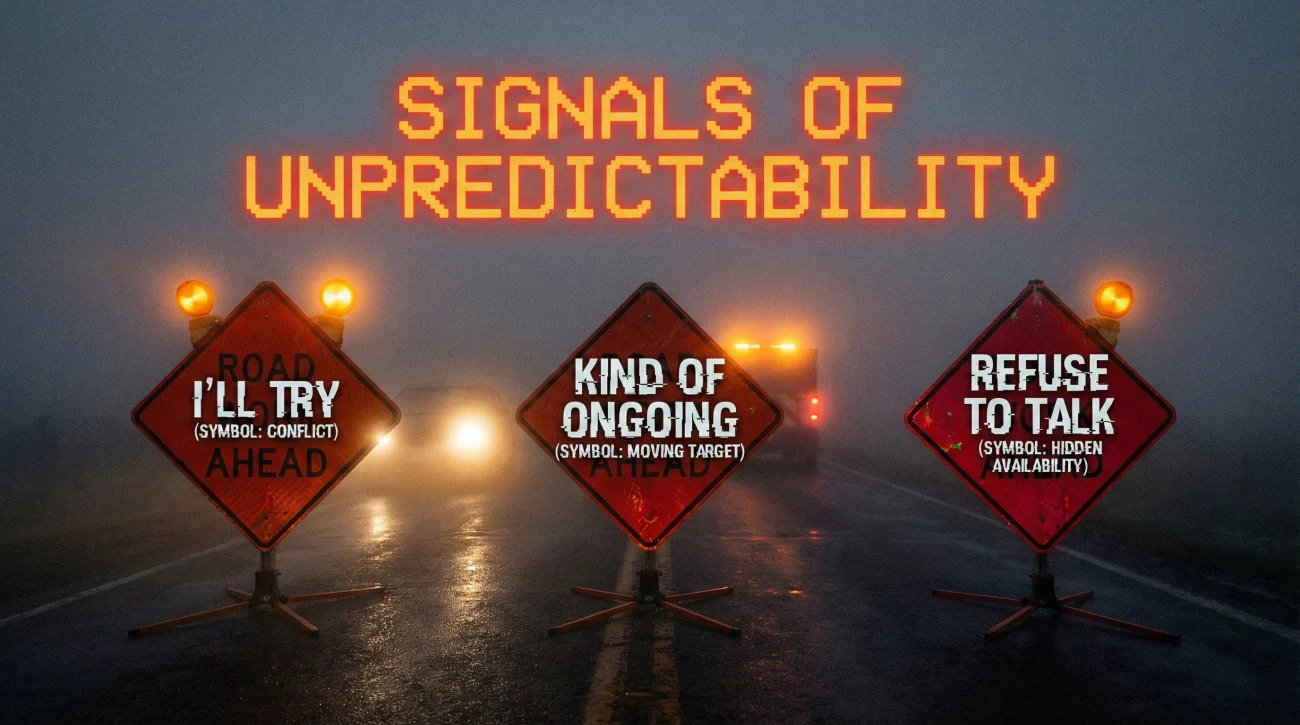
Bad Answer 1: It Sounds Like You Expect Conflict
“I’m still caregiving, but I’ll try to make it work.”
- Why it fails: “Try” sounds like the job and caregiving will collide.
- Better direction: Replace “try” with structure. Name coverage and predictability.
Bad Answer 2: It Makes Them Guess Week To Week
“It’s kind of ongoing and unpredictable.”
- Why it fails: You are telling them the schedule is a moving target.
- Better direction: If it is ongoing, say “stable and structured” and name the predictable window.
Bad Answer 3: It Protects Privacy But Skips The Work Question
“I don’t want to talk about it.”
- Why it fails: Boundaries are fair, but you did not answer availability.
- Better direction: Keep the boundary, then confirm schedule fit in one sentence.
Now we replace those with scripts you can actually use, plus guidance on when each script fits.
12 Availability Scripts With Guidance: Pick One And Stay Consistent
These are not meant to be memorized word for word. They are meant to give you a stable shape, so you do not improvise into oversharing. Choose the script that matches your lane and the job’s schedule demands.
Each script includes a pivot line, because the pivot is what stops the interview from spiraling into personal territory.
Group A: The Situation Is Not A Scheduling Factor Now
Use these when you are fully available, or when coverage is fully handled. Your goal is calm certainty, then performance.
A1: Simple and closed
That caregiving chapter is not affecting my schedule now.
My availability is stable, and I can commit reliably to this role’s hours.
I’m happy to focus on performance, and I can share how I manage deadlines and priorities in fast-moving work.
A2: Coverage is in place
I’m still involved as family, but I’m not primary coverage anymore.
My work hours are predictable, and I can meet the expectations of this schedule consistently.
If helpful, I can walk through a recent example of how I kept delivery steady across multiple stakeholders.
A3: Minimal and confident
I’m not expecting caregiving to interrupt my work schedule going forward.
My availability is stable, and I’m ready for consistent delivery.
I’d love to talk about the outcomes you need in this role and how I can drive them.
Group B: Caregiving Is Ongoing, But Structured And Predictable
Use these when the support structure is real and your schedule is predictable. You are not selling perfection. You are describing planning.
B1: Shared support structure
I still provide support, but it’s shared within a support structure.
My work hours are predictable, and I can commit reliably to the role’s schedule.
I protect deadlines through early planning and early communication, so delivery stays steady.
B2: Fixed windows outside core hours
Caregiving exists in my life, but it’s contained to predictable windows.
During core work hours, I’m consistently available and responsive.
I’m comfortable with steady delivery, and I can share how I plan work to keep handoffs clean.
B3: Services and routine are in place
Support services are in place, so the situation is stable.
My schedule is predictable and aligned with standard business hours.
I’m ready to focus on outcomes, and I can show how I keep commitments consistent.
B4: The proof marker version
I still provide support, but the schedule is structured and predictable.
I can commit reliably to the role’s hours and deadlines.
I’ve already been delivering on a steady cadence recently, so I’m confident about consistent performance here.
Group C: Travel, On-Call, Or Unpredictable Spikes
Use these when the job is not a standard cadence. The goal is alignment. If the interviewer is reasonable, this earns respect. If they are not reasonable, it saves you time.
C1: Clarify expectations first
My availability is stable for a predictable schedule, and I can commit reliably to consistent hours.
To answer accurately, can you share how often urgent coverage happens and what the on-call expectation looks like?
Once I understand the cadence, I can confirm fit directly and explain how I protect delivery.
C2: You can meet the requirement
Yes, I can meet the availability requirements for this role.
The support structure around my caregiving is stable, so coverage stays consistent.
I’m comfortable with high-pressure delivery, and I can share an example of steady execution under tight timelines.
C3: You need a professional boundary
I can be reliable in a predictable cadence, and my availability is stable for that schedule.
If the role requires frequent last-minute shifts, I’d rather align early so we do not misfit each other.
If the schedule is consistent, I’m confident I can deliver at a high level here.
Group D: When The Follow Up Turns Too Personal
Use these when the interviewer tries to pull medical details or family specifics. You answer the work question, then close the door calmly. The goal is not confrontation. The goal is focus.
D1: Availability, then boundary
My schedule is stable now, and I can commit reliably to the role’s hours.
I prefer to keep family specifics private, but I can speak clearly to work readiness and consistency.
If helpful, I can share how I manage handoffs and communication to keep delivery predictable.
D2: Answer, then pivot to performance
I’m not expecting caregiving to interrupt my work schedule.
I’d love to shift the focus to how I deliver in roles like this, because that’s what I want to be evaluated on.
Would you like a quick example of how I manage priorities and deadlines?
6 Boundary Lines That Keep The Tone Calm, Not Defensive
Boundaries fail when they sound like shutdown. Boundaries work when they respect the work intent and refuse the private detail. Think of it as: Confirm schedule fit, then close the door on specifics.
Use these as one-liners. Say them once, then pivot to performance. If you repeat a boundary three times, the mood usually escalates.
I prefer to keep family specifics private, but I can speak clearly to availability and work readiness.
I’m happy to address schedule expectations, but I’d rather not discuss personal medical details.
My availability is predictable and aligned with this role, and I’m comfortable being evaluated on performance.
I understand the coverage concern. My schedule is stable, and I can commit reliably.
I can confirm fit for the role’s hours, and I’d like to keep private details private.
If there’s a specific schedule requirement, I’m happy to answer that directly.
💡 Pro Tip: Pair any boundary line with one performance pivot, or it can sound like you are dodging the question.
3 Exit Options If The Conversation Turns Unfair
Most interviewers are reasonable. Sometimes, a follow up becomes repeated probing that is no longer job-related. You do not need to stay in that room. You can exit professionally without drama.
Exit 1: Recenter On Schedule Requirements
This gives the interviewer one last chance to keep it professional. It also makes you look calm, not reactive.
I can confirm my availability is stable and aligned with the role.
If there’s a specific schedule requirement you’re concerned about, I’m happy to address that directly.
Otherwise, I’d like to focus on the work and how I can deliver in this position.
Exit 2: Offer To Move On Or Stop
This is useful when the tone is getting uncomfortable but you still want to leave the door open.
I’ve answered what I can about availability, and I’d prefer not to discuss private details.
If that works for you, I’m happy to move to the role responsibilities and priorities.
If it doesn’t, I understand, and we can stop here.
Exit 3: End The Process Cleanly
If the conversation is clearly inappropriate, you can leave with dignity. No lecture needed.
I don’t think this conversation is staying focused on job-related evaluation.
I appreciate your time, but I’m going to step back from this process.
Thank you for meeting with me today.
A Rehearsal Checklist That Prevents Accidental Oversharing
Most oversharing does not happen because people are reckless. It happens because nerves change your words. You plan one answer, then in the room you start improvising to fill silence.
Use this checklist once, then practice out loud. You are training repeatability, not poetry.
| Check | What to do |
|---|---|
| Pick one label | Choose stable wording and keep it consistent across rounds |
| One stability line | Confirm predictable availability without overpromising |
| One proof marker | Name a steady delivery cadence you can defend |
| One pivot | Move back to performance and role fit immediately |
💡 Pro Tip: If your answer changes every time, the interviewer assumes the situation is still unstable even if it is not.
Final: Answer The Work Concern, Keep Your Privacy, Then Pivot Back To Performance
While inquiries about your personal commitments can feel intrusive, they are usually just operational checks for reliability. The goal is to provide a calm, predictable answer that satisfies the logistical concern without oversharing. Mastering the specific interview question will you still be caregiving allows you to protect your privacy and immediately pivot the dialogue back to outcomes and fit, ensuring the hiring manager focuses on your future potential rather than your past constraints.
❓ FAQ
🧩 Do I have to say the word “caregiving” in the interview?
No. You can say “family support” or “family situation” if you prefer. The important part is that you still answer availability clearly, then pivot to performance.
📅 What if caregiving is ongoing but I truly cannot predict emergencies?
Then the solution is not a script. The solution is role fit. You should target roles with predictable cadence and avoid roles built on last-minute coverage. Do not promise stability you cannot defend.
🛡️ What if they keep asking for medical details?
Use a boundary line that confirms availability, then declines details. If the probing continues and becomes inappropriate, use one of the exit options and protect your dignity.
✅ What is a good proof marker if I have not worked recently?
Use anything with cadence and accountability. Weekly deliverables, a structured commitment, or any consistent output you can describe calmly will reduce the “work readiness” fear.
⚠️ Disclaimer: ResumeSolving provides resume, cover letter, and job search communication guidance for informational purposes only. It is not legal, medical, financial, or professional counseling advice. Hiring decisions vary by company, role, location, and individual circumstances, so we do not guarantee interviews, offers, or outcomes. Always use your own judgment, verify requirements directly with the employer, and follow local laws and workplace policies. When a situation is sensitive, we prioritize privacy-safe, recruiter-appropriate wording, and you never need to share personal details you are not comfortable disclosing.