- Phone screen answers should be 10 seconds maximum: acknowledge, reassure, pivot.
- The recruiter is checking a box, not conducting therapy. Give them what they need to move forward.
- Pivot immediately to the role or your qualifications. Do not wait for follow-up questions.
Ten Seconds That Decide Everything
A data analyst named Chantell had a nine-month gap from treating anxiety and depression. She knew the phone screen would ask about it. She prepared a thorough explanation: the circumstances, what she learned, how she had grown, why she was ready now.
When the recruiter asked, Chantell delivered her full answer. It took almost two minutes. She could hear the energy drain from the call. The recruiter thanked her for sharing and moved on, but the conversation never recovered its momentum. She did not advance to the next round.
For her next phone screen, we built a ten-second script: “I took time off for a health matter that’s now fully resolved. I used part of that time to complete a data visualization certification, and I’m excited to apply those skills here. What drew my attention to this role was your focus on customer analytics.” The recruiter said “Great” and moved to the next question. Chantell got the in-person interview.
Understanding how to explain employment gap in a phone interview for health reasons means understanding what phone screens actually are. They are not deep conversations or therapy sessions. They are brief qualification checks designed to filter candidates before investing in longer interviews. Give the recruiter what they need to check the box and move your candidacy forward. Nothing more.
The 3-Part Structure
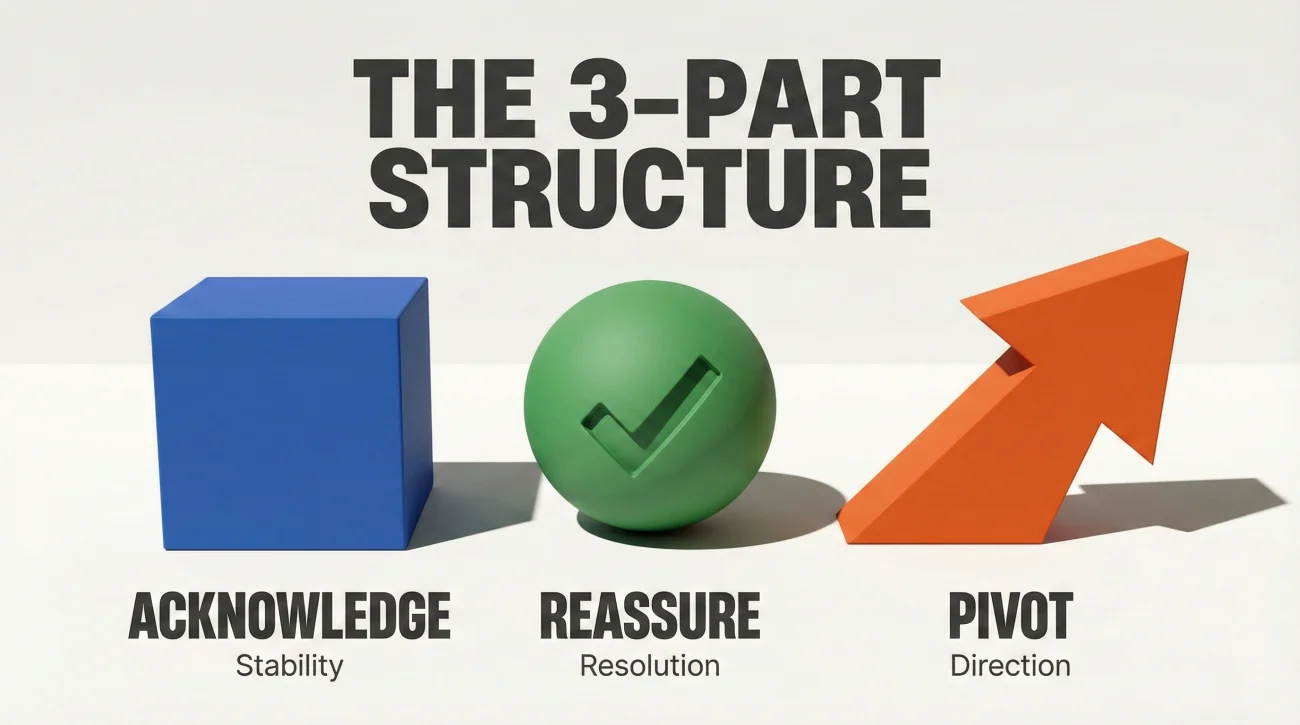
Every effective phone screen gap answer follows this three-part structure. Memorize the framework, then customize the content to your situation:
Part 1: Acknowledge (3 seconds)
Name the gap briefly. Do not explain it, justify it, or apologize for it. Just acknowledge it exists.
Part 2: Reassure (3 seconds)
Signal closure. The recruiter needs to know the situation is resolved and will not affect your work.
Part 3: Pivot (4 seconds)
Redirect to the role, your qualifications, or something positive. Do not wait for follow-up questions. Take control of where the conversation goes next.
Total time: approximately 10 seconds. The recruiter gets the answer they need to check their box, you demonstrate professionalism and composure, and the conversation moves to productive territory where you can actually sell yourself.
5 Ten-Second Scripts
Adapt these to your specific situation. Practice until they sound natural, not memorized. The goal is delivering the content smoothly while sounding like yourself:
Script 1: Minimal Health Reference
“I took some time to address a health matter that’s now fully resolved. During that time, I stayed current with [relevant skill/certification]. I’m particularly interested in this role because [specific reason].”
Best for: Most situations. Gives almost no detail while demonstrating forward momentum.
Script 2: Family Framing
“I took time for a personal health situation in my family – it’s resolved now. I’m fully available and focused on finding the right long-term fit. What excites me about this position is [specific aspect].”
Best for: When you prefer even more distance from personal health disclosure. “Family” is interpreted broadly.
Script 3: With Professional Activity
“I had a health-related break last year, which gave me time to complete my [certification] and do some volunteer work with [organization]. Everything’s resolved, and I’m ready to apply those updated skills. Can you tell me more about the team structure?”
Best for: When you have relevant activity during the gap that strengthens your candidacy.
Script 4: Longer Gap (12+ months)
“I took an extended break for a health matter that required my full attention – it’s completely behind me now. I’ve spent the last few months preparing to return, including updating my certifications and reconnecting with my network. I’m targeting roles exactly like this one because [specific fit].”
Best for: Gaps over a year where you need slightly more context to establish readiness.
Script 5: Direct and Brief
“Health leave – resolved. I’m fully available and excited about this opportunity. What I find most interesting about the role is [specific element].”
Best for: Confident delivery when you want to move past the topic quickly. Works best with strong pivot content.
6 Pivot Lines
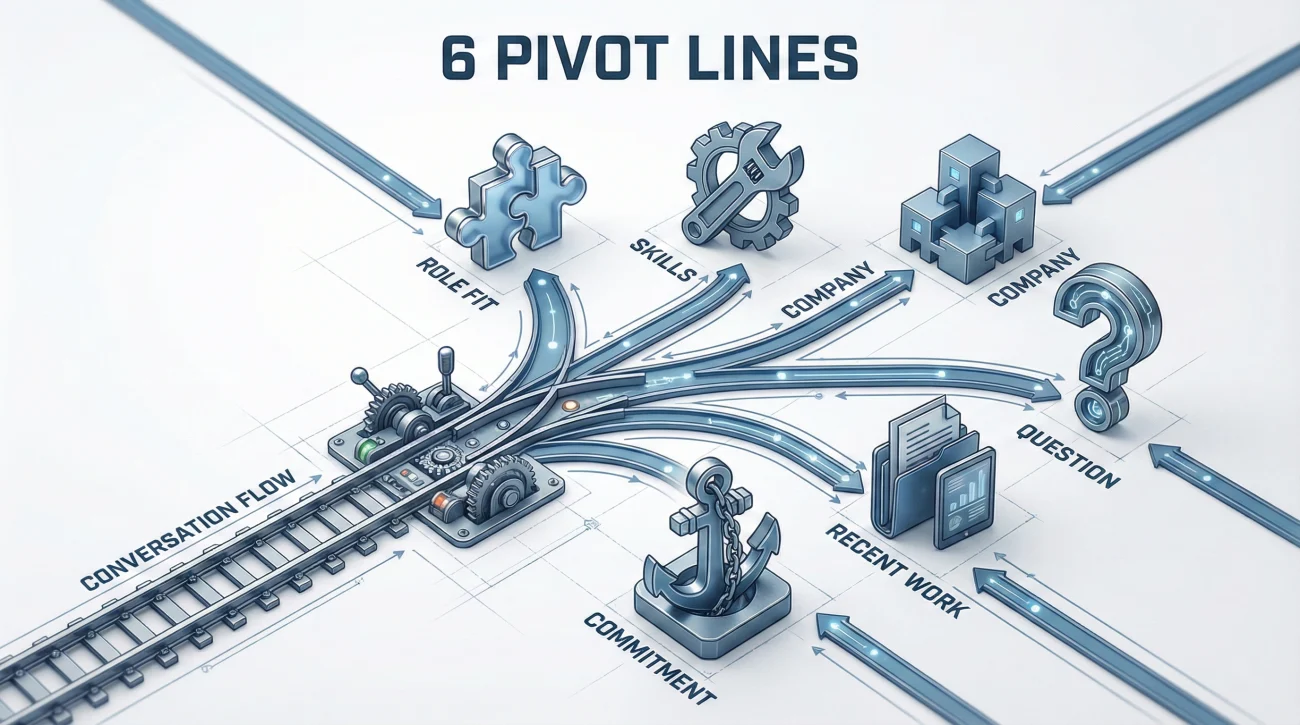
The pivot is where you take control of the conversation’s direction. Do not wait for the recruiter to ask another question – redirect proactively to territory where you can shine. These lines transition smoothly from gap acknowledgment to productive discussion:
Pivot to Role Fit
Pivot to Skills
Pivot to Company
Pivot to Question
Pivot to Recent Work
Pivot to Commitment
Choose a pivot that fits the natural conversation flow. The goal is making the transition feel organic and smooth while steering firmly away from the gap topic toward your strengths.
What NOT to Say on a First Call
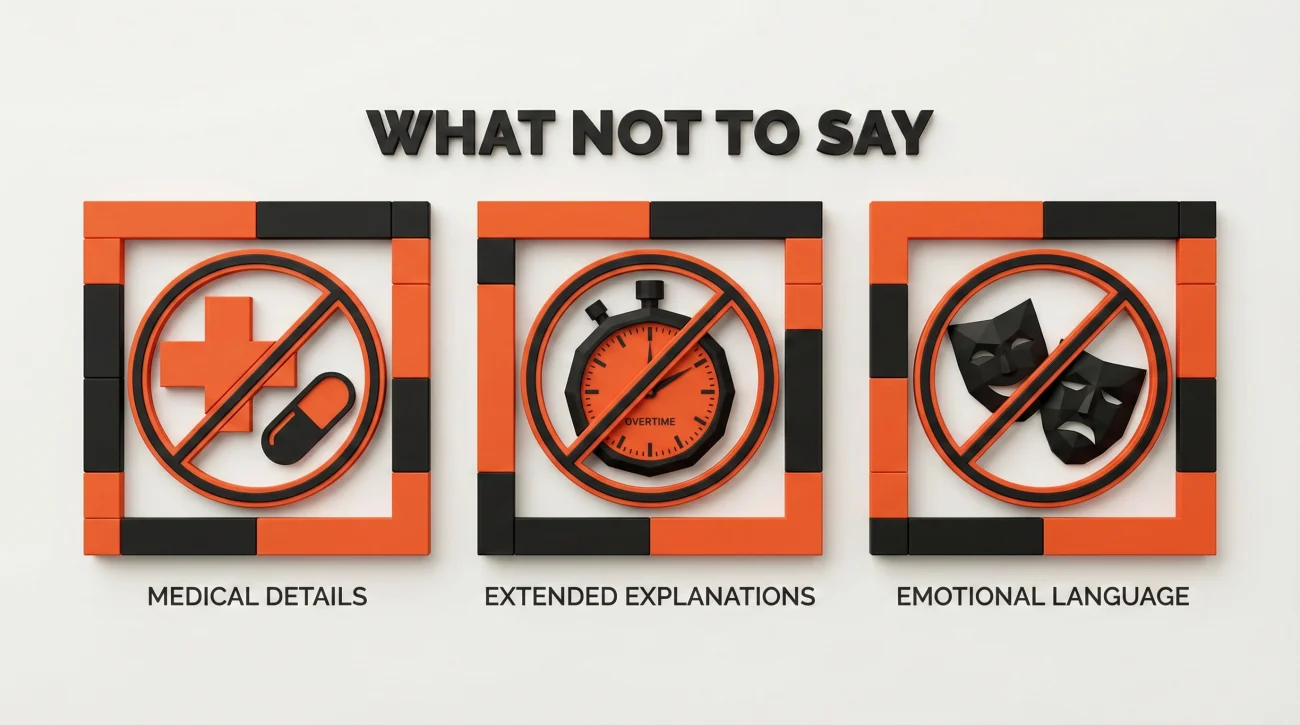
Phone screens are brief qualification checks, not in-depth conversations. These mistakes derail calls and cost candidates opportunities:
🚫 Medical details. “I was dealing with depression and anxiety” or “I needed therapy and medication adjustment” – this is too much information for a first call. Save clinical details for never, or at most for much later conversations if you choose to share.
🚫 Extended explanations. Anything over 15-20 seconds is too long. The recruiter has a checklist. They want to confirm you can account for the time, not understand your journey.
🚫 Emotional language. “It was really difficult” or “I struggled with” or “I went through a hard time” – this signals you may still be processing, not that you are ready to work.
🚫 Apologies. “I’m sorry about the gap” or “I hope that’s not a problem” – never apologize for taking care of your health. It signals insecurity and invites scrutiny.
🚫 Asking if it is okay. “Is that going to be an issue?” or “Does that concern you?” – do not invite objections. State your answer with confidence and pivot forward.
🚫 Oversharing about readiness. “I promise I’m better now” or “I’m definitely stable” – protestations of readiness suggest doubt. Just demonstrate readiness through your professional tone and prepared answers.
Sounding Steady Instead of Rehearsed
A scripted answer delivered robotically sounds suspicious. Here is how to sound natural:
Practice out loud. Say your script 20+ times until the words feel comfortable. You should be able to deliver it while slightly distracted – that is when it sounds natural.
Vary your delivery. Practice with slightly different word choices each time. The structure stays the same, but the exact phrasing can flex. This prevents the “memorized speech” sound.
Match the conversation tone. If the recruiter is casual, be casual. If they are formal, be formal. Your gap answer should not sound dramatically different from the rest of the conversation.
Breathe before answering. A brief pause before responding sounds thoughtful, not unprepared. Rushing into your answer sounds anxious. Take a breath, then deliver.
End with energy. Your pivot should have slightly more energy than your acknowledgment. You are moving toward something positive, and your voice should reflect that.
Handling Follow-Up Probes
Sometimes recruiters ask follow-up questions about your gap. This is not necessarily a red flag – they may be required to ask, or they may be genuinely curious. Here is how to handle common probes without getting pulled into extended discussion:
“Can you tell me more about what happened?”
Stay brief: “It was a personal health situation that required my attention. I addressed it, and I’m fully focused on my career now. I’d rather discuss what I can bring to this role – can I ask about the team’s current priorities?”
“How do we know it won’t happen again?”
Address directly without over-explaining: “I understand the concern. The situation is resolved, and I’m committed to this next chapter. I’m looking for a long-term fit where I can contribute consistently.”
“That must have been difficult.”
Acknowledge without expanding: “It was a challenging period, but it’s behind me now. I’m actually grateful for the perspective it gave me about what I want in my career. Speaking of which, I noticed this role involves [specific aspect]…”
The pattern for all follow-ups: brief acknowledgment, clear reassurance, immediate redirect. Do not get pulled into extended discussion about your health or the gap. Every answer should end pointing toward the role, your qualifications, or a question that moves the conversation forward.
Ten Seconds, Then Move On
Understanding how to explain employment gap in a phone interview for health reasons means understanding what phone screens actually need: brief confirmation that you can account for your timeline and are fully ready to work now. Acknowledge the gap, reassure them it is resolved, pivot to something positive. Ten seconds maximum, then let your qualifications and genuine enthusiasm for the role carry the rest of the conversation. The gap is one question among many on the recruiter’s checklist. Do not let it become the whole story of your candidacy.
❓ FAQ
🎯 What if they do not ask about the gap?
Do not bring it up. If they have your resume and do not ask, they either do not care or plan to address it later. Do not create a problem that does not exist. Focus on demonstrating your qualifications.
📝 Should I disclose my specific condition?
No. Not on a phone screen, and likely not at all during the hiring process. “Health matter” is sufficient. You can choose to share more after you are hired if you want, but it is never required and rarely helpful during interviews.
💼 What if I start getting emotional?
Practice more before your calls so the words become routine. If emotion surfaces during a call, take a breath and pivot: “I appreciate your understanding. What I’m focused on now is [redirect to role].” Brief pause, then forward motion.
🔍 How do I know if my answer worked?
If the recruiter says “Okay” or “Great” and moves to the next topic, your answer worked. If they probe deeper, stay calm and use the follow-up patterns above. The goal is advancement to the next round, not a perfect conversation.
⚠️ Disclaimer: ResumeSolving provides resume, cover letter, and job search communication guidance for informational purposes only. It is not legal, medical, financial, or professional counseling advice. Hiring decisions vary by company, role, location, and individual circumstances, so we do not guarantee interviews, offers, or outcomes. Always use your own judgment, verify requirements directly with the employer, and follow local laws and workplace policies. When a situation is sensitive, we prioritize privacy-safe, recruiter-appropriate wording, and you never need to share personal details you are not comfortable disclosing.