- LinkedIn Career Break text is public, so the safest approach is short, neutral, and closed-ended.
- Your line should remove uncertainty about readiness and availability, not invite a personal conversation.
- If a recruiter asks, answer once with calm closure, then pivot to role fit and start timing.
LinkedIn is public, so your wording has a different job
How to explain an employment gap on LinkedIn career break sounds like a simple wording question, but it is really a public-boundary question. A resume is sent to a hiring process. A LinkedIn profile can be read by recruiters, coworkers, former managers, and strangers who feel entitled to comment.
I have worked in HR long enough to respect two truths at the same time. First, career breaks for health reasons are common and human. Second, public platforms are not always kind, and even kind people can still ask invasive questions.
A candidate I supported, Mina (details adjusted), wrote a sincere paragraph in her Career Break description because she wanted to be transparent. It was honest, but it turned her profile into an invitation. She started receiving messages that were not recruiting messages at all. Some were supportive, some were awkward, some were intrusive. The result was that she felt she had to manage other people’s reactions while trying to rebuild her career.
Another person I helped, Rowan, kept his Career Break text to one calm, closed-ended line. Same reality, different boundary. A recruiter friend later described it in a way that stuck with me: “It told me what I needed, and it did not make me feel like I was stepping into something I could not handle responsibly.”
Key Point: On LinkedIn, your goal is not to explain your life. Your goal is to make your timeline coherent while protecting your privacy.
This article gives you paste-ready snippets, a simple formula for customizing them, what to avoid, and what to say when someone asks privately. You will see options by privacy lane, not one universal “perfect” line.
What recruiters are actually scanning for in a Career Break entry
In most screens, a Career Break entry is not evaluated like a moral statement. It is evaluated like a risk question. Recruiters do not have enough context to interpret nuance, and many will avoid asking for medical details because it is both sensitive and unnecessary at that stage.
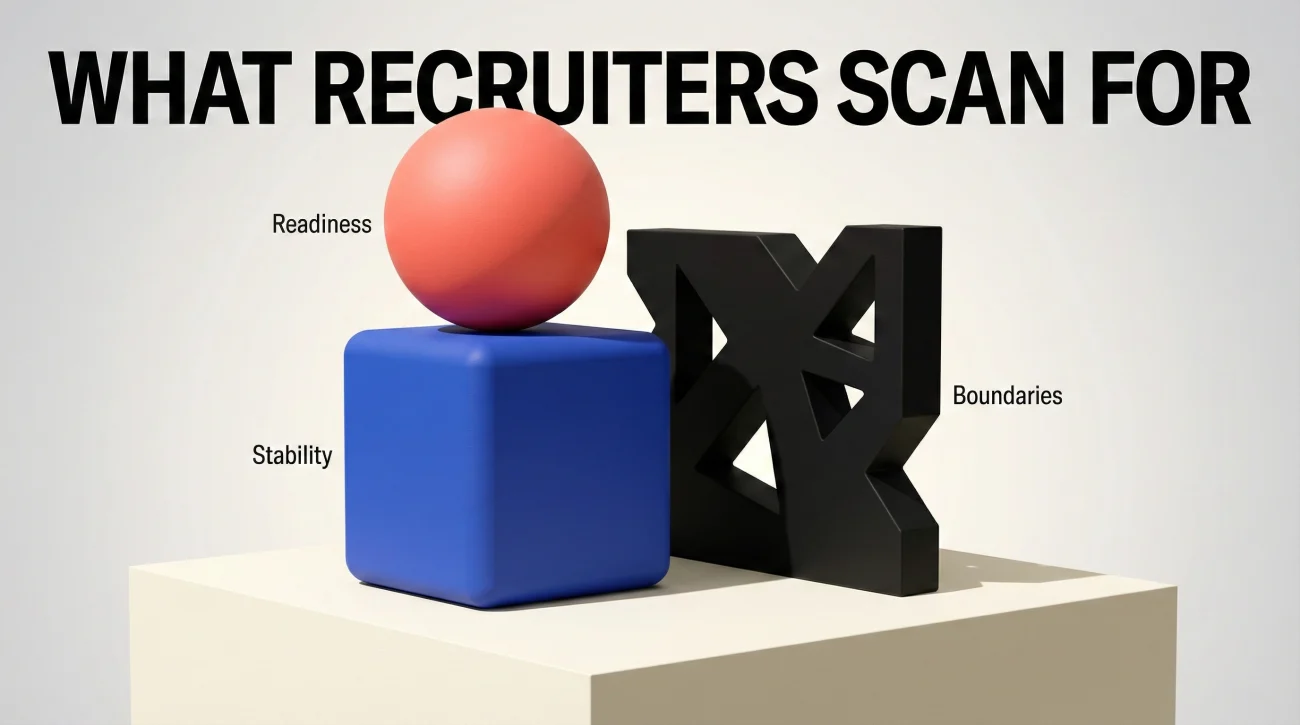
A recruiter colleague of mine, Jess, explained her scan in a way that matches what I see in hiring debriefs too. She said she looks for three signals before she messages someone:
- Stability: Does the wording sound like a defined period that has ended, or an ongoing situation?
- Readiness: Do you clearly signal availability for consistent work now?
- Boundaries: Are you keeping the public description professional, or inviting a conversation that cannot be handled responsibly over LinkedIn messages?
That third point surprises people. They assume more detail equals more credibility. In practice, more detail often equals more uncertainty, because the reader cannot validate it or use it fairly. So they default to avoidance, even when the candidate is strong.
💡 Pro Tip: A strong Career Break line makes a recruiter think “Okay, clear,” and continue scanning your achievements. If it makes them curious about your health, it is too detailed for LinkedIn.
Choose your privacy lane before you write anything
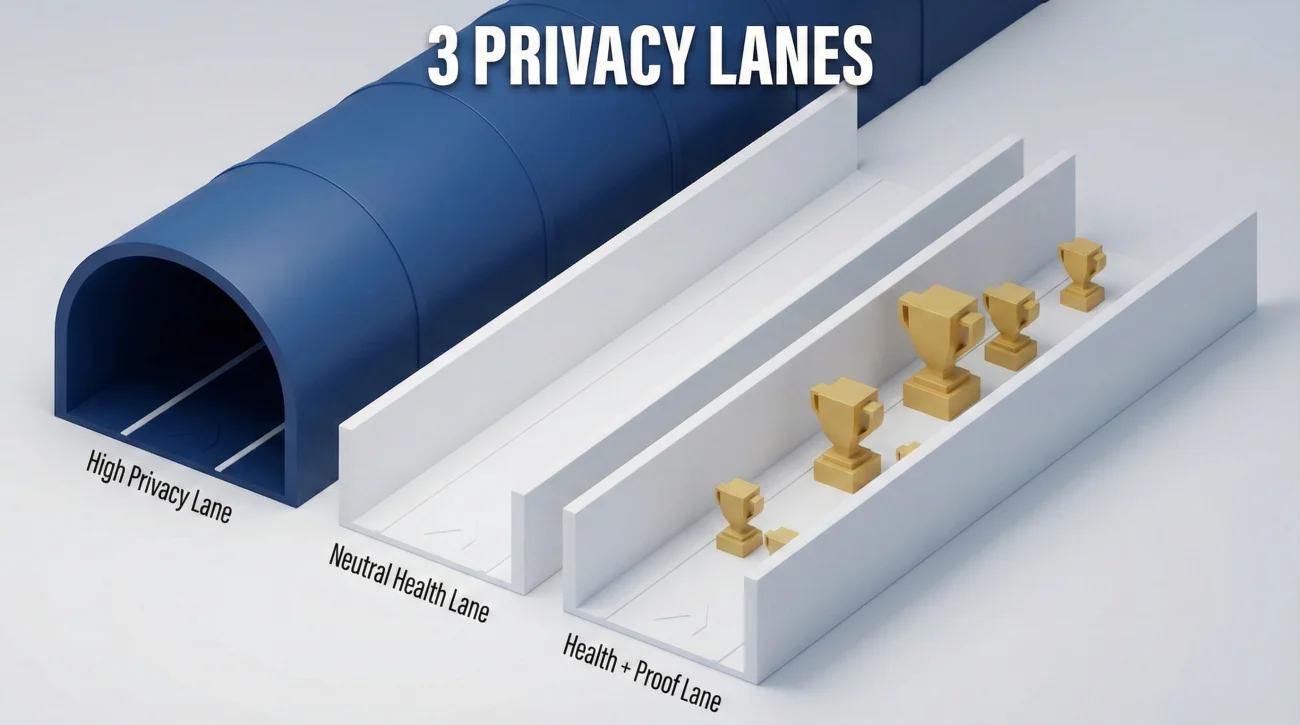
Most risky Career Break descriptions happen because people start drafting while they are still deciding what they want to share publicly. If you pick a privacy lane first, the wording becomes easier and cleaner.
- High privacy lane: You use “Career break” or “Personal leave” and do not mention health publicly. This lane is often safest in conservative industries or small markets.
- Neutral health lane: You mention “personal health reasons” or “health-related leave” without diagnosis, treatment, or emotional language. This is the most flexible lane for most people.
- Health plus proof lane: You keep the health label neutral, but add one professional signal like a course, certification, portfolio refresh, or structured upskilling.
⚠️ Warning: LinkedIn is not only read by recruiters. It is also read by people who have no hiring authority and too much curiosity. Privacy is not paranoia, it is professional boundaries.
A simple formula that stays calm and closed-ended
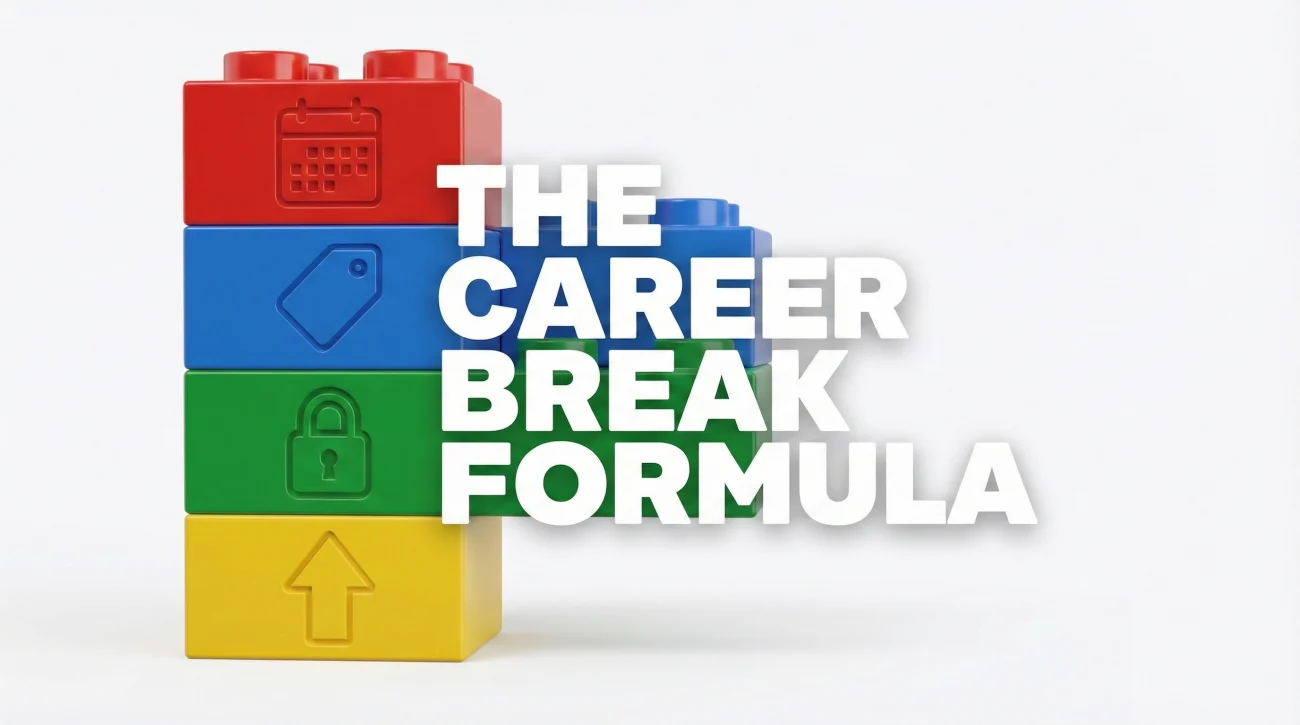
If you want clean LinkedIn gap wording that does not invite follow-up questions, use this structure. It is boring by design, and boring is good in public.
Dates + Neutral label + Closure signal + Readiness signal
Each part has a job:
- Dates: Makes the break look like a defined chapter, not a foggy mystery.
- Neutral label: Communicates the category without personal detail.
- Closure signal: A short phrase that implies the break has ended or is resolved.
- Readiness signal: Tells the reader you are available for consistent work now.
Notice what is missing. There is no diagnosis. There is no emotional language. There is no “please understand.” That is not because your experience is not real. It is because LinkedIn is public and context is thin.
💡 Pro Tip: If you feel an urge to add a second paragraph, that is usually a sign you are trying to earn safety through explanation. On LinkedIn, safety comes from boundaries.
8 short snippets you can paste into LinkedIn Career Break
These snippets are designed to be copied as-is, then lightly customized. They are intentionally short. They also keep the tone neutral, which is important when you are using LinkedIn career break health reasons language in a public profile.
| Snippet | When to use it |
|---|---|
| Apr 2025 to Jan 2026: Career break for personal health reasons. Fully available for full time roles. | Neutral health lane, clean default that closes the loop. |
| May 2025 to Dec 2025: Medical leave (personal health). Situation resolved and ready to return to consistent work. | When you want a stronger closure signal in one line. |
| Jun 2025 to Feb 2026: Health-related career break. Now stable, role-ready, and actively interviewing. | When you want to signal active search without noisy signals. |
| Mar 2025 to Nov 2025: Personal leave for health priorities. Ready to return to full time work. | High privacy with a light health hint, minimal medical language. |
| 2025: Career break for personal health reasons. Fully available and focused on roles in Operations. | When you prefer year-only formatting on LinkedIn for simplicity. |
| Jan 2025 to Sep 2025: Temporary leave for a health issue. Returning to work with full availability. | When “temporary” accurately reflects the break and lowers uncertainty. |
| Feb 2025 to Oct 2025: Personal leave. Personal matters addressed and ready for a steady work schedule. | High privacy lane, no health language in public. |
| Apr 2025 to Jan 2026: Health-related leave while completing targeted upskilling in Excel and reporting. Ready to apply it in my next role. | Health plus proof lane, when you want one credibility signal without oversharing. |
If you want a fast self-check, ask one question. Does your snippet feel closed-ended, or does it feel like the start of a conversation? If it feels like the start, shorten it.
Real examples: before and after, and what changed in the response
Here are three patterns I have seen repeatedly. These are not copy-pasted stories from one person. They are anonymized composites built from real candidate situations, plus what recruiters and hiring managers said afterward in screens or debriefs.
Example 1: The “honest paragraph” that became the headline
Mina wrote a Career Break description that explained mental health in detail. Her intention was responsible transparency. The side effect was that recruiters who did message her often started with personal questions, and some recruiters did not message at all because they did not want to step into a sensitive topic without context.
We replaced her paragraph with one line from the neutral health lane, and added a readiness signal. The tone shifted from “please understand me” to “this is handled.” Her messages became more job-focused and less personal.
Career break for personal health reasons. Fully available for full time roles.
Example 2: The vague break that triggered suspicion in a conservative industry
Rowan used “Career break” with no context and no readiness signal. In a high-trust, low-drama culture that might be fine. In his case, he was applying into a conservative environment where people dislike ambiguity. A recruiter friend told him privately that the line felt like a missing piece.
We kept privacy high but added closure and readiness. Nothing personal, just a clean ending.
Career break. Personal matters addressed and ready for a steady return to work.
Example 3: The “toxic job” story that raised an unnecessary flag
A third candidate framed the break as “burnout from a toxic boss.” That may be true. The problem is that LinkedIn is a public stage, and conflict language travels badly. A hiring manager I partnered with once described this as “future drama risk,” even when the candidate seemed capable.
We removed blame and kept it forward-focused. The candidate kept the deeper story for the interview, where context exists, but the profile stayed professional.
Career break for health priorities. Fully available for consistent work.
💡 Pro Tip: In public, credibility comes from calm closure. In private, credibility comes from context and how you connect the break to readiness.
3 things not to write publicly, and why they backfire
I am not judging openness. I am separating what is true from what is strategically safe on a public profile. These backfire because they invite more questions than a recruiter can responsibly ask, and they also invite the wrong audience to engage.
| Do not post this publicly | Why it backfires | Use this instead |
|---|---|---|
| I took time off because my depression got really bad and I could not function. | It reads like an active condition and creates uncertainty about readiness. | Career break for personal health reasons. Ready to return to full time work. |
| I was burned out from a toxic boss and needed to heal. | It centers conflict and implies future drama in the workplace. | Career break for health priorities. Fully available for consistent work. |
| My panic attacks started again so I stepped away for treatment. | It invites probing questions recruiters should not ask, and some will avoid the risk. | Health-related leave. Situation resolved and role-ready. |
⚠️ Warning: Avoid wording that sounds like you are asking the public to validate your story. Even if your intent is good, it changes how hiring teams read your profile.
Align LinkedIn and resume dates so you do not look slippery
This is the unglamorous part that protects you. I have seen candidates lose trust over small mismatches that were not even intentional. A resume showed month ranges while LinkedIn showed only a year, and the recruiter assumed the person was hiding the true length of the break.
Keep your story consistent across documents, even if the wording differs. Consistency is a trust shortcut.
- Match your date style: If your resume uses months, use months on LinkedIn. If your resume uses years only, keep LinkedIn years only.
- Do not overlap dates by accident: Make sure your last role end date and break start date do not overlap unless that is truly accurate.
- Keep the label consistent: If LinkedIn says “career break for health reasons,” do not make the resume say “sabbatical” unless you use that story everywhere.
- Use one entry: Multiple break entries often look like instability, even when the reality is simple.
- Decide how you treat freelance: If you did light freelance, either show it as freelance work or keep it out of the timeline. Do not contradict yourself across platforms.
💡 Pro Tip: If you choose a high privacy lane on LinkedIn, you can still be a little clearer on your resume because it is sent to a specific hiring process, not displayed to the public.
What hiring teams say in debriefs, and how to use it without spiraling
This is the part most articles avoid, so I will say it carefully. Hiring teams rarely say “we rejected them because of mental health.” They say things like “unclear availability” or “not sure if they can handle the pace.” That language is not always fair, but it is how uncertainty shows up in debrief rooms.
One HRBP friend told me she tries to steer teams away from vague fear-based judgments by asking one question: “Did the candidate show readiness and consistency in the way they communicated?” That question is your leverage. You cannot control bias, but you can reduce uncertainty signals.
Here is what I have seen work, even when the team is cautious:
- Calm closure: Use one phrase that makes the break feel completed.
- Clear availability: “Fully available for full time work” is boring and powerful.
- Work pivot: Make it easy to talk about skills, scope, and start date.
⚠️ Warning: Do not try to “pre-defend” yourself in public. Defensive wording reads like uncertainty, even when your intent is reasonable.
If a recruiter asks about your break, answer once and pivot
Some recruiters will ask anyway, especially for senior roles or time-sensitive hires. The goal is to acknowledge, close the loop, and return to the job. Do not over-explain to earn comfort. Comfort comes from calm and clarity.
These two templates are designed for LinkedIn messages, a first call, or a quick screen.
Thanks for asking. I took a defined career break for personal health reasons, and that situation is resolved. I am fully available for full time work now. I would love to focus on fit for the role. What are the top two priorities you need solved in the first 60 days?
I stepped away for health-related reasons during a defined period, and I am now role-ready with full availability. I am targeting roles in Product Operations because my background in process improvement and stakeholder alignment fits well. What does success look like in the first 90 days for this position?
Notice what these do not do. They do not volunteer details. They do not sound fragile. They also do not challenge the recruiter. They move the conversation back to work.
Micro-edits that make your wording feel safer
If your draft feels almost right but still a little risky, these micro-edits can change how it lands without changing the truth. This is where public professional phrasing matters most. The goal is not to be cold. The goal is to be contained.
- Change “Taking time to heal” to “Situation resolved and ready to return.”
- Change “Managing my mental health” to “Career break for personal health reasons.”
- Change “Trying to get back” to “Fully available now.”
- Change “Burnout from my last job” to “Career break for health priorities.”
- Change “I needed to focus on recovery” to “Defined leave period completed.”
✅ Quick test: If your sentence makes a stranger feel like they should ask “Are you okay,” it is too personal for LinkedIn.
Final check before you publish your Career Break text
Before you hit save, read your line as if it were being read by a future manager you respect, a recruiter you have never met, and a former coworker who loves gossip. If the wording still feels safe, you are in the right zone.
Keep it short. Close the loop. Show readiness. Then put your energy into the parts of your profile that actually create opportunity, like your headline, your measurable achievements, and the roles you are targeting.
How to explain an employment gap on LinkedIn career break is not about proving you deserve work. It is about removing uncertainty so your work can speak again.
❓ FAQ
🧩 Do I have to use the Career Break feature at all?
No. Some people prefer to leave LinkedIn clean and handle gaps on the resume. If the gap is noticeable and you want to reduce guessing, one short, closed-ended line can help.
🔒 Should I mention health publicly or keep it as “personal”?
If you want maximum privacy, use “personal leave” or “career break for personal reasons” and include readiness. If you need clarity and your industry is neutral, “personal health reasons” is often safe. Avoid diagnosis language in public.
📅 What if my LinkedIn dates do not match my resume exactly?
Fix it. Small mismatches create a bigger trust problem than the gap itself. Align your month range or align your year-only format across documents.
🎯 Will adding a Career Break reduce my chances?
Not automatically. What hurts is oversharing or wording that sounds ongoing and uncertain. A short line with closure and readiness often reduces uncertainty.
💬 What if a recruiter keeps probing for details?
Repeat your boundary once and pivot to work topics. If they cannot respect that, it is useful information about how they handle people. You do not owe medical details in a LinkedIn message.
⚠️ Disclaimer: ResumeSolving provides resume, cover letter, and job search communication guidance for informational purposes only. It is not legal, medical, financial, or professional counseling advice. Hiring decisions vary by company, role, location, and individual circumstances, so we do not guarantee interviews, offers, or outcomes. Always use your own judgment, verify requirements directly with the employer, and follow local laws and workplace policies. When a situation is sensitive, we prioritize privacy-safe, recruiter-appropriate wording, and you never need to share personal details you are not comfortable disclosing.