- The recruiter fear with caregiving gaps is not judgment about your choice. It is whether you are still caregiving and whether your availability is predictable.
- Label it or keep it neutral depends on your situation. Both approaches work when executed correctly.
- Caregiving scripts must address timeline and availability, not defend your decision to care for family
- Consistency matters: your resume, application forms, LinkedIn, and interview answers should tell the same story
What Recruiters Actually Worry About With Caregiving Gaps
When a recruiter sees a caregiving gap on your resume, they are not thinking about whether you made the right choice. Nearly one in four American adults has taken time off to care for a family member. Recruiters know this reality.
What they actually worry about is simpler and more practical: Is this person still caregiving? Will they be available? Can I count on predictable attendance?
A marketing director named Catherine came to me after three interviews that all stalled at the same point. Each time, the conversation went well until they asked about her two-year gap caring for her mother. Catherine gave heartfelt answers about her mother’s illness, the difficulty of the decision, and how much she learned about herself. The interviewers nodded sympathetically. Then ghosted her.
The problem was not that Catherine shared too much emotion. The problem was that she never answered the question they were actually asking: Are you available now?
We rebuilt her answer to address availability directly. She mentioned that her mother had passed, that she had processed her grief, and that she was ready to commit fully to her next role. Within three weeks, she had an offer.
Key Point: Caregiving gaps trigger availability concerns, not moral judgments. Your scripts need to answer “Are you available and stable now?” before anything else.
Decision Map: Label as Caregiver or Keep It Neutral
You have two basic approaches for presenting a caregiving gap on resume documents: explicitly label it as caregiving, or use neutral language like career break or personal leave. Neither approach is universally better. The right choice depends on your specific situation.
When Labeling as Caregiver Helps
- The caregiving situation has clearly ended (death, recovery, or transition to professional care)
- You can speak about it calmly without becoming emotional
- The company culture values family commitment and work-life integration
- You want to screen out employers who would judge caregiving negatively
- Your industry has many caregivers and the experience is normalized
When Neutral Language Works Better
- The caregiving situation is ongoing but manageable with support in place
- You prefer not to discuss family health matters with strangers
- The gap is short enough that detailed explanation seems unnecessary
- You are applying to industries or roles where personal disclosures feel risky
- You want to control the conversation rather than invite follow-up questions
| Approach | Resume Line Example | Best For |
|---|---|---|
| Explicit caregiver label | Family Caregiver | 2022 – 2024 | Clear closure, comfortable discussing |
| Soft caregiver reference | Career Break – Family Care | 2022 – 2024 | Middle ground, less personal |
| Neutral label | Personal Leave | 2022 – 2024 | Privacy preferred, any situation |
| No label | (Gap visible but unexplained on resume) | Short gaps, explain in interview only |
💡 Pro Tip: Whatever approach you choose, make sure your LinkedIn matches your resume. Mismatches between documents trigger suspicion and deeper probing.
Four Mini Scripts for Caregiving Situations
These scripts address the most common caregiving scenarios. Adapt the structure to your situation, but keep the core pattern: brief context, clear closure or support signal, availability confirmation, pivot to role.

Script 1: Caregiving Has Ended (Parent Passed or Recovered)
“I took two years to care for my father during his illness. He passed last spring, and I’ve had time to process that chapter. I’m now fully available and ready to commit to my next role. What I’m most excited about in this position is…”
This script works because it answers the availability question definitively. The phrase “that chapter” signals closure without dwelling on grief.
Script 2: Caregiving Transitioned to Professional Support
“I stepped back from work to coordinate care for my mother when her health declined. We now have a stable care team in place, and my schedule is completely predictable. I’m looking forward to bringing my full focus back to my career.”
This script addresses ongoing situations without lying. “Stable care team” and “completely predictable” are the key reassurance phrases.
Script 3: Short Caregiving Gap (Under One Year)
“I took a few months to help my family through a health situation. That’s resolved now, and I’ve been actively preparing for my return to work. I’ve been particularly focused on…”
For shorter gaps, keep it brief. “That’s resolved” closes the topic. The pivot to preparation shows momentum.
Script 4: Boundary Script When They Probe Too Deep
“I’d prefer to keep the medical details private, but I’m happy to confirm that my availability is stable and predictable going forward. What I’d love to discuss is how my experience aligns with what you need in this role.”
Use this when questions feel intrusive. You have every right to privacy. The key is redirecting firmly but professionally.
The Availability Question: What They Really Want to Hear
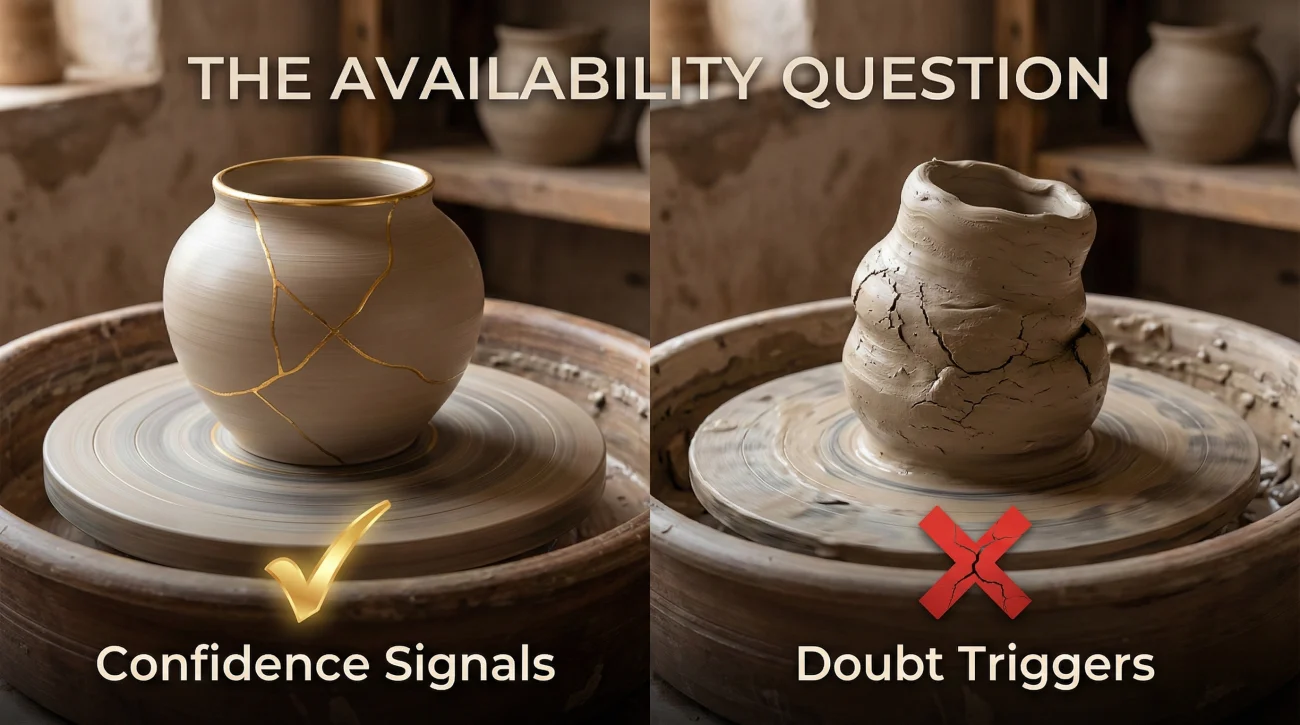
Every caregiving gap conversation comes down to one question: Can we count on you? Recruiters may ask it directly or dance around it, but that is what they need answered.
A project manager named Daniel kept losing opportunities because he treated availability questions as invasive. When interviewers asked about his gap caring for his wife, he would say things like “That’s personal” or “I’d rather not discuss family matters.” Technically correct. Practically disastrous.
The interviewers were not prying into his wife’s diagnosis. They wanted to know if he would show up reliably. His defensive answers made them assume the worst.
We reframed his approach. Instead of treating availability questions as invasions, he learned to treat them as opportunities to reassure:
❌ Before: “I took time off for family reasons. I’d prefer not to go into details.”
✅ After: “I took time to support my wife through a health challenge. She’s doing well now, we have excellent support in place, and my availability is completely stable. I’m excited to focus fully on my next role.”
The second version shares almost no additional personal information. But it answers the real question.
Availability Signals That Build Confidence
- ✅ “Support system is in place”
- ✅ “Schedule is predictable”
- ✅ “Fully available for standard hours”
- ✅ “Situation is stable”
- ✅ “Ready to commit long-term”
- ✅ “No anticipated disruptions”
Phrases That Trigger More Questions
- ❌ “Day by day” or “taking it as it comes”
- ❌ “Hopefully things stay stable”
- ❌ “As long as nothing changes”
- ❌ “My family comes first” (true but scary to employers)
- ❌ “I might need flexibility” (without specifics)
- ❌ “It’s complicated”
Resume Positioning: Entry or Gap Line
You have two main options for showing caregiving on your resume: create an entry like a job, or add a simple gap line. Each has trade-offs.
Option 1: Caregiving as an Entry
Coordinated full-time care for family member, managing medical appointments, insurance coordination, and household logistics
This approach works when you want to account for time explicitly and have transferable activities to mention. The risk is that it can look like you are inflating caregiving into a job, which some recruiters find off-putting.
⚠️ Warning: Do not list clinical duties unless you are actually a licensed caregiver. “Administered medications” or “provided medical care” implies professional credentials you may not have.
Option 2: Simple Gap Line
This approach accounts for the time without claiming it was employment. It is cleaner and invites fewer questions about what exactly you did.
Which to Choose
| Situation | Better Choice | Why |
|---|---|---|
| Gap under 1 year | Simple gap line or nothing | Short gaps need minimal explanation |
| Gap 1-2 years with transferable activities | Entry with bullets | Shows you stayed active and organized |
| Gap 2+ years, intensive caregiving | Entry with limited bullets | Accounts for time, explains scope |
| Prefer privacy | Simple gap line | Closes topic without detail |
Transferable Skills: What Caregiving Actually Taught You
Caregiving develops real professional skills. The challenge is translating them without sounding like you are inflating domestic work into corporate experience.
An operations analyst named Grace spent 18 months coordinating her father’s care across three specialists, two insurance companies, and a rotating team of home health aides. She managed schedules, tracked medications, negotiated with providers, and maintained detailed records. These are legitimate skills. But when she wrote “Managed complex healthcare operations” on her resume, it sounded like she was claiming hospital administrator experience.
The solution is specificity without exaggeration:
| Caregiving Reality | Inflated Version (Avoid) | Honest Translation (Use) |
|---|---|---|
| Coordinated doctor appointments | Managed healthcare operations | Coordinated scheduling across multiple providers |
| Tracked medications and dosages | Administered pharmaceutical protocols | Maintained detailed tracking systems for complex schedules |
| Hired and managed home aides | Supervised healthcare team | Recruited, scheduled, and coordinated care providers |
| Dealt with insurance claims | Managed healthcare finance | Navigated insurance processes and resolved billing issues |
| Made difficult decisions under pressure | Executive healthcare decision-making | Made time-sensitive decisions with incomplete information |
The honest translations describe the same activities but do not imply credentials or authority you did not have.
Sample Bullets That Work
- Coordinated care across 4 medical specialists, maintaining detailed records and ensuring consistent communication
- Managed household logistics including scheduling, budgeting, and vendor coordination during family health crisis
- Researched and evaluated care options, negotiating with providers and insurance to optimize coverage
- Maintained composure and clear decision-making during 18-month period of sustained high-stress responsibility
⚠️ Warning: Only include bullets like these if you actually did these activities at meaningful scale. “Coordinated care across 4 specialists” is credible. “Coordinated care across 12 specialists” sounds inflated unless your situation genuinely involved that complexity.
Common Caregiving Gap Mistakes
After working with dozens of caregivers returning to work, I see the same mistakes repeatedly. These errors trigger recruiter concerns even when your situation is completely stable.

Mistake 1: Sounding Like Caregiving Might Resume
Phrases like “things are stable for now” or “hopefully it stays this way” make recruiters nervous. Even if you mean well, conditional language suggests unpredictability.
Fix: Use definitive language. “The situation is resolved” or “I have reliable support in place” closes the topic.
Mistake 2: Too Much Emotional Detail
Sharing the emotional weight of caregiving is natural in personal conversations. In interviews, it can make recruiters uncomfortable and shift focus away from your qualifications.
Fix: Keep it factual. “I took time to care for my mother during her illness” is sufficient. You do not need to describe the difficulty or your feelings about it.
Mistake 3: Defensive Tone
When caregivers feel judged, they sometimes become defensive. Phrases like “I had no choice” or “Anyone would have done the same” sound like you expect criticism.
Fix: State facts neutrally. “I stepped back to provide care for my family” needs no justification or defense.
Mistake 4: Treating Privacy as Evasion
You have every right to keep medical details private. But “I’d rather not discuss it” sounds evasive. Recruiters fill silence with worst-case assumptions.
Fix: Redirect positively. “I prefer to keep the details private, but I’m happy to confirm my availability is stable and predictable.”
Mistake 5: Forgetting to Pivot
Many caregivers answer the gap question thoroughly but forget to redirect toward their qualifications. The conversation stalls on the gap instead of moving to fit.
Fix: Always end your answer with a pivot. “…and what excites me most about this role is…” or “…which brings me to why I’m particularly interested in this position.”
Consistency Checklist: Keep Your Story Aligned
Caregiving gaps appear on multiple documents. Inconsistencies between them create doubt and invite deeper probing. Before applying anywhere, verify alignment:
| Touchpoint | What to Check |
|---|---|
| Resume | Gap dates match LinkedIn. Label is consistent with your interview story. |
| Career Break feature used if gap is visible. Dates match resume exactly. | |
| Application forms | Reason for leaving previous job aligns with gap explanation. Dates match. |
| Phone screen | 10-second version ready. Availability signal clear. |
| Interview | Longer version ready if asked. Same facts as resume and forms. |
| References | Briefed on timeline. Will not contradict your story. |
| Background check | Employment dates on resume match what employers will verify. |
💡 Pro Tip: Create a master document with your exact dates, exact phrasing, and exact story. Reference it every time you apply or interview. Memory is unreliable under stress.
Choose Your Next Step
This hub covered the caregiving gap framework. The clusters below go deep on specific situations. Choose based on your immediate challenge:
If you are deciding whether to label your gap as caregiving or keep it neutral, start with the decision guide. If you need specific wording for your resume line, the parent care cluster has 12 ready-to-use options. If interviews are your weak point, the availability scripts cluster addresses the exact questions that trip up most caregivers.
| Article | Description |
|---|---|
| Family Caregiver on a Resume: Yes or No and the Cleanest Approach | Decision checklist for whether to position caregiving as an entry or neutral break, with 8 title options |
| Caring for a Parent Gap: A Resume Line That Sounds Stable | 12 one-liners for parent care situations with pivot lines that reassure availability |
| Full-Time Caregiver Resume Entry Examples: How to Describe It Without Turning It Into a Nursing Job | 8 entry examples and 10 bullet patterns that translate to planning, reliability, and coordination |
| Caregiving Gap Interview Answer: The Timeline and Availability Version | 6 scripts focused on availability, 10 reassurance lines, and 6 pivots back to role fit |
| If They Ask “Will You Still Be Caregiving?”: Availability Scripts That Do Not Overshare | 12 availability answers, 6 boundary lines, and 3 graceful exit options |
| Returning to Work After Caregiving: Proof and Availability Signals Recruiters Believe | 15 proof ideas and 8 bullet examples focused on support-in-place cues |
| Caregiving Gap Wording Mistakes: What Makes Recruiters Worry | 18 caregiving-specific red flags with replacements that signal stability |
For general gap mechanics that apply to all gap types, see the canonical pages on resume formatting, application forms, LinkedIn, cover letters, background checks, and references in the main Employment Gaps hub.
Moving Forward From Caregiving
Caregiving is not a career liability. It is a life chapter that millions of professionals navigate. The challenge is not defending your choice. It is addressing the practical concern that sits behind every recruiter’s question: Can we count on you now?
When you understand that caregiving gap on resume situations trigger availability concerns rather than moral judgments, your approach shifts. You stop justifying and start reassuring. You stop oversharing and start signaling closure. You stop defending the past and start demonstrating readiness for the future.
Your caregiving experience showed commitment, resilience, and the ability to manage complexity under pressure. Frame it that way, answer the availability question clearly, and move forward with confidence.
❓ FAQ
🎯 Should I mention that my family member passed away?
Only if it helps signal closure. A brief mention like “My father passed last year, and I’ve had time to process that chapter” can definitively close the availability question. But you are not obligated to share this. “The situation is resolved” works equally well if you prefer privacy.
📝 What if I am still caregiving but have support in place?
Focus on the support structure and schedule predictability. Phrases like “stable care team,” “predictable schedule,” and “no anticipated disruptions” reassure without requiring you to claim caregiving has ended. Be honest but emphasize the stability.
💼 Can I list caregiving skills like I would list job skills?
Be careful here. Skills like coordination, scheduling, and managing logistics translate well. But do not claim clinical skills unless you have credentials. “Managed complex medication schedules” is fine. “Administered medications” implies nursing training you may not have.
🔍 What if the interviewer keeps asking personal questions about my family member’s condition?
You have every right to redirect. Try: “I’d prefer to keep the medical details private, but I’m happy to confirm my availability is stable.” If they persist inappropriately, that tells you something important about the company culture.
⚠️ Should I explain caregiving in my cover letter?
Only if the gap is prominent and unexplained on your resume. A brief mention can preempt questions: “After two years supporting my family through a health situation, I’m excited to return to marketing with fresh perspective.” Keep it to one sentence and pivot immediately to your value.
⚠️ Disclaimer: ResumeSolving provides resume, cover letter, and job search communication guidance for informational purposes only. It is not legal, medical, financial, or professional counseling advice. Hiring decisions vary by company, role, location, and individual circumstances, so we do not guarantee interviews, offers, or outcomes. Always use your own judgment, verify requirements directly with the employer, and follow local laws and workplace policies. When a situation is sensitive, we prioritize privacy-safe, recruiter-appropriate wording, and you never need to share personal details you are not comfortable disclosing.