- You can be honest about a break without turning your resume into a health disclosure.
- Use one calm label, add one “stability proof” detail, and keep the rest for the interview if needed.
- This article gives 6 safe framing categories, 10 copy-ready lines, and 5 hooks that reduce “Will it happen again?” worries.
A Burnout Break Is Not a Confession
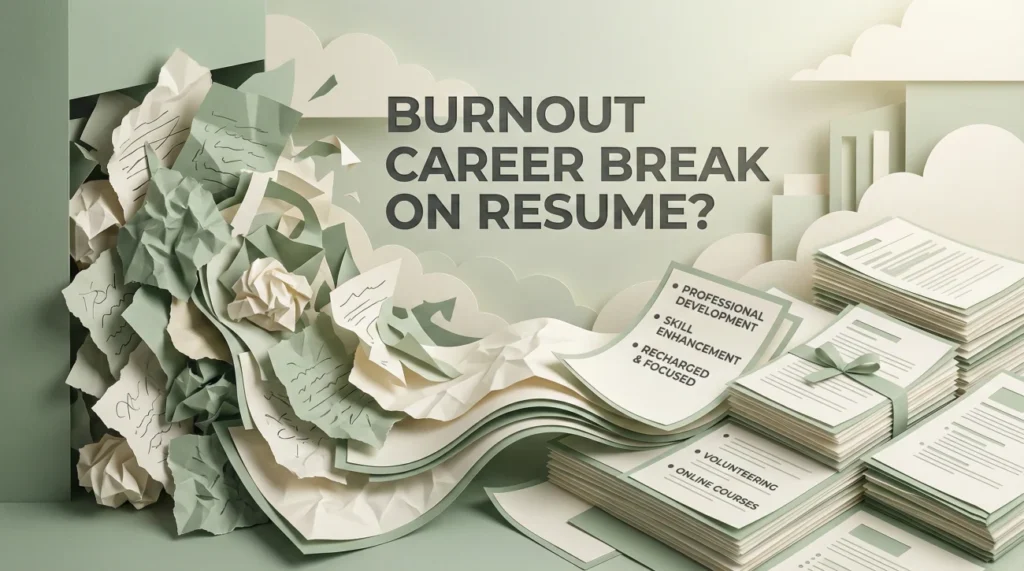
If you are searching for burnout career break on resume wording, you are probably trying to solve two problems at once: Explain the gap, and avoid opening a door you cannot easily close.
I have seen this play out in screening calls more times than I can count. The moment a resume line drifts into “health story” territory, the conversation can get weird fast. Sometimes the recruiter backs off politely. Sometimes they ask a clumsy follow-up. Sometimes they decide, quietly, that you are a “risk”.
Here is the uncomfortable truth: You should not have to trade privacy for credibility. A resume is a business document, not a diary.
Key Point: Your goal is not to justify burnout. Your goal is to signal stability, readiness, and a clean return to performance.
Let me start with a real situation. “Margaret” (product marketing) took seven months off after a brutal launch cycle plus a leadership change. Her first draft said: “Took time off due to burnout and anxiety.” It was honest, and it also became the most memorable line on the page for all the wrong reasons.
We rewrote it into a neutral label and a proof hook. Same timeline, same truth, far less risk. She got back to interviews within a few weeks, and no one tried to turn the gap into a medical conversation.
Why “Burnout” Triggers the Wrong Questions
Recruiters are not trained clinicians, and most hiring processes are not built for nuance. When they see “burnout”, they often translate it into operational questions:
- Will this person quit again when things get intense?
- Are they still dealing with something ongoing?
- Will we need accommodations, and will the manager handle that well?
None of these questions are fair, and some of them are not even appropriate at early stages. But your resume is screened by humans with limited time, and by systems that reward simple pattern matching. That is the reality you are working with.
So should you avoid the word “burnout” entirely?
In most cases, yes, on the resume. You can still be truthful about the break. You can be direct about stepping away. You can keep your explanation calm and professional, without naming a condition or inviting a diagnosis conversation.
This is also where a lot of internet advice is weak. It tells people to “be honest” but does not show them how to be honest with boundaries. That is what we are going to fix.
The Line You Do Not Want to Cross: Resume Framing vs Health Disclosure
Think of your resume as a headline, not the full article. The headline should answer: What happened, and why are you ready now?
| What you want to signal | Safe on a resume | Usually too much on a resume |
|---|---|---|
| Time away was intentional and closed | “Personal sabbatical (closed), returned to full-time search” | “Mental health leave due to burnout, now recovered” |
| You stayed professionally connected | “Skill refresh, portfolio work, industry learning” | Detailed treatment details, symptoms, diagnosis labels |
| You can handle intensity again | Concrete stability proof (routine, structure, deliverables) | Emotional explanations, long personal narrative |
| You are a safe hire | Neutral reason + forward-looking focus | Blaming a past employer in a heated way |
💡 Pro Tip: If your line could make a recruiter ask “Are you okay?” you have probably drifted too far into personal territory for a resume.
Now we need a menu of safe options. Because one label does not fit every situation.
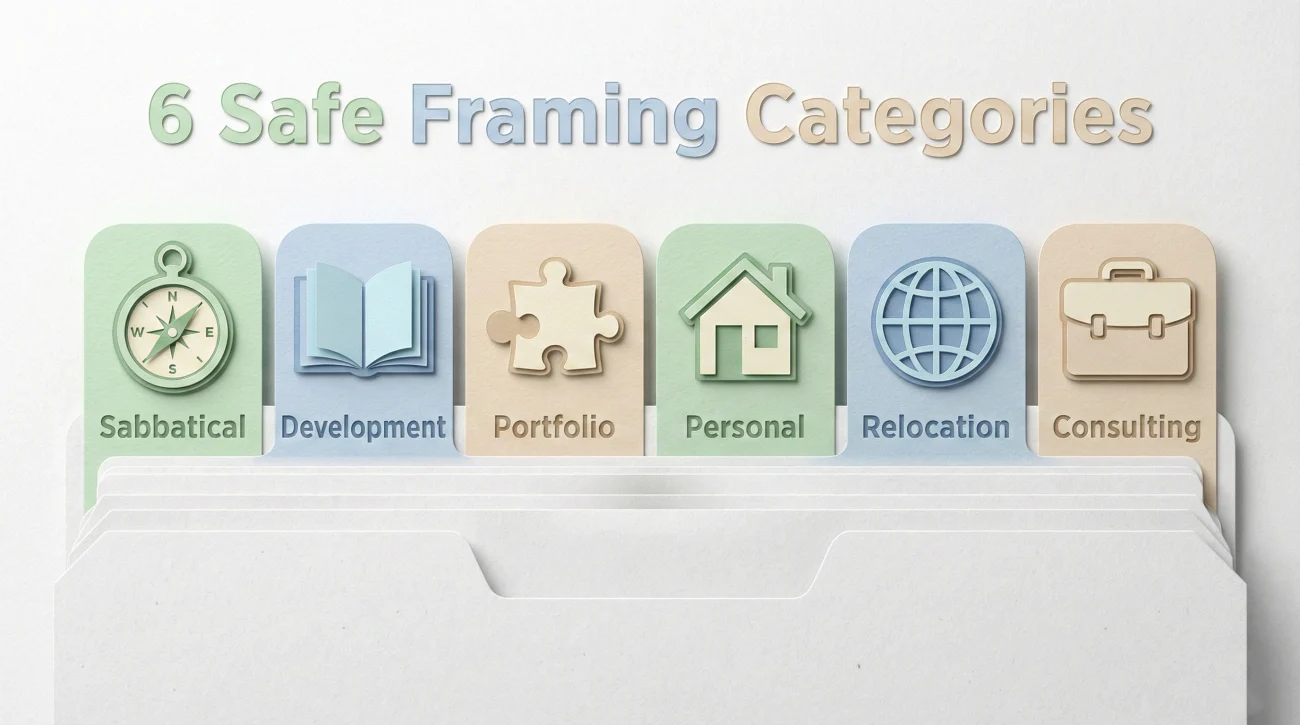
Six Safe Framing Categories You Can Use Instead of “Burnout”
These categories are designed for one purpose: They explain time off in a calm way, while keeping the story in a professional lane.
How to choose the right category
Pick the category that matches what a reference check or a timeline review would support. You are not inventing a new life. You are choosing the least personal, most accurate label that still reads as believable.
Also, the label should match your target role. A “portfolio sprint” works great for designers and engineers. A “professional development sabbatical” can work for many roles if you can point to specific learning or output.
The 6 categories
- 🧭 Personal sabbatical: A planned pause, now closed, returning to full-time work.
- 📚 Professional development reset: Courses, certifications, structured learning, skills refresh.
- 🧩 Portfolio or project sprint: Built or shipped something concrete, even if unpaid.
- 🏡 Personal obligations (kept private): Family logistics, relocation, caregiving, life admin.
- 🌍 Relocation and transition window: Moved cities or countries, now settled and available.
- 🧱 Independent consulting or contract work: Light work, advisory, short gigs, kept simple.
⚠️ Warning: Avoid labels that sound ongoing, like “currently recovering”, “still managing”, or “taking time to heal”. Those phrases invite concern instead of closure.
In a minute, I will give you 10 lines you can copy. Before that, you need one more concept: A label alone is not enough.
The Missing Piece Most Advice Skips: “Stability Proof Hooks”
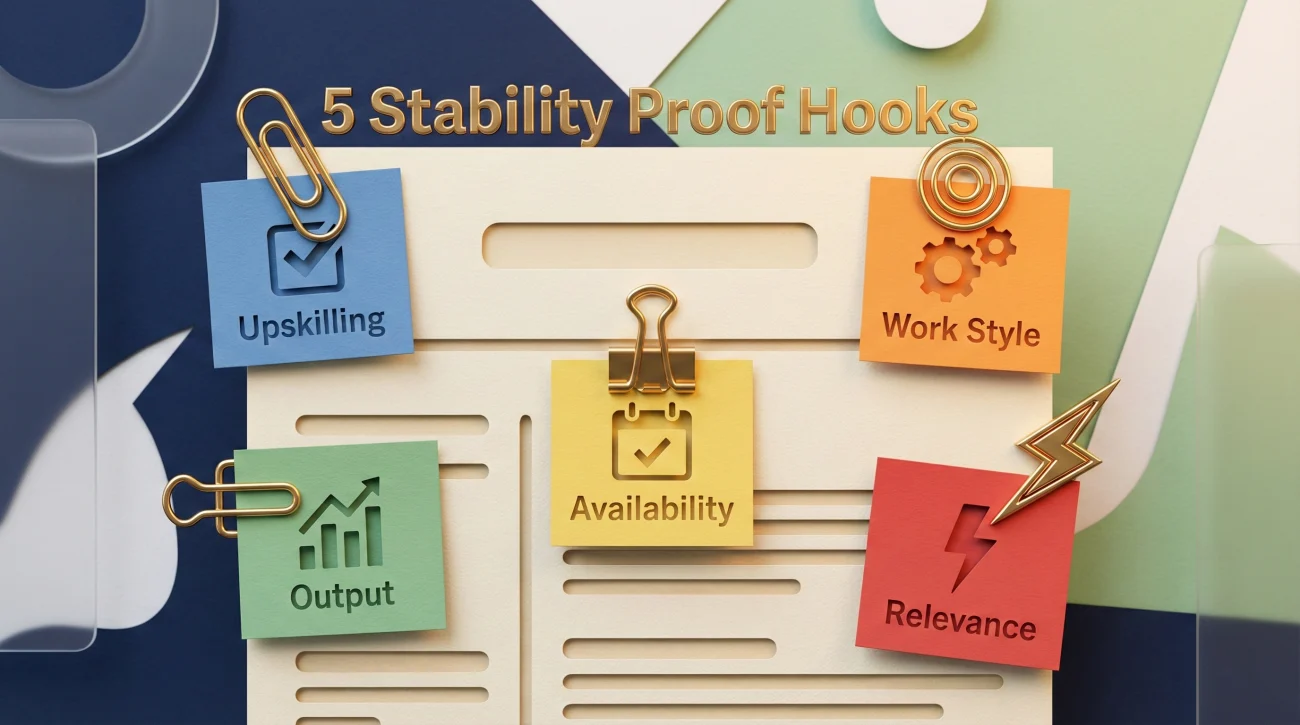
Here is what I have learned from hiring managers who are honest in private: they do not mind a break as much as they mind uncertainty. They want to know if the break is a closed chapter, and if you have a sustainable way of working now.
That is what a stability proof hook does. It is a small detail that lowers the “Will it happen again?” anxiety without oversharing.
Five hooks you can add without getting personal
- ✅ Structured upskilling: “Completed X hours”, “finished Y course”, “earned Z credential”.
- ✅ Output proof: “Shipped a portfolio project”, “published a case study”, “built a demo”.
- ✅ Availability statement: “Now fully available for full-time work”, “open to start immediately”.
- ✅ Work style adjustment (non-medical): “Returning with a sustainable workload model”, “reset routines and boundaries”.
- ✅ Recent relevance: “Kept current with tools and market trends”, plus one specific example.
“Barry” (customer success) is a good example. He wrote a raw line about burnout, then added nothing else. Recruiters kept circling back to his emotional state. When he switched to a neutral label plus an output hook (he rebuilt onboarding templates as a personal project), the conversation moved back to performance.
Key Point: A calm label explains the gap. A proof hook explains why you are safe to hire now.
Now let us make this usable.
10 Resume Lines You Can Copy and Adjust Without Sounding Cringe
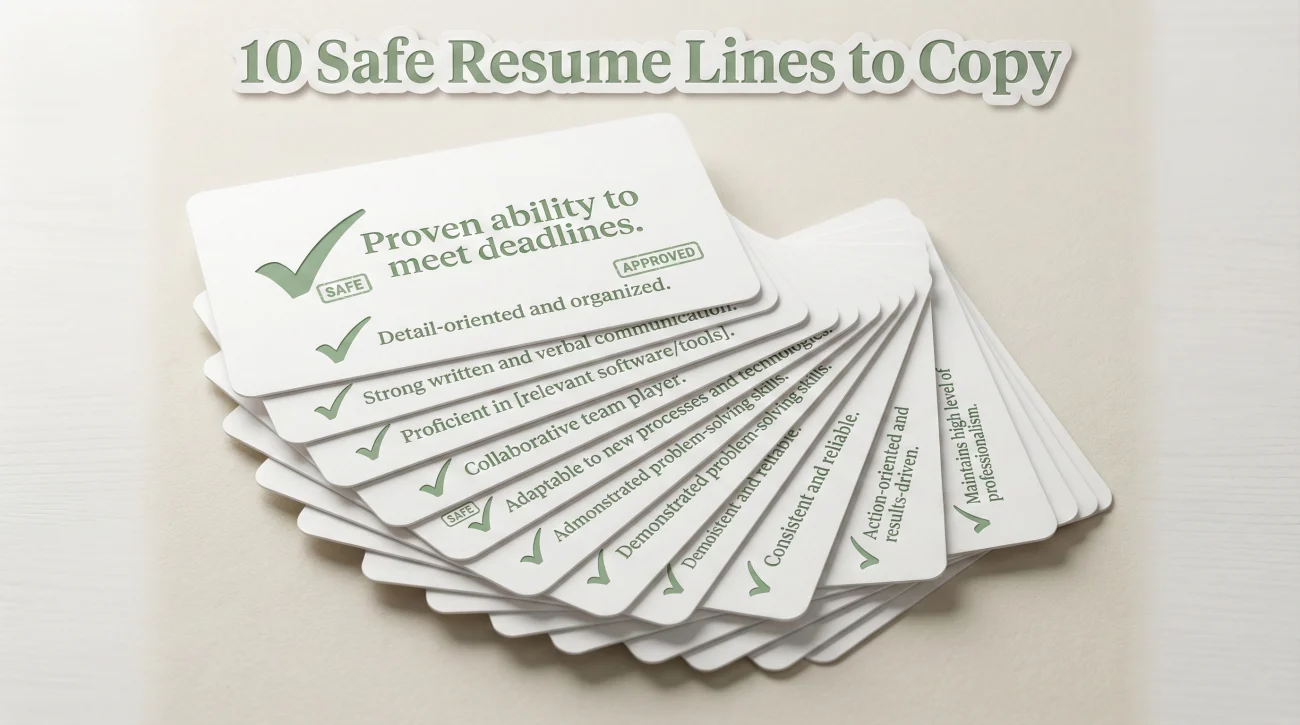
These lines are written for the Experience section or a small “Career Break” entry. Each one is designed to stay professional, avoid health disclosure, and include at least one stabilizing signal.
Also, if you specifically searched for time off burnout resume, notice how the wording keeps the focus on closure and readiness, not the emotional backstory.
🧭 Personal Sabbatical (Closed Chapter)
Personal Sabbatical | Mar 2024 to Oct 2024 | Returned to full-time availability
Use this if the time off was primarily to reset and step away from an unsustainable pace, but you do not want to name burnout directly.
Add a hook if you can: a short course, a portfolio refresh, or a consistent volunteer commitment.
📚 Professional Development Reset (Concrete)
Professional Development Sabbatical | Jun 2024 to Dec 2024 | Completed advanced training in [Skill]
This works when you can point to structured learning. Even one credible course is better than vague “personal growth”.
If you are worried the break looks like avoidance, the specificity makes it read like intention.
🧩 Portfolio Sprint (Built Something)
Portfolio Project Sprint | Jan 2024 to May 2024 | Built [Project] to deepen [Skill] and showcase results
Perfect for roles where output speaks loudly: design, engineering, analytics, marketing, content.
One sentence later in the resume can point to the project link, but keep the break line itself simple.
🏡 Personal Leave (Private, Still Professional)
Personal Leave of Absence | Apr 2024 to Sep 2024 | Now fully available for full-time work
This is one of the safest universal labels. It is honest, it is neutral, and it does not invite medical questions.
It also works when you did not have “achievements” during the break. That is normal.
🌍 Relocation Window (Now Settled)
Relocation and Transition | Feb 2024 to Jul 2024 | Relocated to [City] and now available on-site or hybrid
Use this if relocation was part of the story, even if the deeper reason was burnout. It gives a practical narrative.
Recruiters understand relocation timelines. The “now settled” hook is what makes it work.
🧱 Independent Consulting (Light, Realistic)
Independent Consulting | May 2024 to Nov 2024 | Supported small clients on short-term projects
This line works if you did any paid or unpaid advisory work. Do not exaggerate scope. Keep it believable.
If asked later, you can describe one project in two sentences. That is enough.
🧠 Skill Refresh (Modern Tools)
Skill Refresh Period | Aug 2024 to Dec 2024 | Updated skills in [Tool] and [Skill Area]
Use this when your field moves fast and you want to reassure them you are current.
It is especially useful after high-intensity roles, because it signals deliberate rebuilding.
📈 Career Reset (Forward-Looking)
Career Reset | Mar 2024 to Sep 2024 | Refocused on [Target Role] and prepared for full-time return
This is a good choice when you are changing roles slightly, and the break helped you reposition.
Pair it with one stabilizer: a course, a project, or a volunteer leadership role.
🗂️ Family Logistics (Minimal, Closed)
Personal Time Off | Jan 2024 to Jun 2024 | Managed a family transition, now resolved
This gives a clear reason without detail. “Now resolved” matters because it signals closure.
If you prefer, replace “family transition” with “personal commitments”.
🧾 Simple Gap Label (When You Want the Least Attention)
Career Break | Apr 2024 to Oct 2024 | Returning to full-time work and ready to start
This is the minimal viable line. It can be enough if your experience is strong and the gap is not extreme.
Use it when you want the rest of the resume to do the talking.
💡 Pro Tip: If you are stuck on career break burnout explanation, stop trying to explain burnout. Explain the break as a closed, professional chapter and move on.
Where to Place the Line, and When to Leave It Out
Placement changes how much attention your break receives. The internet often forgets this, and it is why people copy advice and still feel exposed.
Three placement options that stay ATS-safe
- Experience section entry: Best if the break is recent and clearly visible in dates.
- One line in a short “Additional” section: Best if you want less emphasis.
- Leave it out: Sometimes the cleanest move, if the gap is small or your timeline is already non-linear.
When is it okay to leave it out?
If the gap is short, or if your resume is already structured around projects and outcomes, you might not need a label. Some candidates do better by simply tightening dates, showcasing recent output, and letting the recruiter ask if they care.
“I took a short career break in 2024. It is a closed chapter, and I am fully available now. Happy to share context, but I would love to focus on the role and how I can deliver.”
Notice what that answer does. It is calm. It signals closure. It redirects to performance. It does not invite therapy talk.
Also, one underrated option is to align with your hub theme: sabbatical framing. If you are looking for a sabbatical burnout break resume example, the trick is to avoid “I was burned out” and instead present the break as planned and closed, with one concrete outcome.
If They Ask in an Interview: The 20-Second Answer That Keeps Your Privacy
Even if you keep the resume neutral, someone may ask: “What happened during that gap?” You do not need a speech. You need a compact answer that is honest and bounded.
A simple script you can adapt
“After a high-intensity stretch, I took a planned break to reset and return with a more sustainable working rhythm. During that time I stayed professionally engaged through [one concrete activity]. The break is complete, and I am ready for full-time work again.”
This answer works because it hits three beats: neutral reason, proof of engagement, closure.
Here is a real-world detail from a hiring manager friend of mine (engineering director). He once told me: “If a candidate says ‘burnout’ and then spirals into the story, I get nervous. If they say ‘planned reset’ and show a project, I do not worry.” That is the difference between a resume that gets screened and a resume that gets discussed.
❌ Note: Avoid blaming your past employer in a heated way. You can say “high-intensity environment” without turning it into a warning label about yourself or them.
Final: The Calm Way to Write This So You Get Interviews, Not Side-Eyes
Most candidates overthink the explanation and underthink the signal. Your break does not need to sound inspirational. It needs to sound closed.
Here is the simplest rule I give people: Pick one safe label, add one proof hook, and move on. The more you try to “prove you are okay”, the more you accidentally suggest you might not be.
If you want a clean template to follow, keep your burnout career break on resume wording to one line, then let the rest of your resume do what it is meant to do: Show you can deliver.
And yes, you can be human without being exposed. That balance is the whole game.
❓ FAQ
🧠 Should I write the word “burnout” on my resume?
Most of the time, no. Use a neutral label like “Personal Sabbatical” or “Personal Leave of Absence” and add a stability proof hook. Save deeper context for later stages, if it is even needed.
🗓️ What if I did nothing “productive” during the break?
That is more common than people admit. You can still use a neutral label plus an availability statement. Do not invent projects. Keep the line simple and closed, then focus your resume on your strongest work history.
🔍 Will recruiters assume something is wrong if I say “Personal Leave”?
Some might wonder, but a calm, closed label plus a readiness hook usually prevents speculation. The goal is not to remove all curiosity. The goal is to avoid triggering risk concerns.
📄 Should I put the break in my summary instead of experience?
Only if it is very recent and you need to frame it upfront. In many cases, placing it as a small experience entry is cleaner. If you put it in the summary, keep it one sentence and forward-looking.
🎯 What is the safest one-liner if I am panicking?
“Career Break | [Dates] | Returning to full-time work and ready to start.” It is neutral, honest, and does not invite medical follow-ups.
⚠️ Disclaimer: ResumeSolving provides resume, cover letter, and job search communication guidance for informational purposes only. It is not legal, medical, financial, or professional counseling advice. Hiring decisions vary by company, role, location, and individual circumstances, so we do not guarantee interviews, offers, or outcomes. Always use your own judgment, verify requirements directly with the employer, and follow local laws and workplace policies. When a situation is sensitive, we prioritize privacy-safe, recruiter-appropriate wording, and you never need to share personal details you are not comfortable disclosing.