- “Burnout” is a loaded word in hiring. You can be truthful without handing them a risk label.
- A strong gap explanation focuses on sustainable performance: what changed, what’s stable now, and what proof exists.
- Your best story is not a confession. It is a work-ready narrative that’s repeatable across resume, LinkedIn, and interviews.
Burnout gaps are not rejected for the reason most people think
Rina was a product marketer who did everything “right” on paper: promotions, big launches, a strong brand name. Then she disappeared from the market for eight months. When she came back, her resume was solid, her interviews were not. She kept saying she left because she “burned out,” and she meant it honestly. But the room always shifted.
After one call, she texted me: “I can feel them deciding I’m fragile.” That sentence is the whole problem. In hiring, “burnout” often gets translated into “will this happen again?” not “this person made a healthy choice.” A lot of public advice encourages being open and framing growth. Some of it is helpful, and some of it is naive about what risk-avoidant hiring looks like in the real world.
This guide is about how to explain a burnout gap on your resume without turning your most exhausted chapter into a permanent label. I’ll share what I’ve seen work, plus a few blunt lessons I’ve picked up from colleagues and candidates who tried the “total transparency” route first and regretted it.
💡 Pro Tip: Your goal is not to prove you suffered. Your goal is to prove you can sustain the job now.
Why the word “burnout” creates follow-up traps
Hiring teams hear different meanings, and some of them are unfair
When people say “burnout,” they can mean very different things: toxic leadership, impossible workload, untreated anxiety, long COVID fatigue, grief, depression, caregiver overload, or simply a job that ran hot for too long. Online discussions show how inconsistent reactions can be. Some people say “do not mention it,” because interviewers interpret it as low tolerance or future absence risk.
That does not mean you must hide your story. It means you should choose language that is stable and job-relevant. “Health reasons,” “a planned career break,” or “a reset after an intense period” can be accurate without forcing the interviewer to attach their own definition of burnout to you.
Most advice skips the reality: risk screens happen fast
A lot of mainstream guidance says: be honest, be positive, highlight what you learned, and show you stayed active. That is not wrong. The missing piece is that many hiring loops are designed to minimize uncertainty, not to reward personal growth stories.
One HR colleague of mine (internal recruiting, high volume roles) said it plainly: “If I’m comparing two equal candidates and one sounds like a risk, I do not have time to be heroic.” It’s not kind, but it’s honest. Your wording should reduce uncertainty, not increase it.
Key Point: “Burnout” can be true and still be unhelpful. You are allowed to pick a cleaner label that protects your privacy and supports a work-readiness signal.
A practical disclosure matrix: when to say burnout and when to avoid it
Here’s a tool I use with candidates because “always disclose” and “never disclose” are both lazy rules. The right choice depends on role context, interview stage, and what proof you can show.
| Situation | Better approach | Why |
|---|---|---|
| Early screening call, general questions | Use a neutral label (career break, health reasons, planned reset) | Reduces risk labeling before they know your strengths |
| Company publicly values wellbeing and asks directly | Brief mention is OK, then pivot to stability and proof | Some cultures handle it well, but you still need readiness signals |
| Role is high pressure (on-call, crisis response, peak seasons) | Avoid the word “burnout,” focus on workload fit and systems | They will over-index on resilience and predictability |
| You need accommodations later | Do not disclose medical details in interviews; plan timing strategically | Many guidance sources suggest disclosure timing matters, and you are not required to overshare early |
⚠️ Warning: If you say “burnout,” expect the unspoken follow-up: “What stops you from burning out here?” Prepare that answer before you ever use the word.
The story that works: from “I burned out” to “I made work sustainable”
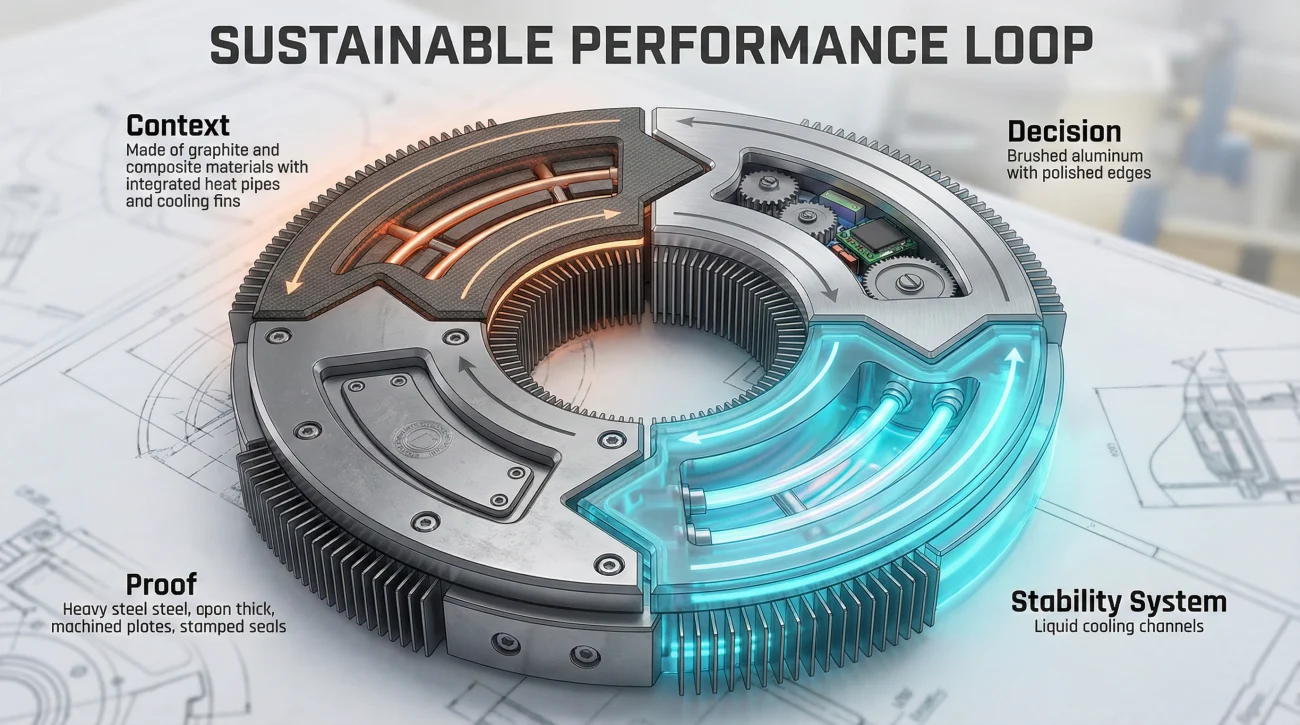
The best burnout-gap explanations do three things at once: they close the gap cleanly, they show stability now, and they demonstrate judgment. Not “I suffered,” but “I learned how to prevent repeat conditions.” Some articles encourage framing burnout as resilience and growth. The part they often miss is the proof: you must connect your story to observable work behavior.
Use the Sustainable Performance Loop
I call it a loop because it stops the interview from spiraling into your health history. It keeps the focus on work conditions, decisions, and reliability.
[Context] + [Decision] + [Stability System] + [Proof]
Each part is short. Together, they sound like a professional who understands boundaries and delivery.
- 🧩 Context: “After an intense stretch of launches and understaffing…”
- 🧭 Decision: “I took a planned break to reset and reassess how I work best.”
- 🛠️ Stability system: “I rebuilt routines and set clearer workload rules.”
- ✅ Proof: “Since then, I’ve delivered consistently in a structured commitment.”
💡 Pro Tip: “Stability system” is the magic line. It answers the fear that this will repeat.
What to put on the resume: clean, minimal, and defensible
Most people either write nothing (and let recruiters guess), or they write a dramatic paragraph (and create more questions). A good burnout-gap resume entry is boring on purpose. It gives a timeframe and a neutral label. If you did something structured, you can add a proof marker. General career-break guidance often recommends a one-liner plus any relevant activities. That’s the direction I agree with, with one adjustment: avoid identity labels that trigger bias.
Option A: Neutral label only
This is the safest baseline when you did not work publicly during the break.
Planned reset after an intensive project cycle
Returned with full-time availability and a stable schedule
Option B: Add a proof marker that implies cadence
Proof markers are not about “staying busy.” They are about showing you can sustain commitments again. This aligns with common advice to show you stayed engaged, but your goal is reliability, not hustle theater.
Structured return plan and skills refresh
Completed a timed portfolio project with weekly deliverables and peer review
❌ Note: Avoid writing “Burnout Recovery” as the label. It may be true, but it invites the exact risk story you are trying to prevent.
Interview answers that feel human without sounding risky
Now the part most people want: what to actually say. I’m giving you three versions because hiring environments differ. Online threads show a consistent pattern: when candidates lead with “burnout,” responses can be skeptical, even when the story is reasonable.
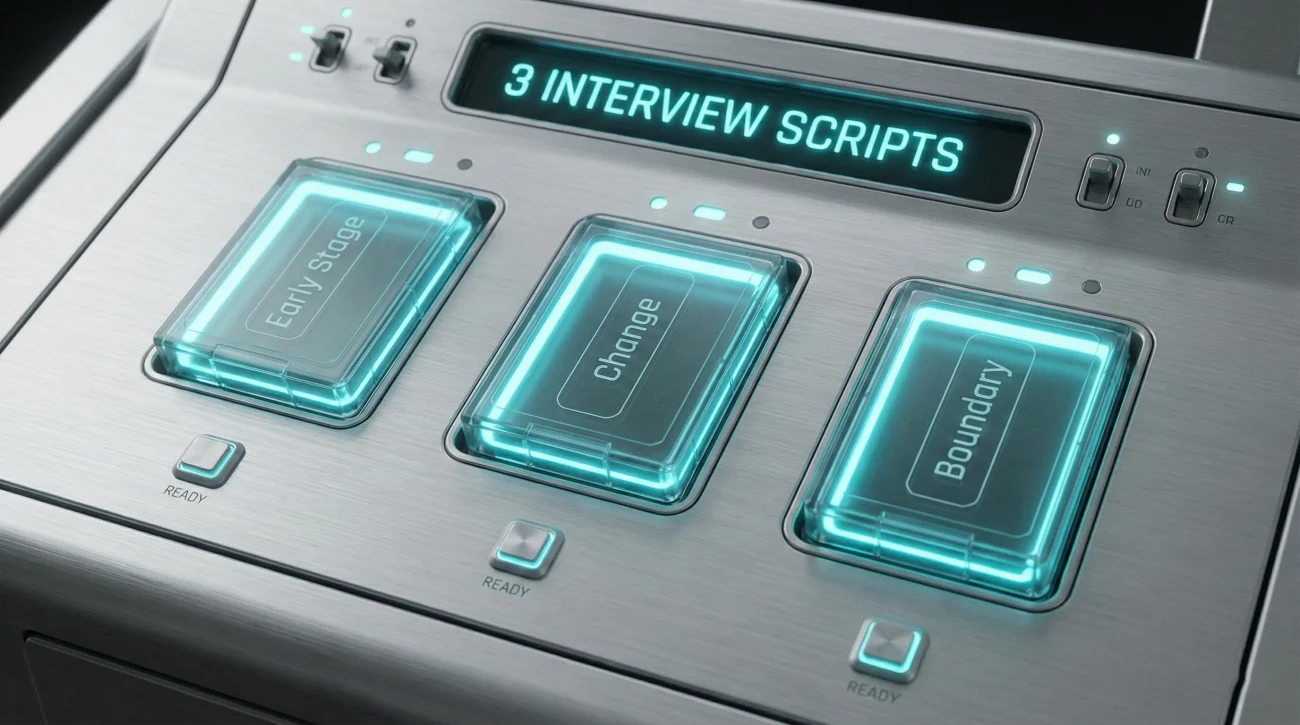
Script 1: The clean, early-stage answer
This is for recruiter screens and first rounds. You keep it short and you do not offer extra detail.
The break is complete, my schedule is stable, and I’m fully available for full-time work.
I’m excited about this role because the scope and cadence match how I deliver consistently.
Script 2: The “what changed?” answer
Some interviewers ask the real question directly: “What would you do differently?” This is your moment to show judgment, not pain.
What changed is how I manage workload and communication: I set clearer boundaries, escalate earlier, and plan capacity instead of absorbing everything.
Since then, I’ve been consistent in structured commitments, and I’m ready to bring that stability into this role.
Script 3: If they push for “burnout” specifics
Sometimes you can feel the curiosity pulling the interview away from the job. This script keeps you respectful and redirects to performance. It also fits with broader guidance that you are not obligated to disclose health details during interviews.
The break is complete, and I’ve rebuilt routines that support consistent delivery.
If it helps, I can share how I plan workload, flag risks early, and maintain predictable output in high-stakes weeks.
“If you want to know the real lesson, it’s this: I don’t volunteer my diagnosis. I volunteer my reliability.”
The proof problem: what convinces them you will not repeat the gap
This is where most advice gets generic. “Show you learned.” “Be positive.” “Highlight growth.” Great, but hiring decisions move when there is proof of stable output. A colleague of mine in engineering hiring calls it “recent rhythm.” If you can show recent rhythm, the gap matters less.
Build a Reliability Portfolio, not a Hustle Portfolio
Rina’s turning point was not a certificate. It was a six-week collaboration with a friend who ran a small agency. She agreed to a simple cadence: two deliverables a week, a Friday check-in, and clear scope. Nothing fancy. But it gave her something powerful: a short, recent period of predictable delivery.
Another candidate, Ethan, did not have freelance options. He joined a community project, owned one workstream, and shipped weekly updates. When he described the gap, he could point to output and accountability, not just introspection.
| Proof type | What it signals | How to describe it |
|---|---|---|
| Weekly deliverables | Cadence | “I shipped on a weekly schedule for X weeks.” |
| External feedback | Quality and collaboration | “Work reviewed by peers or stakeholders.” |
| Bounded scope | Judgment | “I defined scope and protected priorities.” |
| Consistent attendance | Reliability | “I held a fixed commitment every week.” |
💡 Pro Tip: Proof does not need to be impressive. It needs to be recent and repeatable.
Common mistakes that make a burnout gap sound worse
Mistake 1: Turning the interview into a workplace tr
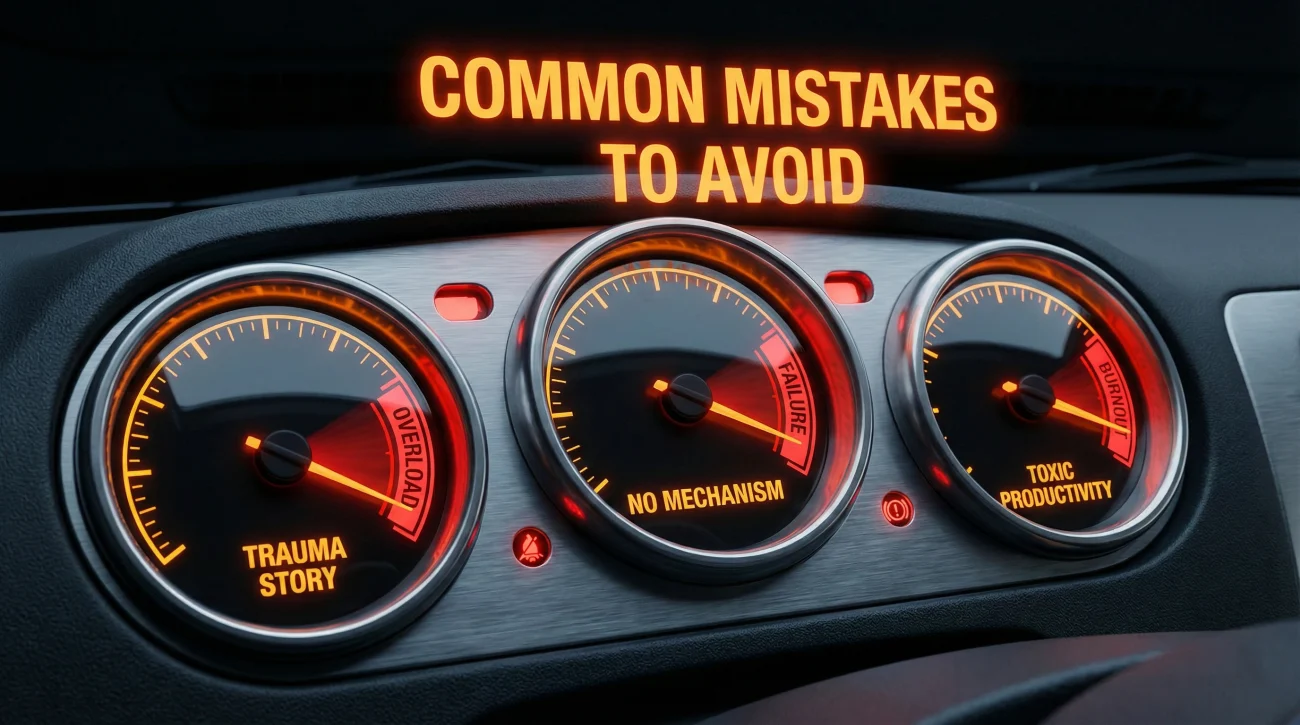
auma story
I understand the urge. Burnout often comes with a story of unfairness, and telling it can feel like reclaiming your dignity. The problem is that interviews are not therapy, and hiring panels are not neutral listeners. The more detail you give, the more they imagine scenarios where your emotions return under pressure.
If you want to name the cause, name it in work terms: “unclear priorities,” “under-resourced,” “sustained peak workload,” “misalignment with role design.” Those are operational, not personal.
Mistake 2: Saying you are “better now” with no mechanism
Hiring teams do not need guarantees. They need a mechanism. “Better now” is a claim. A mechanism is: “I plan workload, I set boundaries, I escalate early, I protect sleep, I keep a stable schedule.”
This is why the “stability system” line matters. It shows you are not hoping for change. You designed it.
Mistake 3: Over-correcting into toxic productivity
Some candidates try to outrun the gap by listing a dozen courses, side projects, and volunteer roles. It reads like panic. It can even sound like you are still in the same over-functioning pattern that caused burnout in the first place.
Two strong proof signals beat ten weak ones.
⚠️ Warning: If your “gap story” sounds like you are still trying to earn rest, it will not land well.
Final: You Do Not Need To Confess, You Need To Convince
Burnout is a rational reason to pause, but the term itself can trigger risk assessments in a hiring process that is not always fair. The goal is to shift the narrative from past exhaustion to present reliability. By replacing emotional descriptions with a neutral label and backing it with proof of a renewed professional rhythm, you master how to explain a burnout gap on your resume effectively. This approach ensures your return is defined by stability and performance rather than the reasons you left.
❓ FAQ
🔥 Should I write “burnout” on my resume?
Most of the time, no. Use a neutral label like “Career Break” or “Planned Break,” then communicate stability and readiness in the interview. The word “burnout” often triggers assumptions you cannot control.
🧩 What if the interviewer asks directly why I left?
Answer in work terms, not medical terms. Keep it brief: an intense period became unsustainable, you took a planned break, the break is complete, and you can describe the systems you use to deliver consistently now.
🛠️ What’s the best proof that I’m stable now?
Recent rhythm: a short, recent period where you delivered on a predictable cadence with accountability. That can be freelance, a structured volunteer role, a collaboration, or a timed portfolio project with weekly milestones.
🧠 Can I say “health reasons” instead of burnout?
Yes. It can be accurate and it protects privacy. You are not obligated to share medical details in interviews. If asked, redirect to work readiness and how you manage workload, communication, and deadlines.
⚠️ Disclaimer: ResumeSolving provides resume, cover letter, and job search communication guidance for informational purposes only. It is not legal, medical, financial, or professional counseling advice. Hiring decisions vary by company, role, location, and individual circumstances, so we do not guarantee interviews, offers, or outcomes. Always use your own judgment, verify requirements directly with the employer, and follow local laws and workplace policies. When a situation is sensitive, we prioritize privacy-safe, recruiter-appropriate wording, and you never need to share personal details you are not comfortable disclosing.