- With recurring health related gaps, hiring teams are usually testing work stability, not judging your character.
- A strong explanation has three parts: a neutral reason, a stability signal, and one proof marker you can defend.
- Keep the resume light. Use the interview to add the stability layer, then pivot back to performance.
When the gap happened more than once, the real question changes
Rina had two breaks in her work history. The first was five months. The second was almost a year. Different companies, different years, same underlying issue: her health made full-time work unrealistic for a while.
She tried to protect herself with nicer labels. The first gap became “family responsibilities.” The second became “career break.” It felt safer on paper.
In her next interview, the hiring manager asked a simple question: “Help me understand the timeline.” Rina answered honestly, but the story already felt slippery. Not because of her health, but because the labels kept shifting. The manager did not hear “a real situation handled responsibly.” They heard “I’m not sure what the truth is.”
If you have recurring gaps for health reasons, that is the real danger: not the gap, the wobble. Hiring teams are listening for stability, consistency, and whether the role will be disrupted again.
This guide is built for that reality. It shows how to explain recurring employment gaps for health reasons without oversharing, without sounding fragile, and without trying to promise something no human can guarantee.
💡 Pro Tip: The best explanation does not ask for sympathy. It removes uncertainty.
What recruiters are really doing when they ask about repeat gaps
I want to be careful here. Not every recruiter thinks the same way, and some companies handle health related situations with more maturity than others. But across the HR peers I trust and the hiring debriefs I have sat through, recurring gaps tend to trigger a different kind of listening.
When there is one gap, the frame is often “an event happened.” When there are two or more gaps, the frame often shifts to “is this a pattern that could repeat?” That shift is why generic gap advice fails here.
They are forecasting reliability, not grading your life story
A hiring manager is not trying to learn medical details. They are trying to staff a role, hit deadlines, and keep the team functioning. So their brain translates unknowns into operational questions: Will this person be consistently available? Will projects stall? Will the team have to quietly plan around uncertainty?
A colleague of mine, Hannah, once summarized it after a debrief: “I’m not judging the gap. I’m judging whether the team can count on a stable cadence.” It can sound cold, but it is a useful lens. Your answer should speak to cadence.
This is also why long, emotional explanations can backfire. The more variables you introduce, the more risk the interviewer feels, even if your situation is stable now.
They are scanning for consistency across resume, LinkedIn, and interview
With recurring gaps, small inconsistencies become trust problems. A “career break” on the resume, “health reasons” in the interview, and “sabbatical” on LinkedIn looks like three different stories, even if you meant the same thing.
One of the hardest cases I saw last year involved a candidate who was genuinely ready to work again. She lost the offer because her date ranges did not align between her resume and the background check form. It was a formatting choice, not a lie, but the employer interpreted it as carelessness. With gaps, carelessness and deception get confused.
Key Point: When gaps repeat, the interviewer is listening for a stable, consistent story that ends in work readiness.
The Stability Layer: a structure that prevents follow up spirals
Most gap advice stops at “be honest and brief.” That is not enough when the gap happened more than once. You need a stability layer, which is a small set of signals that tells a reasonable employer: this was real, it is managed, and I can do the work now.
The three parts that work in real interviews
The stability layer has three pieces. You can say it in one sentence or three, depending on the interviewer’s tone.
[Neutral Reason] + [Stability Signal] + [Proof Marker]
| Piece | What it does | What to avoid |
|---|---|---|
| Neutral reason | Names the gap without inviting medical interrogation | Diagnosis details, dramatic backstory, too much timeline |
| Stability signal | Communicates “this is not an active crisis” | Absolute promises, overconfident guarantees |
| Proof marker | One concrete indicator you can sustain the role now | Motivation speeches, vague “I’m ready” statements |
Why proof matters more when the gap repeats
When someone has one gap, a neutral reason can be enough. When someone has recurring gaps, the employer’s brain wants a present-day anchor. Proof is that anchor.
Proof does not have to be a full-time job. It can be a consistent contract, a volunteer commitment with deadlines, a structured program that required sustained effort, or a project with real accountability. The goal is not prestige. The goal is cadence.
⚠️ Warning: Avoid “It will never happen again.” If you cannot guarantee it, do not say it. Stability is stronger than certainty.
What to put on the resume, and what to keep for the interview
A common mistake is trying to solve trust with more text on the resume. When people feel exposed, they over-explain early. That often creates the opposite effect because the resume is not where nuance lives.
The resume’s job is simple: show your fit, show your results, and prevent the reader from inventing a worse story about your timeline. The interview is where you add the stability layer.
Three resume approaches that do not trigger extra questions
Different industries tolerate different levels of blank space. If you are applying in a conservative environment, a neutral label can reduce unnecessary guessing. If you are applying in a more modern environment, dates alone are often fine.
Here are three options. Pick one and stay consistent across your documents.
| Approach | Best for | What it looks like |
|---|---|---|
| Dates only | When your experience is strong and the gap is not the first thing they see | No label, clean timeline, strong bullets in roles |
| Neutral “Career Break” label | When the gap is long and you want to prevent guessing | Career Break (Year to Year) with one neutral line |
| Bridge activity | When you have proof markers worth showing | Contract work, volunteer role, training with sustained output |
If you add a label, keep it boring on purpose
“Boring” is a feature. Your goal is to reduce curiosity, not increase it. If you add a line under a break, keep it neutral and work-oriented.
Here is a resume-safe example you can adapt:
Managed a recurring health situation, returned to full-time work readiness
Maintained structured commitments and skill developmentCareer Break | 2020 (6 months)
Health reasons, resumed consistent work activity
Notice what is missing: diagnosis, emotional detail, and anything that sounds like an active crisis.
Interview answers that sound stable, not vague
Most people do not fail the gap question because they are dishonest. They fail because they answer the wrong concern. They explain the past and forget to prove the present.
Below are three answer styles. Each one uses the stability layer, but they differ in how much detail they offer. Pick the one that matches the employer’s tone and the role’s expectations.
Answer style 1: Minimal, when the interviewer is respectful
This style works when the interviewer asks once and is prepared to move on. It is short, coherent, and ends in readiness.
I had two periods where I needed to step back for health reasons.
The situation is stable now, and I’m able to take on a full-time role.
I’m excited about this position because it fits how I work best: steady cadence, clear priorities, and ownership.
If you stop here, that is fine. The mistake is adding more details than the interviewer requested because you feel you should “earn trust” through disclosure.
Answer style 2: The stability layer, when you sense concern about repetition
Use this if the interviewer’s body language changes, or they ask a second question like “Has that been resolved?” This version adds a proof marker.
I managed a recurring health issue that required me to step back twice.
It’s been stable with a consistent plan, and I’ve been maintaining a structured routine that matches full-time work.
For example, I’ve been meeting weekly deadlines through a steady commitment, and I’ve sustained that for months.
I’m ready to bring that reliability into this role.
This is the key: the proof marker is about cadence, not heroism. You are not trying to sound inspirational. You are trying to sound predictable in a good way.
Answer style 3: When they push for medical details
Some interviewers push. Sometimes it is nosiness. Sometimes they think they are being supportive and do it clumsily. You can set a boundary and still sound credible.
I’m not comfortable sharing medical specifics, but I can speak to work readiness.
The situation is managed with a stable plan, and I can consistently meet the demands of a full-time role.
If it helps, I can share how I manage workload, communication, and deadlines so the team has confidence in my reliability.
This answer does two things. It protects your privacy, and it redirects the conversation to the only part the employer can fairly evaluate: your performance system.
💡 Pro Tip: End your answer with how you work, not what happened to you.
Proof markers that actually convince hiring teams
When candidates hear “prove you’re ready,” they often think they need a dramatic comeback story. You do not. You need one believable signal that your present life supports consistent work.

What counts as a strong proof marker
A strong proof marker has two qualities: it is sustained, and it has accountability. It shows you can keep a rhythm even when no one is cheering for you.
- A contract or freelance role with recurring deliverables over time
- A volunteer role with a real schedule and deadlines
- A structured program where you had to produce work consistently
- A portfolio project with external feedback and a timeline you actually kept
A friend of mine, Emily, stopped getting stuck on her gap the moment she stopped trying to “explain the past” and started proving the present. Her proof marker was simple: a steady weekly commitment with deadlines. That detail shifted the conversation from “what happened?” to “what can you do now?”
What does not help, even if it is true
Some truths are not useful in hiring conversations because they do not reduce uncertainty. They can even increase it.
- “I’m motivated now” without any evidence of sustained behavior
- “I worked on myself” without showing what that looks like in daily cadence
- “I learned a lot” without linking it to the role’s demands
Consistency checklist: The quiet thing that prevents trust loss
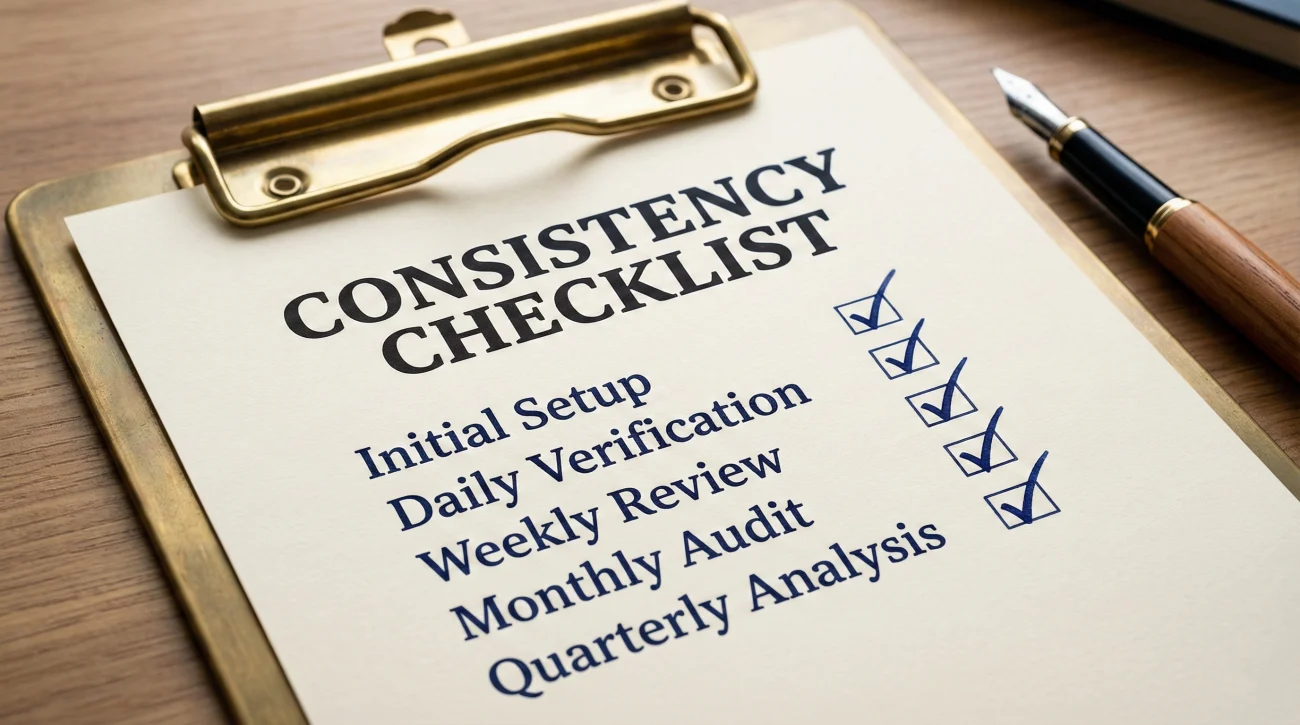
If you do nothing else, do this. Repeat gaps magnify inconsistency, and inconsistency kills trust faster than the gap itself. Here is a checklist I use when I help candidates clean up their story.
- Keep the labels consistent across resume, LinkedIn, and interview. If you call it “health reasons” once, do not turn it into “sabbatical” later. You are not required to disclose specifics, but you are required to be coherent.
- Align date ranges everywhere. Pick a date format and stick to it. Avoid month-level precision in one place and year-only in another unless you do it consistently for all roles.
- Write your story once, then rehearse it out loud. If you only wrote it, you will improvise under stress. Rehearsal reduces accidental oversharing and keeps your wording steady.
- Prepare one pivot line back to performance. Your answer should end with how you work, what you deliver, and why you fit the role. That bridge keeps your gap in the background instead of turning it into the headline.
❌ Note: Do not create a different version of the story for each interview. That is how contradictions appear over time.
A mini workbook: Write your version in 10 minutes

If you want to stop overthinking this, do this exercise once, save it, and reuse it. The goal is a short answer that stays consistent across interviews.
Step 1: Choose your neutral reason
Pick the shortest truthful label you can live with. Keep it neutral and repeatable.
- Health reasons
- A recurring health issue
- A personal health situation
Pick one and stick to it. Consistency beats variety here.
Step 2: Write one stability signal that feels honest
A stability signal is not a guarantee. It is a present-state statement. Choose wording you can say calmly without feeling like you are lying to yourself.
- It’s stable with a consistent plan.
- It’s managed, and my schedule is reliable.
- I’m able to commit to full-time work now.
If none of these feel true, write a smaller version that is true. Smaller and true beats big and fragile.
Step 3: Add a proof marker you can defend
This is your anchor. One sentence. Something you can explain if asked. Choose a proof marker that reflects real cadence and accountability.
- I’ve maintained weekly deadlines through a steady commitment for the past several months.
- I’ve been consistently delivering project work on a fixed schedule.
- I’ve kept a structured routine that mirrors a full-time role.
If you cannot defend it, do not use it. Replace it with something smaller but true.
Put it together, then rehearse it once
Now you have your three parts. Keep it short, stable, and easy to repeat. End on readiness and reliability.
I stepped back twice for health reasons.
It’s stable with a consistent plan, and I’m able to commit to full-time work now.
Here is the proof I can sustain the role: [your proof marker].
Final: Your story should be stable enough to repeat
Recurring gaps do not automatically disqualify you. But they do require a story that can survive pressure. If your explanation changes every time you tell it, the employer stops trusting the parts they cannot verify.
Use the stability layer. Keep the resume light. Add one proof marker you can defend. Rehearse your wording. Then pivot back to how you work and what you deliver.
This is the simplest version of how to explain recurring employment gaps for health reasons without oversharing and without sounding like a gamble.
❓ FAQ
🧩 Should I mention health reasons on my resume if the gap happened twice?
Only if the gap is large enough that recruiters keep guessing and the guessing is hurting you. If you add anything, keep it neutral and short. The interview is where you add the stability signal and proof marker.
🛡️ What if an interviewer pushes for medical details?
You can set a boundary and still sound credible. Say you are not comfortable sharing specifics, then redirect to work readiness and how you manage workload, communication, and deadlines.
📅 Should I use years only to make gaps less obvious?
Sometimes it helps, especially if it makes the overall timeline easier to scan. The key is consistency. If you use years only, do it across roles, and keep LinkedIn and your background check forms aligned.
✅ I have no recent job. What proof marker can I use?
Pick something with accountability: a steady volunteer commitment, a contract project with deadlines, a structured program that required sustained output, or a portfolio project with a real timeline. The proof marker is about cadence, not prestige.
⚠️ Disclaimer: ResumeSolving provides resume, cover letter, and job search communication guidance for informational purposes only. It is not legal, medical, financial, or professional counseling advice. Hiring decisions vary by company, role, location, and individual circumstances, so we do not guarantee interviews, offers, or outcomes. Always use your own judgment, verify requirements directly with the employer, and follow local laws and workplace policies. When a situation is sensitive, we prioritize privacy-safe, recruiter-appropriate wording, and you never need to share personal details you are not comfortable disclosing.