- A Recent Activity section bridges the gap between your break and now, showing you are ready to work.
- Credible activities include courses, volunteer work, freelance projects, and professional development – not hobbies or self-care.
- Write bullets honestly. Do not pretend volunteer work was a job or inflate minor activities into major accomplishments.
Proof You Are Ready Now
A marketing coordinator named Simone took 14 months off to address severe anxiety and depression. Treatment worked. She felt ready to return. But her resume showed her last role ending over a year ago with nothing since – a gap that made recruiters wonder if she was still recovering or truly ready to work.
During her final months of treatment, Simone had completed a Google Analytics certification, volunteered to manage social media for a local nonprofit, and taken a part-time contract updating website copy for a friend’s business. None of it felt significant enough to mention.
We built these activities into a “Recent Professional Activity” section positioned right after her summary. The section showed three things: she had stayed engaged with her field, she could commit to deadlines and deliverables, and she was actively preparing to return. Her response rate improved immediately.
When returning to work after a mental health break, the gap itself is often less concerning to recruiters than what comes after it. They want evidence you are ready now – that your skills are current, you can meet commitments, and you are genuinely prepared to contribute from day one. A Recent Activity section provides that evidence without requiring you to explain your health history or justify your time away.
What Counts as Credible Activity
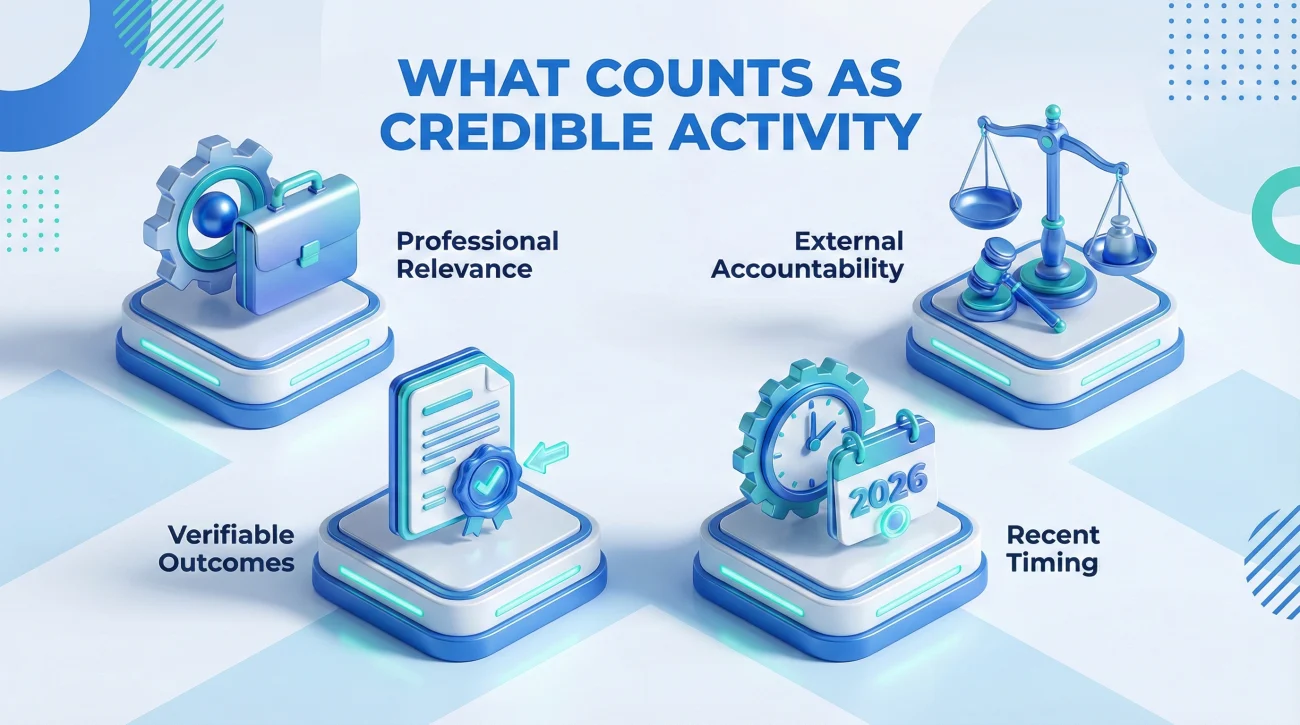
Not everything you did during recovery belongs on a resume. Recruiters can distinguish between genuine professional engagement and filler. Credible activities share these characteristics:
Professional relevance. The activity connects to your target role or demonstrates transferable skills. Completing a certification in your field counts. Learning to paint does not, even if it was therapeutic.
External accountability. Someone else depended on you or evaluated your work. Volunteer commitments, client projects, and course completions all involve external expectations. Personal projects with no deadline or audience are weaker.
Verifiable outcomes. You can point to something concrete: a certificate, a live website, a reference who can confirm your contribution. Vague claims about “staying current” are not credible without proof.
Recent timing. Activity from the last 3-6 months of your gap is most valuable. It shows current readiness, not just that you did something once during a long break.
The goal is demonstrating current capability and professional reliability, not filling empty space on your resume. One strong, verifiable activity beats three weak or vague ones every time.
12 Honest Activity Ideas
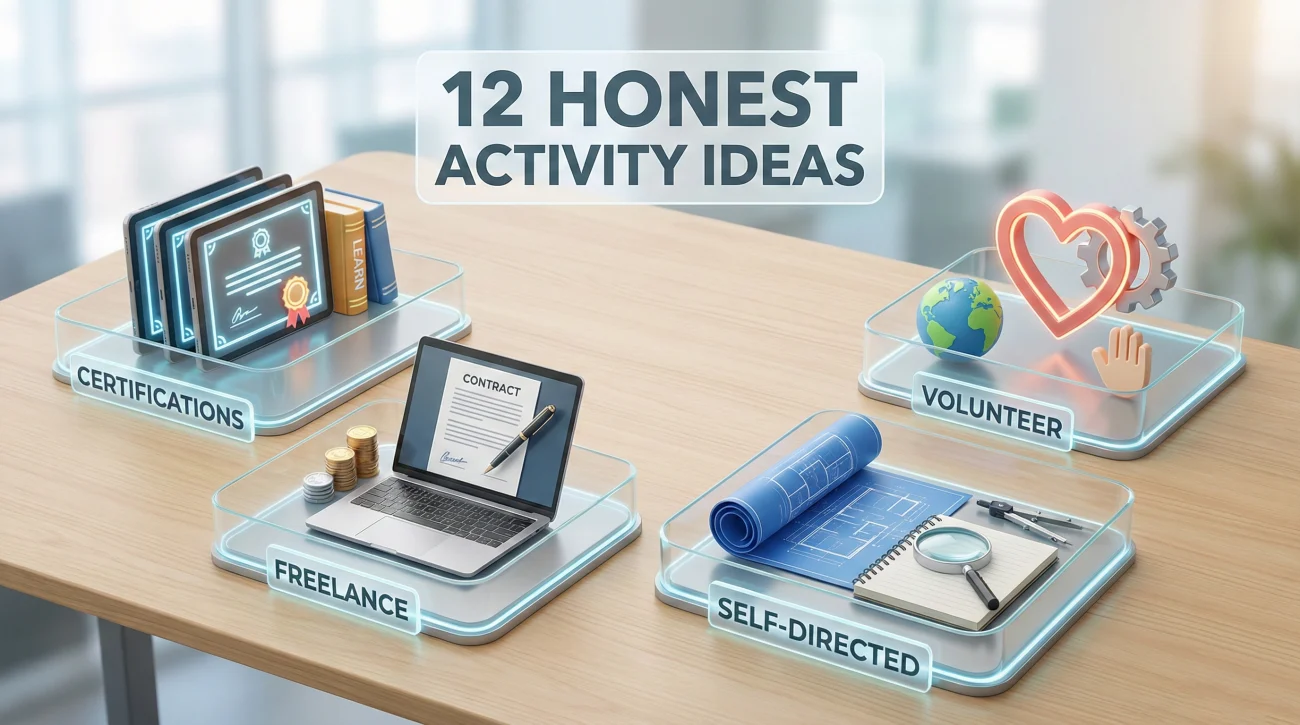
If you are still in your break or early in job searching, consider these options for building credible recent activity. Start with what matches your field and energy level:
Certifications and Courses
- 📜 Industry certifications (Google, HubSpot, Salesforce, PMP, etc.)
- 📚 Online courses with completion certificates (Coursera, LinkedIn Learning, edX)
- 🎓 Continuing education or professional development workshops
Volunteer Work
- 🤝 Skills-based volunteering for nonprofits (marketing, accounting, IT support)
- 📋 Board or committee service for community organizations
- 👥 Mentoring through professional associations or alumni networks
Freelance and Contract
- 💼 Small freelance projects through your network
- 📝 Contract work through platforms (Upwork, Fiverr, Toptal)
- 🏢 Consulting for friends’ or family members’ businesses
Self-Directed Professional Work
- 🌐 Building a portfolio website or professional blog
- 💻 Contributing to open-source projects (for technical roles)
- 📊 Creating case studies or sample work for your portfolio
Start with what is realistic for your energy level and current recovery stage. Even one certification and one small volunteer project creates a credible Recent Activity section that demonstrates readiness.
How to Name the Section
The section header sets expectations. Choose based on what you actually did:
Best options:
- “Recent Professional Activity” – neutral, covers mixed activities
- “Professional Development” – works when certifications dominate
- “Consulting & Projects” – works when freelance work dominates
- “Volunteer & Professional Activity” – works when volunteering dominates
Avoid:
- “During My Career Break” – draws attention to gap unnecessarily
- “Recovery Period Activities” – discloses health information
- “Freelance Experience” – implies more than occasional projects
- “Employment” – misrepresents volunteer or project work
The header should be accurate and professional without drawing unnecessary attention to your break. It frames how recruiters interpret the bullets below it.
Section Template
Here is a complete section you can adapt:
RECENT PROFESSIONAL ACTIVITY | 2024
Digital Marketing Volunteer | Local Food Bank
• Managed Instagram and Facebook accounts, growing followers 35% over 4 months
• Created monthly content calendar and wrote weekly posts
Professional Development
• Completed Google Analytics Certification (GA4)
• Completed HubSpot Content Marketing Certification
Freelance Projects
• Wrote website copy for small business launch (referral from former colleague)
• Conducted competitive analysis for friend’s startup pitch deck
Notice the structure: each activity type is clearly grouped, bullets show specific scope and measurable outcomes, and nothing is inflated beyond what actually happened. This template demonstrates genuine professional engagement without misrepresenting volunteer or project work as employment.
8 Bullet Patterns
These patterns help you write honest bullets that demonstrate value without inflating your activities. Each one includes concrete details that make the activity verifiable and credible:
Pattern 1: Scope + Outcome
Pattern 2: Deliverable + Context
Pattern 3: Certification + Application
Pattern 4: Volunteer Role + Responsibility
Pattern 5: Project + Client Type
Pattern 6: Skill Refresh + Evidence
Pattern 7: Portfolio + Demonstration
Pattern 8: Mentoring + Scope
Each pattern includes concrete details that make the activity verifiable and credible. Avoid vague bullets like “Stayed current with industry trends” that provide no evidence.
Where to Place the Section
Placement affects how prominently the section reads:
Option 1: After Summary, Before Experience (Recommended)
This placement leads with recent activity before the gap becomes visible. Recruiters see current engagement first, then your work history. Best when your recent activity is strong and directly relevant.
Option 2: After Experience Section
This placement keeps traditional chronological focus on your work history. The recent activity section supplements rather than leads. Best when your pre-gap experience is your strongest selling point.
Option 3: Integrated Into Timeline
If you had significant activity, you can include it chronologically within your experience section, positioned where it falls in your timeline. Best for substantial freelance or consulting work.
Choose based on what you want recruiters to notice first. If your recent activity is compelling, lead with it. If your experience is stronger, let that lead and use recent activity as support.
What NOT to Do

Avoid these common mistakes that undermine credibility and raise red flags with recruiters:
🚫 Inflating volunteer work. Do not give yourself titles you did not hold or claim responsibilities beyond your actual scope. “Managed social media” is fine. “Marketing Director” for occasional volunteer posts is not.
🚫 Including personal activities. Exercise routines, hobbies, self-care practices, and personal growth do not belong in this section. They may have been important for your recovery, but they are not professional credentials.
🚫 Listing activities without outcomes. “Took online courses” says nothing. “Completed 3 certifications in data analytics with capstone projects” demonstrates commitment and completion.
🚫 Using employment-style formatting for non-employment. Do not structure volunteer work like a full job with extensive bullets. Keep it proportional to what it actually was.
🚫 Referencing your health condition. The section should stand on its own as professional activity. Do not explain that you did these things “while recovering” or “during treatment.”
Aligning Resume and Interview
Your Recent Activity section must match what you say in interviews. Prepare to discuss each item:
For certifications: Be ready to explain what you learned and how you plan to apply it. “I completed the Google Analytics certification because I wanted to strengthen my data skills for marketing roles. The capstone project involved analyzing e-commerce conversion patterns.”
For volunteer work: Describe it accurately without inflating. “I helped a local nonprofit with their social media – about 5 hours a week for four months. I created their content calendar and wrote posts. It was a good way to stay sharp while I was focused on other things.”
For freelance projects: Know the details. Who was the client? What did you deliver? What was the outcome? Vague answers suggest fabrication.
The section should strengthen your candidacy in interviews, not create awkward moments where you cannot back up what you wrote. Keep it honest and you will be able to discuss it confidently.
Show Readiness, Not Recovery
When returning to work after a mental health break, your resume should demonstrate current readiness, not explain past recovery. A Recent Activity section provides concrete evidence that you have stayed professionally engaged, can meet commitments and deadlines, and are fully prepared to contribute immediately. Build it honestly with credible activities, write bullets that show real scope and outcomes rather than vague claims, and position it where it supports your strongest narrative. Let your recent work speak for your current capability – that is what recruiters actually need to see.
❓ FAQ
🎯 What if I did not do anything professional during my break?
Start now. Even 2-3 months of activity before applying makes a difference. Take a certification course, volunteer for a nonprofit in your field, or do a small project for someone in your network. You do not need extensive activity – you need evidence of current readiness.
📝 Can I include activities from early in my break?
Include them if relevant, but emphasize recent activities. Something you did 18 months ago shows less about current readiness than something you completed last month. Date the section as a range or just the current year.
💼 How many activities do I need?
Quality over quantity. One meaningful volunteer commitment plus one certification is enough. Three to five bullet points total creates a credible section. More than that may invite scrutiny about whether this was actually a break.
🔍 Should I mention this section in my summary?
Only if it is a key selling point. If you completed a highly relevant certification, you might mention it: “Marketing coordinator with Google Analytics certification (2024).” But do not draw extra attention to “recent activity” language that highlights the gap.
⚠️ Disclaimer: ResumeSolving provides resume, cover letter, and job search communication guidance for informational purposes only. It is not legal, medical, financial, or professional counseling advice. Hiring decisions vary by company, role, location, and individual circumstances, so we do not guarantee interviews, offers, or outcomes. Always use your own judgment, verify requirements directly with the employer, and follow local laws and workplace policies. When a situation is sensitive, we prioritize privacy-safe, recruiter-appropriate wording, and you never need to share personal details you are not comfortable disclosing.