- Sabbaticals trigger flight risk calculations: if you left once voluntarily, will you do it again?
- The fix is not hiding the break. It is showing closure (why it ended) and commitment (why you will stay).
- Burnout framing requires extra care – it signals stress tolerance concerns. Frame as resolved, not ongoing.
The Flight Risk Equation
When a recruiter sees “sabbatical” or “career break” on a resume, they run a mental calculation: This person chose to leave work. They had the financial runway to not work. What stops them from doing it again in eighteen months when they get bored or tired or want another adventure?
This is different from gaps caused by layoffs or health issues. Those are things that happened to you. A sabbatical is something you chose. That choice reveals preferences – and recruiters worry those preferences include “not working.”
A marketing director named Sandra took a year off to travel after burning out at a startup. When she returned to job searching, her resume showed the gap clearly: “Career Break – Travel and Personal Development, 2023-2024.” She applied to 60 jobs with almost no responses. Recruiters saw someone who might leave again the moment she saved enough for another trip.
We rewrote her positioning. The break became time-bounded with clear closure. Her summary emphasized what she wanted now and why. Her interview answers included specific commitment signals. Same gap, same person. Different framing. She had three offers within two months.
Understanding sabbatical on resume challenges means understanding that recruiters are not judging your choice to take time off. They are calculating the probability you will make that choice again while employed by them. Your materials must address that calculation directly with closure signals and commitment cues.
Sabbatical vs Unemployment vs Medical Leave
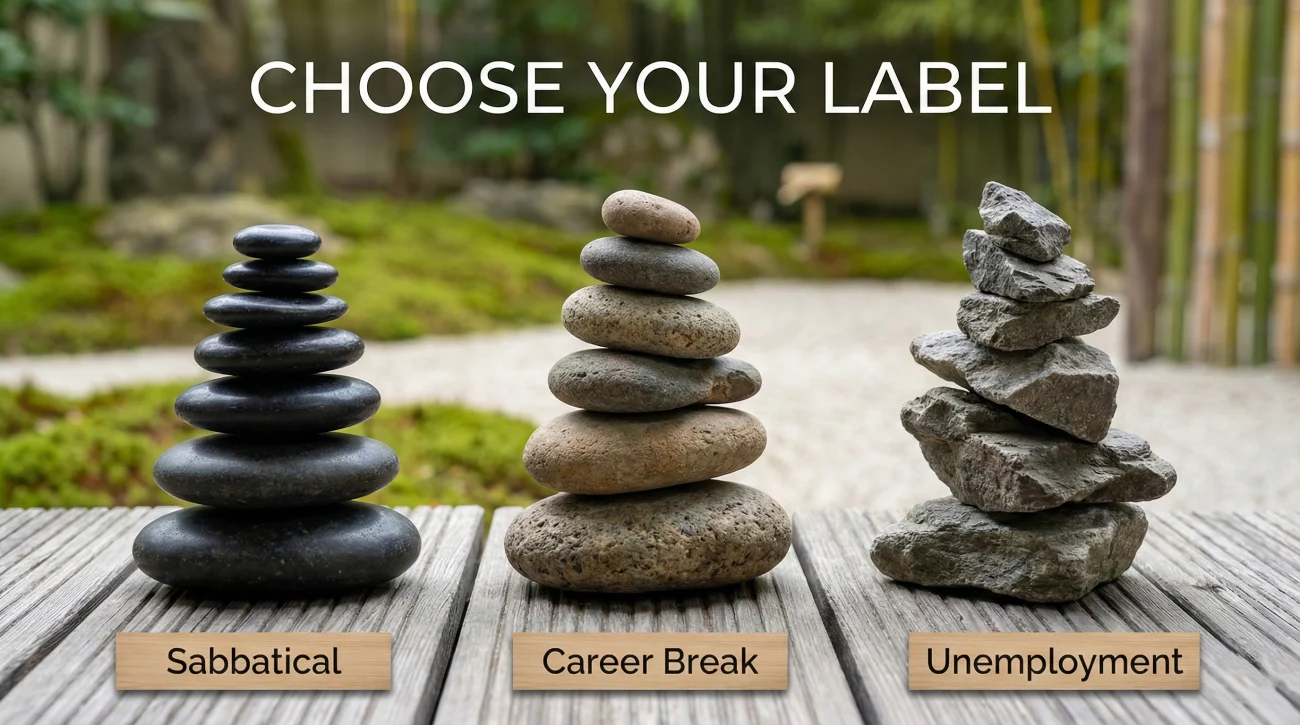
These labels signal different things to recruiters. Using the wrong one creates confusion or triggers unintended concerns. Choose deliberately based on what actually happened.
Sabbatical implies intentional, planned time away – often for travel, study, writing, or personal projects. It suggests financial stability and deliberate choice. The risk signal is flight risk and potential lack of commitment to traditional employment.
Career Break is more neutral. It covers sabbaticals but also caregiving, relocation transitions, or simply “I needed time off.” It invites fewer assumptions but may prompt more questions about what you actually did.
Unemployment implies you wanted to work but could not find a job. This triggers different concerns: skill staleness, market rejection, unclear value proposition. Do not use unemployment framing for an intentional break.
Medical Leave or health-related language triggers privacy boundaries and potential disability concerns. Unless your break was genuinely health-related and you are comfortable discussing it, avoid medical framing for what was actually a chosen sabbatical.
💡 Label Choice: “Career Break” or “Sabbatical” are both acceptable for intentional time off. Choose based on what you actually did. If you traveled and studied, sabbatical fits. If you took care of family while also recharging, career break is more accurate.
Resume Entry Options
How you list the sabbatical on your resume affects how recruiters interpret it. Here are the main approaches:
Option 1: Minimal Entry
Use when you did nothing particularly professional during the break. The entry accounts for time without overclaiming. You can elaborate verbally if asked.
Option 2: Activity-Focused Entry
Completed Google Analytics certification. Volunteered as marketing advisor for local nonprofit. Traveled for personal development.
Use when you have legitimate professional activities to show. The activities counter the “checked out” assumption.
Option 3: Project-Focused Entry
Wrote and published industry newsletter reaching 2,000 subscribers. Completed UX certification through Google. Consulted informally for two early-stage startups.
Use when you had substantive projects with measurable outputs. This reads almost like freelance work and strongly counters flight risk.
Option 4: No Entry (Gap Only)
For breaks under 6 months, you may not need an entry at all. The gap between job dates tells the story. Be prepared to explain verbally but do not draw extra attention on paper to a short break.
Flight Risk Checklist

Review your materials for signals that amplify flight risk concerns. Red flags suggest instability and potential for repeat departure. Green signals demonstrate closure and commitment.
🚩 Red Flags That Suggest You Might Leave Again
- 🚩 Open-ended language: “took time to explore” with no closure
- 🚩 Lifestyle emphasis: “traveled to 30 countries” as the headline
- 🚩 No commitment language anywhere in materials
- 🚩 Vague about why you are returning now
- 🚩 Multiple sabbaticals or breaks in recent history
- 🚩 Summary focuses on what you learned, not what you want to do
- 🚩 No recent professional activity during or after the break
✅ Signals That Suggest Stability
- ✅ Time-bounded framing: clear start and end dates
- ✅ Closure signal: reason the break ended
- ✅ Commitment cue: specific about why this role, this company
- ✅ Professional activity: certification, project, or freelance work during break
- ✅ Forward momentum: “returning to” or “seeking” language
- ✅ Role clarity: specific target, not “open to opportunities”
Should You Label the Sabbatical?
The decision to label or not label your sabbatical depends on length, what you did, and your target role. These common questions help clarify the right approach for your situation:
Should I list the sabbatical as an entry on my resume?
It depends on length and what you did. Gaps under 6 months often need no entry – the dates simply show time between roles. Gaps over 6 months benefit from a brief entry that accounts for the time and shows intentionality rather than unexplained silence.
What if I did nothing productive during the break?
Then keep the entry minimal: “Career Break | 2023-2024” with no description. You can address it verbally in interviews. Listing an entry prevents recruiters from assuming the worst. You do not need to claim achievements you did not have.
Should I mention travel specifically?
Cautiously. “Extended travel through Southeast Asia” reads as lifestyle choice that might recur. “Career break including travel and professional development” is more balanced. If travel was the entire point, consider whether emphasizing it helps or hurts.
What about listing courses or certifications from during the break?
Yes – these are strong signals of continued professional investment. List them either under the sabbatical entry or in a separate Professional Development section. They counter the “checked out” assumption.
Should I address the sabbatical in my summary?
Not directly. Your summary should focus on your target role and qualifications. The sabbatical entry handles the timeline. If commitment is a concern, your summary can include forward-looking language like “seeking long-term role” without mentioning the break itself.
Four Scripts for Sabbatical Situations
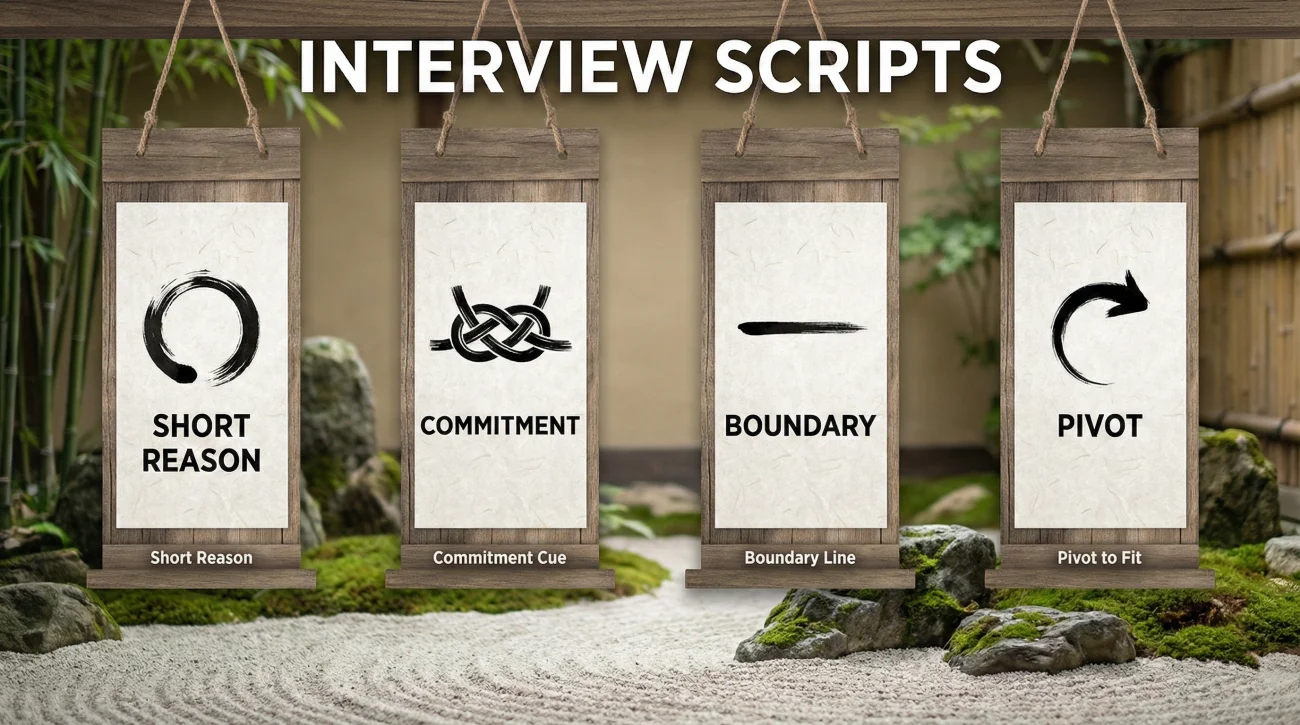
These scripts handle the most common sabbatical-related conversations. Adapt the language to your situation while keeping the structural elements: acknowledgment, closure signal, and commitment cue.
Script 1: Short Reason (10 seconds)
“I took a planned career break last year to recharge and handle some personal priorities. That chapter is closed now, and I’m focused on finding the right long-term role. This position matches exactly what I’m looking for.”
Use for initial questions or when you need to move quickly past the topic.
Script 2: Commitment Cue (15 seconds)
“I know taking a break might raise questions about commitment. I want to be direct: that break was a one-time reset, not a pattern. I’m looking for a role I can grow in for years, not something to fill time until my next adventure. The scope and team here are exactly what I want to commit to.”
Use when you sense flight risk concerns or when the interviewer seems hesitant.
Script 3: Boundary Line (For Intrusive Questions)
“I’m happy to discuss my professional background and what I can bring to this role. The personal details of my break aren’t really relevant to whether I can do this job well. What I can tell you is that I’m ready, energized, and looking for the right long-term fit.”
Use when questions become too personal or probing about reasons for the break.
Script 4: Pivot to Role Fit
“The break gave me clarity about what kind of work I find most engaging. I came back knowing I want to focus on [specific area] at a company where I can have real impact. That’s why I’m particularly interested in this role – the scope matches what I identified as my target.”
Use to redirect from explaining the break to selling your fit.
Stability Signals vs Flight Risk Signals
Every element of your materials either increases or decreases perceived flight risk. Small word choices compound into an overall impression. Review your resume, summary, and interview talking points against this framework to ensure consistency:
| Element | Flight Risk Signal | Stability Signal |
|---|---|---|
| Break description | “Traveled and explored new interests” | “Career break, completed PMP certification” |
| Summary opening | “Returning professional seeking new chapter” | “Product manager focused on B2B SaaS growth” |
| Why this role | “Seems like a good opportunity” | “Specific match for my target scope and industry” |
| Future plans | “Open to seeing where things go” | “Looking for a multi-year commitment” |
| Break ending | No explanation why it ended | “Completed my goals and ready to return” |
| During break | Nothing professional mentioned | Courses, projects, certifications, volunteering |
The pattern is consistency: stability signals all point toward commitment, intentionality, and clarity about what you want. Flight risk signals all suggest drift, uncertainty, or priorities that compete with employment.
Burnout-Specific Framing
Burnout breaks require extra care in how you discuss them. Saying “I burned out” triggers immediate concerns about stress tolerance: Can you handle pressure? Will you burn out here too? Will you need another extended break in two years? These are fair questions from an employer’s perspective, and you need to answer them implicitly through your framing.
The key is positioning burnout as situational and fully resolved, not as a constitutional tendency or ongoing vulnerability:
“I burned out from the stress and needed to recover.”
“The startup environment I was in wasn’t sustainable long-term. I took time to reset and get clarity on what kind of role suits me better. I’m specifically interested in companies with healthier operating models.”
The safer framing puts the problem on the situation, not your capacity. It shows self-awareness (you learned what works for you) and intentionality (you are choosing environments deliberately now).
If asked directly whether you burned out, you can acknowledge it briefly without dwelling: “The pace wasn’t sustainable, and I made a proactive choice to step back rather than let performance suffer. I’m fully recharged now and clear about the kind of environment where I thrive.”
Avoid extended discussion of symptoms, struggles, or recovery. The interview is not therapy. Acknowledge, show resolution, pivot to fit.
Detailed Guides
| Article | Focus |
|---|---|
| Should You Include Sabbatical on Resume or Leave It Blank | Decision checklist based on length and activity |
| Personal Sabbatical Resume Wording | 10 labels and 8 descriptions with risk levels |
| Took a Year Off to Travel: Resume Wording | Travel-specific framing that controls flight risk |
| Sabbatical Resume Entry Examples | 9 entries by scenario with truth-check rules |
| How to Explain Sabbatical in Interview | 40-second answer structure with commitment cues |
| Will You Take Another Sabbatical: Flight Risk Answer | Direct handling of the commitment objection |
| Burnout Career Break Resume Wording | Burnout-specific framing with privacy intact |
| Quit Due to Burnout Interview Answer | Script for voluntary exit without new job |
| Currently on Sabbatical Resume | Edge case for ongoing break, availability signals |
| Sabbatical vs Unemployment: Resume Signals | Label choice to avoid wrong category assumptions |
| Returning From Sabbatical: Commitment Signals | Proof options focused on closure and readiness |
For general gap mechanics (resume formatting, application forms, LinkedIn, verification), see the main Employment Gaps hub.
Closing the Chapter
A sabbatical on resume is not a problem to hide. It is a chapter that needs clear closure. Show that the break had boundaries – it started for specific reasons, it ended when those reasons were resolved, you accomplished what you needed. Show that you are returning with intention – specific target role, clear commitment to staying, genuine interest in building something long-term. When your materials tell that story consistently across resume, interview, and references, the sabbatical becomes evidence of self-awareness and intentionality rather than a warning sign about flight risk.
❓ FAQ
🎯 How long a break requires explanation?
Breaks under 3-4 months often need no explanation – normal job search timing. 4-6 months benefits from a brief mention. 6+ months should have a clear entry or explanation ready. Over 12 months needs strong narrative and recent activity proof.
📝 Can I call it a sabbatical if I was actually laid off?
No. Background checks may reveal layoff. If you were laid off and then took extended time before searching, you can say “After my role was eliminated, I took time to [activity] before beginning my search.” But do not relabel a layoff as a sabbatical.
💼 What if I want to take more sabbaticals in the future?
Do not mention this in interviews. Your immediate goal is getting hired. Future sabbaticals are future conversations with future employers about earned time off, not promises you make during the hiring process.
🔍 Should I mention I have savings that enabled the break?
Generally no. Financial runway suggests you could leave again whenever you want. Focus on why you want to work, not why you technically do not have to.
⚠️ Disclaimer: ResumeSolving provides resume, cover letter, and job search communication guidance for informational purposes only. It is not legal, medical, financial, or professional counseling advice. Hiring decisions vary by company, role, location, and individual circumstances, so we do not guarantee interviews, offers, or outcomes. Always use your own judgment, verify requirements directly with the employer, and follow local laws and workplace policies. When a situation is sensitive, we prioritize privacy-safe, recruiter-appropriate wording, and you never need to share personal details you are not comfortable disclosing.