- The Market Shift: With the quits rate dropping to 2.0% (BLS), the “Great Resignation” is over. Leaving a job is now a high-visibility event.
- The Narrative Trap: Recruiters view “messy” exits as risk signals. Your story must be consistent from your resignation letter to your next interview.
- The Paper Trail: Verbal resignations are dangerous. Always confirm your timeline in writing immediately to prevent “floating dates” and payroll errors.
What a Lower Quits Rate Changes for Job Seekers
A few years ago, resigning felt like a collective movement. Everyone was doing it, and employers were so desperate for talent that they overlooked messy transitions. That era is over.
We have entered the era of the “Big Stay.” According to the Bureau of Labor Statistics (BLS) Job Openings and Labor Turnover Survey (JOLTS) for December 2025, the number of quits has stabilized at 3.2 million, with a quits rate of just 2.0%. This returns us to pre-pandemic norms.
Why does this matter to you? Because in a low-turnover market, voluntary resignation stands out. When fewer people are leaving, HR and management pay closer attention to how you leave.
Key Insight: When you resign today, you are not just closing a chapter; you are writing the reference check for your next role. A chaotic exit creates a “risk signal” that follows you, while a clean exit validates your professionalism.
Field Note: Where Resignations Go Sideways
In HR, we rarely judge people for leaving. People grow, life changes. But we do judge how the exit is executed. Most “bad exits” aren’t caused by screaming matches; they are caused by administrative silence.
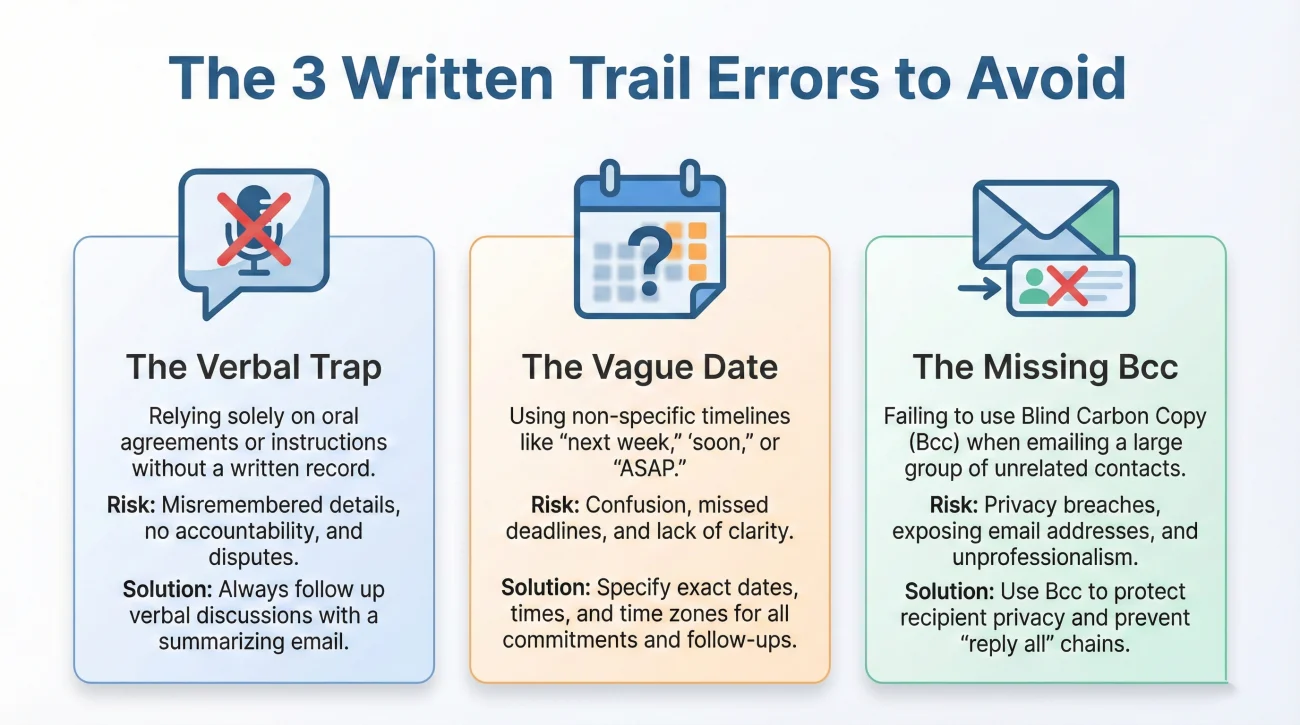
📝 Field Note: The 3 “Written Trail” Errors
I have overseen hundreds of offboarding processes, and the most stressful exits usually stem from three specific failures in the written trail:
1. The Verbal Trap: You tell your boss you are leaving. They say “Let’s talk next week.” You think the clock has started. HR thinks you are still employed. Result: Your notice period is delayed.
2. The Vague Date: You say “My last day is around the 15th.” Payroll sets it for the 15th. You intended to work through the 17th. Result: Pay disputes and insurance gaps.
3. The Missing Bcc: You negotiate your exit terms on your work email. On your last day, IT shuts off access. Result: You lose all proof of what was agreed upon.
The Clean Exit Narrative
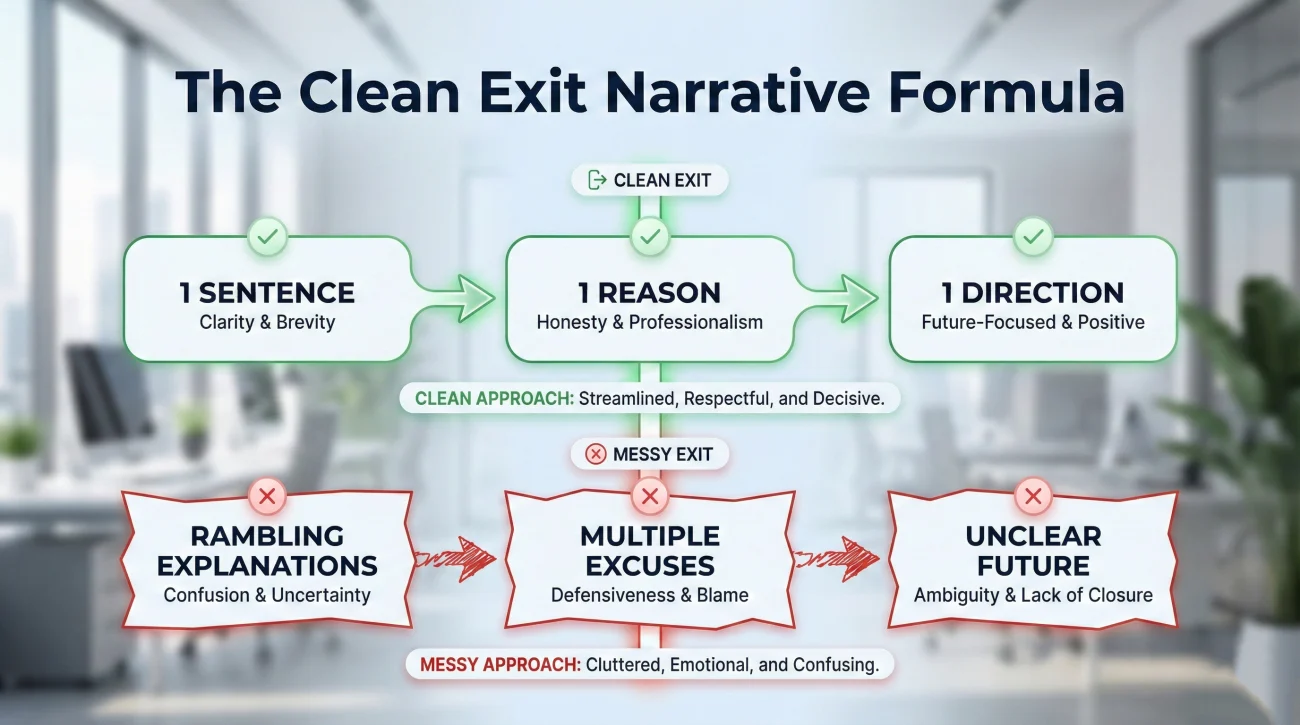
The story you tell when you quit is the same story you will need to tell in your next interview. If these stories don’t match, you look like a risk.
A “clean” narrative follows a simple formula: 1 Sentence + 1 Reason + 1 Direction
“I’m leaving because the management is chaotic, and I need a break, but I’m also looking for better pay.” (Too many variables, sounds emotional).
“I have decided to move on to pursue a role with a stronger focus on strategic planning in the fintech sector.” (Clear, forward-looking).
This clarity prevents gossip. When your narrative is simple, no one speculates. When you over-explain, you give people material to misinterpret.
Mini Scenario: The “Floating Date” Problem
The Situation: You had a nervous meeting with your manager on Tuesday morning to resign. They seemed stunned and said, “I need to process this, let’s discuss details later.” It is now Thursday, and you haven’t confirmed your last day.
The Risk: If you don’t document it, your notice period hasn’t officially started in the eyes of many corporate policies.
The Fix: Send a “Confirmation of Conversation” email immediately. Do not ask for permission; state the facts.
Subject: Follow up: Resignation timeline – [Your Name]
Hi [Manager Name],
Following up on our conversation this past Tuesday regarding my resignation. I want to ensure we have the timeline documented for HR and transition planning.
Per our discussion, my two-week notice period began on [Tuesday’s Date], making my final working day [Date].
I have already started drafting a handover document and will share it for your review by tomorrow.
Best regards,
[Your Name]
Safe Scripts for Your Official Notice
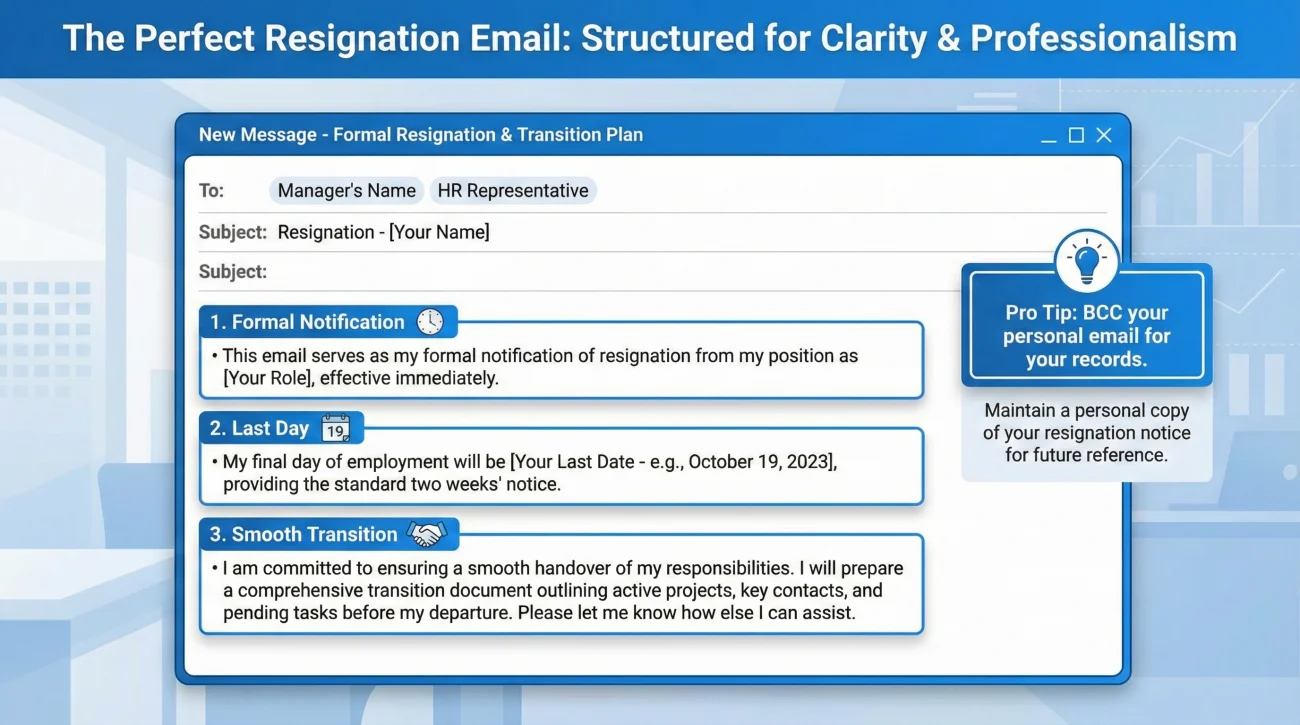
Your official resignation letter (or email) is a legal document, not a diary entry. Its only purpose is to trigger the offboarding process and establish dates.
📄 The Standard “Boring” Resignation Note
Subject: Resignation – [Your Name]
Dear [Manager Name],
Please accept this email as formal notification that I am resigning from my position as [Your Job Title]. My last day will be [Date, typically 2 weeks out].
I want to ensure a smooth transition during my final two weeks. I am happy to assist in training my replacement or documenting my current projects before I depart.
Thank you for the opportunity to work with the team at [Company Name].
Sincerely,
[Your Name]
💡 Pro Tip: BCC your personal email address on this note. This ensures you have a timestamped copy of your notice if any disputes arise about your timeline.
Common Mistakes That Create “Risk Signals”
According to research by Robert Half, 86% of HR managers said the way an employee quits affects their future career opportunities. Yet, smart professionals still make emotional errors.
| The Mistake | The Risk Signal (Recruiter View) |
|---|---|
| The “Mic Drop” Email | Sending a long email detailing everything wrong with the company looks unstable. It suggests you lack emotional regulation and professional judgment. |
| Changing the Story | Telling your boss you are “going back to school” but telling colleagues you “got a huge offer.” HR talks. Inconsistency looks like dishonesty. |
| The “Not My Problem” Exit | Refusing to do a handover because “I’m leaving anyway.” This guarantees a bad reference. The last 2 weeks are the only 2 weeks people remember. |
Final Thoughts
In a market with a 2.0% quit rate, stability is currency. When you move to your next role, you want to arrive with a reputation for reliability, not drama.
A smart resignation is boring. It is documented, consistent, and helpful. It protects your past so you can focus entirely on your future. Control the paperwork, control the narrative, and leave the bridge standing – even if you never plan to walk across it again.
❓ FAQ
🗓️ Is the two-week notice mandatory?
In most “at-will” employment states (US), it is a professional courtesy, not a law. However, failing to give it often makes you ineligible for rehire and can result in the forfeiture of accrued vacation pay depending on company policy.
🤐 Should I tell HR the “real” reason I’m leaving in the exit interview?
Proceed with caution. The exit interview is not a therapy session. If your feedback is constructive and factual, share it. If it is personal or purely emotional, it is often safer to give a neutral reason like “career growth.”
💵 What if I resign and they ask me to leave immediately?
This is common in sales or sensitive roles. Be prepared for this financially before you send the email. Ensure you have already removed your personal files from the computer before you hit send.
🔄 Can I retract my resignation if I change my mind?
Technically yes, but practically, it’s difficult. Once you resign, the trust bond is fractured. Employers often see retracted resignations as a temporary fix and may continue looking for your replacement.
📚 Data Sources & References
This guide relies on labor market data and HR industry standards to ensure your resignation process is safe and professional. References include:
- BLS JOLTS Report (December 2025):
Data Point: Quits level at 3.2 million; Quits rate at 2.0%.
Context: Used to benchmark the current “low turnover” environment compared to the “Great Resignation.”
View Official BLS JOLTS Data - Robert Half Survey:
Data Point: 86% of HR managers verify that the manner of resignation impacts future career potential and references.
Context: Highlights the long-term career risks of a messy or unprofessional exit.
View Robert Half Insights - Harvard Business Review (HBR):
Context: Insights on “Boomerang Employees” and the increasing importance of maintaining alumni networks in a stabilized economy.
View HBR Articles on Offboarding
⚠️ Disclaimer: ResumeSolving provides resume, cover letter, and job search communication guidance for informational purposes only. It is not legal, medical, financial, or professional counseling advice. Hiring decisions vary by company, role, location, and individual circumstances, so we do not guarantee interviews, offers, or outcomes. Always use your own judgment, verify requirements directly with the employer, and follow local laws and workplace policies. When a situation is sensitive, we prioritize privacy-safe, recruiter-appropriate wording, and you never need to share personal details you are not comfortable disclosing.