- You are not legally required to disclose a mental health condition to employers, but you do need a consistent, professional explanation for the gap itself.
- Use neutral language like “personal health matter” or “medical leave” across your resume, applications, phone screens, and interviews.
- Prepare five scripts: a 10-second version, a 30-second version, a boundary response, a form answer, and a recruiter reply.
- Keep your story identical everywhere. Background checks verify dates, not reasons, so consistency protects you.
What This Guide Covers
If you have taken time away from work because of depression, anxiety, burnout, a hospitalization, or any other mental health condition, you are not alone. Roughly one in five adults in the United States lives with a mental illness, and many of them have stepped away from work at some point to focus on recovery.
The challenge is not the gap itself. The challenge is explaining it in a way that keeps you safe, keeps your privacy intact, and keeps recruiters focused on what matters: your ability to do the job now.
In over a decade of reviewing applications and interviewing candidates, I have seen people handle mental health employment gaps in ways that helped them and ways that hurt them. The difference almost always comes down to preparation. Candidates who rehearse a short, confident explanation tend to move forward. Candidates who overshare, apologize, or freeze tend to get screened out.
This guide will give you a decision tree for every touchpoint in the hiring process, five mini scripts you can customize, and a quick wording rule set to keep your messaging tight. You will also find links to deeper guides for specific situations, from resume wording to phone screen answers to handling follow-up questions that push too far.
What Counts as a Mental Health or Illness Gap
For the purposes of this guide, a mental health gap is any period where you were not employed primarily because of a psychological or psychiatric condition. This includes depression, anxiety disorders, bipolar disorder, PTSD, eating disorders, substance use disorders, schizophrenia, and any other diagnosis that required you to step back from work.
It also includes situations where you left work due to severe burnout, even if you never received a formal diagnosis. The line between burnout and clinical depression is blurry, and many people who “just needed a break” were actually dealing with something deeper.
Key Point: From a recruiter’s perspective, the specific diagnosis does not matter. What matters is whether you seem stable, ready, and capable of doing the job. Your explanation should address stability and readiness, not medical details.
A colleague of mine once interviewed a candidate who disclosed a bipolar diagnosis within the first two minutes of a phone screen. The candidate was clearly qualified, but the recruiter spent the rest of the call wondering about reliability instead of evaluating skills. That candidate did not move forward. Another candidate with the exact same gap simply said she had taken time off for a health matter that was now resolved, then pivoted to her recent certifications. She got the job.
The difference was not the condition. It was the framing.
Your Legal Rights: What You Must and Must Not Disclose
Before we get into scripts and strategies, you need to understand the legal landscape. In the United States, the Americans with Disabilities Act protects you from discrimination based on a mental health condition. Here is what that means in practical terms.
Before a Job Offer
Employers cannot ask you disability-related questions before making a conditional job offer. They cannot ask whether you have a mental health condition, whether you have been hospitalized, or what medications you take. If they do ask, you are not required to answer.
However, they can ask about gaps in your employment history. This is where things get tricky. You need to explain the gap without disclosing the diagnosis.
After a Job Offer
Once you have a conditional offer, employers can require a medical examination, but they can only withdraw the offer if the exam reveals that you cannot perform the essential functions of the job, even with reasonable accommodations.
On the Job
If you need accommodations to do your job, you will need to disclose that you have a condition that requires them. But you still do not have to share your specific diagnosis. You can say “I have a medical condition” without saying “I have depression.”
💡 Pro Tip: Choosing not to disclose a mental health condition is not lying or hiding. It is exercising a legal right. Frame it that way in your own mind, and your confidence will come through in interviews.
The Decision Tree: Where and How to Explain Your Gap
Every touchpoint in the hiring process requires a slightly different approach. Here is how to think about each one.
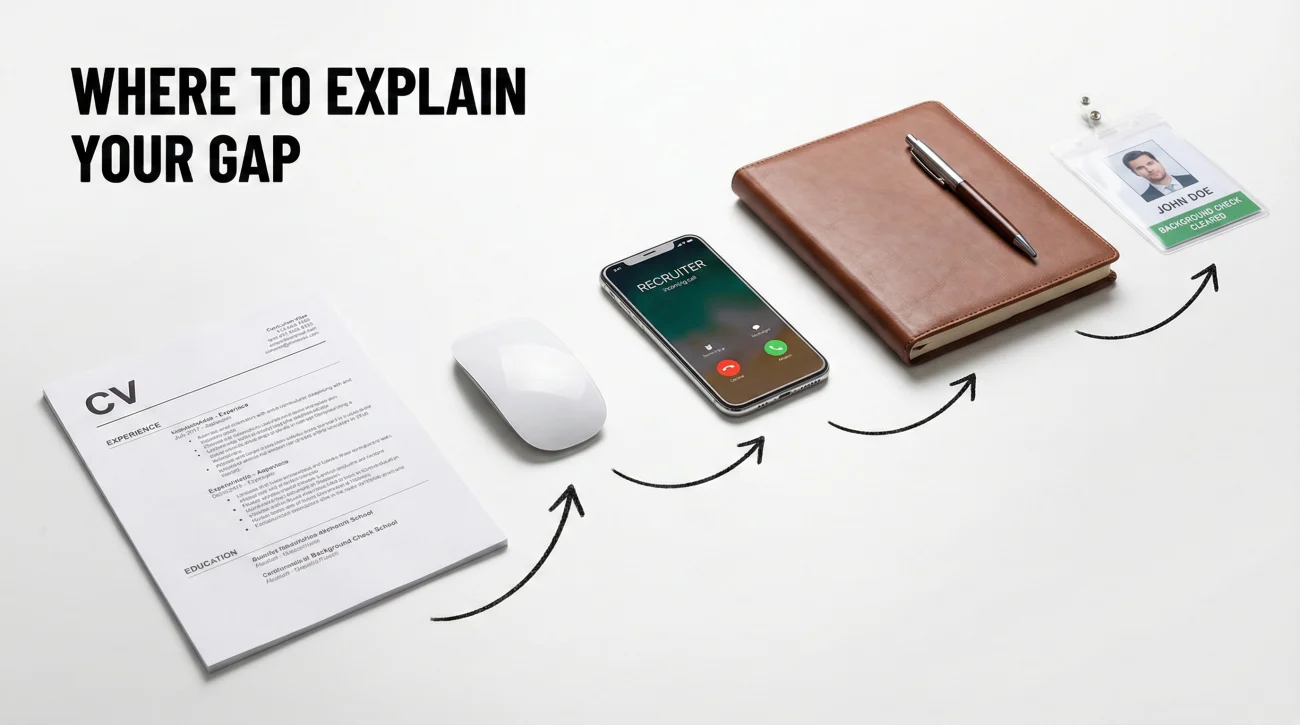
Resume
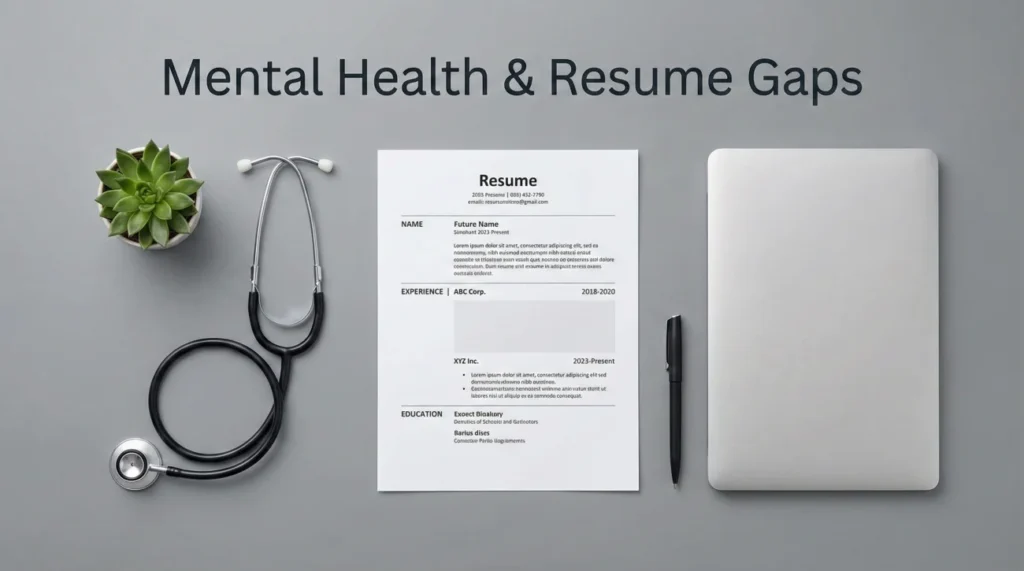
Your resume should acknowledge the gap without explaining it in detail. You have three options: leave the gap blank and let the dates speak for themselves, add a single line like “Career Break” or “Personal Leave” with dates, or include a brief “Career Break” entry that mentions one neutral activity like “focused on health and professional development.”
The goal is to prevent the recruiter from assuming the worst, like incarceration or being fired for cause, without volunteering information that raises new questions.
Application Forms
Many online applications have a required field asking you to explain gaps. Keep your answer short, neutral, and forward-looking. One to two sentences maximum. Do not use the word “mental” or any diagnosis. Phrases like “personal health matter,” “medical leave,” or “family health situation” work well.
Phone Screen
This is where most candidates stumble. The recruiter asks about the gap, and the candidate either freezes or overshares. You need a 10-second script that acknowledges the gap, reassures the recruiter, and pivots back to the role. Practice it until it sounds natural, not rehearsed.
In-Person or Video Interview
If the gap comes up again in a later interview, use a slightly longer version of your script. Add one or two sentences about what you did during the break to stay current, like taking an online course or doing freelance projects. Then pivot hard to why you are excited about this specific role.
LinkedIn now has a “Career Break” feature that lets you add a break to your profile with a category like “Health and well-being.” This can actually work in your favor because it normalizes the gap. But keep the description minimal. One line is enough.
Background Check and Verification
Background checks verify dates of employment, job titles, and sometimes reasons for leaving. They do not typically reveal medical information, and employers cannot legally ask for it. Your main concern is consistency. Make sure the dates on your resume match what your former employers will report. If there is a discrepancy, the background check company will flag it, and you will need to explain.
| Touchpoint | What to Do | What to Avoid |
|---|---|---|
| Resume | Brief “Career Break” line or clean gap with dates | Detailed explanations, medical terms |
| Application Form | 1-2 sentences: “Personal health matter, now resolved” | Diagnosis names, lengthy narratives |
| Phone Screen | 10-second script with reassurance and pivot | Freezing, apologizing, oversharing |
| Interview | 30-second version with recent activity proof | Defensive tone, unsolicited details |
| Career Break feature with minimal description | Long explanations, emotional language | |
| Background Check | Consistent dates across all documents | Date discrepancies, omitted employers |
Five Mini Scripts You Can Use Today
These interview scripts are designed to be customized. Swap in your own details, practice them out loud, and adjust the tone to match your natural speaking style. The goal is to sound confident and matter-of-fact, not defensive or apologetic.

Script 1: The 10-Second Phone Screen Answer
Use this when a recruiter asks about the gap during an initial phone screen. Keep it tight.
“I took time off to address a health matter that’s now fully resolved. I used part of that time to stay current with [specific skill or certification]. I’m ready to get back to work and excited about this role because [one specific reason].”
Script 2: The 30-Second Interview Answer
Use this in a longer interview when you have more time to provide context.
“Between [dates], I stepped away from work to focus on a personal health situation. It was a difficult decision, but it was the right one, and the situation is now behind me. During that time, I completed [course/certification/project] to keep my skills sharp. I also did some freelance work for [client or project type], which actually taught me a lot about [relevant skill]. I’m fully ready to return to a full-time role, and I’m particularly drawn to this position because [specific reason related to the job].”
Script 3: The Boundary Response
Use this if an interviewer pushes for details you do not want to share.
“I appreciate the question, but the specifics are personal and not something I’m comfortable discussing in detail. What I can tell you is that the situation is resolved, I’m healthy, and I’m fully committed to this next chapter of my career. Should I tell you more about what I’ve been working on recently?”
Script 4: The Application Form Answer
Use this when filling out online applications with a required “explain your gap” field.
“Personal health matter, now resolved. Used time productively for professional development and am ready to return to full-time work.”
Script 5: The Recruiter Email Reply
Use this when a recruiter emails you asking about the gap before scheduling a call.
“Thanks for reaching out. The gap on my resume was due to a health matter that required my full attention at the time. I’m happy to say that’s now behind me, and I’ve spent the past few months getting back up to speed with [relevant activity]. I’d love to discuss how my experience aligns with the [Job Title] role. Would [day/time] work for a call?”
⚠️ Warning: Never use the words “depression,” “anxiety,” “bipolar,” “psychiatric,” or any other clinical term in these scripts. Even well-meaning interviewers have unconscious biases. Keep the language neutral and focus on resolution and readiness.
Quick Wording Rules to Keep You Safe
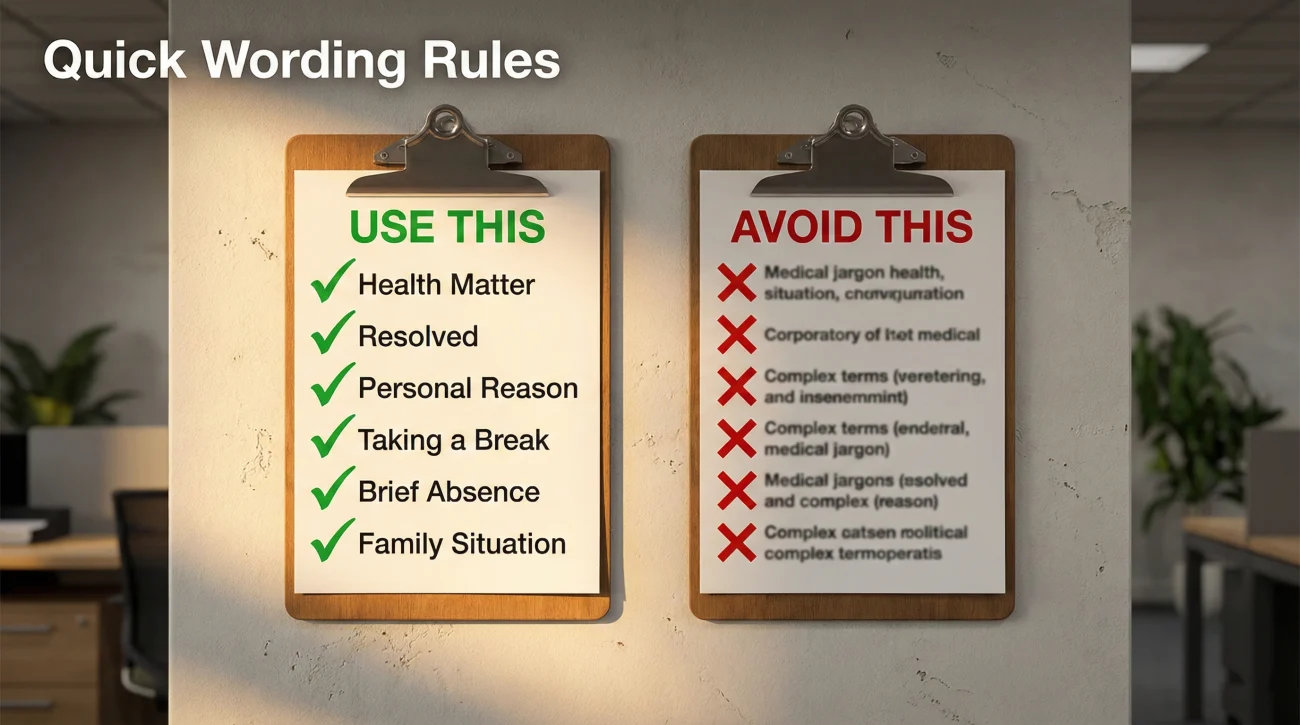
When talking about your gap, these rules will help you stay on the right side of the line between honest and oversharing.
- Use “health matter” instead of “mental health.” It is accurate without being specific.
- Use “resolved” or “behind me” instead of “in recovery.” Recovery implies an ongoing process that might affect work.
- Use “stepped away” or “took time” instead of “had to leave.” The former sounds like a choice; the latter sounds like you were forced out.
- Use “personal” as a shield word. “Personal health matter” and “personal situation” are understood to mean “none of your business” in polite professional language.
- Always include a forward-looking statement. End every explanation with what you are doing now or what you are excited about next.
A friend of mine who works in talent acquisition once told me that the candidates who get screened out are not the ones with gaps. They are the ones who seem stuck in the past. If your explanation sounds like you are still processing what happened, recruiters will worry that you are not ready. If your explanation sounds like ancient history followed by forward momentum, they will move on to evaluating your skills.
The Consistency Check: Keeping Your Story Straight
One of the biggest mistakes candidates make is telling slightly different versions of their story to different people. This creates problems at two stages: when the hiring team compares notes, and when the background check comes back.
Internal Consistency
The recruiter who does your phone screen will write notes. The hiring manager will write notes. If you tell the recruiter you took time off for a “family matter” and tell the hiring manager it was a “health matter,” someone will notice. Pick one phrase and stick with it.
External Consistency
Background checks verify your employment dates by contacting your previous employers or using a database like The Work Number. If your resume says you left your last job in March 2023 but your former employer reports February 2023, you will get a flag. Always use the exact dates your employers will report.
💡 Pro Tip: Before you start applying, request a copy of your own employment records from The Work Number (theworknumber.com) if your previous employers use it. This lets you verify that your resume dates match what will show up in a background check.
What Background Checks Actually Reveal
Standard employment verification checks reveal dates of employment, job titles, and sometimes salary and reason for leaving. They do not reveal medical information, therapy records, or hospitalizations. HIPAA protects that information, and employers cannot legally request it.
The exception is if you are applying for certain government positions, security clearances, or roles that require a medical examination. In those cases, you may need to disclose more, but even then, the focus is on whether you can perform the job safely, not on your diagnosis.
Deep Dive Guides for Specific Situations
This hub page gives you the framework. The guides below go deeper into specific touchpoints and scenarios. Bookmark the ones that apply to your situation.
Moving Forward With Confidence
A mental health career break is not a scarlet letter. It is a chapter of your life that you handled responsibly by prioritizing your well-being. The goal now is to frame that chapter in a way that helps employers see what they need to see: that you are stable, ready, and capable.
Prepare your scripts. Practice them until they feel natural. Keep your story consistent across every document and conversation. And remember that you are not obligated to share anything beyond what is necessary to explain the timeline.
One of the best candidates I ever hired had a two-year gap for mental health reasons. She never told me the diagnosis, and I never asked. What she did tell me was that she had taken time to focus on her health, that she had used part of that time to earn a certification, and that she was excited about the role because it aligned with where she wanted to take her career. That was enough. She got the job, and she turned out to be one of the strongest performers on the team.
Your gap does not define you. Your skills, your preparation, and your forward momentum do. If you are returning to work after a health-related break, the resources in our mental health employment gap hub will help you navigate every step of the process with clarity and confidence.
❓ FAQ
🔒 Am I legally required to tell employers about my mental health condition?
No. Under the Americans with Disabilities Act, you are not required to disclose a mental health condition during the hiring process. Employers cannot ask about your medical history before making a job offer. You only need to disclose if you are requesting a workplace accommodation, and even then, you can describe your limitations without naming the diagnosis.
📝 What should I write on my resume about a mental health gap?
Keep it minimal. You can leave the gap with no explanation, add a simple “Career Break” line with dates, or include a brief entry mentioning professional development. Avoid any mention of mental health, therapy, or medical treatment. The resume’s job is to get you an interview, not to explain your entire life story.
📞 What do I say when a recruiter asks about my gap on a phone screen?
Use a 10-second script: acknowledge the gap briefly (“I took time off for a health matter”), reassure them it is resolved (“that’s now behind me”), and pivot to the role (“I’m excited about this opportunity because…”). Practice it until it sounds natural. The goal is to move the conversation forward, not to dwell on the past.
🚫 What if the interviewer keeps pushing for details I do not want to share?
Use a polite boundary statement: “I appreciate the question, but the specifics are personal. What I can tell you is that the situation is resolved and I’m fully ready to work.” Then redirect with a question about the role. If they continue pressing, that is a red flag about the company culture.
🔍 Will a background check reveal my mental health history?
No. Standard employment background checks verify job titles, dates, and sometimes salary. They do not access medical records, therapy history, or psychiatric hospitalizations. HIPAA protects that information. The only exception is certain government or security-clearance roles that require a separate medical evaluation.
⚖️ Should I use the same explanation everywhere or customize it?
Use the same core explanation everywhere. The wording can be slightly longer or shorter depending on the format, but the key facts should be identical. If you tell the recruiter “health matter” and the hiring manager “family situation,” someone will notice the inconsistency and wonder what you are hiding.
⚠️ Disclaimer: ResumeSolving provides resume, cover letter, and job search communication guidance for informational purposes only. It is not legal, medical, financial, or professional counseling advice. Hiring decisions vary by company, role, location, and individual circumstances, so we do not guarantee interviews, offers, or outcomes. Always use your own judgment, verify requirements directly with the employer, and follow local laws and workplace policies. When a situation is sensitive, we prioritize privacy-safe, recruiter-appropriate wording, and you never need to share personal details you are not comfortable disclosing.