- If your resume says “Present” for a sabbatical, recruiters may assume you are not available. Your job is to add a clear availability signal.
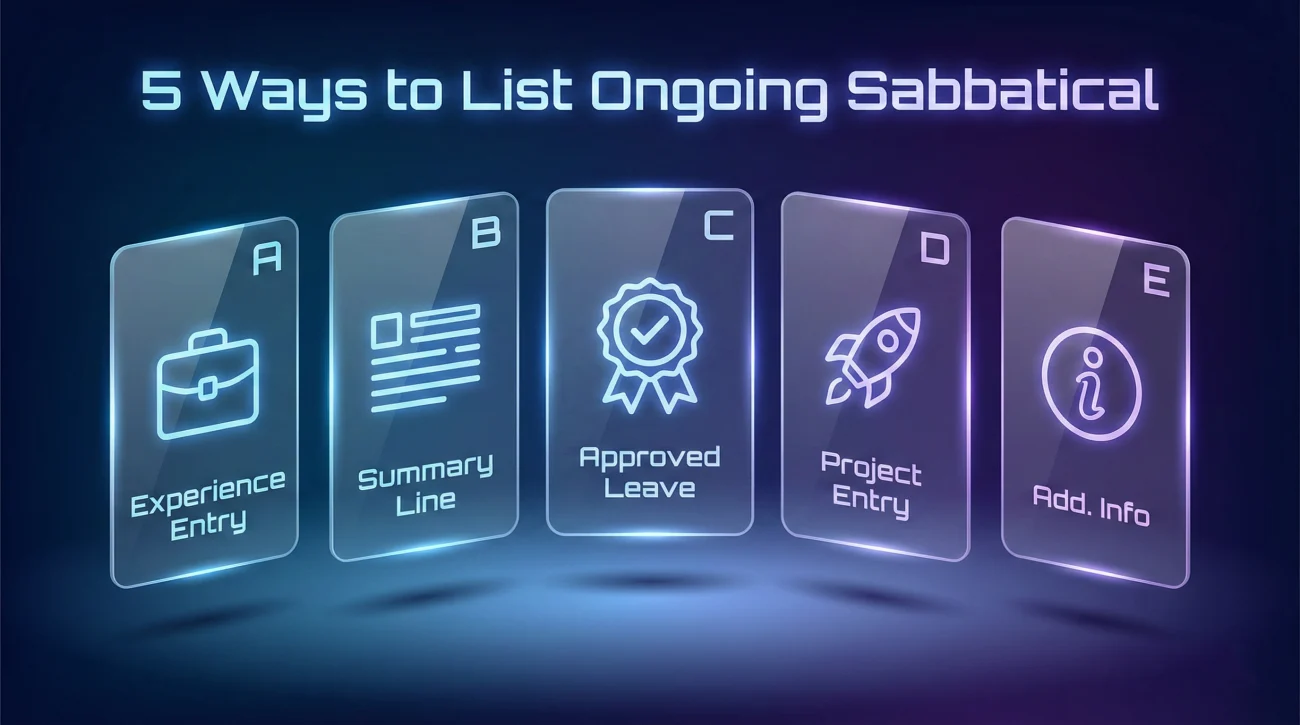
- You have five safe ways to list an ongoing sabbatical. Pick the one that matches how your timeline and work reality actually looks.
- Do not “invent” consulting. If you did projects, label them as projects. If you did not, keep it simple and stable.
Why an ongoing sabbatical can look riskier than a finished one
I have reviewed plenty of resumes where the problem was not the break itself. The problem was what the break implied. When a recruiter sees “Sabbatical: Apr 2025 – Present,” the brain does a fast shortcut: “Present means still happening. Still happening means not available.”
That shortcut is unfair, but it is common. And it is exactly why currently on sabbatical resume wording needs a different approach than “my sabbatical ended last year.” This is not about selling a story. It is about removing a false assumption.
“I am interested, but are you actually ready to come back to work?”
One candidate, Rina, took a planned six-month break after a burnout cycle. She started applying a month before her planned return. Her resume said “Sabbatical – Present.” She got polite rejections that felt oddly fast. We changed one line and added one small bullet: “Available from: Oct 2025.” Interviews started appearing within two weeks.
Another example came from a colleague in HR, Marcus. He was hiring for a hybrid role with a strict start date. He told me he filtered out “Present sabbaticals” when the posting said “Start ASAP,” not because he disliked breaks, but because he assumed schedule mismatch. That is the real risk you are managing: the schedule assumption.
⚠️ Warning: If you are on an ongoing sabbatical, your resume must do two jobs at once: show a clean timeline and show an availability signal. If either is missing, recruiters fill in the blanks.
A simple decision rule before you write anything
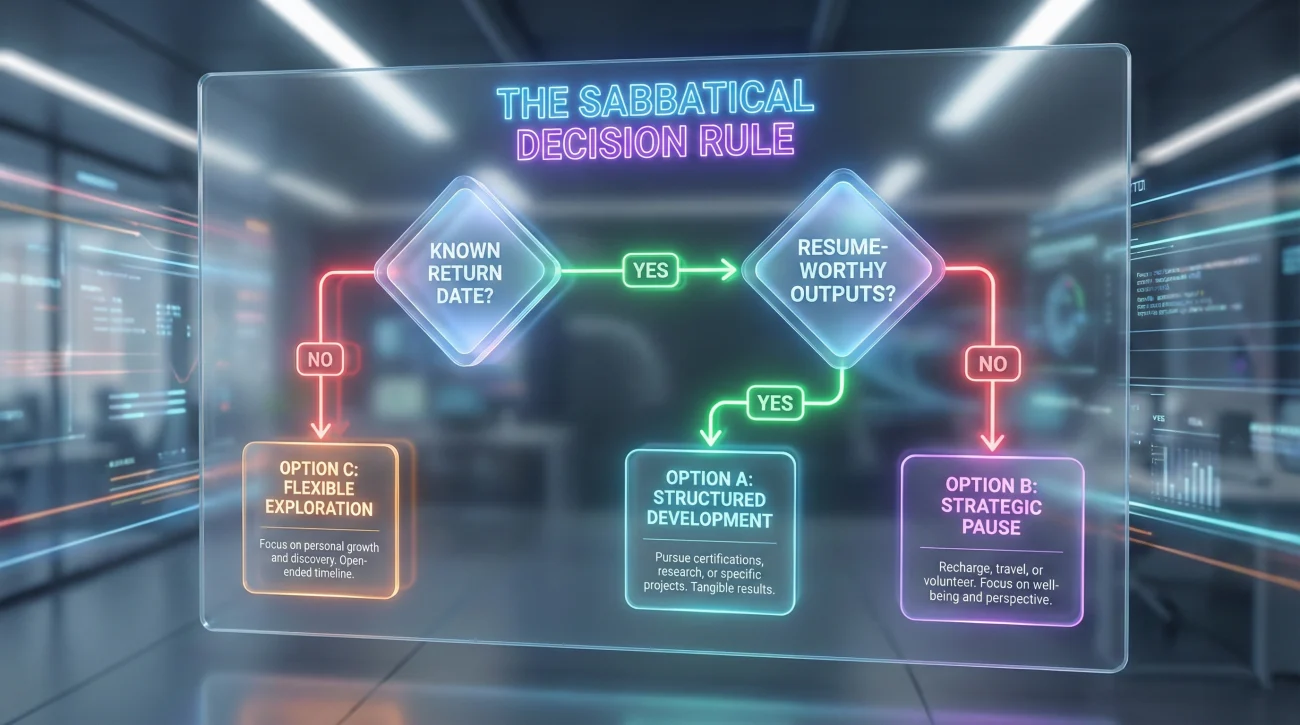
Before you pick formatting, answer two questions honestly. The answers determine which listing option is safest.
- Do you have a known return date? If yes, use it. If no, you need a different kind of closure signal.
- Do you have “resume-worthy” outputs during the break? Outputs can be a course, a certification, a portfolio project, volunteering with measurable scope, or consulting that you can verify. If you do not, do not force bullets that sound like filler.
Now choose your path. Below are five options, what they look like, and which situation each one fits.
Option A: Sabbatical entry in Experience with a planned return line. Best for: you have a return month or a clear availability date. Avoids: “Present” equals unavailable.
Option B: One-line sabbatical in Summary while Experience stays focused on your strongest role. Best for: you want minimal spotlight on the break. Avoids: over-explaining.
Option C: Approved leave framing (still employed) plus a “returning” line. Best for: formal leave from an employer. Avoids: “flight risk” assumptions.
Option D: Project-based entry (only if real outputs exist). Best for: you produced tangible work during the break. Avoids: sounding stagnant without inventing a job.
Option E: Additional Information line with availability. Best for: smallest footprint possible. Avoids: turning the sabbatical into the headline.
💡 Pro Tip: Your goal is not to make the sabbatical impressive. Your goal is to make it unambiguous.
Five safe ways to list an ongoing sabbatical
Let’s get practical. Below are five options with templates and examples. Copy the structure and change details. Keep dates accurate. Keep claims verifiable.
Option A: Experience entry with an availability signal
This is the cleanest option when you are applying before the break ends. You keep chronology intact for ATS, but you remove the “unavailable” assumption.
Use this when your situation matches the phrase ongoing sabbatical resume in the real sense: you are still on break today, but you are applying for roles that start soon.
– Planned return to full-time work: Oct 2025
– Completed: AWS Cloud Practitioner (Aug 2025); built 2 internal dashboards for a nonprofit team
– Available for interviews now; available to start: Sep 2025
– Maintained professional momentum: portfolio refresh aligned to target roles
⚠️ Warning: Do not write “Available immediately” if your reality is “Available in two months.” Misalignment here triggers trust issues later.
Option B: A one-line sabbatical in the Summary (minimal spotlight)
If your strongest selling point is your previous role and achievements, this option keeps the sabbatical from becoming the headline. It works well when the break is short, or when you worry that a long sabbatical entry will look like a second job.
This approach also helps if you are trying to keep the Experience section clean for scanning. It answers the timeline question without creating a large new block that invites curiosity.
Option C: Approved leave with a “returning” framing
If you are technically still employed and on an approved leave, say so plainly. Recruiters interpret “approved leave” differently than “I disappeared.” They still need a return signal, but the trust baseline is higher.
Approved Sabbatical Leave | May 2025 – Present
– Returning to work: Nov 2025 (planned)
– During leave: advanced SQL reporting; completed a finance automation project for a community org
💡 Pro Tip: If you are still employed, do not list the sabbatical as a separate “company.” Keep it under the real employer to avoid “new employer” confusion.
Option D: Project entry (only if it is true and specific)
Some people do real work during a break. That is fine. The mistake is labeling casual learning as “consulting.” If you did paid client work, call it what it is and be ready to verify it. If you did personal projects, call them projects.
– Built a budgeting app prototype; tested with 20 users; improved onboarding completion from 42% to 68%
– Created 3 role-specific case studies tailored to target roles
This option works best when you need to show momentum. It is especially useful for technical roles where “output” is easy to demonstrate.
Option E: Additional Information line (quiet, but clear)
If you want the smallest footprint possible, add one line near the end. This is often enough when your timeline is otherwise clean and your last role ended recently.
Option E is also a safe choice if you are worried about bias or intrusive questions. You do not owe a personal narrative. You owe a timeline that makes sense.
How to handle dates so you do not look indefinite
The fastest way to trigger “unavailable” is to look indefinite. The second fastest way is to look like you are keeping your options open. Recruiters see that and think: “They might quit again.”
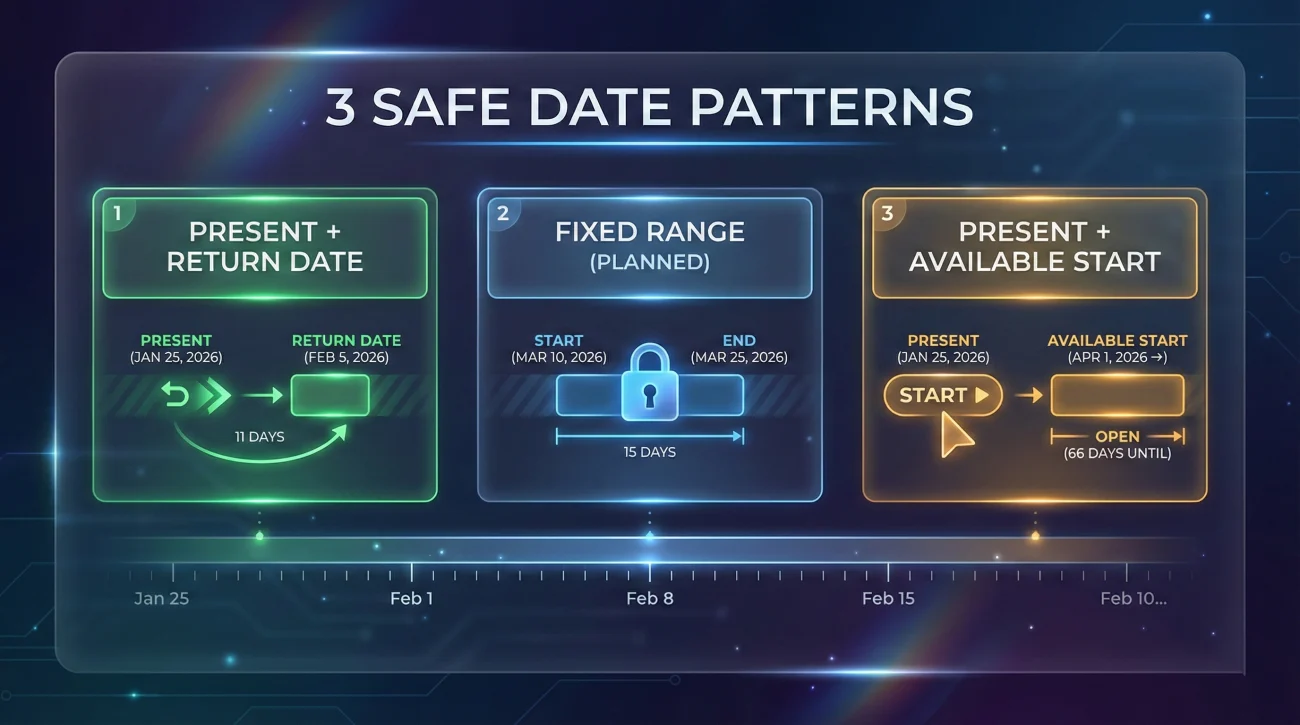
Here are three safe date patterns. Choose one and stick to it consistently across the document.
- Pattern 1:
Month YYYY - Presentplus a bullet that saysPlanned return: Month YYYY - Pattern 2:
Month YYYY - Month YYYY (planned)if you truly have a fixed planned end - Pattern 3:
Month YYYY - PresentplusAvailable to start: Month YYYYif return date and start date differ
That last one matters more than people think. A planned personal return and a job start date are not always the same. When you are writing sabbatical end date resume details, the reader cares about the start date they can hire you for.
❌ Note: Avoid fuzzy language like “returning soon,” “taking time to explore,” or “open-ended break.” Those phrases invite assumptions.
Five red-flag phrases and the safer swaps
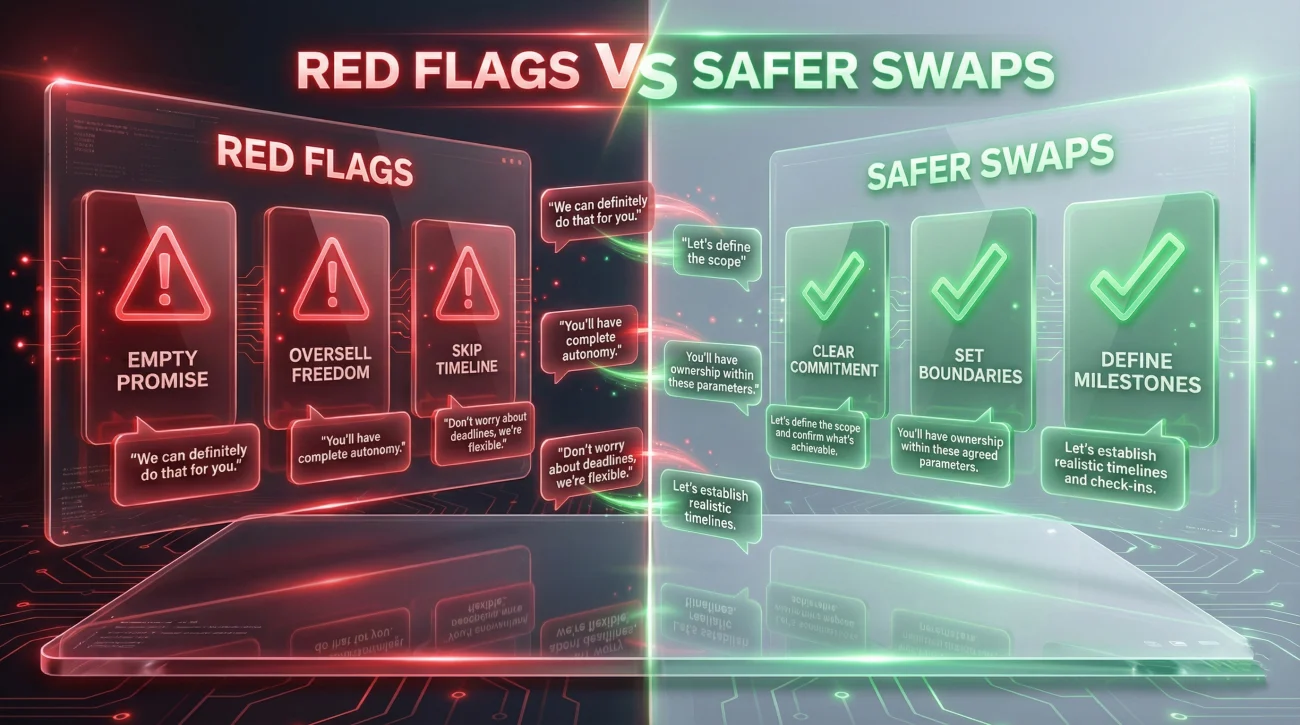
Some phrasing makes a sabbatical sound like a lifestyle choice that has no endpoint. That is not what you want when you are applying for roles with real deadlines.
🚫 “Sabbatical – Present” with no extra context
❓ Why it hurts: It reads like “still away.”
✅ Safer swap: Add one line that gives a hiring timeline: “Available to start: Oct 2025” or “Planned return: Oct 2025.”
🧨 “Indefinite career break”
❓ Why it hurts: Indefinite equals high uncertainty.
✅ Safer swap: “Planned sabbatical” plus a specific month for availability, even if it is a range like “Q4 2025.”
🌀 “Taking time to find myself”
❓ Why it hurts: It sounds personal, unstructured, and unrelated to work.
✅ Safer swap: Keep it neutral: “Planned sabbatical for recovery and skills refresh” and stop there.
⚠️ “Not sure what I want next”
❓ Why it hurts: Recruiters hear “unfocused,” not “honest.”
✅ Safer swap: Replace uncertainty with direction: “Target roles: [Role]. Focus: [2-3 skills]. Available from: [Month].”
🧊 “I am not ready to return yet”
❓ Why it hurts: It is a clear “do not hire me now.”
✅ Safer swap: Only apply when you can commit to a start timeline. Then write that timeline clearly.
Notice what the swaps have in common. They remove ambiguity. They keep the tone professional. They avoid oversharing. That matters a lot for candidates who want a still on career break resume line that does not turn into a personal interview.
A recruiter-friendly way to signal availability without sounding desperate
There is a difference between “available” and “please hire me.” The best resumes communicate availability as a simple fact, not an emotional plea.
Here is a short script you can use in a cover note, email, or recruiter message. Keep it calm and factual.
“I am currently on a planned sabbatical and will be available to start in October. I am interviewing now for roles aligned with analytics and retention.”
One candidate, Theresa, used a version of that sentence in her first message to recruiters. She stopped getting “Are you still on break?” as the first question. Instead, the first question became role-related. That is the win. You want to move the conversation away from your timeline and toward your fit.
💡 Pro Tip: If you can start immediately, say “Available to start: [Month]” anyway. Even “This month” is clearer than leaving it blank.
- ✅ Keep it specific: Month and year beats vague words.
- ✅ Keep it consistent: Your resume, LinkedIn, and recruiter message should not conflict.
- ✅ Keep it verifiable: If you list outputs, make sure you can show them.
Final
If you remember one thing from this guide, make it this: a “Present” sabbatical with no return signal looks like a scheduling problem, not a character flaw. Fix the scheduling signal, and the break becomes a neutral detail.
When you write currently on sabbatical resume wording, choose one of the five options, add a clean availability line, and keep the rest of your resume focused on impact. The goal is not to justify your time off. The goal is to make hiring you feel straightforward.
❓ FAQ
🎯 Should I write “Present” for my sabbatical?
Yes, if it is truly ongoing. But do not stop there. Add a planned return month or an “Available to start” line so it does not read as indefinite.
🧭 Do I need to explain why I took the sabbatical?
No. A resume is not a diary. A neutral reason is enough, and in many cases you can skip the reason entirely and focus on timing plus availability.
🧩 What if I did nothing impressive during the break?
That is fine. Do not manufacture bullets. Use a minimal option like Summary line or Additional Information, and keep your resume centered on your strongest work experience.
🛡️ Is it okay to label casual learning as consulting?
No. If you did paid or real client work, label it accurately. If you did personal learning, call it learning or projects. “Consulting” implies verifiable client deliverables and can backfire if questioned.
⏳ What availability date should I put if I am not sure?
Only apply when you can commit to a realistic start window. If you can commit to a range, write it as a month or quarter and be consistent in recruiter conversations.
⚠️ Disclaimer: ResumeSolving provides resume, cover letter, and job search communication guidance for informational purposes only. It is not legal, medical, financial, or professional counseling advice. Hiring decisions vary by company, role, location, and individual circumstances, so we do not guarantee interviews, offers, or outcomes. Always use your own judgment, verify requirements directly with the employer, and follow local laws and workplace policies. When a situation is sensitive, we prioritize privacy-safe, recruiter-appropriate wording, and you never need to share personal details you are not comfortable disclosing.