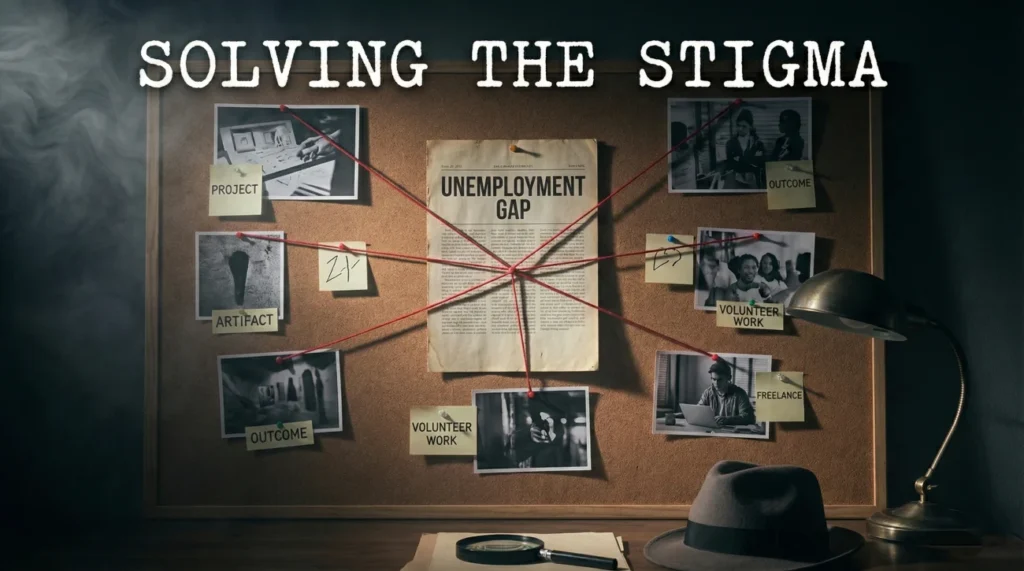
- “Long unemployment stigma” is real, but most rejection happens because your resume feels hard to verify, not because you are “broken.”
- Your job is to reduce perceived risk fast: Lead with proof artifacts, clear scope, and outcomes that can be checked.
- Use neutral gap labeling plus a proof-first section and scenario-ready language that answers questions without sounding defensive.
Long unemployment stigma is not just bias, it is also uncertainty you can design around
I have watched smart, capable people get stuck in the same loop: Months turn into a year, a year turns into two, and suddenly every application feels heavier. Not because their skills disappeared, but because the resume starts to look “quiet.” Fewer recent dates. Fewer fresh signals. More blank space that a stranger has to interpret.
This is where long unemployment stigma shows up. Some of it is pure bias. Some of it is a risk calculation: Hiring teams fear they cannot verify what you can do right now, so they default to the candidate with the easiest story to validate.
Most advice online says “explain the gap” or “be confident.” That sounds nice, but it does not fix the real blocker. The blocker is that a resume with a long gap often gives the reader too little proof to evaluate quickly.
This guide is built around one practical question: How do you make a long gap feel less relevant by replacing “unknown” with checkable evidence?
💡 Pro Tip: You do not win by making your gap sound prettier. You win by making your capability easier to verify than the next person’s.
What research suggests about long-term unemployment and hiring reactions
Some field and audit studies suggest that, in certain markets and time periods, longer unemployment spells can be associated with lower employer callbacks. In other contexts, the pattern is weaker, changes over time, or depends heavily on what else the resume provides beyond dates.
The practical takeaway is simple: Stigma can exist, but you should not build a strategy around panic. Build a strategy around what you can control: Making your resume feel lower risk to a busy reader.
Hiring teams do not have time to investigate every candidate. They screen. Your resume either makes screening easy, or it makes screening feel uncertain. Long gaps amplify that uncertainty.
The real triggers: what makes a long gap look risky on a resume
People think stigma comes from the number of months. In practice, stigma grows when the resume creates unanswered questions. Below are the patterns that quietly make a reviewer hesitate.

Risk signal 1: A resume that has effort but no output
Bullets like “upskilled,” “studied,” “learned,” and “explored opportunities” can be true, but they do not help a manager predict performance. They read as activity without deliverables.
Replace effort language with outputs: A dashboard, a report, a case study, an audit, a portfolio, a process document, a short automation, a writing sample, or a capstone that shows the job skill in action.
Risk signal 2: Labels that imply employment when it was personal work
Titles like “Consultant” or “Founder” can be legitimate. They also trigger probing when there is no client list, no product, no references, and no external proof. If the label feels like a disguise, the reader assumes a bigger problem than unemployment.
A safer approach is boring but credible: “Independent Projects,” “Portfolio Projects,” or “Selected Projects.” It tells the truth and sets the right expectation.
Risk signal 3: A timeline that is either hidden or oddly continuous
Two extremes create suspicion: Deleting dates entirely, or padding the gap with vague entries to make it look continuous. Both can cause the same reaction: “What am I not seeing?”
Neutral labeling plus proof is stronger than clever formatting. The goal is not to hide time. The goal is to make time less important by leading with evidence.
Risk signal 4: Proof that cannot be checked quickly
Even strong work can be ignored if the reader cannot verify it. A portfolio without links, a project without scope, or a claim without a deliverable creates friction. Friction is where resumes die.
⚠️ Warning: If your resume asks the reader to “trust you,” you are asking for a risk they do not need to take.
The antidote: Build a proof-first resume that reduces risk signals
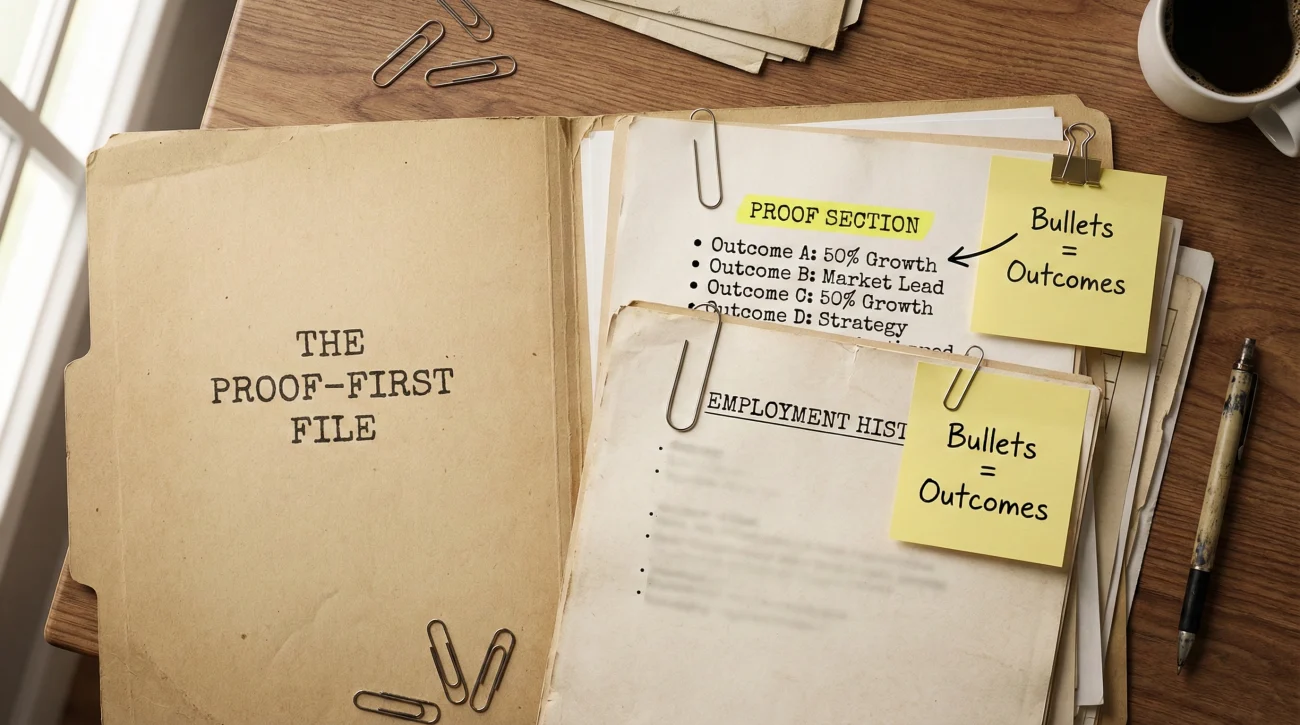
If long gaps increase uncertainty, your resume must do the opposite. It must make evaluation easy. The simplest way is to lead with proof artifacts that match the role and can be verified.
Step 1: Add a section recruiters understand
Use one of these section names. They are clear, common, and less likely to be misunderstood as “fake employment.”
- Selected Projects (best for tangible work samples and case studies)
- Continuing Practice (best when you want to show you stayed sharp)
- Relevant Experience (Including Projects) (best for mixed backgrounds)
Step 2: Put proof above Employment if the gap is long
When your last paid role is years back, Employment-first often forces the reader to meet the gap before they meet your ability. Flip it. Make the top third of page one feel like capability, not absence.
This is not hiding. This is sequencing. You are controlling what the reader evaluates first.
Step 3: Use bullets that sound like real work, not coping
Here are bullet templates that work for independent projects, volunteer deliverables, coursework projects, and portfolio builds. They sound like work because they describe constraints, outputs, and outcomes.
Built: [Asset/Tool], to solve: [Problem], proof: [Link or artifact]
Improved: [Process], by: [Change], reducing: [Errors/time/cost], proof: [Method or sample]
Produced: [Report/Model/Deck], under: [Constraint], validated by: [Benchmark or review]
If you have no public links, you can still write “available upon request,” but only if you can provide the artifact quickly. Otherwise it reads like vapor.
Scenarios: how to describe a long gap without sounding defensive
Below are common scenarios. Each includes a short resume line and a tight interview answer that stays neutral and quickly redirects to proof.
🧱 Scenario 1: Caregiving or family responsibilities
Resume line (neutral):
Career Break | 2022 – 2025 (Family responsibilities) + Selected Projects (links available)
Interview answer (tight):
“I had a family responsibility period that limited full-time work. During that time, I kept my skills current through projects that match this role. I can walk you through two examples and share the artifacts.”
🩺 Scenario 2: Health recovery or burnout
Resume line (neutral):
Career Break | 2023 – 2024 (Health recovery) + Continuing Practice (work samples available)
Interview answer (tight):
“I had a health recovery period that is now resolved. I stayed engaged with the work through structured projects and I am ready for full capacity. Here is what I built recently and how it maps to the role.”
🧭 Scenario 3: Relocation or immigration process
Resume line (neutral):
Relocation | 2022 – 2023 + Selected Projects (role-aligned outputs)
Interview answer (tight):
“A relocation timeline limited the kind of roles I could accept. I used the time to build role-relevant work samples and stay current with tools. I can share a case study and the underlying file.”
🧩 Scenario 4: Layoffs plus a slow market
Resume approach: Do not list “Unemployed.” Lead with a proof-first section that shows what you delivered while searching.
Interview answer (tight):
“I was impacted by layoffs, and the market has been slower than expected. I treated the search period like a production period: I built work samples that match the role and I can show the outputs.”
🛠️ Scenario 5: Skill pivot after long unemployment
Resume approach: Use “Continuing Practice” and make the pivot verifiable via capstones and samples, not course lists.
Interview answer (tight):
“I am pivoting into this area, so I focused on building proof, not collecting certificates. Here are the two projects that demonstrate the core skills, and here is what I would improve if I did them again.”
How to answer “Why have you been unemployed so long?” without feeding stigma
Do not debate the gap. Do not overshare. Do not try to sound inspirational. Your goal is to land on one stable explanation and then redirect to proof.
A simple 3-part structure that works
- Part 1 (neutral context): One sentence, no details.
- Part 2 (current readiness): Confirm it is resolved or stable.
- Part 3 (proof pivot): Bring up artifacts and outcomes.
“I had [neutral reason]. It is resolved now, and I am ready for full-time work.
During that period, I stayed current through [2 proof items]. I can show you the work and results.”
This structure prevents the interviewer from spending five minutes inside your personal life. It also signals maturity: You are not fragile, you are prepared, and you have evidence.
Mistakes that accidentally increase long unemployment stigma
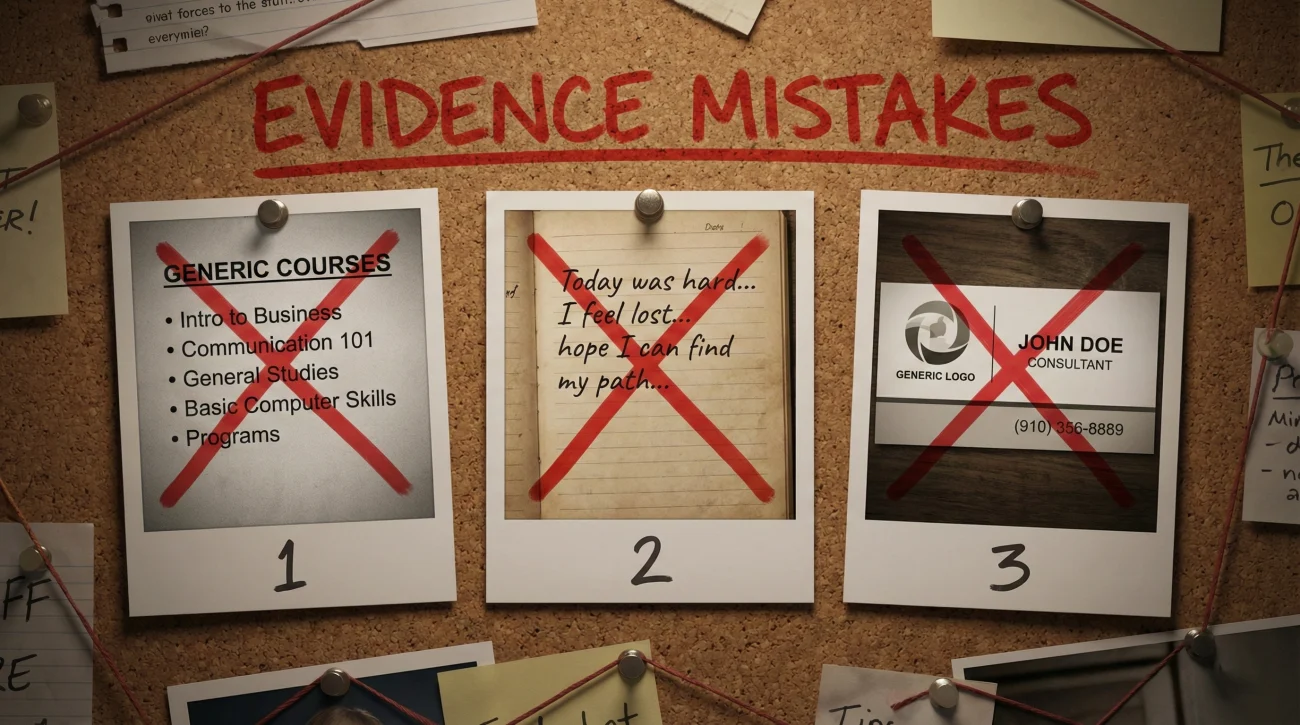
These are the quiet mistakes that make a long gap look worse than it is.
Mistake 1: Filling space with low-credibility items.
Listing ten courses with no outputs feels like padding. Pick fewer learning items and attach proof: A capstone, a sample, a scored assessment, or a portfolio piece.
Mistake 2: Writing a gap explanation like a personal essay.
Recruiting is not therapy. The more emotional detail you add, the more a stranger wonders if the issue is still ongoing. Keep it neutral. Move to proof.
Mistake 3: Using impressive labels without verification.
Big titles without clients, references, or deliverables invite skepticism. “Independent Projects” with solid artifacts beats “Consultant” with nothing to show.
❌ Note: If the reader has to guess what you did, they will guess in the direction of risk.
Final: You do not erase stigma by talking better, you erase it by showing proof faster
Long unemployment stigma can be real, but the fastest way to reduce its impact is to reduce uncertainty. Make your resume easy to verify. Put proof above Employment when the gap is long. Use neutral labels. Use outcome-first bullets that sound like work, not coping.
If you want a quick self-check, scroll only the top third of page one. If it is mostly explanation, rewrite it so it is mostly evidence. Your goal is to make the reader think: “I can see what they can do, right now.”
❓ FAQ
🧠 Is long unemployment stigma always the reason I am not getting interviews?
Not always. Sometimes the bigger issue is that the resume has weak proof and unclear scope, so the reader cannot evaluate you quickly. Fix proof and clarity first, then worry about stigma.
🧾 Should I list “Unemployed” as a job entry?
Usually no. It is honest but rarely helpful. A proof-first section like “Selected Projects” does more to reduce risk because it gives the reader deliverables to judge.
🧷 What is the minimum proof bundle that can work?
Two items is a strong start: One short case study and one concrete work sample. Add a clear verification path, even if the artifact is “available upon request.”
🧭 How do I mention caregiving without oversharing?
Use one neutral phrase like “Family responsibilities” and move on. Then let your proof section carry the credibility. You owe clarity, not personal details.
🛠️ Can I call personal projects “consulting” to look stronger?
Only if you had real clients and they would confirm the work. If it was personal work, label it as projects. Credibility beats a prettier label.
📌 Where should proof go if my last job was years ago?
Put proof above Employment so the top third of page one leads with capability. You are shaping what the reader evaluates first.
⚠️ Disclaimer: ResumeSolving provides resume, cover letter, and job search communication guidance for informational purposes only. It is not legal, medical, financial, or professional counseling advice. Hiring decisions vary by company, role, location, and individual circumstances, so we do not guarantee interviews, offers, or outcomes. Always use your own judgment, verify requirements directly with the employer, and follow local laws and workplace policies. When a situation is sensitive, we prioritize privacy-safe, recruiter-appropriate wording, and you never need to share personal details you are not comfortable disclosing.