How to write a resume summary when you are currently unemployed without sounding risky
I have watched a hiring manager skim a resume in under a minute, pause at the top summary, and then quietly move on. Not because the candidate was “bad”. Because the summary made the manager feel like they had to guess what was true right now.
When you are currently unemployed, the summary is the easiest place to accidentally increase doubt. Most templates online tell you to “stay positive” and “highlight skills”. That advice is not wrong, it is just incomplete. The reader is not evaluating your optimism. The reader is evaluating risk.
As an HR partner, I have also seen the opposite. A candidate with a long gap gets interviews because their summary reads like a forecast of what they will deliver, not a confession of what happened. The gap still exists. The summary just stops making it the headline.
This guide is built for the person who is job hunting in a long stretch, wants to sound current, and does not want to overshare. You will get structures you can copy, plus the reasoning behind them, so you are not stuck swapping synonyms and hoping it works.
What a reader is actually deciding in the first scan
When someone sees “currently unemployed”, their brain usually jumps to three quiet questions. They may never say them out loud. They still shape the decision.
| Hidden concern | What it really means | What your summary should do |
|---|---|---|
| Momentum | Are you actively doing the work now, or only describing who you used to be | Include one current proof hook that is real and recent |
| Readiness | Can you sustain normal cadence without the job competing with a crisis | Use stable language that signals routine, delivery, and availability |
| Focus | Do you want this role, or do you want any role | Name a clear target role and context instead of “open to anything” |
That is why the common “motivated self-starter” summary falls flat. Traits do not answer these questions. Proof does. So the goal is not to sound inspiring. The goal is to remove the need for the reader to guess.
Three rules for an unemployed resume summary that sounds current
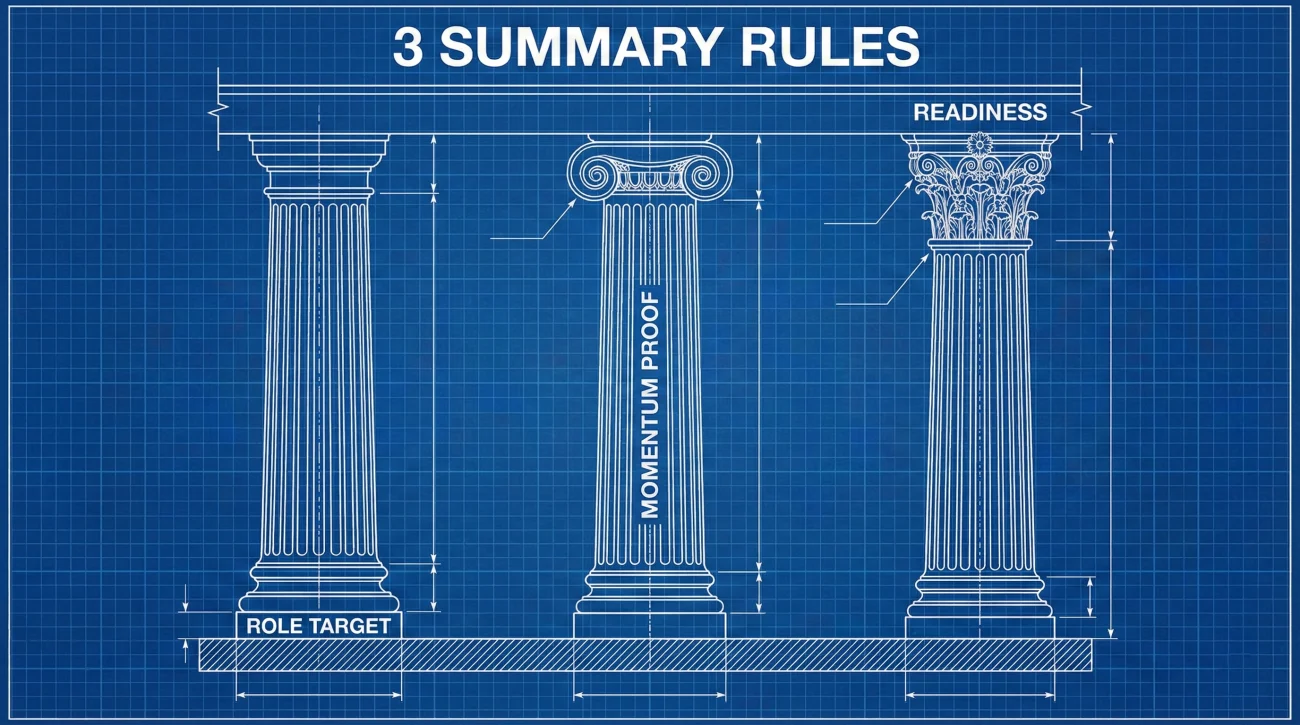
Rule 1: Lead with a role target, not your situation
If the first line is about unemployment, you let the gap become the headline. If the first line is Role + level + context, you give the reader a place to file you.
This is not about hiding anything. It is about controlling the opening frame so the reader evaluates fit first. You can still be honest later if the process asks for it.
“Currently unemployed and open to any opportunity in marketing.”
“B2B demand gen marketer with 6 years in SaaS, focused on pipeline and lifecycle conversion.”
Notice what changed. The “after” line does not pretend unemployment does not exist. It simply refuses to open with it. In HR screenings, that shift matters because it puts your skills into a hiring category fast.
Rule 2: Add one proof of present momentum
This is the missing piece in most resume summary templates. You do not need a heroic story. You need one believable, recent signal that you are active now.
The proof hook should be something you can show or describe in one sentence. If the reader asks a follow-up, you should be able to explain it calmly without improvising.
Here are proof hooks that usually work across industries. Pick one you can support with a link, a file, a portfolio, or a clear description.
- 📌 Recent deliverable: A shipped project, published work, portfolio update, or shipped feature
- 🧩 Structured learning with output: A course plus a finished artifact, not just “completed training”
- 🛠️ Short contract or consulting: Even small scope work that shows current execution
- 🤝 Volunteer project with cadence: A role that has deadlines, stakeholders, or measurable output
- 🗓️ Interview readiness signal: A clear routine for job search and availability, without sounding desperate
One caution from real hiring rooms. A proof hook only helps when it is specific. A friend of mine in product got laid off and spent months rewriting his summary with adjectives. Nothing changed until he named one weekly output: a portfolio rebuild with two concrete case studies. Suddenly the summary stopped sounding like hope and started sounding like present tense.
Here are copy-ready examples. Each one is separated on purpose so the reader does not skim past a wall of templates.
If your proof hook is a recent deliverable: Use this when you have something you can link, show, or describe in one sentence.
“Recently shipped a customer onboarding refresh that reduced support tickets by 18% and documented the new flow for handoff.”
If your proof hook is structured learning with output: Use this when you completed something and produced an artifact, not just a certificate.
“Completed Google Data Analytics and built a KPI dashboard sample using real retail data to demonstrate reporting clarity.”
If your proof hook is a short contract or consulting: Use this when you have paid or formal work, even if small.
“Supported a 6-week contract focused on process cleanup, stakeholder updates, and weekly deliverables.”
If your proof hook is volunteer work with cadence: Use this when the volunteer role is structured, not casual.
“Volunteer operations lead with weekly cadence, tracking deliverables and improving handoffs across a small nonprofit team.”
Rule 3: Close with readiness, not hope
The last line should sound like a professional ready to deliver. Avoid language that sounds like waiting, begging, or uncertainty. If it reads like a request for a chance, it increases doubt.
A good closing line signals stability. It suggests cadence, ownership, and predictable delivery.
“Eager to contribute and hoping to find a great team.”
“Ready for full-time cadence, clear priorities, and accountable weekly delivery in a team that values documentation.”
❓ Why it works: Unemployment is a status. Hiring is a forecast. Your summary should read like a forecast of what you will deliver if hired.
Red flag summary language that makes long term unemployment feel bigger

Most “red flags” are not evil. They are common phrases people say when they feel cornered. The problem is that they expand uncertainty instead of reducing it. The replacements below keep your dignity, keep your privacy, and still give the reader what they need to hire: predictability.
🚩 Pattern 1: Language that sounds like you will take any job
🚩 Red flag: “Open to any opportunity.”
This usually reads as low focus. A manager wonders if you will accept the role and then keep searching. Even if that is unfair, it is a real reaction.
✅ Replacement: “Targeting customer success roles in B2B SaaS, strongest in renewals and risk rescue, with a recent playbook refresh to show current execution.”
🧱 Pattern 2: Trait-heavy lines with no evidence
🚩 Red flag: “Hardworking, quick learner, passionate, eager to contribute.”
These traits appear in almost every resume, employed or not. They do not answer momentum or readiness. They can also sound like filler when a gap exists.
✅ Replacement: “Known for closing loops fast, documenting decisions, and shipping on weekly deadlines. Recently completed a portfolio case study to demonstrate current work.”
🧭 Pattern 3: Making unemployment your opening identity
🚩 Red flag: “Currently unemployed and seeking a role in marketing.”
This makes the situation the identity. You can keep the truth without opening with it.
✅ Replacement: “Lifecycle marketer focused on activation and retention, with 6 years in SaaS and a recent email teardown project to show current thinking.”
🧊 Pattern 4: Apology language that trains the reader to expect decay
🚩 Red flag: “I know my experience is not recent, but…”
That sentence cues doubt before you give proof. It trains the reader to scan for “skills decay” instead of scanning for fit.
✅ Replacement: “Bringing recent output to pair with experience: a refreshed portfolio sample and weekly delivery routine aligned to this role’s cadence.”
One practical note from HR. Replacing red flag lines is not about being “perfect”. It is about sounding controlled and repeatable. A summary that feels controlled helps the reader assume you are controlled.
A quick customization pass that keeps the summary tight

If you want a fast way to personalize the structures above, use this short checklist. It is designed to prevent the common mistake I see in long term unemployment resumes: adding more words to “earn trust”, then accidentally sounding more uncertain.
- Step 1: Replace the role label with the exact title you are applying to.
- Step 2: Replace the domain with a real context that matches the job.
- Step 3: Replace two skills with skills that appear in the job description, not your favorite skills.
- Step 4: Choose one proof hook you can show or describe clearly, then keep it to one line.
- Step 5: Read the closing line out loud. If it sounds like hope, rewrite it to sound like execution.
That is it. The goal is not perfect phrasing. The goal is to remove the need for the reader to guess.
Where the unemployment explanation belongs instead
A lot of candidates try to explain the gap inside the summary because it feels safer to “get ahead of it”. In practice, that often backfires. The summary is for fit. The gap explanation belongs in the interview, and sometimes in one neutral resume line depending on your situation.
When you are asked directly, your goal is not a dramatic story. Your goal is a stable story that ends in performance. Here are interview-style answers that tend to land well because they are coherent and controlled.
“I had a stretch between roles after a layoff. The situation is stable now, and I have been keeping a weekly cadence through recent deliverables. I am ready to bring that consistency into this role.”
That answer is short on purpose. It does not invite follow-up curiosity. It gives a stability signal and pivots back to readiness.
“After my last role ended, I took time to reset my target and keep my skills current. I have recent output I can share, and my availability is stable for a normal full-time workflow.”
If you read those and think, “But my story is messier than that”, you are not alone. A person cannot compress every detail into a safe sentence. The goal is not to tell everything. The goal is to be coherent across resume, interview, and references.
Final thoughts on long term unemployment resume summaries
A resume summary written during a period of unemployment should not feel like a defensive performance; rather, it must function as a controlled forecast of your future value. By explicitly naming your target role, anchoring it with a tangible proof hook, and closing with a clear statement of readiness, you dictate how the reader interprets your pause. This intentional structure prevents hiring managers from guessing your status and ensures that your long term unemployment resume frames the gap as a temporary interval in a consistent career trajectory, rather than the defining headline of your professional identity.
❓ FAQ
🎯 Should I write “currently unemployed” in my resume summary
Usually no. The summary is where you earn the first scan. Put Role + context first, then add one proof hook that shows you are active now. If you need to acknowledge the gap, do it in a neutral line elsewhere or in the interview when asked.
🧩 What is the safest “proof hook” if I do not have freelance work
A structured learning item with a finished artifact is often the safest. “Completed X” is weaker than “Completed X and built Y”. The output gives the reader something solid to evaluate.
🛠️ How long should an unemployed resume summary be
Keep it tight. Think 2 to 4 lines that do three jobs: role target, one proof of present momentum, and a closing readiness line. If you add more, add it in experience bullets, not the summary.
📌 What if my gap was long and I am switching industries
Then your proof hook matters even more. Focus on a transferable outcome, then attach one current artifact that demonstrates it. Avoid long explanations in the summary. Make the bridge in the experience section and in interview answers.
✅ Can a resume summary fix long term unemployment by itself
No single paragraph fixes everything. The summary just sets the tone. When it is controlled and specific, it reduces doubt and earns the next read. Your experience bullets and interview story still need to support it.
⚠️ Disclaimer: ResumeSolving provides resume, cover letter, and job search communication guidance for informational purposes only. It is not legal, medical, financial, or professional counseling advice. Hiring decisions vary by company, role, location, and individual circumstances, so we do not guarantee interviews, offers, or outcomes. Always use your own judgment, verify requirements directly with the employer, and follow local laws and workplace policies. When a situation is sensitive, we prioritize privacy-safe, recruiter-appropriate wording, and you never need to share personal details you are not comfortable disclosing.